
Articles liés à Status in Classical Athens
Synopsis
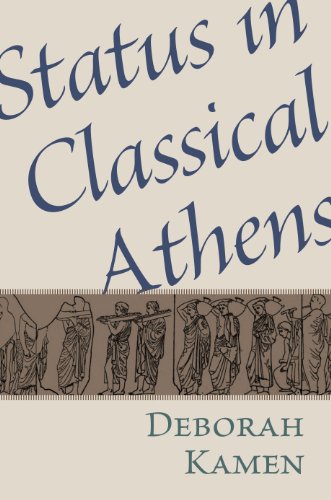
Ancient Greek literature, Athenian civic ideology, and modern classical scholarship have all worked together to reinforce the idea that there were three neatly defined status groups in classical Athens--citizens, slaves, and resident foreigners. But this book--the first comprehensive account of status in ancient democratic Athens--clearly lays out the evidence for a much broader and more complex spectrum of statuses, one that has important implications for understanding Greek social and cultural history. By revealing a social and legal reality otherwise masked by Athenian ideology, Deborah Kamen illuminates the complexity of Athenian social structure, uncovers tensions between democratic ideology and practice, and contributes to larger questions about the relationship between citizenship and democracy.
Each chapter is devoted to one of ten distinct status groups in classical Athens (451/0-323 BCE): chattel slaves, privileged chattel slaves, conditionally freed slaves, resident foreigners (metics), privileged metics, bastards, disenfranchised citizens, naturalized citizens, female citizens, and male citizens. Examining a wide range of literary, epigraphic, and legal evidence, as well as factors not generally considered together, such as property ownership, corporal inviolability, and religious rights, the book demonstrates the important legal and social distinctions that were drawn between various groups of individuals in Athens. At the same time, it reveals that the boundaries between these groups were less fixed and more permeable than Athenians themselves acknowledged. The book concludes by trying to explain why ancient Greek literature maintains the fiction of three status groups despite a far more complex reality.Les informations fournies dans la section « Synopsis » peuvent faire référence à une autre édition de ce titre.
À propos de l'auteur
Deborah Kamen is assistant professor of classics at the University of Washington.
Les informations fournies dans la section « A propos du livre » peuvent faire référence à une autre édition de ce titre.
Résultats de recherche pour Status in Classical Athens

Image fournie par le vendeur
Status in Classical Athens
Edité par
Princeton University Press, 2013
ISBN 10 : 0691138133
ISBN 13 : 9780691138138
Ancien ou d'occasion
Couverture rigide
Vendeur : The Anthropologists Closet, West Des Moines, IA, Etats-Unis
Évaluation du vendeur 5 sur 5 étoiles

Hardcover. Etat : Used Like New. Etat de la jaquette : Used Like New. Used Like New hardcover in like dust jacket. The back bottom left corner is worn. Pages are clean and free of marks or underlining. Includes a bibliography and index. 8vo. (6.14 x 0.37 x 9.21 inches) 160 pp. Fast shipping in a secure book box mailer with tracking. Ancient Greek literature, Athenian civic ideology, and modern classical scholarship have all worked together to reinforce the idea that there were three neatly defined status groups in classical Athens--citizens, slaves, and resident foreigners. But this book--the first comprehensive account of status in ancient democratic Athens--clearly lays out the evidence for a much broader and more complex spectrum of statuses, one that has important implications for understanding Greek social and cultural history. By revealing a social and legal reality otherwise masked by Athenian ideology, Deborah Kamen illuminates the complexity of Athenian social structure, uncovers tensions between democratic ideology and practice, and contributes to larger questions about the relationship between citizenship and democracy. Each chapter is devoted to one of ten distinct status groups in classical Athens (451/0-323 BCE): chattel slaves, privileged chattel slaves, conditionally freed slaves, resident foreigners (metics), privileged metics, bastards, disenfranchised citizens, naturalized citizens, female citizens, and male citizens. Examining a wide range of literary, epigraphic, and legal evidence, as well as factors not generally considered together, such as property ownership, corporal inviolability, and religious rights, the book demonstrates the important legal and social distinctions that were drawn between various groups of individuals in Athens. At the same time, it reveals that the boundaries between these groups were less fixed and more permeable than Athenians themselves acknowledged. The book concludes by trying to explain why ancient Greek literature maintains the fiction of three status groups despite a far more complex reality. N° de réf. du vendeur 203393
Acheter D'occasion
EUR 19,96
Expédition à EUR 4,86
Expédition nationale : Etats-Unis
Expédition nationale : Etats-Unis
Quantité disponible : 1 disponible(s)
Image d'archives
Status in Classical Athens
Edité par
Princeton University Press, 2013
ISBN 10 : 0691138133
ISBN 13 : 9780691138138
Neuf
Couverture rigide
Vendeur : Powell's Bookstores Chicago, ABAA, Chicago, IL, Etats-Unis
Évaluation du vendeur 5 sur 5 étoiles
Hardcover. Etat : New. Etat de la jaquette : New. 1. N° de réf. du vendeur 2035157
Acheter neuf
EUR 20,91
Expédition à EUR 4,41
Expédition nationale : Etats-Unis
Expédition nationale : Etats-Unis
Quantité disponible : 9 disponible(s)
Image fournie par le vendeur
Status in Classical Athens
Edité par
Princeton University Press, 2013
ISBN 10 : 0691138133
ISBN 13 : 9780691138138
Neuf
Couverture rigide
Vendeur : GreatBookPrices, Columbia, MD, Etats-Unis
Évaluation du vendeur 5 sur 5 étoiles
Etat : New. N° de réf. du vendeur 5556340-n
Acheter neuf
EUR 42,44
Expédition à EUR 2,33
Expédition nationale : Etats-Unis
Expédition nationale : Etats-Unis
Quantité disponible : 2 disponible(s)
Image fournie par le vendeur
Status in Classical Athens
Edité par
Princeton University Press, US, 2013
ISBN 10 : 0691138133
ISBN 13 : 9780691138138
Neuf
Couverture rigide
Vendeur : Rarewaves USA, HEBRON, KY, Etats-Unis
Évaluation du vendeur 5 sur 5 étoiles
Hardback. Etat : New. Ancient Greek literature, Athenian civic ideology, and modern classical scholarship have all worked together to reinforce the idea that there were three neatly defined status groups in classical Athens--citizens, slaves, and resident foreigners. But this book--the first comprehensive account of status in ancient democratic Athens--clearly lays out the evidence for a much broader and more complex spectrum of statuses, one that has important implications for understanding Greek social and cultural history. By revealing a social and legal reality otherwise masked by Athenian ideology, Deborah Kamen illuminates the complexity of Athenian social structure, uncovers tensions between democratic ideology and practice, and contributes to larger questions about the relationship between citizenship and democracy. Each chapter is devoted to one of ten distinct status groups in classical Athens (451/0-323 BCE): chattel slaves, privileged chattel slaves, conditionally freed slaves, resident foreigners (metics), privileged metics, bastards, disenfranchised citizens, naturalized citizens, female citizens, and male citizens.Examining a wide range of literary, epigraphic, and legal evidence, as well as factors not generally considered together, such as property ownership, corporal inviolability, and religious rights, the book demonstrates the important legal and social distinctions that were drawn between various groups of individuals in Athens. At the same time, it reveals that the boundaries between these groups were less fixed and more permeable than Athenians themselves acknowledged. The book concludes by trying to explain why ancient Greek literature maintains the fiction of three status groups despite a far more complex reality. N° de réf. du vendeur LU-9780691138138
Acheter neuf
EUR 44,85
Livraison gratuite
Expédition nationale : Etats-Unis
Expédition nationale : Etats-Unis
Quantité disponible : 12 disponible(s)
Image d'archives
Status in Classical Athens
Edité par
Princeton University Press, 2013
ISBN 10 : 0691138133
ISBN 13 : 9780691138138
Neuf
Couverture rigide
Vendeur : PBShop.store US, Wood Dale, IL, Etats-Unis
Évaluation du vendeur 5 sur 5 étoiles
HRD. Etat : New. New Book. Shipped from UK. Established seller since 2000. N° de réf. du vendeur WP-9780691138138
Acheter neuf
EUR 45,27
Livraison gratuite
Expédition nationale : Etats-Unis
Expédition nationale : Etats-Unis
Quantité disponible : 2 disponible(s)
Image fournie par le vendeur
Status in Classical Athens
Edité par
Princeton University Press, 2013
ISBN 10 : 0691138133
ISBN 13 : 9780691138138
Ancien ou d'occasion
Couverture rigide
Vendeur : GreatBookPrices, Columbia, MD, Etats-Unis
Évaluation du vendeur 5 sur 5 étoiles
Etat : As New. Unread book in perfect condition. N° de réf. du vendeur 5556340
Acheter D'occasion
EUR 47,40
Expédition à EUR 2,33
Expédition nationale : Etats-Unis
Expédition nationale : Etats-Unis
Quantité disponible : 2 disponible(s)
Image d'archives
Status in Classical Athens
Edité par
Princeton University Press, 2013
ISBN 10 : 0691138133
ISBN 13 : 9780691138138
Neuf
Couverture rigide
Vendeur : PBShop.store UK, Fairford, GLOS, Royaume-Uni
Évaluation du vendeur 5 sur 5 étoiles
HRD. Etat : New. New Book. Shipped from UK. Established seller since 2000. N° de réf. du vendeur WP-9780691138138
Acheter neuf
EUR 45,89
Expédition à EUR 4,87
Expédition depuis Royaume-Uni vers Etats-Unis
Expédition depuis Royaume-Uni vers Etats-Unis
Quantité disponible : 2 disponible(s)
Image fournie par le vendeur
Status in Classical Athens
Edité par
Princeton University Press, US, 2013
ISBN 10 : 0691138133
ISBN 13 : 9780691138138
Neuf
Couverture rigide
Vendeur : Rarewaves.com USA, London, LONDO, Royaume-Uni
Évaluation du vendeur 5 sur 5 étoiles
Hardback. Etat : New. Ancient Greek literature, Athenian civic ideology, and modern classical scholarship have all worked together to reinforce the idea that there were three neatly defined status groups in classical Athens--citizens, slaves, and resident foreigners. But this book--the first comprehensive account of status in ancient democratic Athens--clearly lays out the evidence for a much broader and more complex spectrum of statuses, one that has important implications for understanding Greek social and cultural history. By revealing a social and legal reality otherwise masked by Athenian ideology, Deborah Kamen illuminates the complexity of Athenian social structure, uncovers tensions between democratic ideology and practice, and contributes to larger questions about the relationship between citizenship and democracy. Each chapter is devoted to one of ten distinct status groups in classical Athens (451/0-323 BCE): chattel slaves, privileged chattel slaves, conditionally freed slaves, resident foreigners (metics), privileged metics, bastards, disenfranchised citizens, naturalized citizens, female citizens, and male citizens.Examining a wide range of literary, epigraphic, and legal evidence, as well as factors not generally considered together, such as property ownership, corporal inviolability, and religious rights, the book demonstrates the important legal and social distinctions that were drawn between various groups of individuals in Athens. At the same time, it reveals that the boundaries between these groups were less fixed and more permeable than Athenians themselves acknowledged. The book concludes by trying to explain why ancient Greek literature maintains the fiction of three status groups despite a far more complex reality. N° de réf. du vendeur LU-9780691138138
Acheter neuf
EUR 52,11
Livraison gratuite
Expédition depuis Royaume-Uni vers Etats-Unis
Expédition depuis Royaume-Uni vers Etats-Unis
Quantité disponible : 1 disponible(s)
Image d'archives
Status in Classical Athens
Edité par
Princeton University Press, 2013
ISBN 10 : 0691138133
ISBN 13 : 9780691138138
Neuf
Couverture rigide
Edition originale
Vendeur : Kennys Bookshop and Art Galleries Ltd., Galway, GY, Irlande
Évaluation du vendeur 5 sur 5 étoiles
Etat : New. Num Pages: 160 pages. BIC Classification: 1QDAG; HBJD; HBLA1; JFSC. Category: (P) Professional & Vocational; (U) Tertiary Education (US: College). Dimension: 234 x 147 x 17. Weight in Grams: 396. . 2013. 1st Edition. Hardcover. . . . . N° de réf. du vendeur V9780691138138
Acheter neuf
EUR 44,30
Expédition à EUR 9,50
Expédition depuis Irlande vers Etats-Unis
Expédition depuis Irlande vers Etats-Unis
Quantité disponible : 1 disponible(s)
Image d'archives
Status in Classical Athens.
Edité par
Princeton University Press, 2013
ISBN 10 : 0691138133
ISBN 13 : 9780691138138
Ancien ou d'occasion
Couverture rigide
Vendeur : Scrinium Classical Antiquity, Aalten, Pays-Bas
Évaluation du vendeur 5 sur 5 étoiles
Princeton University Press, Princeton / Oxford, 2013. XIV,144p. Bound wrps. 'This is very well-researched and important contribution to scholarship. Deborah Kamen's argument that Athenian civic ideology has obscured the complexity of statuses in classical Athens is persuasive, as is her detailed discussion of each of the status categories. There is great value in having the evidence for all of the status groups presented together in a single book rather than in separate specialized studies. In lucid prose, Kamen carries out this project with clear-sighted precision.' (SARA FORSDYKE, University of Michigan). N° de réf. du vendeur 33201
Acheter D'occasion
EUR 33,50
Expédition à EUR 27,50
Expédition depuis Pays-Bas vers Etats-Unis
Expédition depuis Pays-Bas vers Etats-Unis
Quantité disponible : 1 disponible(s)