
Articles liés à How Big Banks Fail and What to Do About It
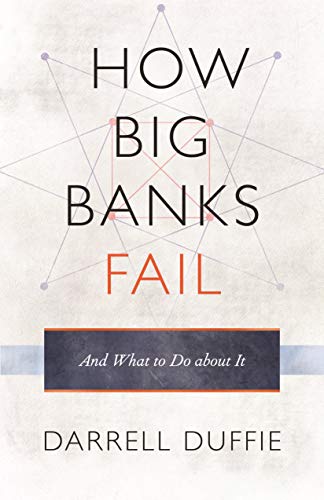
Synopsis
A leading finance expert explains how and why big banks fail--and what can be done to prevent it
Dealer banks--that is, large banks that deal in securities and derivatives, such as J. P. Morgan and Goldman Sachs--are of a size and complexity that sharply distinguish them from typical commercial banks. When they fail, as we saw in the global financial crisis, they pose significant risks to our financial system and the world economy. How Big Banks Fail and What to Do about It examines how these banks collapse and how we can prevent the need to bail them out. In sharp, clinical detail, Darrell Duffie walks readers step-by-step through the mechanics of large-bank failures. He identifies where the cracks first appear when a dealer bank is weakened by severe trading losses, and demonstrates how the bank's relationships with its customers and business partners abruptly change when its solvency is threatened. As others seek to reduce their exposure to the dealer bank, the bank is forced to signal its strength by using up its slim stock of remaining liquid capital. Duffie shows how the key mechanisms in a dealer bank's collapse--such as Lehman Brothers' failure in 2008--derive from special institutional frameworks and regulations that influence the flight of short-term secured creditors, hedge-fund clients, derivatives counterparties, and most devastatingly, the loss of clearing and settlement services. How Big Banks Fail and What to Do about It reveals why today's regulatory and institutional frameworks for mitigating large-bank failures don't address the special risks to our financial system that are posed by dealer banks, and outlines the improvements in regulations and market institutions that are needed to address these systemic risks.Les informations fournies dans la section « Synopsis » peuvent faire référence à une autre édition de ce titre.
À propos de l'auteur
Darrell Duffie is the Dean Witter Distinguished Professor of Finance at Stanford University's Graduate School of Business. He is the author of Dynamic Asset Pricing Theory and the coauthor of Credit Risk: Pricing, Measurement, and Management (both Princeton).
Les informations fournies dans la section « A propos du livre » peuvent faire référence à une autre édition de ce titre.
Résultats de recherche pour How Big Banks Fail and What to Do About It

Image d'archives
How Big Banks Fail and What to Do about It
Edité par
Princeton University Press, 2010
ISBN 10 : 0691148856
ISBN 13 : 9780691148854
Ancien ou d'occasion
Couverture rigide
Vendeur : Better World Books, Mishawaka, IN, Etats-Unis
Évaluation du vendeur 5 sur 5 étoiles

Etat : Good. Former library copy. Pages intact with minimal writing/highlighting. The binding may be loose and creased. Dust jackets/supplements are not included. Includes library markings. Stock photo provided. Product includes identifying sticker. Better World Books: Buy Books. Do Good. N° de réf. du vendeur 5758129-6
Acheter D'occasion
EUR 20,45
Livraison gratuite
Expédition nationale : Etats-Unis
Expédition nationale : Etats-Unis
Quantité disponible : 1 disponible(s)
Image d'archives
How Big Banks Fail, and What to Do About It
Edité par
Princeton University Press, 2011
ISBN 10 : 0691148856
ISBN 13 : 9780691148854
Ancien ou d'occasion
Couverture rigide
Vendeur : Anybook.com, Lincoln, Royaume-Uni
Évaluation du vendeur 5 sur 5 étoiles
Etat : Fair. This is an ex-library book and may have the usual library/used-book markings inside.This book has hardback covers. Book contains pencil markings With owner's name inside cover. In fair condition, suitable as a study copy. Dust jacket in good condition. Library sticker on front cover. Please note the Image in this listing is a stock photo and may not match the covers of the actual item,350grams, ISBN:9780691148854. N° de réf. du vendeur 9701739
Acheter D'occasion
EUR 14,97
Expédition à EUR 15,30
Expédition depuis Royaume-Uni vers Etats-Unis
Expédition depuis Royaume-Uni vers Etats-Unis
Quantité disponible : 1 disponible(s)
Image d'archives
How Big Banks Fail and What to Do about It
Edité par
Princeton University Press, 2010
ISBN 10 : 0691148856
ISBN 13 : 9780691148854
Ancien ou d'occasion
Couverture rigide
Vendeur : HPB-Red, Dallas, TX, Etats-Unis
Évaluation du vendeur 5 sur 5 étoiles
hardcover. Etat : Good. Connecting readers with great books since 1972! Used textbooks may not include companion materials such as access codes, etc. May have some wear or writing/highlighting. We ship orders daily and Customer Service is our top priority! N° de réf. du vendeur S_485551518
Acheter D'occasion
EUR 29,83
Expédition à EUR 3,33
Expédition nationale : Etats-Unis
Expédition nationale : Etats-Unis
Quantité disponible : 1 disponible(s)
Image fournie par le vendeur
How Big Banks Fail and What to Do About It
Edité par
Princeton University Press, 2010
ISBN 10 : 0691148856
ISBN 13 : 9780691148854
Neuf
Couverture rigide
Vendeur : GreatBookPrices, Columbia, MD, Etats-Unis
Évaluation du vendeur 5 sur 5 étoiles
Etat : New. N° de réf. du vendeur 8957827-n
Acheter neuf
EUR 42,90
Expédition à EUR 2,35
Expédition nationale : Etats-Unis
Expédition nationale : Etats-Unis
Quantité disponible : 3 disponible(s)
Image d'archives
How Big Banks Fail and What to Do about It
Edité par
Princeton University Press, 2010
ISBN 10 : 0691148856
ISBN 13 : 9780691148854
Neuf
Couverture rigide
Vendeur : PBShop.store UK, Fairford, GLOS, Royaume-Uni
Évaluation du vendeur 5 sur 5 étoiles
HRD. Etat : New. New Book. Shipped from UK. Established seller since 2000. N° de réf. du vendeur WP-9780691148854
Acheter neuf
EUR 40,40
Expédition à EUR 4,88
Expédition depuis Royaume-Uni vers Etats-Unis
Expédition depuis Royaume-Uni vers Etats-Unis
Quantité disponible : 3 disponible(s)
Image fournie par le vendeur
How Big Banks Fail and What to Do about It
Edité par
Princeton University Press, US, 2010
ISBN 10 : 0691148856
ISBN 13 : 9780691148854
Neuf
Couverture rigide
Vendeur : Rarewaves USA, HEBRON, KY, Etats-Unis
Évaluation du vendeur 5 sur 5 étoiles
Hardback. Etat : New. Dealer banks--that is, large banks that deal in securities and derivatives, such as J. P. Morgan and Goldman Sachs--are of a size and complexity that sharply distinguish them from typical commercial banks. When they fail, as we saw in the global financial crisis, they pose significant risks to our financial system and the world economy. How Big Banks Fail and What to Do about It examines how these banks collapse and how we can prevent the need to bail them out. In sharp, clinical detail, Darrell Duffie walks readers step-by-step through the mechanics of large-bank failures. He identifies where the cracks first appear when a dealer bank is weakened by severe trading losses, and demonstrates how the bank's relationships with its customers and business partners abruptly change when its solvency is threatened. As others seek to reduce their exposure to the dealer bank, the bank is forced to signal its strength by using up its slim stock of remaining liquid capital.Duffie shows how the key mechanisms in a dealer bank's collapse--such as Lehman Brothers' failure in 2008--derive from special institutional frameworks and regulations that influence the flight of short-term secured creditors, hedge-fund clients, derivatives counterparties, and most devastatingly, the loss of clearing and settlement services. How Big Banks Fail and What to Do about It reveals why today's regulatory and institutional frameworks for mitigating large-bank failures don't address the special risks to our financial system that are posed by dealer banks, and outlines the improvements in regulations and market institutions that are needed to address these systemic risks. N° de réf. du vendeur LU-9780691148854
Acheter neuf
EUR 45,31
Livraison gratuite
Expédition nationale : Etats-Unis
Expédition nationale : Etats-Unis
Quantité disponible : 17 disponible(s)
Image d'archives
How Big Banks Fail and What to Do about It
Edité par
Princeton University Press, 2010
ISBN 10 : 0691148856
ISBN 13 : 9780691148854
Neuf
Couverture rigide
Vendeur : PBShop.store US, Wood Dale, IL, Etats-Unis
Évaluation du vendeur 5 sur 5 étoiles
HRD. Etat : New. New Book. Shipped from UK. Established seller since 2000. N° de réf. du vendeur WP-9780691148854
Acheter neuf
EUR 45,63
Livraison gratuite
Expédition nationale : Etats-Unis
Expédition nationale : Etats-Unis
Quantité disponible : 3 disponible(s)
Image fournie par le vendeur
How Big Banks Fail and What to Do About It
Edité par
Princeton University Press, 2010
ISBN 10 : 0691148856
ISBN 13 : 9780691148854
Ancien ou d'occasion
Couverture rigide
Vendeur : GreatBookPrices, Columbia, MD, Etats-Unis
Évaluation du vendeur 5 sur 5 étoiles
Etat : As New. Unread book in perfect condition. N° de réf. du vendeur 8957827
Acheter D'occasion
EUR 44,19
Expédition à EUR 2,35
Expédition nationale : Etats-Unis
Expédition nationale : Etats-Unis
Quantité disponible : 3 disponible(s)
Image fournie par le vendeur
How Big Banks Fail and What to Do about It
Edité par
Princeton University Press, US, 2010
ISBN 10 : 0691148856
ISBN 13 : 9780691148854
Neuf
Couverture rigide
Vendeur : Rarewaves.com USA, London, LONDO, Royaume-Uni
Évaluation du vendeur 5 sur 5 étoiles
Hardback. Etat : New. Dealer banks--that is, large banks that deal in securities and derivatives, such as J. P. Morgan and Goldman Sachs--are of a size and complexity that sharply distinguish them from typical commercial banks. When they fail, as we saw in the global financial crisis, they pose significant risks to our financial system and the world economy. How Big Banks Fail and What to Do about It examines how these banks collapse and how we can prevent the need to bail them out. In sharp, clinical detail, Darrell Duffie walks readers step-by-step through the mechanics of large-bank failures. He identifies where the cracks first appear when a dealer bank is weakened by severe trading losses, and demonstrates how the bank's relationships with its customers and business partners abruptly change when its solvency is threatened. As others seek to reduce their exposure to the dealer bank, the bank is forced to signal its strength by using up its slim stock of remaining liquid capital.Duffie shows how the key mechanisms in a dealer bank's collapse--such as Lehman Brothers' failure in 2008--derive from special institutional frameworks and regulations that influence the flight of short-term secured creditors, hedge-fund clients, derivatives counterparties, and most devastatingly, the loss of clearing and settlement services. How Big Banks Fail and What to Do about It reveals why today's regulatory and institutional frameworks for mitigating large-bank failures don't address the special risks to our financial system that are posed by dealer banks, and outlines the improvements in regulations and market institutions that are needed to address these systemic risks. N° de réf. du vendeur LU-9780691148854
Acheter neuf
EUR 47,12
Livraison gratuite
Expédition depuis Royaume-Uni vers Etats-Unis
Expédition depuis Royaume-Uni vers Etats-Unis
Quantité disponible : 2 disponible(s)
Image d'archives
How Big Banks Fail and What to Do About It (eng)
Edité par
Princeton University Press, 2010
ISBN 10 : 0691148856
ISBN 13 : 9780691148854
Neuf
Couverture rigide
Vendeur : Brook Bookstore On Demand, Napoli, NA, Italie
Évaluation du vendeur 5 sur 5 étoiles
Etat : new. N° de réf. du vendeur 6132b4aabf0e4958c247ea912d49deb7
Acheter neuf
EUR 45,37
Expédition à EUR 5,50
Expédition depuis Italie vers Etats-Unis
Expédition depuis Italie vers Etats-Unis
Quantité disponible : 3 disponible(s)