
Articles liés à Braintrust: What Neuroscience Tells Us About Morality
Braintrust: What Neuroscience Tells Us About Morality - Couverture souple
Livre 30 sur 61: Princeton Science Library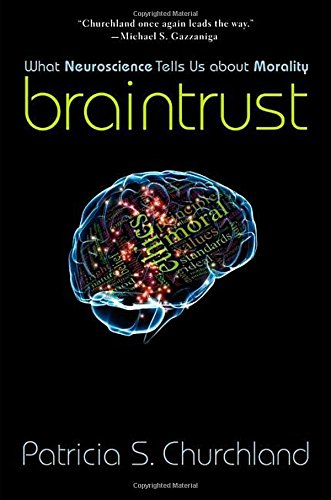
Synopsis
What is morality? Where does it come from? And why do most of us heed its call most of the time? In Braintrust, neurophilosophy pioneer Patricia Churchland argues that morality originates in the biology of the brain. She describes the "neurobiological platform of bonding" that, modified by evolutionary pressures and cultural values, has led to human styles of moral behavior. The result is a provocative genealogy of morals that asks us to reevaluate the priority given to religion, absolute rules, and pure reason in accounting for the basis of morality. Moral values, Churchland argues, are rooted in a behavior common to all mammals--the caring for offspring. The evolved structure, processes, and chemistry of the brain incline humans to strive not only for self-preservation but for the well-being of allied selves--first offspring, then mates, kin, and so on, in wider and wider "caring" circles. Separation and exclusion cause pain, and the company of loved ones causes pleasure; responding to feelings of social pain and pleasure, brains adjust their circuitry to local customs. In this way, caring is apportioned, conscience molded, and moral intuitions instilled. A key part of the story is oxytocin, an ancient body-and-brain molecule that, by decreasing the stress response, allows humans to develop the trust in one another necessary for the development of close-knit ties, social institutions, and morality. A major new account of what really makes us moral, Braintrust challenges us to reconsider the origins of some of our most cherished values.
Les informations fournies dans la section « Synopsis » peuvent faire référence à une autre édition de ce titre.
À propos de l'auteur
Patricia S. Churchland is professor emerita of philosophy at the University of California, San Diego, and an adjunct professor at the Salk Institute. Her books include Brain-Wise and Neurophilosophy. In 1991, she was awarded a MacArthur Fellowship.
Les informations fournies dans la section « A propos du livre » peuvent faire référence à une autre édition de ce titre.
Résultats de recherche pour Braintrust: What Neuroscience Tells Us About Morality

Image d'archives
Braintrust: What Neuroscience Tells Us about Morality
Edité par
Princeton University Press, 2012
ISBN 10 : 0691156344
ISBN 13 : 9780691156347
Ancien ou d'occasion
paperback
Vendeur : Orion Tech, Kingwood, TX, Etats-Unis
Évaluation du vendeur 5 sur 5 étoiles

paperback. Etat : Very Good. N° de réf. du vendeur 0691156344-2-35588847
Acheter D'occasion
EUR 3,69
Livraison gratuite
Expédition nationale : Etats-Unis
Expédition nationale : Etats-Unis
Quantité disponible : 1 disponible(s)
Image d'archives
Braintrust: What Neuroscience Tells Us about Morality
Edité par
Princeton University Press, 2012
ISBN 10 : 0691156344
ISBN 13 : 9780691156347
Ancien ou d'occasion
Paperback
Vendeur : World of Books (was SecondSale), Montgomery, IL, Etats-Unis
Évaluation du vendeur 5 sur 5 étoiles
Paperback. Etat : Good. What is morality? Where does it come from? And why do most of us heed its call most of the time? In Braintrust, neurophilosophy pioneer Patricia Churchland argues that morality originates in the biology of the brain. She describes the "neurobiological platform of bonding" that, modified by evolutionary pressures and cultural values, has led to human styles of moral behavior. The result is a provocative genealogy of morals that asks us to reevaluate the priority given to religion, absolute rules, and pure reason in accounting for the basis of morality. Moral values, Churchland argues, are rooted in a behavior common to all mammals--the caring for offspring. The evolved structure, processes, and chemistry of the brain incline humans to strive not only for self-preservation but for the well-being of allied selves--first offspring, then mates, kin, and so on, in wider and wider "caring" circles. Separation and exclusion cause pain, and the company of loved ones causes pleasure; responding to feelings of social pain and pleasure, brains adjust their circuitry to local customs. In this way, caring is apportioned, conscience molded, and moral intuitions instilled. A key part of the story is oxytocin, an ancient body-and-brain molecule that, by decreasing the stress response, allows humans to develop the trust in one another necessary for the development of close-knit ties, social institutions, and morality. A major new account of what really makes us moral, Braintrust challenges us to reconsider the origins of some of our most cherished values. N° de réf. du vendeur 00103460710
Acheter D'occasion
EUR 3,92
Livraison gratuite
Expédition nationale : Etats-Unis
Expédition nationale : Etats-Unis
Quantité disponible : 2 disponible(s)
Image d'archives
Braintrust: What Neuroscience Tells Us about Morality
Edité par
Princeton University Press (edition Reprint), 2012
ISBN 10 : 0691156344
ISBN 13 : 9780691156347
Ancien ou d'occasion
Paperback
Vendeur : BooksRun, Philadelphia, PA, Etats-Unis
Évaluation du vendeur 5 sur 5 étoiles
Paperback. Etat : Very Good. Reprint. It's a well-cared-for item that has seen limited use. The item may show minor signs of wear. All the text is legible, with all pages included. It may have slight markings and/or highlighting. N° de réf. du vendeur 0691156344-8-1
Acheter D'occasion
EUR 4,78
Livraison gratuite
Expédition nationale : Etats-Unis
Expédition nationale : Etats-Unis
Quantité disponible : 1 disponible(s)
Image d'archives
Braintrust: What Neuroscience Tells Us about Morality
Edité par
Princeton University Press, 2012
ISBN 10 : 0691156344
ISBN 13 : 9780691156347
Ancien ou d'occasion
Paperback
Vendeur : World of Books Inc, Montgomery, IL, Etats-Unis
Évaluation du vendeur 4 sur 5 étoiles

Paperback. Etat : Good. What is morality? Where does it come from? And why do most of us heed its call most of the time? In Braintrust, neurophilosophy pioneer Patricia Churchland argues that morality originates in the biology of the brain. She describes the "neurobiological platform of bonding" that, modified by evolutionary pressures and cultural values, has led to human styles of moral behavior. The result is a provocative genealogy of morals that asks us to reevaluate the priority given to religion, absolute rules, and pure reason in accounting for the basis of morality. Moral values, Churchland argues, are rooted in a behavior common to all mammals--the caring for offspring. The evolved structure, processes, and chemistry of the brain incline humans to strive not only for self-preservation but for the well-being of allied selves--first offspring, then mates, kin, and so on, in wider and wider "caring" circles. Separation and exclusion cause pain, and the company of loved ones causes pleasure; responding to feelings of social pain and pleasure, brains adjust their circuitry to local customs. In this way, caring is apportioned, conscience molded, and moral intuitions instilled. A key part of the story is oxytocin, an ancient body-and-brain molecule that, by decreasing the stress response, allows humans to develop the trust in one another necessary for the development of close-knit ties, social institutions, and morality. A major new account of what really makes us moral, Braintrust challenges us to reconsider the origins of some of our most cherished values. N° de réf. du vendeur CIN0691156344G
Acheter D'occasion
EUR 5,74
Livraison gratuite
Expédition nationale : Etats-Unis
Expédition nationale : Etats-Unis
Quantité disponible : 2 disponible(s)
Image d'archives
Braintrust: What Neuroscience Tells Us about Morality
Edité par
Princeton University Press, 2012
ISBN 10 : 0691156344
ISBN 13 : 9780691156347
Ancien ou d'occasion
Paperback
Vendeur : ThriftBooks-Atlanta, AUSTELL, GA, Etats-Unis
Évaluation du vendeur 5 sur 5 étoiles
Paperback. Etat : Good. No Jacket. Pages can have notes/highlighting. Spine may show signs of wear. ~ ThriftBooks: Read More, Spend Less. N° de réf. du vendeur G0691156344I3N00
Acheter D'occasion
EUR 5,90
Livraison gratuite
Expédition nationale : Etats-Unis
Expédition nationale : Etats-Unis
Quantité disponible : 1 disponible(s)
Image d'archives
Braintrust: What Neuroscience Tells Us about Morality
Edité par
Princeton University Press, 2012
ISBN 10 : 0691156344
ISBN 13 : 9780691156347
Ancien ou d'occasion
Paperback
Vendeur : ThriftBooks-Atlanta, AUSTELL, GA, Etats-Unis
Évaluation du vendeur 5 sur 5 étoiles
Paperback. Etat : Fair. No Jacket. Readable copy. Pages may have considerable notes/highlighting. ~ ThriftBooks: Read More, Spend Less. N° de réf. du vendeur G0691156344I5N00
Acheter D'occasion
EUR 5,90
Livraison gratuite
Expédition nationale : Etats-Unis
Expédition nationale : Etats-Unis
Quantité disponible : 1 disponible(s)
Image d'archives
Braintrust : What Neuroscience Tells Us about Morality
Edité par
Princeton University Press, 2012
ISBN 10 : 0691156344
ISBN 13 : 9780691156347
Ancien ou d'occasion
Couverture souple
Vendeur : Better World Books, Mishawaka, IN, Etats-Unis
Évaluation du vendeur 5 sur 5 étoiles
Etat : Good. Reprint. Former library copy. Pages intact with minimal writing/highlighting. The binding may be loose and creased. Dust jackets/supplements are not included. Includes library markings. Stock photo provided. Product includes identifying sticker. Better World Books: Buy Books. Do Good. N° de réf. du vendeur 13024374-75
Acheter D'occasion
EUR 6,12
Livraison gratuite
Expédition nationale : Etats-Unis
Expédition nationale : Etats-Unis
Quantité disponible : 1 disponible(s)
Image d'archives
Braintrust : What Neuroscience Tells Us about Morality
Edité par
Princeton University Press, 2012
ISBN 10 : 0691156344
ISBN 13 : 9780691156347
Ancien ou d'occasion
Couverture souple
Vendeur : Better World Books: West, Reno, NV, Etats-Unis
Évaluation du vendeur 5 sur 5 étoiles
Etat : Good. Reprint. Former library copy. Pages intact with minimal writing/highlighting. The binding may be loose and creased. Dust jackets/supplements are not included. Includes library markings. Stock photo provided. Product includes identifying sticker. Better World Books: Buy Books. Do Good. N° de réf. du vendeur 13024374-75
Acheter D'occasion
EUR 6,12
Livraison gratuite
Expédition nationale : Etats-Unis
Expédition nationale : Etats-Unis
Quantité disponible : 1 disponible(s)
Image d'archives
Braintrust : What Neuroscience Tells Us about Morality
Edité par
Princeton University Press, 2012
ISBN 10 : 0691156344
ISBN 13 : 9780691156347
Ancien ou d'occasion
Couverture souple
Vendeur : Better World Books, Mishawaka, IN, Etats-Unis
Évaluation du vendeur 5 sur 5 étoiles
Etat : Fine. Reprint. Used book that is in almost brand-new condition. May contain a remainder mark. Better World Books: Buy Books. Do Good. N° de réf. du vendeur 18739473-6
Acheter D'occasion
EUR 6,12
Livraison gratuite
Expédition nationale : Etats-Unis
Expédition nationale : Etats-Unis
Quantité disponible : 1 disponible(s)
Image d'archives
Braintrust: What Neuroscience Tells Us about Morality
Edité par
Princeton University Press, 2012
ISBN 10 : 0691156344
ISBN 13 : 9780691156347
Ancien ou d'occasion
Paperback
Vendeur : Academybookshop, Long Island City, NY, Etats-Unis
Évaluation du vendeur 4 sur 5 étoiles
Paperback. Etat : Fair. This book has some DAMAGE, which is usually a tear, a sc dents, bent or stainon the edge, pages are clean, no missing pages. N° de réf. du vendeur C-gj24-07263
Acheter D'occasion
EUR 5,09
Expédition à EUR 3,52
Expédition nationale : Etats-Unis
Expédition nationale : Etats-Unis
Quantité disponible : 1 disponible(s)