
Articles liés à The Recursive Mind: The Origins of Human Language,...
Synopsis
A groundbreaking theory of what makes the human mind unique
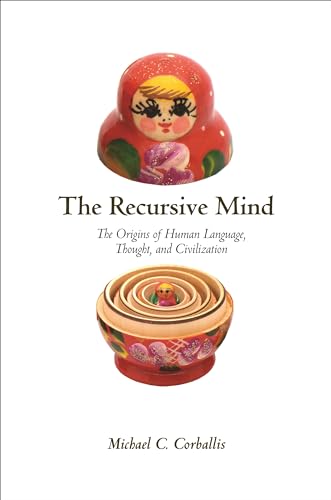
The Recursive Mind challenges the commonly held notion that language is what makes us uniquely human. In this compelling book, Michael Corballis argues that what distinguishes us in the animal kingdom is our capacity for recursion: the ability to embed our thoughts within other thoughts. "I think, therefore I am," is an example of recursive thought, because the thinker has inserted himself into his thought. Recursion enables us to conceive of our own minds and the minds of others. It also gives us the power of mental "time travel"-the ability to insert past experiences, or imagined future ones, into present consciousness. Drawing on neuroscience, psychology, animal behavior, anthropology, and archaeology, Corballis demonstrates how these recursive structures led to the emergence of language and speech, which ultimately enabled us to share our thoughts, plan with others, and reshape our environment to better reflect our creative imaginations. He shows how the recursive mind was critical to survival in the harsh conditions of the Pleistocene epoch, and how it evolved to foster social cohesion. He traces how language itself adapted to recursive thinking, first through manual gestures, then later, with the emergence of Homo sapiens, vocally. Toolmaking and manufacture arose, and the application of recursive principles to these activities in turn led to the complexities of human civilization, the extinction of fellow large-brained hominins like the Neandertals, and our species' supremacy over the physical world.Les informations fournies dans la section « Synopsis » peuvent faire référence à une autre édition de ce titre.
À propos de l'auteur
Michael C. Corballis (1936-2021) was professor emeritus of psychology at the University of Auckland. His books include From Hand to Mouth: The Origins of Language (Princeton) and A Very Short Tour of the Mind: 21 Short Walks around the Human Brain.
Les informations fournies dans la section « A propos du livre » peuvent faire référence à une autre édition de ce titre.
Résultats de recherche pour The Recursive Mind: The Origins of Human Language,...

Image d'archives
The Recursive Mind: The Origins of Human Language, Thought, and Civilization - Updated Edition
Edité par
Princeton University Press, 2014
ISBN 10 : 0691160945
ISBN 13 : 9780691160948
Ancien ou d'occasion
Couverture souple
Vendeur : St Vincent de Paul of Lane County, Eugene, OR, Etats-Unis
Évaluation du vendeur 5 sur 5 étoiles

Etat : Good. COVER SHOWS SOME LIGHT SMUDGING/DIRT STAINING FROM HANDLING. paperback 100% of proceeds go to charity! Good condition with all pages in tact. Item shows signs of use and may have cosmetic defects. N° de réf. du vendeur D-03-5880
Acheter D'occasion
EUR 4,60
Expédition à EUR 3,57
Expédition nationale : Etats-Unis
Expédition nationale : Etats-Unis
Quantité disponible : 1 disponible(s)
Image d'archives
The Recursive Mind: The Origins of Human Language, Thought, and Civilization - Updated Edition
Edité par
Princeton University Press, 2014
ISBN 10 : 0691160945
ISBN 13 : 9780691160948
Ancien ou d'occasion
paperback
Vendeur : Half Price Books Inc., Dallas, TX, Etats-Unis
Évaluation du vendeur 5 sur 5 étoiles
paperback. Etat : Very Good. Connecting readers with great books since 1972! Used books may not include companion materials, and may have some shelf wear or limited writing. We ship orders daily and Customer Service is our top priority! N° de réf. du vendeur S_480472739
Acheter D'occasion
EUR 6,58
Expédition à EUR 3,36
Expédition nationale : Etats-Unis
Expédition nationale : Etats-Unis
Quantité disponible : 1 disponible(s)
Image fournie par le vendeur
The Recursive Mind: The Origins of Human Language, Thought, and Civilization - Updated Edition
Edité par
Princeton University Press, 2014
ISBN 10 : 0691160945
ISBN 13 : 9780691160948
Ancien ou d'occasion
Couverture souple
Vendeur : Goodwill of Greater Milwaukee and Chicago, Racine, WI, Etats-Unis
Évaluation du vendeur 5 sur 5 étoiles
Etat : acceptable. Book is considered to be in acceptable condition. The actual cover image may not match the stock photo. Book may have one or more of the following defects: noticeable wear on the cover dust jacket or spine; curved, dog eared or creased page s ; writing or highlighting inside or on the edges; sticker s or other adhesive on cover; CD DVD may not be included; and book may be a former library copy. N° de réf. du vendeur SEWV.0691160945.A
Acheter D'occasion
EUR 8,73
Expédition à EUR 2,68
Expédition nationale : Etats-Unis
Expédition nationale : Etats-Unis
Quantité disponible : 1 disponible(s)
Image d'archives
Recursive Mind : The Origins of Human Language, Thought, and Civilization
Edité par
Princeton University Press, 2014
ISBN 10 : 0691160945
ISBN 13 : 9780691160948
Neuf
Couverture souple
Vendeur : GreatBookPrices, Columbia, MD, Etats-Unis
Évaluation du vendeur 5 sur 5 étoiles
Etat : New. N° de réf. du vendeur 20349675-n
Acheter neuf
EUR 24,07
Expédition à EUR 2,36
Expédition nationale : Etats-Unis
Expédition nationale : Etats-Unis
Quantité disponible : 2 disponible(s)
Image d'archives
The Recursive Mind
Vendeur : PBShop.store US, Wood Dale, IL, Etats-Unis
Évaluation du vendeur 5 sur 5 étoiles
PAP. Etat : New. New Book. Shipped from UK. Established seller since 2000. N° de réf. du vendeur WP-9780691160948
Acheter neuf
EUR 26,52
Livraison gratuite
Expédition nationale : Etats-Unis
Expédition nationale : Etats-Unis
Quantité disponible : 3 disponible(s)
Image fournie par le vendeur
The Recursive Mind
Edité par
Princeton University Press, US, 2014
ISBN 10 : 0691160945
ISBN 13 : 9780691160948
Neuf
Paperback
Vendeur : Rarewaves USA, HEBRON, KY, Etats-Unis
Évaluation du vendeur 5 sur 5 étoiles
Paperback. Etat : New. Updated Edition. The Recursive Mind challenges the commonly held notion that language is what makes us uniquely human. In this compelling book, Michael Corballis argues that what distinguishes us in the animal kingdom is our capacity for recursion: the ability to embed our thoughts within other thoughts. "I think, therefore I am," is an example of recursive thought, because the thinker has inserted himself into his thought. Recursion enables us to conceive of our own minds and the minds of others. It also gives us the power of mental "time travel"--the ability to insert past experiences, or imagined future ones, into present consciousness. Drawing on neuroscience, psychology, animal behavior, anthropology, and archaeology, Corballis demonstrates how these recursive structures led to the emergence of language and speech, which ultimately enabled us to share our thoughts, plan with others, and reshape our environment to better reflect our creative imaginations. He shows how the recursive mind was critical to survival in the harsh conditions of the Pleistocene epoch, and how it evolved to foster social cohesion.He traces how language itself adapted to recursive thinking, first through manual gestures, then later, with the emergence of Homo sapiens, vocally. Toolmaking and manufacture arose, and the application of recursive principles to these activities in turn led to the complexities of human civilization, the extinction of fellow large-brained hominins like the Neandertals, and our species' supremacy over the physical world. N° de réf. du vendeur LU-9780691160948
Acheter neuf
EUR 27,29
Livraison gratuite
Expédition nationale : Etats-Unis
Expédition nationale : Etats-Unis
Quantité disponible : Plus de 20 disponibles
Image fournie par le vendeur
Recursive Mind : The Origins of Human Language, Thought, and Civilization
Edité par
Princeton University Press, 2014
ISBN 10 : 0691160945
ISBN 13 : 9780691160948
Ancien ou d'occasion
Couverture souple
Vendeur : GreatBookPrices, Columbia, MD, Etats-Unis
Évaluation du vendeur 5 sur 5 étoiles
Etat : As New. Unread book in perfect condition. N° de réf. du vendeur 20349675
Acheter D'occasion
EUR 25,35
Expédition à EUR 2,36
Expédition nationale : Etats-Unis
Expédition nationale : Etats-Unis
Quantité disponible : 2 disponible(s)
Image fournie par le vendeur
The Recursive Mind: The Origins of Human Language, Thought, and Civilization (Paperback or Softback)
Edité par
Princeton University Press 4/27/2014, 2014
ISBN 10 : 0691160945
ISBN 13 : 9780691160948
Neuf
Paperback or Softback
Vendeur : BargainBookStores, Grand Rapids, MI, Etats-Unis
Évaluation du vendeur 5 sur 5 étoiles
Paperback or Softback. Etat : New. The Recursive Mind: The Origins of Human Language, Thought, and Civilization. Book. N° de réf. du vendeur BBS-9780691160948
Acheter neuf
EUR 29,45
Livraison gratuite
Expédition nationale : Etats-Unis
Expédition nationale : Etats-Unis
Quantité disponible : 5 disponible(s)
Image fournie par le vendeur
The Recursive Mind
Edité par
Princeton University Press, US, 2014
ISBN 10 : 0691160945
ISBN 13 : 9780691160948
Neuf
Paperback
Vendeur : Rarewaves.com USA, London, LONDO, Royaume-Uni
Évaluation du vendeur 5 sur 5 étoiles
Paperback. Etat : New. Updated Edition. The Recursive Mind challenges the commonly held notion that language is what makes us uniquely human. In this compelling book, Michael Corballis argues that what distinguishes us in the animal kingdom is our capacity for recursion: the ability to embed our thoughts within other thoughts. "I think, therefore I am," is an example of recursive thought, because the thinker has inserted himself into his thought. Recursion enables us to conceive of our own minds and the minds of others. It also gives us the power of mental "time travel"--the ability to insert past experiences, or imagined future ones, into present consciousness. Drawing on neuroscience, psychology, animal behavior, anthropology, and archaeology, Corballis demonstrates how these recursive structures led to the emergence of language and speech, which ultimately enabled us to share our thoughts, plan with others, and reshape our environment to better reflect our creative imaginations. He shows how the recursive mind was critical to survival in the harsh conditions of the Pleistocene epoch, and how it evolved to foster social cohesion.He traces how language itself adapted to recursive thinking, first through manual gestures, then later, with the emergence of Homo sapiens, vocally. Toolmaking and manufacture arose, and the application of recursive principles to these activities in turn led to the complexities of human civilization, the extinction of fellow large-brained hominins like the Neandertals, and our species' supremacy over the physical world. N° de réf. du vendeur LU-9780691160948
Acheter neuf
EUR 29,69
Livraison gratuite
Expédition depuis Royaume-Uni vers Etats-Unis
Expédition depuis Royaume-Uni vers Etats-Unis
Quantité disponible : 2 disponible(s)
Image d'archives
The Recursive Mind: The Origins of Human Language, Thought, and Civilization
Edité par
Princeton University Press 2014-04-27, 2014
ISBN 10 : 0691160945
ISBN 13 : 9780691160948
Neuf
Paperback
Vendeur : Chiron Media, Wallingford, Royaume-Uni
Évaluation du vendeur 5 sur 5 étoiles
Paperback. Etat : New. Brand new book, sourced directly from publisher. Dispatch time is 3-4 days from our warehouse. Book will be sent in robust, secure packaging to ensure it reaches you securely. N° de réf. du vendeur 6666-WLY-9780691160948
Acheter neuf
EUR 25,55
Expédition à EUR 5,96
Expédition depuis Royaume-Uni vers Etats-Unis
Expédition depuis Royaume-Uni vers Etats-Unis
Quantité disponible : 1 disponible(s)