
Articles liés à The Work of the Dead: A Cultural History of Mortal...
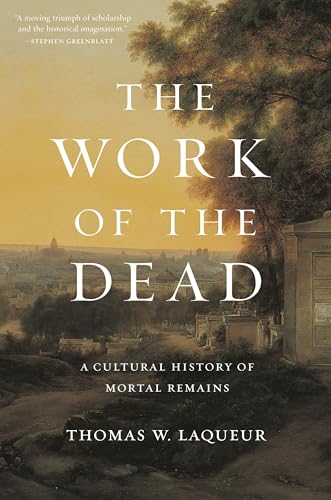
Synopsis
The meaning of our concern for mortal remains--from antiquity through the twentieth century
The Greek philosopher Diogenes said that when he died his body should be tossed over the city walls for beasts to scavenge. Why should he or anyone else care what became of his corpse? In The Work of the Dead, acclaimed cultural historian Thomas Laqueur examines why humanity has universally rejected Diogenes's argument. No culture has been indifferent to mortal remains. Even in our supposedly disenchanted scientific age, the dead body still matters--for individuals, communities, and nations. A remarkably ambitious history, The Work of the Dead offers a compelling and richly detailed account of how and why the living have cared for the dead, from antiquity to the twentieth century. The book draws on a vast range of sources--from mortuary archaeology, medical tracts, letters, songs, poems, and novels to painting and landscapes in order to recover the work that the dead do for the living: making human communities that connect the past and the future. Laqueur shows how the churchyard became the dominant resting place of the dead during the Middle Ages and why the cemetery largely supplanted it during the modern period. He traces how and why since the nineteenth century we have come to gather the names of the dead on great lists and memorials and why being buried without a name has become so disturbing. And finally, he tells how modern cremation, begun as a fantasy of stripping death of its history, ultimately failed--and how even the ashes of the victims of the Holocaust have been preserved in culture. A fascinating chronicle of how we shape the dead and are in turn shaped by them, this is a landmark work of cultural history.Les informations fournies dans la section « Synopsis » peuvent faire référence à une autre édition de ce titre.
À propos de l'auteur
Thomas W. Laqueur is the Helen Fawcett Professor of History at the University of California, Berkeley. His books include Making Sex: Body and Gender from the Greeks to Freud, Solitary Sex: A Cultural History of Masturbation, and Religion and Respectability: Sunday Schools and Working Class Culture, 1780-1850. He is a regular contributor to the London Review of Books.
Les informations fournies dans la section « A propos du livre » peuvent faire référence à une autre édition de ce titre.
Résultats de recherche pour The Work of the Dead: A Cultural History of Mortal...

Image d'archives
The Work of the Dead: A Cultural History of Mortal Remains
Edité par
Princeton University Press, 2018
ISBN 10 : 0691180938
ISBN 13 : 9780691180939
Ancien ou d'occasion
paperback
Vendeur : HPB-Red, Dallas, TX, Etats-Unis
Évaluation du vendeur 5 sur 5 étoiles

paperback. Etat : Good. Connecting readers with great books since 1972! Used textbooks may not include companion materials such as access codes, etc. May have some wear or writing/highlighting. We ship orders daily and Customer Service is our top priority! N° de réf. du vendeur S_479630129
Acheter D'occasion
EUR 14,93
Expédition à EUR 3,35
Expédition nationale : Etats-Unis
Expédition nationale : Etats-Unis
Quantité disponible : 1 disponible(s)
Image d'archives
The Work of the Dead: A Cultural History of Mortal Remains
Edité par
Princeton University Press, 2018
ISBN 10 : 0691180938
ISBN 13 : 9780691180939
Ancien ou d'occasion
Paperback
Vendeur : World of Books (was SecondSale), Montgomery, IL, Etats-Unis
Évaluation du vendeur 5 sur 5 étoiles
Paperback. Etat : Very Good. The meaning of our concern for mortal remains-from antiquity through the twentieth century The Greek philosopher Diogenes said that when he died his body should be tossed over the city walls for beasts to scavenge. Why should he or anyone else care what became of his corpse? In The Work of the Dead, acclaimed cultural historian Thomas Laqueur ex. N° de réf. du vendeur 00105898168
Acheter D'occasion
EUR 18,37
Livraison gratuite
Expédition nationale : Etats-Unis
Expédition nationale : Etats-Unis
Quantité disponible : 2 disponible(s)
Image d'archives
The Work of the Dead: A Cultural History of Mortal Remains
Edité par
Princeton University Press, 2018
ISBN 10 : 0691180938
ISBN 13 : 9780691180939
Ancien ou d'occasion
Paperback
Vendeur : World of Books Inc, Montgomery, IL, Etats-Unis
Évaluation du vendeur 4 sur 5 étoiles

Paperback. Etat : Very Good. The meaning of our concern for mortal remains-from antiquity through the twentieth century The Greek philosopher Diogenes said that when he died his body should be tossed over the city walls for beasts to scavenge. Why should he or anyone else care what became of his corpse? In The Work of the Dead, acclaimed cultural historian Thomas Laqueur ex. N° de réf. du vendeur CIN0691180938VG
Acheter D'occasion
EUR 20,21
Livraison gratuite
Expédition nationale : Etats-Unis
Expédition nationale : Etats-Unis
Quantité disponible : 2 disponible(s)
Image d'archives
The Work of the Dead: A Cultural History of Mortal Remains Format: Paperback
Edité par
Princeton University Press, 2018
ISBN 10 : 0691180938
ISBN 13 : 9780691180939
Ancien ou d'occasion
Couverture souple
Vendeur : INDOO, Avenel, NJ, Etats-Unis
Évaluation du vendeur 5 sur 5 étoiles
Etat : As New. Unread copy in mint condition. N° de réf. du vendeur PG9780691180939
Acheter D'occasion
EUR 25,71
Livraison gratuite
Expédition nationale : Etats-Unis
Expédition nationale : Etats-Unis
Quantité disponible : Plus de 20 disponibles
Image d'archives
The Work of the Dead: A Cultural History of Mortal Remains Format: Paperback
Edité par
Princeton University Press, 2018
ISBN 10 : 0691180938
ISBN 13 : 9780691180939
Neuf
Couverture souple
Vendeur : INDOO, Avenel, NJ, Etats-Unis
Évaluation du vendeur 5 sur 5 étoiles
Etat : New. Brand New. N° de réf. du vendeur 9780691180939
Acheter neuf
EUR 25,80
Livraison gratuite
Expédition nationale : Etats-Unis
Expédition nationale : Etats-Unis
Quantité disponible : Plus de 20 disponibles
Image fournie par le vendeur
The Work of the Dead
Edité par
Princeton University Press, US, 2018
ISBN 10 : 0691180938
ISBN 13 : 9780691180939
Neuf
Paperback
Vendeur : Rarewaves USA, HEBRON, KY, Etats-Unis
Évaluation du vendeur 5 sur 5 étoiles
Paperback. Etat : New. The meaning of our concern for mortal remains-from antiquity through the twentieth centuryThe Greek philosopher Diogenes said that when he died his body should be tossed over the city walls for beasts to scavenge. Why should he or anyone else care what became of his corpse? In The Work of the Dead, acclaimed cultural historian Thomas Laqueur examines why humanity has universally rejected Diogenes's argument. No culture has been indifferent to mortal remains. Even in our supposedly disenchanted scientific age, the dead body still matters-for individuals, communities, and nations. A remarkably ambitious history, The Work of the Dead offers a compelling and richly detailed account of how and why the living have cared for the dead, from antiquity to the twentieth century.The book draws on a vast range of sources-from mortuary archaeology, medical tracts, letters, songs, poems, and novels to painting and landscapes in order to recover the work that the dead do for the living: making human communities that connect the past and the future. Laqueur shows how the churchyard became the dominant resting place of the dead during the Middle Ages and why the cemetery largely supplanted it during the modern period. He traces how and why since the nineteenth century we have come to gather the names of the dead on great lists and memorials and why being buried without a name has become so disturbing. And finally, he tells how modern cremation, begun as a fantasy of stripping death of its history, ultimately failed-and how even the ashes of the victims of the Holocaust have been preserved in culture.A fascinating chronicle of how we shape the dead and are in turn shaped by them, this is a landmark work of cultural history. N° de réf. du vendeur LU-9780691180939
Acheter neuf
EUR 33,03
Livraison gratuite
Expédition nationale : Etats-Unis
Expédition nationale : Etats-Unis
Quantité disponible : Plus de 20 disponibles
Image d'archives
The Work of the Dead
Vendeur : PBShop.store US, Wood Dale, IL, Etats-Unis
Évaluation du vendeur 5 sur 5 étoiles
PAP. Etat : New. New Book. Shipped from UK. Established seller since 2000. N° de réf. du vendeur WP-9780691180939
Acheter neuf
EUR 34,80
Livraison gratuite
Expédition nationale : Etats-Unis
Expédition nationale : Etats-Unis
Quantité disponible : 15 disponible(s)
Image d'archives
The Work of the Dead: A Cultural History of Mortal Remains
Edité par
Princeton University Press, 2018
ISBN 10 : 0691180938
ISBN 13 : 9780691180939
Neuf
paperback
Vendeur : Chiron Media, Wallingford, Royaume-Uni
Évaluation du vendeur 5 sur 5 étoiles
paperback. Etat : New. Brand new book, sourced directly from publisher. Dispatch time is 24-48 hours from our warehouse. Book will be sent in robust, secure packaging to ensure it reaches you securely. N° de réf. du vendeur 6666-GRD-9780691180939
Acheter neuf
EUR 30,33
Expédition à EUR 7,67
Expédition depuis Royaume-Uni vers Etats-Unis
Expédition depuis Royaume-Uni vers Etats-Unis
Quantité disponible : 5 disponible(s)
Image d'archives
The Work of the Dead: A Cultural History of Mortal Remains
Edité par
Princeton University Press, 2018
ISBN 10 : 0691180938
ISBN 13 : 9780691180939
Neuf
Couverture souple
Vendeur : Kennys Bookshop and Art Galleries Ltd., Galway, GY, Irlande
Évaluation du vendeur 5 sur 5 étoiles
Etat : New. 2018. Reprint. Paperback. . . . . . N° de réf. du vendeur V9780691180939
Acheter neuf
EUR 31,26
Expédition à EUR 9,50
Expédition depuis Irlande vers Etats-Unis
Expédition depuis Irlande vers Etats-Unis
Quantité disponible : Plus de 20 disponibles
Image d'archives
The Work of the Dead
Vendeur : PBShop.store UK, Fairford, GLOS, Royaume-Uni
Évaluation du vendeur 5 sur 5 étoiles
PAP. Etat : New. New Book. Shipped from UK. Established seller since 2000. N° de réf. du vendeur WP-9780691180939
Acheter neuf
EUR 34,70
Expédition à EUR 6,94
Expédition depuis Royaume-Uni vers Etats-Unis
Expédition depuis Royaume-Uni vers Etats-Unis
Quantité disponible : 15 disponible(s)