The Evolution of the International Economic Order (Eliot Janeway Lectures on Historical Economics) - Couverture souple
Synopsis
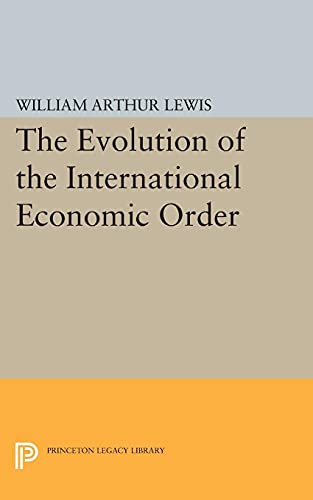
Do rich industrial nations underestimate the threat to their economic stability posed by demands for a new international economic order? Are the developing countries wrong to assume that their economic advancement depends on a transfer of wealth from the richer nations? Sir W. Arthur Lewis's provocative analysis of the present economic order and its origins suggests that the answer to both questions is yes. Professor Lewis perceptively illuminates aspects of recent economic history that have often been overlooked by observers of international affairs. He asks first how the world came to be divided into countries exporting manufactures and countries exporting primary commodities. High agricultural productivity and a good investment climate allowed countries in Northwest Europe to industrialize rapidly, while the favorable terms of trade they enjoyed assured them and the temperate lands to which Europeans migrated of continuing dominance over the tropical countries. At the core of the author's argument lies the contention that as the structure of international trade changes, the tropical countries move rapidly toward becoming net importers of agricultural commodities and net exporters of manufactures. Even so, they continue to depend on the markets of the richer countries for their growth, and they continue to trade on unfavorable terms. Both of these disadvantages, he concludes, stem from large agricultural sectors with low productivity and will disappear only as the technology of tropical food production is revolutionized. Originally published in 1978. The Princeton Legacy Library uses the latest print-on-demand technology to again make available previously out-of-print books from the distinguished backlist of Princeton University Press. These paperback editions preserve the original texts of these important books while presenting them in durable paperback editions. The goal of the Princeton Legacy Library is to vast
Les informations fournies dans la section « Synopsis » peuvent faire référence à une autre édition de ce titre.
Présentation de l'éditeur
Do rich industrial nations underestimate the threat to their economic stability posed by demands for a new international economic order? Are the developing countries wrong to assume that their economic advancement depends on a transfer of wealth from the richer nations? Sir W. Arthur Lewis's provocative analysis of the present economic order and its origins suggests that the answer to both questions is yes. Professor Lewis perceptively illuminates aspects of recent economic history that have often been overlooked by observers of international affairs. He asks first how the world came to be divided into countries exporting manufactures and countries exporting primary commodities. High agricultural productivity and a good investment climate allowed countries in Northwest Europe to industrialize rapidly, while the favorable terms of trade they enjoyed assured them and the temperate lands to which Europeans migrated of continuing dominance over the tropical countries. At the core of the author's argument lies the contention that as the structure of international trade changes, the tropical countries move rapidly toward becoming net importers of agricultural commodities and net exporters of manufactures. Even so, they continue to depend on the markets of the richer countries for their growth, and they continue to trade on unfavorable terms. Both of these disadvantages, he concludes, stem from large agricultural sectors with low productivity and will disappear only as the technology of tropical food production is revolutionized. Originally published in 1978. The Princeton Legacy Library uses the latest print-on-demand technology to again make available previously out-of-print books from the distinguished backlist of Princeton University Press. These paperback editions preserve the original texts of these important books while presenting them in durable paperback editions. The goal of the Princeton Legacy Library is to vast
Les informations fournies dans la section « A propos du livre » peuvent faire référence à une autre édition de ce titre.
Autres éditions populaires du même titre

Résultats de recherche pour The Evolution of the International Economic Order (Eliot...

Image d'archives
The Evolution of the International Economic Order
Edité par
Princeton University Press, 2015
ISBN 10 : 0691609683
ISBN 13 : 9780691609683
Ancien ou d'occasion
Couverture souple
Vendeur : Better World Books, Mishawaka, IN, Etats-Unis
Évaluation du vendeur 5 sur 5 étoiles

Etat : Good. Former library book; may include library markings. Used book that is in clean, average condition without any missing pages. N° de réf. du vendeur 14201042-6
Acheter D'occasion
EUR 28,58
Frais de port :
Gratuit
Vers Etats-Unis
Quantité disponible : 1 disponible(s)
Image d'archives
The Evolution of the International Economic Order
Vendeur : PBShop.store US, Wood Dale, IL, Etats-Unis
Évaluation du vendeur 5 sur 5 étoiles
PAP. Etat : New. New Book. Shipped from UK. Established seller since 2000. N° de réf. du vendeur WP-9780691609683
Acheter neuf
EUR 31,71
Frais de port :
Gratuit
Vers Etats-Unis
Quantité disponible : 3 disponible(s)
Image d'archives
The Evolution of the International Economic Order
Vendeur : PBShop.store UK, Fairford, GLOS, Royaume-Uni
Évaluation du vendeur 5 sur 5 étoiles
PAP. Etat : New. New Book. Shipped from UK. Established seller since 2000. N° de réf. du vendeur WP-9780691609683
Acheter neuf
EUR 30,42
Frais de port :
EUR 3,76
De Royaume-Uni vers Etats-Unis
Quantité disponible : 3 disponible(s)
Image fournie par le vendeur
The Evolution of the International Economic Order
Edité par
Princeton University Press, US, 2015
ISBN 10 : 0691609683
ISBN 13 : 9780691609683
Neuf
Paperback
Vendeur : Rarewaves.com USA, London, LONDO, Royaume-Uni
Évaluation du vendeur 5 sur 5 étoiles
Paperback. Etat : New. Do rich industrial nations underestimate the threat to their economic stability posed by demands for a new international economic order? Are the developing countries wrong to assume that their economic advancement depends on a transfer of wealth from the richer nations? Sir W. Arthur Lewis's provocative analysis of the present economic order and its origins suggests that the answer to both questions is yes. Professor Lewis perceptively illuminates aspects of recent economic history that have often been overlooked by observers of international affairs. He asks first how the world came to be divided into countries exporting manufactures and countries exporting primary commodities. High agricultural productivity and a good investment climate allowed countries in Northwest Europe to industrialize rapidly, while the favorable terms of trade they enjoyed assured them and the temperate lands to which Europeans migrated of continuing dominance over the tropical countries.At the core of the author's argument lies the contention that as the structure of international trade changes, the tropical countries move rapidly toward becoming net importers of agricultural commodities and net exporters of manufactures. Even so, they continue to depend on the markets of the richer countries for their growth, and they continue to trade on unfavorable terms. Both of these disadvantages, he concludes, stem from large agricultural sectors with low productivity and will disappear only as the technology of tropical food production is revolutionized. Originally published in 1978. The Princeton Legacy Library uses the latest print-on-demand technology to again make available previously out-of-print books from the distinguished backlist of Princeton University Press. These editions preserve the original texts of these important books while presenting them in durable paperback and hardcover editions. The goal of the Princeton Legacy Library is to vastly increase access to the rich scholarly heritage found in the thousands of books published by Princeton University Press since its founding in 1905. N° de réf. du vendeur LU-9780691609683
Acheter neuf
EUR 39,43
Frais de port :
Gratuit
De Royaume-Uni vers Etats-Unis
Quantité disponible : 2 disponible(s)
Image d'archives
The Evolution of the International Economic Order (eng)
Edité par
Princeton University Press, 2015
ISBN 10 : 0691609683
ISBN 13 : 9780691609683
Neuf
Couverture souple
Vendeur : Brook Bookstore On Demand, Napoli, NA, Italie
Évaluation du vendeur 5 sur 5 étoiles
Etat : new. N° de réf. du vendeur 1b679b77575cdd2d23cf2c09984dc467
Acheter neuf
EUR 35,69
Frais de port :
EUR 5,50
De Italie vers Etats-Unis
Quantité disponible : 3 disponible(s)
Image fournie par le vendeur
Evolution of the International Economic Order
Edité par
Princeton University Press, 2015
ISBN 10 : 0691609683
ISBN 13 : 9780691609683
Neuf
Couverture souple
Vendeur : GreatBookPrices, Columbia, MD, Etats-Unis
Évaluation du vendeur 5 sur 5 étoiles
Etat : New. N° de réf. du vendeur 23273947-n
Acheter neuf
EUR 41,23
Frais de port :
EUR 2,27
Vers Etats-Unis
Quantité disponible : 1 disponible(s)
Image fournie par le vendeur
The Evolution of the International Economic Order
Edité par
Princeton University Press, US, 2015
ISBN 10 : 0691609683
ISBN 13 : 9780691609683
Neuf
Paperback
Vendeur : Rarewaves USA, OSWEGO, IL, Etats-Unis
Évaluation du vendeur 5 sur 5 étoiles
Paperback. Etat : New. Do rich industrial nations underestimate the threat to their economic stability posed by demands for a new international economic order? Are the developing countries wrong to assume that their economic advancement depends on a transfer of wealth from the richer nations? Sir W. Arthur Lewis's provocative analysis of the present economic order and its origins suggests that the answer to both questions is yes. Professor Lewis perceptively illuminates aspects of recent economic history that have often been overlooked by observers of international affairs. He asks first how the world came to be divided into countries exporting manufactures and countries exporting primary commodities. High agricultural productivity and a good investment climate allowed countries in Northwest Europe to industrialize rapidly, while the favorable terms of trade they enjoyed assured them and the temperate lands to which Europeans migrated of continuing dominance over the tropical countries.At the core of the author's argument lies the contention that as the structure of international trade changes, the tropical countries move rapidly toward becoming net importers of agricultural commodities and net exporters of manufactures. Even so, they continue to depend on the markets of the richer countries for their growth, and they continue to trade on unfavorable terms. Both of these disadvantages, he concludes, stem from large agricultural sectors with low productivity and will disappear only as the technology of tropical food production is revolutionized. Originally published in 1978. The Princeton Legacy Library uses the latest print-on-demand technology to again make available previously out-of-print books from the distinguished backlist of Princeton University Press. These editions preserve the original texts of these important books while presenting them in durable paperback and hardcover editions. The goal of the Princeton Legacy Library is to vastly increase access to the rich scholarly heritage found in the thousands of books published by Princeton University Press since its founding in 1905. N° de réf. du vendeur LU-9780691609683
Acheter neuf
EUR 44,90
Frais de port :
Gratuit
Vers Etats-Unis
Quantité disponible : Plus de 20 disponibles
Image fournie par le vendeur
Evolution of the International Economic Order
Edité par
Princeton University Press, 2015
ISBN 10 : 0691609683
ISBN 13 : 9780691609683
Ancien ou d'occasion
Couverture souple
Vendeur : GreatBookPrices, Columbia, MD, Etats-Unis
Évaluation du vendeur 5 sur 5 étoiles
Etat : As New. Unread book in perfect condition. N° de réf. du vendeur 23273947
Acheter D'occasion
EUR 45,91
Frais de port :
EUR 2,27
Vers Etats-Unis
Quantité disponible : 1 disponible(s)
Image d'archives
The Evolution of the International Economic Order (Eliot Janeway Lectures on Historical Economics)
Edité par
Princeton University Press, 2015
ISBN 10 : 0691609683
ISBN 13 : 9780691609683
Neuf
Couverture souple
Vendeur : Majestic Books, Hounslow, Royaume-Uni
Évaluation du vendeur 4 sur 5 étoiles

Etat : New. 96. N° de réf. du vendeur 374886164
Acheter neuf
EUR 41,51
Frais de port :
EUR 7,44
De Royaume-Uni vers Etats-Unis
Quantité disponible : 3 disponible(s)
Image d'archives
The Evolution of the International Economic Order (Eliot Janeway Lectures on Historical Economics)
Edité par
Princeton University Press, 2015
ISBN 10 : 0691609683
ISBN 13 : 9780691609683
Neuf
Couverture souple
Vendeur : Books Puddle, New York, NY, Etats-Unis
Évaluation du vendeur 4 sur 5 étoiles
Etat : New. 96. N° de réf. du vendeur 26372240587
Acheter neuf
EUR 47,44
Frais de port :
EUR 3,43
Vers Etats-Unis
Quantité disponible : 3 disponible(s)