
Articles liés à The Encyclopedia of Ephemera: A Guide to the Fragmentary...
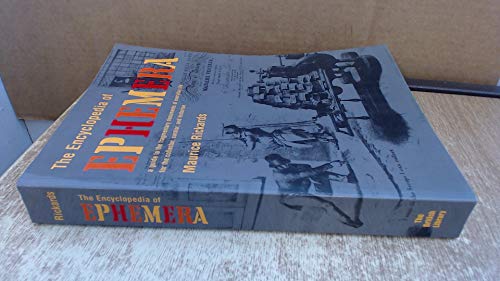
The Encyclopedia of Ephemera: A Guide to the Fragmentary Documents of Everyday Life for the Collector, Curator and Historian - Couverture souple
Synopsis
Ephemera is the plural form of the Greek word ephemeron, which comes from "epi", meaning "on", "about" or "round", and "hemeron", meaning "day". Literally, it refers to something that lasts throughout the day, or, as Maurice Rickards proposed, the "minor transient documents of everyday life", although not every item of ephemera can be regarded as transient or even minor. Collectively the many entries in this reference seek to provide a better definition of ephemera, since they include manuscript and printed matter (football programmes, envelopes, visiting cards, ballot papers), records of the past and present (newspapers, cigarette cards, seed packets, ration papers), items designed to be thrown away (bus tickets, paper bags, cheese labels, beer mats), and to be kept (bookmarks, share certificates, playing cards, board games). The volume is intended for social historians, reference librarians, students of printing and graphic design and for collectors of ephemera who take a broader view than their own specialist field.
Les informations fournies dans la section « Synopsis » peuvent faire référence à une autre édition de ce titre.
Biographie de l'auteur
Maurice Rickards, one of the leading experts in the study of ephemera, spent more than twenty years compiling the Encyclopedia.
Michael Twyman is author of several books on the history of printing and before his retirement was Professor of Typography & Graphic Design at the University of Reading, England.
Présentation de l'éditeur
First published in 2001. Routledge is an imprint of Taylor & Francis, an informa company.
Les informations fournies dans la section « A propos du livre » peuvent faire référence à une autre édition de ce titre.

