
Articles liés à Archaeology & Language
Synopsis
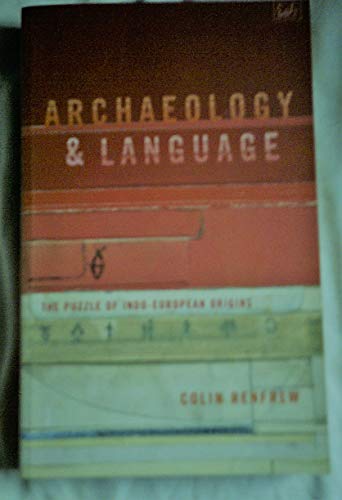
Calling for a synthesis between modern historical linguistics and the New Archaeology of cultural process, Professor Renfrew boldly claims that it is time to reconsider questions of language origins and what they imply about ethnic affiliation-issues seriously discredited by the racial theorists of the 1920s and 1930s. Specifically, he re-examines the intriguing problem of the Indo-European languages and how their ancestors came to spread from Anatolia and ancient Persia across Europe and much of the Indian subcontinent, with evidence for related languages found as far away as sinkiang in China. The solution he proposes is powerfully persuasive and deeply surpri-sing. Professor Renfrew argues that ealy forms of Indo-European language were spoken across Europe some thousands of years earlier thanhas long been assumed. There was, for instance, no `coming of the celts' but a parallel development of Celtic-speaking peoples in much the same areas in which they found today. These lands have been our lands, then for very much longer than is widely thought, and the British ness, or Irishness, or Spanishness of our origins goes much deeper than we have long believed.
Les informations fournies dans la section « Synopsis » peuvent faire référence à une autre édition de ce titre.
Présentation de l'éditeur
Calling for a synthesis between modern historical linguistics and the New Archaeology of cultural process, Professor Renfrew boldly claims that it is time to reconsider questions of language origins and what they imply about ethnic affiliation-issues seriously discredited by the racial theorists of the 1920s and 1930s. Specifically, he re-examines the intriguing problem of the Indo-European languages and how their ancestors came to spread from Anatolia and ancient Persia across Europe and much of the Indian subcontinent, with evidence for related languages found as far away as sinkiang in China. The solution he proposes is powerfully persuasive and deeply surpri-sing. Professor Renfrew argues that ealy forms of Indo-European language were spoken across Europe some thousands of years earlier thanhas long been assumed. There was, for instance, no `coming of the celts' but a parallel development of Celtic-speaking peoples in much the same areas in which they found today. These lands have been our lands, then for very much longer than is widely thought, and the British ness, or Irishness, or Spanishness of our origins goes much deeper than we have long believed.
Revue de presse
'Mr. Renfrew has written this fascinating book to review the subject in general and to advance a revisionist idea about the mode and timing of the Indo-European spread.' Stephen Jay Gould, The New York Times Book Review
'Written for the nonspecialist, this book refreshens the mind with new information, rigorous analysis, scientific scruple, and critical panache.' Thomas D'Evelyn, Christian Science Monitor
'The argument is lively and lucid, and the book deserves a wide readership among specialists and non-specialists alike. It is a daring thesis ... Renfrew is not afraid of dealing with big problems...an attempt to move archaeology forward and to break its isolation ... he has started another of those debates on which progress in archaeology depends.' Richard Bradley, Nature
Les informations fournies dans la section « A propos du livre » peuvent faire référence à une autre édition de ce titre.
Résultats de recherche pour Archaeology & Language

Image fournie par le vendeur
Archaeology & Language
Vendeur : WeBuyBooks, Rossendale, LANCS, Royaume-Uni
Évaluation du vendeur 5 sur 5 étoiles

paperback. Etat : Very Good. Most items will be dispatched the same or the next working day. A copy that has been read, but is in excellent condition. Pages are intact and not marred by notes or highlighting. The spine remains undamaged. N° de réf. du vendeur rev5423484002
Acheter D'occasion
EUR 3,09
Expédition à EUR 7,24
Expédition depuis Royaume-Uni vers Etats-Unis
Expédition depuis Royaume-Uni vers Etats-Unis
Quantité disponible : 1 disponible(s)
Image d'archives
Archaeology & Language
Edité par
Vintage Publishing, United Kingdom, London, 1998
ISBN 10 : 0712666125
ISBN 13 : 9780712666121
Ancien ou d'occasion
Paperback
Vendeur : WorldofBooks, Goring-By-Sea, WS, Royaume-Uni
Évaluation du vendeur 5 sur 5 étoiles
Paperback. Etat : Very Good. Calling for a synthesis between modern historical linguistics and the New Archaeology of cultural process, Professor Renfrew boldly claims that it is time to reconsider questions of language origins and what they imply about ethnic affiliation-issues seriously discredited by the racial theorists of the 1920s and 1930s. Specifically, he re-examines the intriguing problem of the Indo-European languages and how their ancestors came to spread from Anatolia and ancient Persia across Europe and much of the Indian subcontinent, with evidence for related languages found as far away as sinkiang in China. The solution he proposes is powerfully persuasive and deeply surpri-sing. Professor Renfrew argues that ealy forms of Indo-European language were spoken across Europe some thousands of years earlier thanhas long been assumed. There was, for instance, no `coming of the celts' but a parallel development of Celtic-speaking peoples in much the same areas in which they found today. These lands have been our lands, then for very much longer than is widely thought, and the British ness, or Irishness, or Spanishness of our origins goes much deeper than we have long believed. The book has been read, but is in excellent condition. Pages are intact and not marred by notes or highlighting. The spine remains undamaged. N° de réf. du vendeur GOR001238257
Acheter D'occasion
EUR 5,58
Expédition à EUR 6,59
Expédition depuis Royaume-Uni vers Etats-Unis
Expédition depuis Royaume-Uni vers Etats-Unis
Quantité disponible : 6 disponible(s)
Image d'archives
Archaeology & Language
Vendeur : Sell Books, Elland, YORKS, Royaume-Uni
Évaluation du vendeur 5 sur 5 étoiles
paperback. Etat : Good. Our good condition books are generally good for reading but not for gifting or collecting. They could have imperfections such as creasing, fanning, inscriptions, margin notes, yellowing, staining on edge or cover or pages, bumps, scuffs, etc etc (sometimes multiple of these). It's a wide category that encompasses anything that isn't almost-new down to anything that is slightly better than poor. We would NOT recommend gifting Good books - these should be considered reading copies. Our books are dispatched from a Yorkshire former cotton mill. We list via barcode/ISBN so please note that the images are stock images and may not be the exact copy you receive, furthermore the details about edition and year might not be accurate as many publishers reuse the same ISBN for multiple editions and as we simply scan a barcode or enter an ISBN we do not check the validity of the edition data when listing. If you're looking for an exact edition please don't order (at least not without checking with us first, although we don't always have time to check). We aim to dispatch prompty, the service used will depend on order value and book size. We can ship to most countries, see our shipping policies. Payment is via Abe only. N° de réf. du vendeur P-BCR00423-RAG-20250620-G
Acheter D'occasion
EUR 2,64
Expédition à EUR 14,30
Expédition depuis Royaume-Uni vers Etats-Unis
Expédition depuis Royaume-Uni vers Etats-Unis
Quantité disponible : 1 disponible(s)
Image d'archives
Archaeology & Language
Vendeur : ThriftBooks-Atlanta, AUSTELL, GA, Etats-Unis
Évaluation du vendeur 5 sur 5 étoiles
Paperback. Etat : Good. No Jacket. Pages can have notes/highlighting. Spine may show signs of wear. ~ ThriftBooks: Read More, Spend Less. N° de réf. du vendeur G0712666125I3N00
Acheter D'occasion
EUR 20,54
Livraison gratuite
Expédition nationale : Etats-Unis
Expédition nationale : Etats-Unis
Quantité disponible : 1 disponible(s)
Image d'archives
Archaeology & Language : The Puzzle of Indo-European Origins
Edité par
Pimlico, London, 1998
ISBN 10 : 0712666125
ISBN 13 : 9780712666121
Ancien ou d'occasion
Soft cover
Vendeur : Westwood Books, Cramlington, Royaume-Uni
Évaluation du vendeur 4 sur 5 étoiles

Soft cover. Etat : Near Fine. No Jacket. N/A (illustrateur). 1998. Pimlico, London, 1998. Pictorial soft cover. Book condition : Near fine, like new, appears unread. Very Comprehensive. Book will be sent by UK postal service. Bookseller Inventory #S0135. N/A. N° de réf. du vendeur 013555
Acheter D'occasion
EUR 7,27
Expédition à EUR 13,53
Expédition depuis Royaume-Uni vers Etats-Unis
Expédition depuis Royaume-Uni vers Etats-Unis
Quantité disponible : 1 disponible(s)
Image fournie par le vendeur
Archaeology and language: the puzzle of Indo-European origins
Edité par
Pimlico, 1998
ISBN 10 : 0712666125
ISBN 13 : 9780712666121
Ancien ou d'occasion
Couverture souple
Vendeur : Cotswold Internet Books, Cheltenham, Royaume-Uni
Évaluation du vendeur 5 sur 5 étoiles
Etat : Used - Good. Good paperback. New edition. Pages a little yellowed, with some highlighting. Good study copy. N° de réf. du vendeur BOOKS281944I
Acheter D'occasion
EUR 4,85
Expédition à EUR 16,47
Expédition depuis Royaume-Uni vers Etats-Unis
Expédition depuis Royaume-Uni vers Etats-Unis
Quantité disponible : 1 disponible(s)
Image d'archives
Archaeology and Language: The Puzzle of Indo-European Origins (Pimlico)
Vendeur : Brit Books, Milton Keynes, Royaume-Uni
Évaluation du vendeur 4 sur 5 étoiles
Paperback. Etat : Used; Very Good. ***Simply Brit*** Welcome to our online used book store, where affordability meets great quality. Dive into a world of captivating reads without breaking the bank. We take pride in offering a wide selection of used books, from classics to hidden gems, ensuring there is something for every literary palate. All orders are shipped within 24 hours and our lightning fast-delivery within 48 hours coupled with our prompt customer service ensures a smooth journey from ordering to delivery. Discover the joy of reading with us, your trusted source for affordable books that do not compromise on quality. N° de réf. du vendeur 3729919
Acheter D'occasion
EUR 5,84
Expédition à EUR 18,82
Expédition depuis Royaume-Uni vers Etats-Unis
Expédition depuis Royaume-Uni vers Etats-Unis
Quantité disponible : 2 disponible(s)
Image d'archives
Archaeology and Language: The Puzzle of Indo-European Origins (Pimlico)
Vendeur : Greener Books, London, Royaume-Uni
Évaluation du vendeur 4 sur 5 étoiles
Paperback. Etat : Used; Good. **SHIPPED FROM UK** We believe you will be completely satisfied with our quick and reliable service. All orders are dispatched as swiftly as possible! Buy with confidence! Greener Books. N° de réf. du vendeur mon0001353250
Acheter D'occasion
EUR 5,85
Expédition à EUR 23,53
Expédition depuis Royaume-Uni vers Etats-Unis
Expédition depuis Royaume-Uni vers Etats-Unis
Quantité disponible : 1 disponible(s)
Image d'archives
Archaeology & Language
Edité par
Pimlico, UK, 1998
ISBN 10 : 0712666125
ISBN 13 : 9780712666121
Ancien ou d'occasion
Soft Cover
Vendeur : Aynam Book Disposals (ABD), Kendal, CUMBR, Royaume-Uni
Évaluation du vendeur 3 sur 5 étoiles

Soft Cover. Etat : As New. Size: 8vo - over 7¾" - 9¾" tall. Softback. N° de réf. du vendeur 027744
Acheter D'occasion
EUR 10,85
Expédition à EUR 21,95
Expédition depuis Royaume-Uni vers Etats-Unis
Expédition depuis Royaume-Uni vers Etats-Unis
Quantité disponible : 1 disponible(s)
Image d'archives
Archaeology & Language Renfrew, Lord Colin
Edité par
Pimlico, 1998
ISBN 10 : 0712666125
ISBN 13 : 9780712666121
Ancien ou d'occasion
Couverture souple
Vendeur : Hay-on-Wye Booksellers, Hay-on-Wye, HEREF, Royaume-Uni
Évaluation du vendeur 4 sur 5 étoiles
Etat : Very Good. The slightest of shelfwear to extremities of book, otherwise fine. N° de réf. du vendeur 022429-3
Acheter D'occasion
EUR 4,80
Expédition à EUR 29,42
Expédition depuis Royaume-Uni vers Etats-Unis
Expédition depuis Royaume-Uni vers Etats-Unis
Quantité disponible : 1 disponible(s)