Synopsis
Book by Ball Edward Ballard Edward G
Les informations fournies dans la section « Synopsis » peuvent faire référence à une autre édition de ce titre.
Extrait
My father had a little joke that made light of our legacy as a family that had once owned slaves.
"There are five things we don't talk about in the Ball family," he would say. "Religion, sex, death, money, and the Negroes."
"What does that leave to talk about?" my mother asked once.
"That's another of the family secrets," Dad said, smiling.
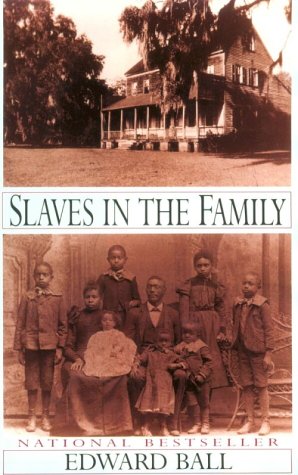
My father, Theodore Porter Ball, came from the venerable city of Charleston, South Carolina, the son of an old plantation clan. The Ball family's plantations were among the oldest and longest standing in the American South, and there were more than twenty of them along the Cooper River, North of Charleston. Between 1698 and 1865, the 167 years the family was in the slave business, close to four thousand black people were born into slavery to the Balls or bought by them. The crop they raised was rice, whose color and standard gave it the name Carolina Gold. After the Civil War, some of the Ball places stayed in business as sharecrop farms with paid black labor until about 1900, when the rice market finally failed in the face of competition from Louisiana and Asia.
When I was twelve, Dad died and was buried near Charleston. Sometime during his last year, he brought together my brother, Theodore Jr., and me to give each of us a copy of the published history of the family. The book had a wordy title, Recollections of the Ball Family of South Carolina and the Comingtee Plantation. A distant cousin, long dead, had written the manuscript, and the book was printed in 1909 on rag paper, with a tan binding and green cloth boards. On the spine the words BALL FAMILY were embossed. The pages smelled like wet leaves.
"One day you'll want to know about all this," Dad said, waving his hand vaguely, his lips pursed. "Your ancestors." The tone of the old joke was replaced by some nervousness.
I know my father was proud of his heritage but at the same time, I suspect, had questions about it. The story of his slave-owning family, part of the weave of his childhood, was a mystery he could only partly decipher. With the gift of the book, Dad seemed to be saying that the plantations were a piece of unfinished business. In that moment, the story of the Ball clan was locked in the depths of my mind, to be pried loose one day.
When I was a child, Dad used to tell stories about our ancestors, the rice planters. I got a personal glimpse of the American revolution, because the Balls had played a role in it--some of us fought for the British, some for independence. the Civil War seemed more real since Dad's grandfather and three great-uncles fought for the Confederacy. From time to time in his stories, Dad mentioned the people our family used to own. They were usually just "the slaves," sometimes "the Ball slaves," a puff of black smoke on the wrinkled horizon of the past. Dad evidently didn't know much about them, and I imagine he didn't want to know.
"Did I ever tell you about Wambaw Elias Ball?" he might say. "His plantation was on Wambaw Creek. He had about a hundred and fifty slaves, and he was a mean fella."
My father had a voice honed by cigarettes, an antique Charleston accent, and I liked to hear him use the old names.
"Wambaw Elias was a Tory," Dad began. "I mean, he picked the wrong side in the Revolution." When the Revolutionary War reached the South, Wambaw Elias, instead of joining the American rebels, went to the British commander in Charleston, Lord Cornwallis, who gave him a company of men and the rank of colonel. Wambaw Elias fought the patriots and burned their houses until such time as the British lost and his victims called for revenge. The Americans went for Wambaw Elias's human property, dragging off some fifty slaves from Wambaw plantation, while other black workers managed to escape into the woods. Wambaw Elias knew he had no future in the United States and decided to cash in his assets. Eventually he captured the slaves who had run away, sold them, then took his family to England, where he lived for another thirty-eight years, regretting to the last that he had been forced to give up the life of a slave owner.
In the Ball family, the tale of Wambaw Elias and his slaves passed as a children's story.
Présentation de l'éditeur
NATIONAL BESTSELLER
"[A] LANDMARK BOOK."
-- San Francisco Chronicle
"POWERFUL."
-- The New York Times Book Review
"GRIPPING."
-- The Boston Sunday Globe
"BRILLIANT."
-- The New Yorker
"EVERYONE SHOULD READ AND LEARN FROM THIS LUMINOUS BOOK...Like Alex Haley's Roots, through which African American history came into national focus...Slaves in the Family has the potential for creating a perceptual shift in the American mind...The book is not only honest in its scrupulous reporting but also personal narrative at its finest."
-- San Francisco Chronicle
"BALL IS A FIRST-RATE SCHOLAR-JOURNALIST...He's also a good detective, tracking down the many descendants of Ball slaves from New York to California and back in the South and coaxing them, often with some difficulty, to tell their stories...Outside Faulkner, it will be hard to find a more poignant, powerful account of a white man struggling with his and his nation's past."
-- The Atlanta Journal-Constitution
"A MASTERPIECE...REMARKABLE...It is a work about slaves in the family. But it is also a large omnium gatherum of enchanting fireside anecdotes, secrets teased out of reluctant fragments from the remote past, the real lives of blacks and whites whose stories had been lost in the disintegrating churn of time until Edward Ball's patient reconstructions."
-- The Raleigh News & Observer
"A TOUR DE FORCE...The heart of this remarkable book consists of his sleuthing--tracking down and interviewing the descendants of former Ball slaves across the country... Part oral history, this unique family saga is a catharsis and a searching inventory of racially divided American society."
-- Publishers Weekly (starred and boxed review)
"A PAGEANTRY OF PASSIONS AND STRUGGLES."
-- African Sun Times
Les informations fournies dans la section « A propos du livre » peuvent faire référence à une autre édition de ce titre.
Autres éditions populaires du même titre

Résultats de recherche pour Slaves in the Family

Image d'archives
Slaves in the Family (G K Hall Large Print Book Series)
Edité par
G K Hall & Co, 1999
ISBN 10 : 0783886284
ISBN 13 : 9780783886282
Ancien ou d'occasion
Couverture rigide
Vendeur : Bookmans, Tucson, AZ, Etats-Unis
Évaluation du vendeur 5 sur 5 étoiles

Hardcover. Etat : Acceptable. Wear & Tear Satisfaction 100% guaranteed. N° de réf. du vendeur mon0002283726
Acheter D'occasion
EUR 7,04
EUR 3,41 shipping
Expédition nationale : Etats-Unis
Expédition nationale : Etats-Unis
Quantité disponible : 1 disponible(s)
Image d'archives
Slaves in the Family
Edité par
Cengage Gale, 1999
ISBN 10 : 0783886284
ISBN 13 : 9780783886282
Ancien ou d'occasion
Couverture rigide
Vendeur : Better World Books, Mishawaka, IN, Etats-Unis
Évaluation du vendeur 5 sur 5 étoiles
Etat : Good. Former library book; may include library markings. Used book that is in clean, average condition without any missing pages. N° de réf. du vendeur 2478659-6
Acheter D'occasion
EUR 10,47
Livraison gratuite
Expédition nationale : Etats-Unis
Expédition nationale : Etats-Unis
Quantité disponible : 2 disponible(s)
Image d'archives
Slaves in the Family (G K Hall Large Print Book Series)
Edité par
G K Hall & Co, 1999
ISBN 10 : 0783886284
ISBN 13 : 9780783886282
Ancien ou d'occasion
Couverture rigide
Vendeur : ThriftBooks-Atlanta, AUSTELL, GA, Etats-Unis
Évaluation du vendeur 5 sur 5 étoiles
Hardcover. Etat : Fair. No Jacket. Former library book; Readable copy. Pages may have considerable notes/highlighting. ~ ThriftBooks: Read More, Spend Less. N° de réf. du vendeur G0783886284I5N10
Acheter D'occasion
EUR 10,55
Livraison gratuite
Expédition nationale : Etats-Unis
Expédition nationale : Etats-Unis
Quantité disponible : 1 disponible(s)
Image fournie par le vendeur
Slaves in the Family (G K Hall Large Print Book Series)
Edité par
G K Hall & Co, 1999
ISBN 10 : 0783886284
ISBN 13 : 9780783886282
Ancien ou d'occasion
Couverture rigide
Vendeur : Bay State Book Company, North Smithfield, RI, Etats-Unis
Évaluation du vendeur 5 sur 5 étoiles
Etat : acceptable. The book is complete and readable, with all pages and cover intact. Dust jacket, shrink wrap, or boxed set case may be missing. Pages may have light notes, highlighting, or minor water exposure, but nothing that affects readability. May be an ex-library copy and could include library markings or stickers. N° de réf. du vendeur BSM.R3MY
Acheter D'occasion
EUR 10,55
Livraison gratuite
Expédition nationale : Etats-Unis
Expédition nationale : Etats-Unis
Quantité disponible : 1 disponible(s)
Image d'archives
Slaves in the Family (G K Hall Large Print Book Series)
Edité par
G K Hall & Co, 1999
ISBN 10 : 0783886284
ISBN 13 : 9780783886282
Ancien ou d'occasion
Couverture rigide
Vendeur : ThriftBooks-Dallas, Dallas, TX, Etats-Unis
Évaluation du vendeur 5 sur 5 étoiles
Hardcover. Etat : Fair. No Jacket. Readable copy. Pages may have considerable notes/highlighting. ~ ThriftBooks: Read More, Spend Less. N° de réf. du vendeur G0783886284I5N00
Acheter D'occasion
EUR 10,55
Livraison gratuite
Expédition nationale : Etats-Unis
Expédition nationale : Etats-Unis
Quantité disponible : 1 disponible(s)
Image fournie par le vendeur
Slaves in the Family (G K Hall Large Print Book Series)
Edité par
G K Hall & Co, 1999
ISBN 10 : 0783886284
ISBN 13 : 9780783886282
Ancien ou d'occasion
Couverture rigide
Vendeur : Solr Books, Lincolnwood, IL, Etats-Unis
Évaluation du vendeur 5 sur 5 étoiles
Etat : good. This book is in Good condition. There may be some notes and highligting but otherwise the book is in overall good condition. N° de réf. du vendeur BCV.0783886284.G
Acheter D'occasion
EUR 18,47
EUR 6,82 shipping
Expédition nationale : Etats-Unis
Expédition nationale : Etats-Unis
Quantité disponible : 1 disponible(s)
Image d'archives
SLAVES in the FAMILY; LARGE PRINT Edition, UnAbridged Core Series. X Library. *
Edité par
G. K. HALL & CO., * * * * *, 1999
ISBN 10 : 0783886284
ISBN 13 : 9780783886282
Ancien ou d'occasion
Couverture rigide
Vendeur : L. Michael, North Hollywood, CA, Etats-Unis
Évaluation du vendeur 4 sur 5 étoiles

Hardcover. Etat : Very Good. Etat de la jaquette : Very Good. 1999 B00K: Very Good/, (illustrateur). B00K: Very Good/, $50.03 0783886284 SLAVES in the FAMILY; LARGE PRINT Edition, UnAbridged Core Series. X Library. BALL, Edward G. K. HALL & CO. 1999 Thick D/J + H/C. Off White Spine, With Title In Red Letters, One Picture On Bottom, Clear Acetate/Plastic Covered Dust Jacket: Very Good/, Shelf, Edge And Corner Wear. Hard Cover BooK: Very Good/, Shelf, Edge And Corner Wear. 843 Numbered Pages Printed On Off White Paper, In Very Good/ Condition, That Appear To Lightly Read, Clean And Tight To The Spine, Slight Shelf, Edge And Corner Wear. Moisture Wrinkling On The A Top Portion Of The Last 90 Pages, No Odor, Not Stuck Together. Usual Stamps And Stickers Along With A Discard Stamp. No Tears. No Odors. No Stains. No Writing. No Names. Acquired From The Estate Of John Treavor & Mary Treavor. Description Applies To This BooK, Only. Description Applies To This Book, Only. This BooK Is Hard To Find, Will Be Packaged And Shipped Carefully, To Avoid Shipping Damage And Will Make It, An Excellent Addition To Your Own Personal Library Collection, Or As A Gift. WORLD WIDE SHIPPING, AVAILABLE. N° de réf. du vendeur 011024
Acheter D'occasion
EUR 24,11
EUR 10,21 shipping
Expédition nationale : Etats-Unis
Expédition nationale : Etats-Unis
Quantité disponible : 1 disponible(s)