
Articles liés à The Correspondence of Erasmus: Letters 1252 to 1355,...
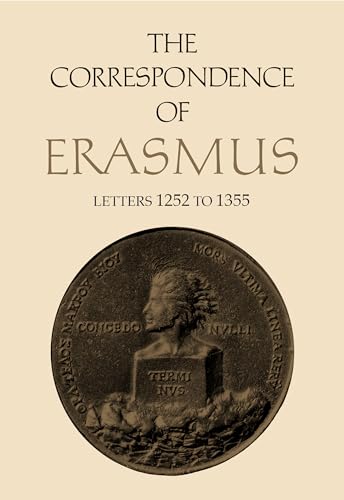
Synopsis
At the beginning of this volume, Erasmus leaves Louvain to live in Basel. Weary from the many controversies reflected in the letters of the previous volumes, he is also anxious to see the annotations to his third edition of the New Testament through Johann Froben's press. Above all he fears that pressure from the imperial court in the Netherlands will force him to take a public stand against Luther.
Erasmus completes a large number of works in the span of this volume, including the Paraphrases on Matthew and John, two new expanded editions of the Colloquies, an edition of De conscribendis epistolis, two apologiae against his Spanish detractors, and editions of Arnobius Junior and Hilary of Poitiers. But the predominant theme of the volume remains 'the sorry business of Luther.'
The harder Erasmus persists in trying to adhere to a reasonable course between Catholic and reforming zealots, the more he finds himself 'a heretic to both sides.' His Catholic critics appear the more dangerous. Among them are the papal nuncio Girolamo Aleandro, who is bent on discrediting him at both the imperial and papal courts as a supporter of Luther; the Spaniard Diego López Zúñiga, who compiles a catalogue of Blasphemies and Impieties of Erasmus of Rotterdam; and the Carmelite Nicholaas Baechem, who denounces Erasmus both in public sermons and at private 'drinking-parties.'
Erasmus' refusal to counsel severity against the Lutherans is motivated chiefly by concern for peace and the common good of Christendom, and not by any tender regard for Luther and the other reformers. Still, many of the letters in this volume testify to his growing aversion to the reformers, and we see him moving perceptibly in the direction of his eventual public breach with them.
A special feature of this volume is the first fully annotated translation of Erasmus' Catalogues Iucubrationum (Ep 1341 A), an extremely important document for the study of Erasmus' life and works and of the controversies they aroused.
Volume 9 of the Collected Works of Erasmus series.
Les informations fournies dans la section « Synopsis » peuvent faire référence à une autre édition de ce titre.
À propos de l'auteur
Desiderius Erasmus (c. 1466-1536), a Dutch humanist, Catholic priest, and scholar, was one of the most influential Renaissance figures. A professor of divinity and Greek, Erasmus wrote, taught, and travelled, meeting with Europe's foremost scholars. A prolific author, Erasmus wrote on both ecclesiastic and general human interest subjects.
Les informations fournies dans la section « A propos du livre » peuvent faire référence à une autre édition de ce titre.
Résultats de recherche pour The Correspondence of Erasmus: Letters 1252 to 1355,...

Image d'archives
The Correspondence of Erasmus: Letters 1252 to 1355. Collected Works of Erasmus Volume 9
Edité par
University of Toronto Press, 1989
ISBN 10 : 0802026044
ISBN 13 : 9780802026040
Ancien ou d'occasion
Couverture rigide
Vendeur : The Bookseller, Edmonton, AB, Canada
Évaluation du vendeur 5 sur 5 étoiles

Hardcover. Etat : Very Good+. Etat de la jaquette : Very Good+. Minor shelf wear to book and dust jacket. Otherwise a tight, unmarked volume. Index. xix, 495 pp. N° de réf. du vendeur 067179
Acheter D'occasion
EUR 57,62
Expédition à EUR 16,57
Expédition depuis Canada vers Etats-Unis
Expédition depuis Canada vers Etats-Unis
Quantité disponible : 1 disponible(s)
Image d'archives
The Correspondence of Erasmus: Letters 1252 to 1355, Volume 9 (eng)
Edité par
University of Toronto Press, 1989
ISBN 10 : 0802026044
ISBN 13 : 9780802026040
Neuf
Couverture rigide
Vendeur : Brook Bookstore On Demand, Napoli, NA, Italie
Évaluation du vendeur 5 sur 5 étoiles
Etat : new. N° de réf. du vendeur 7d03121f0b933e46f0dfbd9863eb8b39
Acheter neuf
EUR 120,56
Expédition à EUR 11
Expédition depuis Italie vers Etats-Unis
Expédition depuis Italie vers Etats-Unis
Quantité disponible : 6 disponible(s)
Image fournie par le vendeur
The Correspondence of Erasmus; Letters 1252 to 1355; 1522 to 1523 Volume 9
Edité par
University of Toronto Press, Canada, 1989
ISBN 10 : 0802026044
ISBN 13 : 9780802026040
Ancien ou d'occasion
Couverture rigide
Vendeur : True Oak Books, Highland, NY, Etats-Unis
Évaluation du vendeur 5 sur 5 étoiles
Hardcover. Etat : Good+. Etat de la jaquette : No Dust Jacket. Translation. Collected Works Of Erasmus; 7 X 1.64 X 10.01 inches; 495 pages; Ex-Library copy with usual identifiers. Few very minor speckles on the top exterior edge of textblock. Very Good condition otherwise. No other noteworthy defects. No markings on text pages.; - Your satisfaction is our priority. We offer free returns and respond promptly to all inquiries. Your item will be carefully cushioned in bubble wrap and securely boxed. All orders ship on the same or next business day. Buy with confidence. N° de réf. du vendeur HVD-81596-A-0
Acheter D'occasion
EUR 134,76
Livraison gratuite
Expédition nationale : Etats-Unis
Expédition nationale : Etats-Unis
Quantité disponible : 1 disponible(s)
Image fournie par le vendeur
Correspondence of Erasmus : Letters 1252 to 1355, 1522 to 1523
Edité par
University of Toronto Press, 1989
ISBN 10 : 0802026044
ISBN 13 : 9780802026040
Neuf
Couverture rigide
Vendeur : GreatBookPrices, Columbia, MD, Etats-Unis
Évaluation du vendeur 5 sur 5 étoiles
Etat : New. N° de réf. du vendeur 1745284-n
Acheter neuf
EUR 133,30
Expédition à EUR 2,30
Expédition nationale : Etats-Unis
Expédition nationale : Etats-Unis
Quantité disponible : 6 disponible(s)
Image d'archives
The Correspondence of Erasmus (Hardcover)
Edité par
University of Toronto Press, Toronto, 1989
ISBN 10 : 0802026044
ISBN 13 : 9780802026040
Neuf
Couverture rigide
Vendeur : Grand Eagle Retail, Bensenville, IL, Etats-Unis
Évaluation du vendeur 5 sur 5 étoiles
Hardcover. Etat : new. Hardcover. At the beginning of this volume, Erasmus leaves Louvain to live in Basel. Weary from the many controversies reflected in the letters of the previous volumes, he is also anxious to see the annotations to his third edition of the New Testament through Johann Frobens press. Above all he fears that pressure from the imperial court in the Netherlands will force him to take a public stand against Luther.Erasmus completes a large number of works in the span of this volume, including the Paraphrases on Matthew and John, two new expanded editions of the Colloquies, an edition of De conscribendis epistolis, two apologiae against his Spanish detractors, and editions of Arnobius Junior and Hilary of Poitiers. But the predominant theme of the volume remains the sorry business of Luther.The harder Erasmus persists in trying to adhere to a reasonable course between Catholic and reforming zealots, the more he finds himself a heretic to both sides. His Catholic critics appear the more dangerous. Among them are the papal nuncio Girolamo Aleandro, who is bent on discrediting him at both the imperial and papal courts as a supporter of Luther; the Spaniard Diego Lopez Zuniga, who compiles a catalogue of Blasphemies and Impieties of Erasmus of Rotterdam; and the Carmelite Nicholaas Baechem, who denounces Erasmus both in public sermons and at private drinking-parties.Erasmus refusal to counsel severity against the Lutherans is motivated chiefly by concern for peace and the common good of Christendom, and not by any tender regard for Luther and the other reformers. Still, many of the letters in this volume testify to his growing aversion to the reformers, and we see him moving perceptibly in the direction of his eventual public breach with them.A special feature of this volume is the first fully annotated translation of Erasmus Catalogues Iucubrationum (Ep 1341 A), an extremely important document for the study of Erasmus life and works and of the controversies they aroused.Volume 9 of the Collected Works of Erasmus series. A special feature of this volume is the first fully annotated translation of Erasmus' Catalogues Iucubrationum (Ep 1341 A), an extremely important document for the study of Erasmus' life and works and of the controversies they aroused. Shipping may be from multiple locations in the US or from the UK, depending on stock availability. N° de réf. du vendeur 9780802026040
Acheter neuf
EUR 135,66
Livraison gratuite
Expédition nationale : Etats-Unis
Expédition nationale : Etats-Unis
Quantité disponible : 1 disponible(s)
Image fournie par le vendeur
The Correspondence of Erasmus
Edité par
University of Toronto Press, CA, 1989
ISBN 10 : 0802026044
ISBN 13 : 9780802026040
Neuf
Couverture rigide
Vendeur : Rarewaves.com USA, London, LONDO, Royaume-Uni
Évaluation du vendeur 5 sur 5 étoiles
Hardback. Etat : New. At the beginning of this volume, Erasmus leaves Louvain to live in Basel. Weary from the many controversies reflected in the letters of the previous volumes, he is also anxious to see the annotations to his third edition of the New Testament through Johann Froben's press. Above all he fears that pressure from the imperial court in the Netherlands will force him to take a public stand against Luther. Erasmus completes a large number of works in the span of this volume, including the Paraphrases on Matthew and John, two new expanded editions of the Colloquies, an edition of De conscribendis epistolis, two apologiae against his Spanish detractors, and editions of Arnobius Junior and Hilary of Poitiers. But the predominant theme of the volume remains 'the sorry business of Luther.' The harder Erasmus persists in trying to adhere to a reasonable course between Catholic and reforming zealots, the more he finds himself 'a heretic to both sides.' His Catholic critics appear the more dangerous. Among them are the papal nuncio Girolamo Aleandro, who is bent on discrediting him at both the imperial and papal courts as a supporter of Luther; the Spaniard Diego López Zúñiga, who compiles a catalogue of Blasphemies and Impieties of Erasmus of Rotterdam; and the Carmelite Nicholaas Baechem, who denounces Erasmus both in public sermons and at private 'drinking-parties.' Erasmus' refusal to counsel severity against the Lutherans is motivated chiefly by concern for peace and the common good of Christendom, and not by any tender regard for Luther and the other reformers. Still, many of the letters in this volume testify to his growing aversion to the reformers, and we see him moving perceptibly in the direction of his eventual public breach with them. A special feature of this volume is the first fully annotated translation of Erasmus' Catalogues Iucubrationum (Ep 1341 A), an extremely important document for the study of Erasmus' life and works and of the controversies they aroused. Volume 9 of the Collected Works of Erasmus series. N° de réf. du vendeur LU-9780802026040
Acheter neuf
EUR 135,77
Livraison gratuite
Expédition depuis Royaume-Uni vers Etats-Unis
Expédition depuis Royaume-Uni vers Etats-Unis
Quantité disponible : 3 disponible(s)
Image fournie par le vendeur
Correspondence of Erasmus : Letters 1252 to 1355, 1522 to 1523
Edité par
University of Toronto Press, 1989
ISBN 10 : 0802026044
ISBN 13 : 9780802026040
Ancien ou d'occasion
Couverture rigide
Vendeur : GreatBookPrices, Columbia, MD, Etats-Unis
Évaluation du vendeur 5 sur 5 étoiles
Etat : As New. Unread book in perfect condition. N° de réf. du vendeur 1745284
Acheter D'occasion
EUR 133,53
Expédition à EUR 2,30
Expédition nationale : Etats-Unis
Expédition nationale : Etats-Unis
Quantité disponible : 6 disponible(s)
Image fournie par le vendeur
Correspondence of Erasmus : Letters 1252 to 1355, 1522 to 1523
Edité par
University of Toronto Press, 1989
ISBN 10 : 0802026044
ISBN 13 : 9780802026040
Neuf
Couverture rigide
Vendeur : GreatBookPricesUK, Woodford Green, Royaume-Uni
Évaluation du vendeur 5 sur 5 étoiles
Etat : New. N° de réf. du vendeur 1745284-n
Acheter neuf
EUR 118,83
Expédition à EUR 17,49
Expédition depuis Royaume-Uni vers Etats-Unis
Expédition depuis Royaume-Uni vers Etats-Unis
Quantité disponible : 6 disponible(s)
Image d'archives
The Correspondence of Erasmus, Vol. 9
Edité par
University of Toronto Press, 1989
ISBN 10 : 0802026044
ISBN 13 : 9780802026040
Neuf
Couverture rigide
Vendeur : Majestic Books, Hounslow, Royaume-Uni
Évaluation du vendeur 4 sur 5 étoiles

Etat : New. pp. 495. N° de réf. du vendeur 6864999
Acheter neuf
EUR 130,27
Expédition à EUR 7,58
Expédition depuis Royaume-Uni vers Etats-Unis
Expédition depuis Royaume-Uni vers Etats-Unis
Quantité disponible : 3 disponible(s)
Image d'archives
The Correspondence of Erasmus
Edité par
University of Toronto Press, 1989
ISBN 10 : 0802026044
ISBN 13 : 9780802026040
Neuf
Couverture rigide
Vendeur : Kennys Bookshop and Art Galleries Ltd., Galway, GY, Irlande
Évaluation du vendeur 5 sur 5 étoiles
Etat : New. A special feature of this volume is the first fully annotated translation of Erasmus' Catalogues Iucubrationum (Ep 1341 A), an extremely important document for the study of Erasmus' life and works and of the controversies they aroused. Translator(s): Mynors, Sir R. A. B. Series: Collected Works of Erasmus. Num Pages: 495 pages, facsimiles, map, portraits. BIC Classification: DN; DSBB; HPCB. Category: (UU) Undergraduate. Dimension: 257 x 181 x 44. Weight in Grams: 1136. . 1989. 0th Edition. Hardcover. . . . . N° de réf. du vendeur V9780802026040
Acheter neuf
EUR 134,32
Expédition à EUR 9,50
Expédition depuis Irlande vers Etats-Unis
Expédition depuis Irlande vers Etats-Unis
Quantité disponible : 1 disponible(s)