
Articles liés à The Art of Storytelling: Easy Steps to Presenting an...
Synopsis
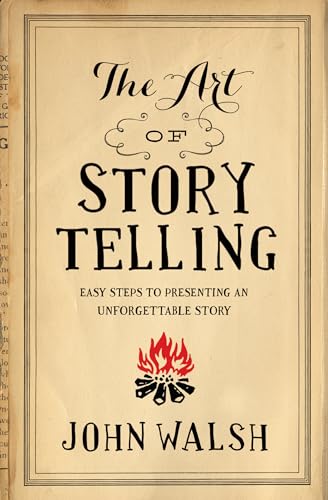
Many of us would love to hold the attention of a crowd, a classroom, or just a group of our friends by telling them a great story. We have felt the pressure of a public presentation or the disappointment of a story that is ignored and we are ready for more. In "The Art of Storytelling," John Walsh talks through the steps to presenting a compelling story, outlining the strategies that helped him move from stutterer to storyteller as he fulfilled his calling of becoming a preacher. This book will help any person with a story to share, as it talks through all aspects of presentation, from what to do with your hands as you speak, to crafting a killer ending. It is especially relevant those who teach through the stories of the Bible or who would like to do so.--
Les informations fournies dans la section « Synopsis » peuvent faire référence à une autre édition de ce titre.
À propos de l'auteur
JOHN WALSH is the founder of BibleTelling and the Christian Storytelling Conference. His network of BibleTelling trainers conduct seminars in the US as well as 21 other countries. The most exciting seminar is the annual BibleTelling Seminar in Israel. Those who attend tell 120 stories of the Bible at the 45 locations where they happened. The Art of Storytelling was first published in 2003, and then republished in 2014. His book, All the Stories of the Bible is used worldwide by missionaries, pastors, and other Christian workers. John shares his Bible stories on a 2-minute daily radio spot called All the Stories of the Bible in a Year and a 4-minute weekly radio spot called Telling the Stories of the Bible.
À propos de la quatrième de couverture
<div><p><b>Can you captivate an audience with your story?</b></p><p>Many of us would love to hold the attention of a crowd, a classroom, or just a group of our friends by telling them a great story. We have felt the pressure of a public presentation or the disappointment of telling a story that others ignore. We are ready to be heard, ready to captivate.</p><p>In <i>The Art of Storytelling</i>, John Walsh takes us through the steps to presenting a compelling story—outlining the strategies that helped him move from stutterer to storyteller. This book will help any person with a story to share by walking you through all aspects of presentation . . . from what to do with your hands as you speak all the way to crafting a killer ending. </p><p>Whether you’re telling bedtime stories to your children or Bible stories to a congregation, this book will take your storytelling to a new level.</p></div>
Extrait. © Reproduit sur autorisation. Tous droits réservés.
The Art of Storytelling
Easy Steps to Presenting an Unforgettable Story
By John Walsh, Pam PughMoody Publishers
Copyright © 2014 John Walsh
All rights reserved.
ISBN: 978-0-8024-1133-4All rights reserved.
Contents
A Personal Word,
Section One: STEPS TO CRAFTING A CAPTIVATING STORY,
1: A New World and Its Story,
2: "Where Do You Find Your Stories?",
3: Let Them Walk in Your Shoes,
4: Make It Unforgettable,
5: Know When to Ramble,
6: The Finishing Touches,
7: The Last Ingredient,
Section Two: TOOLS FOR PRESENTING A CAPTIVATING STORY,
8: You Have to See It,
9: Committing Your Body,
10: Talking; Not Talking,
11: Turning Weakness into Strength,
Bonus Section: BIBLETELLING,
12: Why Storying?,
13: The BibleTelling Triangle,
14: Experiencing BibleTelling,
Excerpt from Tell Me a Story,
CHAPTER 1
A NEW WORLD AND ITS STORY
It was a drizzly Sunday morning and our daughter Christie was getting ready for church. Her husband, Michael, needed to stay home and take care of their two sons who were sick. He helped Christie get the two girls into the car, kissed them all goodbye, and waved as they drove off.
When the trio arrived at church, Christie delivered Amelia to the nursery and escorted Laura to children's church. She planted herself in the auditorium, knowing she could enjoy the pastor's sermon without being distracted with restless children.
Christie enjoyed the way her pastor preached with love and compassion. It was obvious he put a lot of preparation into his sermons, so she always took notes.
When the service ended, she gathered the two girls and headed home where the men of the family were waiting. Once inside the house, Michael asked how the service was.
"Great!" She then told him about the choir rehearsal after the service, and how she practiced her solo in preparation for the next Sunday.
"What was the sermon about?"
"Oh, um ... well ... it was really good." She tried to recall some of the details of the sermon, but couldn't remember a thing. She concluded that all the activity after the service caused her memory to lapse. Finally, she shuffled through her Bible and found the notes she had taken.
"Let's see ..." her voice trailing off as she skimmed her notes. "Ah, yes. That's right. He's continuing his series through the gospel of Luke. It was really good."
From behind her, Laura said, "I remember what Mr. Gorman spoke about in children's church." With that, the child went into enthusiastic detail about all her teacher had taught in the children's service. Not only did she remember the entire lesson, she was able to relate it in a way that made her parents wish they had been able to hear such an exciting presentation.
Did my granddaughter remember the sermon because she is younger and has a better memory? Not at all. While preparing his lesson, Mr. Gorman was aware of how his audience receives and remembers information.
What Mr. Gorman did should be done whenever a presentation is prepared for any group, including adults. There are two types of adults who respond especially well to stories. They are (1) story thinkers and (2) men. Knowing how these two groups receive and remember information will help you to adapt your presentation with them in mind.
ADAPTING PRESENTATIONS FOR STORY THINKERS
Our culture has gone through a change that has altered our society. Many Christian ministries are becoming aware of it, but don't know how to respond. Other ministries have labeled it ungodly, so they ignore it and continue on as if nothing had changed.
This cultural change is neither godly or ungodly. It is simply the difference in how people receive information and the way they remember information. People of past generations were considered analytical thinkers. For them, everything is linear. They think in facts and figures, and the best way to communicate to them is through an outline.
If speakers want analytical thinkers to remember information for any length of time, they create points and put them in a creative order. For instance, they can have all the words of the outline start with the same letter. Better yet, the first letter of all the points can spell out a word. They don't feel the need to include a story, unless it reinforces the outline. Stories are props that illustrate the points, so they are no longer called stories. They are called illustrations.
This was excellent preparation for past generations, but everything has now changed. Most people today receive information best if it is given to them in the form of stories. They are not linear thinkers but are what I call story thinkers.
These people are some of the most creative, productive citizens of our society. They want the information, and they want it straight in a way that holds their interest. You still need a theme and even an outline; just don't let them know you have it. They don't want your clever tricks and ingenious alliterations. Stories are the best way to reach this new breed of thinker.
TIME TO ADJUST
I was invited to a school several years ago to teach creative writing to their students. The principal was concerned about my going into one particular fourth grade class. The teacher had tried everything but was frustrated. The principal told me, "The class is full of ADHD students. You are going to have problems there, so I better go with you in case you need my help."
He sat in the back as I taught the class. He was amazed. I was using storytelling to teach the students to create, write, and rewrite. He watched as these students listened in rapt attention. He was astonished at how I kept the room in a constant state of chaos. Yet every student was learning and creating. They walked around the room, sat on the floor, talked to one another, participated in fun activities, and created fantastic compositions. This classroom was full of story-thinking students, and I was successful because I adjusted to their way of thinking. It may have seemed chaotic to an outsider, but it was organized and completely under my control.
I teach adult Bible studies the same way, with the same results. People are encouraged to move around, talk to one another, express ideas, and be creative. No one knows exactly what to expect when they walk into class, but they know it is going to be fun and they will learn the Scriptures. Members of the class tell me they understand their Bible better and they are growing in their walk with God.
We have taken this process into prisons and have watched it change lives. Inmates respond enthusiastically, and soon their entire worldview is changed. It is hard to maintain their reputation as a troublemaker when they are out in the yard telling Bible stories. Some wardens have told us it changes not only the prisoners but also the atmosphere of the entire prison. It is exciting when inmates learn this method and use it to teach the Bible to others.
THE SCRIPTURES CONTAIN BOTH
Jesus stood before Galileans and looked into their faces. He had a message and wanted them to listen and remember what He said. He told them stories. It is said Jesus was the master teacher because of His use of stories. No, He was the master teacher because He knew His audience and adapted His message to their way of thinking.
Paul stood before Greeks and looked into their faces. He had a message and wanted them to listen and remember what he said. He used analytical reasoning to explain the gospel. He knew his audience and adapted his presentation.
Later, when Paul went to Jerusalem, he neglected to adapt his presentation for the Jewish audience; instead he used the analytical method that worked so well with his Gentile audience. But the people standing before him were unmoved by his message. Only the Romans listened to him.
Don't make this mistake. Know your audience! Always present your message in a way that is consistent with how they think.
The Bible reflects the different ways people receive and remember information. The various writers of Scripture wrote to either story thinkers or analytical thinkers. The Gospels are written in stories. To this day, they appeal to the story thinkers in our society. The Epistles are analytical and appeal to that type of thinker. Both need to be read and studied, but the appeal is different.
STORYTELLING TECHNIQUES
It is no longer acceptable to add an illustration near the end of a lesson, sermon, or business presentation. The techniques you will find in this book will give you the ability to skillfully adjust your message so you can talk the language of the people around you. Today your audience thinks in stories, they remember stories, and they will listen if you tell stories.
A few years ago, a woman told me she was scheduled to speak to a particular organization, but was allowed only seven minutes to make her presentation. "How can I give my three important points and still have time to tell a story?"
She was still thinking "linear" and wanted to add an illustration to her points. I showed her how to reverse that thinking. She was then able to create a seven-minute story that contained all three concepts she wanted to communicate. The key was to emphasize the story and not the points. I told her, "If you are brave enough to do this, your talk will be the most dramatic seven minutes of the day, and the audience will never forget it."
ADAPTING YOUR PRESENTATION FOR MEN AND WOMEN
Men and women generally receive information differently. Men tend to think in pictures, while women tend to think in words.
I was in a meeting of businesspeople attended mostly by men. A woman came to talk about her business and how it related to our community. She spent the entire time telling us facts. She was giving us words not pictures. The men in the room might have stayed at the meeting out of courtesy, but every one of them left the room mentally. Each one was thinking about things unrelated to what she was talking about.
I knew she had fantastic stories about her business that would have completely captivated this group, but she just wasn't using them. Since we were friends, I waited a few days and then made an appointment with her. I asked how she felt the meeting went. She knew it had not gone well but was puzzled as to why.
I explained about the different thinking processes of men and women. I led her through a process where she put her points inside relevant stories. We worked on this together until we had created a presentation about herself, her clients, and the impact her business was making. It transformed how she has been received in the business community. She is able to tell all the facts, but they are hidden in interesting stories. Now her audiences pay attention to what she says.
MAKING A PRESENTATION?
• In one phrase, state what you hope to accomplish with your presentation.
• Give three or four important aspects about the subject matter.
• Craft several two-minute stories that illustrate each aspect. The number of stories is determined by the length of your presentation.
• Weave these stories together to make a formal presentation.
* Use the instruction in this book to increase how effectively you deliver this presentation.
REACHING LISTENERS WITH STORIES
People approach this book for different reasons. Some want to create stories designed to enhance business presentations or influence clients. Others specialize in children's stories for a Sunday school class or children's church. Perhaps you sense a need to put a new spark into family devotions and capture the hearts of your children. Pastors may be reading this book because they want to become more creative in the way they prepare and present sermons.
Whatever the reason, we are all called to work with both analytical and story thinkers. We are to communicate to both men and women. As you keep reading, you will learn to prepare a story and present it in a way that leaves a lasting impression. You will increase the impact you will have on a wide variety of people, some you may not have been able to reach until now.
EASY—HARD
Connecting with story thinkers is easy compared to communicating with analytical thinkers. It will seem harder if you are already active in public speaking. That is because it is different from how you were trained. Look at it this way. Your training causes you to focus on a generation that is decreasing in numbers.
As you read this book, practice each step, and do the exercises. It will show you how to communicate in a way your audience will hear and remember. Men and boys will listen with a higher level of attention. But more important, you will be able to reach out to a society that is desperate for your message.
Oh, to make things simple, I am going to refer to you as "a storyteller." This doesn't mean I think you are a professional storyteller. It simply means you are one who plans to communicate to our "story-thinking culture" through the use of stories.
Before, people heard you speak. Now they will understand what you are saying.
CHAPTER 2"Where DO YOU FIND YOUR STORIES?"
STEP 1: Select a Story
Sometimes it is difficult to find a story that fits a particular occasion and also fits your personality. This is amazing since the world is full of stories. We have heard them all our lives, and some of them are our favorites. Still, when you need one, it's nowhere to be found. So I am going to simplify the "finding" process for you.
Start with a few folktales. These have been classics down through the years. This may not be the type of stories you want to tell on a regular basis, but you can use them to help become a better storyteller. From there you can move into stories that better fit your purposes.
The best way to find folktales is to talk to your local librarian. Call in advance and say you are developing your storytelling skills. Ask if they can help you find books that contain some old storytelling classics. They love to be asked for recommendations and will no doubt have a stack of books waiting for you when you arrive.
PROCESS FOR CHANGING A STORY
I was once asked to tell a story at our church's Thanksgiving service. My pastor wanted to add a little variety to this traditional service, and it was my job to help him do it. He had three requirements: The story was to be about twenty minutes long, it must have a Thanksgiving theme, and should contain a good Christian message. "Oh, by the way," he added, "try to make it enjoyable."
I had to find a story that would be just right for this occasion. There is a world of possibilities that could be used. So what type of tale should I look for? Here are the criteria I use when I search for a story.
LESS IS BETTER
Start with a small story. It doesn't matter if you are to give a ten-minute presentation or forty-five-minute presentation. It is always best to start with a smaller story. The reasons are simple:
• You want to practice adding description to the story, which will make it captivating.
• You want to learn how to make the story relate to the specific needs of your listeners, which will make it relevant.
So find a small story. This will give you room to develop it according to your personality and the needs of your listeners. The story will naturally expand to fill the time allotment.
THE RESOURCE OF CHILDREN'S BOOKS
Even though my Thanksgiving story was for an adult audience, I visited the children's department of my local library. Children's books are the best source for small, well-structured stories, while books written for adults are full of written description designed to entertain readers. This gets in the way of a storyteller.
So I called my favorite children's librarian and said, "Georgianne, do you have any Thanksgiving stories?" Of course she did. She selected several she especially liked and put them aside for me. This saved me an enormous amount of work. If I had searched for a story by myself, I might have gone through a hundred books to find the one I wanted. A librarian is a storyteller's best friend.
A QUALITY STORY
Once I arrived at the library, I looked at the seven books Georgianne had selected. Now it was time to decide which story was the best for the occasion. Each person is different, so you will need to determine what is important to you. I look for two—and only two—qualities:
Does the story resonate with me?
I want my audience to see that I am excited about the story. I can't do this if I don't like it. Besides, once I have developed the story, I may end up telling it many times. It is important that I like the story.
Do I like the ending?
For me, a good ending is a nonnegotiable element. I can adapt the rest of the story to fit the occasion, but good endings are hard to find. Step nine will show you how to craft a good story ending, but it will save you a lot of work if the story already has a good one.
It wasn't long before I found the story I could use for the Thanksgiving service. I crafted it using the fourteen steps in this book, and it turned out to be just what the pastor wanted.
MAKING APPROPRIATE CHANGES
I was asked to tell a cowboy story for a museum of history. I searched and searched, but I couldn't find one that resonated with me. Suddenly, I came across a Japanese story that had a great plot and a wonderful ending. By the time I had finished reworking it, the little family in the story no longer lived in Japan. They lived in western Wyoming in the late 1800s. Jim was trying to get his herd established, and his wife, Helen, was making a home out of a sod-roofed cabin. Their daughter was unaware she was isolated from civilization; instead, she made friends with local natives. Most important, she had a vivid imagination. The story fit the occasion and has delighted many audiences since.
(Continues...)
Excerpted from The Art of Storytelling by John Walsh, Pam Pugh. Copyright © 2014 John Walsh. Excerpted by permission of Moody Publishers.
All rights reserved. No part of this excerpt may be reproduced or reprinted without permission in writing from the publisher.
Excerpts are provided by Dial-A-Book Inc. solely for the personal use of visitors to this web site.
Les informations fournies dans la section « A propos du livre » peuvent faire référence à une autre édition de ce titre.
Résultats de recherche pour The Art of Storytelling: Easy Steps to Presenting an...

Image d'archives
Art of Storytelling, The
Edité par
Moody Publishers, 2014
ISBN 10 : 0802411339
ISBN 13 : 9780802411334
Ancien ou d'occasion
Paperback
Vendeur : World of Books (was SecondSale), Montgomery, IL, Etats-Unis
Évaluation du vendeur 5 sur 5 étoiles

Paperback. Etat : Good. Can you captivate an audience with your story? Many of us would love to hold the attention of a crowd, a classroom, or just a group of our friends by telling them a great story. We have felt the pressure of a public presentation or the disappointment of telling a story that others ignore. We are ready to be heard, ready to captivate. In The Art of Storytelling, John Walsh takes us through the steps to presenting a compelling story--outlining the strategies that helped him move from stutterer to storyteller. This book will help any person with a story to share by walking you through all aspects of presentation . . . from what to do with your hands as you speak all the way to crafting a killer ending. Whether you're telling bedtime stories to your children or Bible stories to a congregation, this book will take your storytelling to a new level. N° de réf. du vendeur 00107480279
Acheter D'occasion
EUR 5,43
Livraison gratuite
Expédition nationale : Etats-Unis
Expédition nationale : Etats-Unis
Quantité disponible : 3 disponible(s)
Image d'archives
Art of Storytelling, The
Edité par
Moody Publishers, 2014
ISBN 10 : 0802411339
ISBN 13 : 9780802411334
Ancien ou d'occasion
Paperback
Vendeur : World of Books (was SecondSale), Montgomery, IL, Etats-Unis
Évaluation du vendeur 5 sur 5 étoiles
Paperback. Etat : Very Good. Can you captivate an audience with your story? Many of us would love to hold the attention of a crowd, a classroom, or just a group of our friends by telling them a great story. We have felt the pressure of a public presentation or the disappointment of telling a story that others ignore. We are ready to be heard, ready to captivate. In The Art of Storytelling, John Walsh takes us through the steps to presenting a compelling story--outlining the strategies that helped him move from stutterer to storyteller. This book will help any person with a story to share by walking you through all aspects of presentation . . . from what to do with your hands as you speak all the way to crafting a killer ending. Whether you're telling bedtime stories to your children or Bible stories to a congregation, this book will take your storytelling to a new level. N° de réf. du vendeur 00109676613
Acheter D'occasion
EUR 5,43
Livraison gratuite
Expédition nationale : Etats-Unis
Expédition nationale : Etats-Unis
Quantité disponible : 1 disponible(s)
Image fournie par le vendeur
The Art of Storytelling: Easy Steps to Presenting an Unforgettable Story
Edité par
Moody Publishers, 2014
ISBN 10 : 0802411339
ISBN 13 : 9780802411334
Ancien ou d'occasion
Couverture souple
Vendeur : Zoom Books Company, Lynden, WA, Etats-Unis
Évaluation du vendeur 5 sur 5 étoiles
Etat : very_good. Book is in very good condition and may include minimal underlining highlighting. The book can also include "From the library of" labels. May not contain miscellaneous items toys, dvds, etc. . We offer 100% money back guarantee and 24 7 customer service. N° de réf. du vendeur ZBV.0802411339.VG
Acheter D'occasion
EUR 5,44
Livraison gratuite
Expédition nationale : Etats-Unis
Expédition nationale : Etats-Unis
Quantité disponible : 1 disponible(s)
Image d'archives
Art of Storytelling, The
Edité par
Moody Publishers, 2014
ISBN 10 : 0802411339
ISBN 13 : 9780802411334
Ancien ou d'occasion
Paperback
Vendeur : World of Books Inc, Montgomery, IL, Etats-Unis
Évaluation du vendeur 4 sur 5 étoiles

Paperback. Etat : Very Good. Can you captivate an audience with your story? Many of us would love to hold the attention of a crowd, a classroom, or just a group of our friends by telling them a great story. We have felt the pressure of a public presentation or the disappointment of telling a story that others ignore. We are ready to be heard, ready to captivate. In The Art of Storytelling, John Walsh takes us through the steps to presenting a compelling story--outlining the strategies that helped him move from stutterer to storyteller. This book will help any person with a story to share by walking you through all aspects of presentation . . . from what to do with your hands as you speak all the way to crafting a killer ending. Whether you're telling bedtime stories to your children or Bible stories to a congregation, this book will take your storytelling to a new level. N° de réf. du vendeur CIN0802411339VG
Acheter D'occasion
EUR 7,28
Livraison gratuite
Expédition nationale : Etats-Unis
Expédition nationale : Etats-Unis
Quantité disponible : 1 disponible(s)
Image d'archives
Art of Storytelling, The
Edité par
Moody Publishers, 2014
ISBN 10 : 0802411339
ISBN 13 : 9780802411334
Ancien ou d'occasion
Paperback
Vendeur : World of Books Inc, Montgomery, IL, Etats-Unis
Évaluation du vendeur 4 sur 5 étoiles
Paperback. Etat : Good. Can you captivate an audience with your story? Many of us would love to hold the attention of a crowd, a classroom, or just a group of our friends by telling them a great story. We have felt the pressure of a public presentation or the disappointment of telling a story that others ignore. We are ready to be heard, ready to captivate. In The Art of Storytelling, John Walsh takes us through the steps to presenting a compelling story--outlining the strategies that helped him move from stutterer to storyteller. This book will help any person with a story to share by walking you through all aspects of presentation . . . from what to do with your hands as you speak all the way to crafting a killer ending. Whether you're telling bedtime stories to your children or Bible stories to a congregation, this book will take your storytelling to a new level. N° de réf. du vendeur CIN0802411339G
Acheter D'occasion
EUR 7,28
Livraison gratuite
Expédition nationale : Etats-Unis
Expédition nationale : Etats-Unis
Quantité disponible : 3 disponible(s)
Image d'archives
The Art of Storytelling: Easy Steps to Presenting an Unforgettable Story
Edité par
Moody Publishers, 2014
ISBN 10 : 0802411339
ISBN 13 : 9780802411334
Ancien ou d'occasion
Paperback
Vendeur : ThriftBooks-Dallas, Dallas, TX, Etats-Unis
Évaluation du vendeur 5 sur 5 étoiles
Paperback. Etat : As New. No Jacket. Pages are clean and are not marred by notes or folds of any kind. ~ ThriftBooks: Read More, Spend Less. N° de réf. du vendeur G0802411339I2N00
Acheter D'occasion
EUR 7,35
Livraison gratuite
Expédition nationale : Etats-Unis
Expédition nationale : Etats-Unis
Quantité disponible : 1 disponible(s)
Image d'archives
The Art of Storytelling: Easy Steps to Presenting an Unforgettable Story
Edité par
Moody Publishers, 2014
ISBN 10 : 0802411339
ISBN 13 : 9780802411334
Ancien ou d'occasion
Paperback
Vendeur : ThriftBooks-Atlanta, AUSTELL, GA, Etats-Unis
Évaluation du vendeur 5 sur 5 étoiles
Paperback. Etat : Fair. No Jacket. Readable copy. Pages may have considerable notes/highlighting. ~ ThriftBooks: Read More, Spend Less. N° de réf. du vendeur G0802411339I5N00
Acheter D'occasion
EUR 7,35
Livraison gratuite
Expédition nationale : Etats-Unis
Expédition nationale : Etats-Unis
Quantité disponible : 1 disponible(s)
Image d'archives
The Art of Storytelling: Easy Steps to Presenting an Unforgettable Story
Edité par
Moody Publishers, 2014
ISBN 10 : 0802411339
ISBN 13 : 9780802411334
Ancien ou d'occasion
Paperback
Vendeur : ThriftBooks-Atlanta, AUSTELL, GA, Etats-Unis
Évaluation du vendeur 5 sur 5 étoiles
Paperback. Etat : Good. No Jacket. Former library book; Pages can have notes/highlighting. Spine may show signs of wear. ~ ThriftBooks: Read More, Spend Less. N° de réf. du vendeur G0802411339I3N10
Acheter D'occasion
EUR 7,35
Livraison gratuite
Expédition nationale : Etats-Unis
Expédition nationale : Etats-Unis
Quantité disponible : 1 disponible(s)
Image d'archives
The Art of Storytelling: Easy Steps to Presenting an Unforgettable Story
Edité par
Moody Publishers, 2014
ISBN 10 : 0802411339
ISBN 13 : 9780802411334
Ancien ou d'occasion
Paperback
Vendeur : ThriftBooks-Dallas, Dallas, TX, Etats-Unis
Évaluation du vendeur 5 sur 5 étoiles
Paperback. Etat : Fair. No Jacket. Readable copy. Pages may have considerable notes/highlighting. ~ ThriftBooks: Read More, Spend Less. N° de réf. du vendeur G0802411339I5N00
Acheter D'occasion
EUR 7,35
Livraison gratuite
Expédition nationale : Etats-Unis
Expédition nationale : Etats-Unis
Quantité disponible : 1 disponible(s)
Image d'archives
The Art of Storytelling: Easy Steps to Presenting an Unforgettable Story
Edité par
Moody Publishers, 2014
ISBN 10 : 0802411339
ISBN 13 : 9780802411334
Ancien ou d'occasion
Paperback
Vendeur : ThriftBooks-Atlanta, AUSTELL, GA, Etats-Unis
Évaluation du vendeur 5 sur 5 étoiles
Paperback. Etat : As New. No Jacket. Pages are clean and are not marred by notes or folds of any kind. ~ ThriftBooks: Read More, Spend Less. N° de réf. du vendeur G0802411339I2N00
Acheter D'occasion
EUR 7,35
Livraison gratuite
Expédition nationale : Etats-Unis
Expédition nationale : Etats-Unis
Quantité disponible : 1 disponible(s)