
Articles liés à GALTUNG: PEACE BY PEACEFUL (P) MEANS; PEACE AND CONFLICT,DEV...
GALTUNG: PEACE BY PEACEFUL (P) MEANS; PEACE AND CONFLICT,DEVELOPMENT AND CIVILIZATION: Peace and Conflict, Development and Civilization - Couverture souple
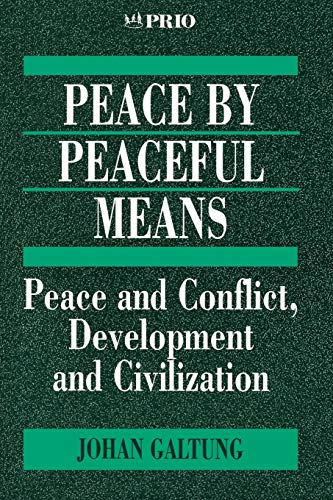
Synopsis
Johan Galtung, one of the founders of modern peace studies, provides a wide-ranging panorama of the ideas, theories and assumptions on which the study of peace is based.
The book is organized in four parts, each examining the one of the four major theoretical approaches to peace. The first part covers peace theory, exploring the epistemological assumptions of peace. In Part Two conflict theory is examined with an exploration of nonviolent and creative handling of conflict. Developmental theory is discussed in Part Three, exploring structural violence, particularly in the economic field, together with a consideration of the ways of overcoming that violence. The fourth part is devoted to civilization theory. This involves an
Les informations fournies dans la section « Synopsis » peuvent faire référence à une autre édition de ce titre.
À propos de l'auteur
Johan Galtung, dr hc mult, is Professor of Peace Studies at the University of Haiwaii, the University of Witten/Herdecke, the European Peace University and the University of Troms[o with a line through it]o. One of the founders of peace research, he established the International Peace Research Institute, Oslo (PRIO) in 1959 and the Journal of Peace Research in 1964. He has published over 50 books, including, Essays in Peace Research, Theories and Methods of Social Science Research, Human Rights in Another Key (1994) and Choose Peace (1995).
À propos de la quatrième de couverture
Johan Galtung, one of the founders of modern peace studies, provides a wide-ranging panorama of the ideas, theories and assumptions on which the study of peace is based.
The book is organized in four parts, each examining the one of the four major theoretical approaches to peace. The first part covers peace theory, exploring the epistemological assumptions of peace. In Part Two conflict theory is examined with an exploration of nonviolent and creative handling of conflict. Developmental theory is discussed in Part Three, exploring structural violence, particularly in the economic field, together with a consideration of the ways of overcoming that violence. The fourth part is devoted to civilization theory. This involves an exploration of cultural violence focusing on the deeper aspects of cultures. Finally, the threads of these four approaches are drawn together with a focus on peace action - peace by peaceful means.
Les informations fournies dans la section « A propos du livre » peuvent faire référence à une autre édition de ce titre.
Résultats de recherche pour GALTUNG: PEACE BY PEACEFUL (P) MEANS; PEACE AND CONFLICT,DEV...

Image fournie par le vendeur
Peace by Peaceful Means: Peace and Conflict, Development and Civilization (International Peace Research Institute, Oslo (PRIO))
Edité par
SAGE Publications Ltd, 1996
ISBN 10 : 0803975112
ISBN 13 : 9780803975118
Ancien ou d'occasion
Couverture souple
Vendeur : Greenworld Books, Arlington, TX, Etats-Unis
Évaluation du vendeur 5 sur 5 étoiles

Etat : very_good. Fast Free Shipping â" Very Good condition book with a firm cover and clean pages. Shows normal use and some light wear or limited notes markings. A solid, nice copy to enjoy. N° de réf. du vendeur GWV.0803975112.VG
Acheter D'occasion
EUR 56,25
Livraison gratuite
Expédition nationale : Etats-Unis
Expédition nationale : Etats-Unis
Quantité disponible : 1 disponible(s)
Image d'archives
Peace by Peaceful Means: Peace and Conflict, Development and Civilization (International Peace Research Institute, Oslo (PRIO))
Edité par
SAGE Publications Ltd, 1996
ISBN 10 : 0803975112
ISBN 13 : 9780803975118
Ancien ou d'occasion
Paperback
Vendeur : Half Price Books Inc., Dallas, TX, Etats-Unis
Évaluation du vendeur 5 sur 5 étoiles
Paperback. Etat : Very Good. Connecting readers with great books since 1972! Used books may not include companion materials, and may have some shelf wear or limited writing. We ship orders daily and Customer Service is our top priority! N° de réf. du vendeur S_486741508
Acheter D'occasion
EUR 53,25
Expédition à EUR 3,40
Expédition nationale : Etats-Unis
Expédition nationale : Etats-Unis
Quantité disponible : 1 disponible(s)
Image d'archives
Peace by Peaceful Means: Peace and Conflict, Development and Civilization
Edité par
Sage Publications Ltd, 1996
ISBN 10 : 0803975112
ISBN 13 : 9780803975118
Ancien ou d'occasion
Paperback
Vendeur : ThriftBooks-Atlanta, AUSTELL, GA, Etats-Unis
Évaluation du vendeur 5 sur 5 étoiles
Paperback. Etat : Fair. No Jacket. Readable copy. Pages may have considerable notes/highlighting. ~ ThriftBooks: Read More, Spend Less. N° de réf. du vendeur G0803975112I5N00
Acheter D'occasion
EUR 56,94
Livraison gratuite
Expédition nationale : Etats-Unis
Expédition nationale : Etats-Unis
Quantité disponible : 1 disponible(s)
Image d'archives
Peace by Peaceful Means: Peace and Conflict, Development and Civilization (International Peace Research Institute, Oslo (PRIO))
Edité par
SAGE Publications Ltd, 1996
ISBN 10 : 0803975112
ISBN 13 : 9780803975118
Ancien ou d'occasion
Couverture souple
Vendeur : Phatpocket Limited, Waltham Abbey, HERTS, Royaume-Uni
Évaluation du vendeur 5 sur 5 étoiles
Etat : Acceptable. Used - Acceptable. Your purchase helps support Sri Lankan Children's Charity 'The Rainbow Centre'. Ex-library with wear and barcode page may have been removed. Our donations to The Rainbow Centre have helped provide an education and a safe haven to hundreds of children who live in appalling conditions. N° de réf. du vendeur Z1-C-007-02969
Acheter D'occasion
EUR 50,92
Expédition à EUR 12,75
Expédition depuis Royaume-Uni vers Etats-Unis
Expédition depuis Royaume-Uni vers Etats-Unis
Quantité disponible : 1 disponible(s)
Image d'archives
GALTUNG: PEACE BY PEACEFUL (P) MEANS; PEACE AND CONFLICT,DEVELOPMENT AND CIVILIZATION: Peace and Conflict, Development and Civilization: 14 (International Peace Research Institute, Oslo (PRIO))
Edité par
SAGE Publications Ltd 1996-04-16, 1996
ISBN 10 : 0803975112
ISBN 13 : 9780803975118
Neuf
Paperback
Vendeur : Chiron Media, Wallingford, Royaume-Uni
Évaluation du vendeur 5 sur 5 étoiles
Paperback. Etat : New. Brand new book, sourced directly from publisher. Dispatch time is 24-48 hours from our warehouse. Book will be sent in robust, secure packaging to ensure it reaches you securely. N° de réf. du vendeur 6666-GRD-9780803975118
Acheter neuf
EUR 64,73
Expédition à EUR 5,98
Expédition depuis Royaume-Uni vers Etats-Unis
Expédition depuis Royaume-Uni vers Etats-Unis
Quantité disponible : 1 disponible(s)
Image fournie par le vendeur
Peace by Peaceful Means : Peace and Conflict, Development and Civilization
Edité par
SAGE Publications Ltd, 1996
ISBN 10 : 0803975112
ISBN 13 : 9780803975118
Neuf
Couverture souple
Vendeur : GreatBookPrices, Columbia, MD, Etats-Unis
Évaluation du vendeur 5 sur 5 étoiles
Etat : New. N° de réf. du vendeur 759693-n
Acheter neuf
EUR 70,36
Expédition à EUR 2,39
Expédition nationale : Etats-Unis
Expédition nationale : Etats-Unis
Quantité disponible : 2 disponible(s)
Image fournie par le vendeur
Peace by Peaceful Means
Edité par
SAGE Publications Inc, US, 1996
ISBN 10 : 0803975112
ISBN 13 : 9780803975118
Neuf
Paperback
Vendeur : Rarewaves.com USA, London, LONDO, Royaume-Uni
Évaluation du vendeur 5 sur 5 étoiles
Paperback. Etat : New. Johan Galtung, one of the founders of modern peace studies, provides a wide-ranging panorama of the ideas, theories and assumptions on which the study of peace is based.The book is organized in four parts, each examining the one of the four major theoretical approaches to peace. The first part covers peace theory, exploring the epistemological assumptions of peace. In Part Two conflict theory is examined with an exploration of nonviolent and creative handling of conflict. Developmental theory is discussed in Part Three, exploring structural violence, particularly in the economic field, together with a consideration of the ways of overcoming that violence. The fourth part is devoted to civilization theory. This involves an exploration of cultural violence focusing on the deeper aspects of cultures. Finally, the threads of these four approaches are drawn together with a focus on peace action - peace by peaceful means. N° de réf. du vendeur LU-9780803975118
Acheter neuf
EUR 78,66
Livraison gratuite
Expédition depuis Royaume-Uni vers Etats-Unis
Expédition depuis Royaume-Uni vers Etats-Unis
Quantité disponible : 1 disponible(s)
Image d'archives
Peace by Peaceful Means: Peace and Conflict, Development and Civilization
impression à la demandeVendeur : Revaluation Books, Exeter, Royaume-Uni
Évaluation du vendeur 5 sur 5 étoiles
Paperback. Etat : Brand New. 292 pages. 9.50x6.25x0.75 inches. In Stock. This item is printed on demand. N° de réf. du vendeur __0803975112
Acheter neuf
EUR 68,76
Expédition à EUR 11,99
Expédition depuis Royaume-Uni vers Etats-Unis
Expédition depuis Royaume-Uni vers Etats-Unis
Quantité disponible : 2 disponible(s)
Image fournie par le vendeur
Peace by Peaceful Means : Peace and Conflict, Development and Civilization
Edité par
SAGE Publications Ltd, 1996
ISBN 10 : 0803975112
ISBN 13 : 9780803975118
Ancien ou d'occasion
Couverture souple
Vendeur : GreatBookPrices, Columbia, MD, Etats-Unis
Évaluation du vendeur 5 sur 5 étoiles
Etat : As New. Unread book in perfect condition. N° de réf. du vendeur 759693
Acheter D'occasion
EUR 78,74
Expédition à EUR 2,39
Expédition nationale : Etats-Unis
Expédition nationale : Etats-Unis
Quantité disponible : 2 disponible(s)
Image d'archives
Peace by Peaceful Means: Peace and Conflict, Development and Civilization
Edité par
SAGE Publications Ltd, 1996
ISBN 10 : 0803975112
ISBN 13 : 9780803975118
Neuf
Paperback / softback
Vendeur : THE SAINT BOOKSTORE, Southport, Royaume-Uni
Évaluation du vendeur 5 sur 5 étoiles
Paperback / softback. Etat : New. New copy - Usually dispatched within 4 working days. N° de réf. du vendeur B9780803975118
Acheter neuf
EUR 64,43
Expédition à EUR 19,36
Expédition depuis Royaume-Uni vers Etats-Unis
Expédition depuis Royaume-Uni vers Etats-Unis
Quantité disponible : 2 disponible(s)