
Articles liés à Fateless
Synopsis
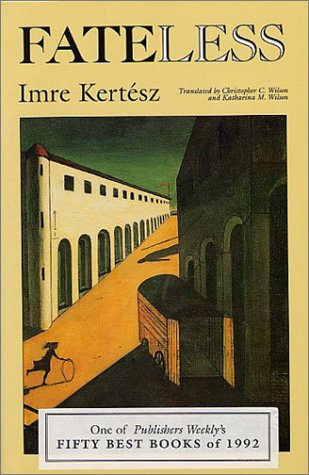
On his return to his native Budapest from a German concentration camp, 14-year-old George Koves senses the difference of people on the street. Left to ponder the meaning of his experience alone, he comes to the conclusion that neither his Hungarian or Jewish heritage was at the heart of his fate.
Les informations fournies dans la section « Synopsis » peuvent faire référence à une autre édition de ce titre.
À propos de l'auteur
Imre Kertesz is the winner of the 2002 Nobel Prize for Literature. Born in Hungary in 1929, he is one of the country's most successful postwar writers. Imprisoned in Auschwitz as a youth, Kertesz worked as a journalist and wrote musical plays to support himself before publishing Fateless, his first novel, in 1975. He is the author of Looking for a Clue, Detective Story, The British Flag, and Gallery-Diary 1961-1991.
Les informations fournies dans la section « A propos du livre » peuvent faire référence à une autre édition de ce titre.
Résultats de recherche pour Fateless

Image d'archives
Fateless
Edité par
Northwestern University Press, 1996
ISBN 10 : 0810110490
ISBN 13 : 9780810110496
Ancien ou d'occasion
Paperback
Vendeur : World of Books (was SecondSale), Montgomery, IL, Etats-Unis
Évaluation du vendeur 5 sur 5 étoiles

Paperback. Etat : Fair. Winner, 2002 Nobel Prize for LiteratureOne of Publishers Weekly's Fifty Best Books of 1992 Fateless is a moving and disturbing novel about a Hungarian Jewish boy's experiences in German concentration camps and his attempts to reconcile himself to those experiences after the war. Upon his return to his native Budapest still clad in his striped prison clothes, fourteen-year-old George Koves senses the indifference, even hostility, of people on the street. His former neighbors and friends urge him to put the ordeal out of his mind, while a sympathetic journalist refers to the camps as the lowest circle of hell. The boy can relate to neither cliche and is left to ponder the meaning of his experience alone. George's response to his experience is curiously ambivalent. In the camps he tries to adjust to his ever-worsening situation by imputing human motives to his inhumane captors. By imposing his logic--that of a bright, sensitive, though in many ways ordinary teenager - he maintains a precarious semblance of normalcy. Once freed, he must contend with the banality of evil to which he has become accustomed: when asked why he uses words like naturally, undeniably, and without question to describe the most horrendous of experiences, he responds, In the concentration camp it was natural. Without emotional or spiritual ties to his Jewish heritage and rejected by his country, he ultimately comes to the conclusion that neither his Hungarianness nor his Jewishness was really at the heart of his fate: rather, there are only given situations, and within these, further givens. N° de réf. du vendeur CIN0810110490A
Acheter D'occasion
EUR 3,72
Livraison gratuite
Expédition nationale : Etats-Unis
Expédition nationale : Etats-Unis
Quantité disponible : 1 disponible(s)
Image d'archives
Fateless
Edité par
Northwestern University Press, 1996
ISBN 10 : 0810110490
ISBN 13 : 9780810110496
Ancien ou d'occasion
Paperback
Vendeur : World of Books (was SecondSale), Montgomery, IL, Etats-Unis
Évaluation du vendeur 5 sur 5 étoiles
Paperback. Etat : Good. Winner, 2002 Nobel Prize for LiteratureOne of Publishers Weekly's Fifty Best Books of 1992 Fateless is a moving and disturbing novel about a Hungarian Jewish boy's experiences in German concentration camps and his attempts to reconcile himself to those experiences after the war. Upon his return to his native Budapest still clad in his striped prison clothes, fourteen-year-old George Koves senses the indifference, even hostility, of people on the street. His former neighbors and friends urge him to put the ordeal out of his mind, while a sympathetic journalist refers to the camps as the lowest circle of hell. The boy can relate to neither cliche and is left to ponder the meaning of his experience alone. George's response to his experience is curiously ambivalent. In the camps he tries to adjust to his ever-worsening situation by imputing human motives to his inhumane captors. By imposing his logic--that of a bright, sensitive, though in many ways ordinary teenager - he maintains a precarious semblance of normalcy. Once freed, he must contend with the banality of evil to which he has become accustomed: when asked why he uses words like naturally, undeniably, and without question to describe the most horrendous of experiences, he responds, In the concentration camp it was natural. Without emotional or spiritual ties to his Jewish heritage and rejected by his country, he ultimately comes to the conclusion that neither his Hungarianness nor his Jewishness was really at the heart of his fate: rather, there are only given situations, and within these, further givens. N° de réf. du vendeur 00107271483
Acheter D'occasion
EUR 3,72
Livraison gratuite
Expédition nationale : Etats-Unis
Expédition nationale : Etats-Unis
Quantité disponible : 3 disponible(s)
Image d'archives
Fateless
Edité par
Northwestern University Press, 1996
ISBN 10 : 0810110490
ISBN 13 : 9780810110496
Ancien ou d'occasion
Paperback
Vendeur : World of Books (was SecondSale), Montgomery, IL, Etats-Unis
Évaluation du vendeur 5 sur 5 étoiles
Paperback. Etat : Very Good. Winner, 2002 Nobel Prize for LiteratureOne of Publishers Weekly's Fifty Best Books of 1992 Fateless is a moving and disturbing novel about a Hungarian Jewish boy's experiences in German concentration camps and his attempts to reconcile himself to those experiences after the war. Upon his return to his native Budapest still clad in his striped prison clothes, fourteen-year-old George Koves senses the indifference, even hostility, of people on the street. His former neighbors and friends urge him to put the ordeal out of his mind, while a sympathetic journalist refers to the camps as the lowest circle of hell. The boy can relate to neither cliche and is left to ponder the meaning of his experience alone. George's response to his experience is curiously ambivalent. In the camps he tries to adjust to his ever-worsening situation by imputing human motives to his inhumane captors. By imposing his logic--that of a bright, sensitive, though in many ways ordinary teenager - he maintains a precarious semblance of normalcy. Once freed, he must contend with the banality of evil to which he has become accustomed: when asked why he uses words like naturally, undeniably, and without question to describe the most horrendous of experiences, he responds, In the concentration camp it was natural. Without emotional or spiritual ties to his Jewish heritage and rejected by his country, he ultimately comes to the conclusion that neither his Hungarianness nor his Jewishness was really at the heart of his fate: rather, there are only given situations, and within these, further givens. N° de réf. du vendeur 00109623702
Acheter D'occasion
EUR 3,72
Livraison gratuite
Expédition nationale : Etats-Unis
Expédition nationale : Etats-Unis
Quantité disponible : 1 disponible(s)
Image d'archives
Fateless
Edité par
Northwestern University Press, 1996
ISBN 10 : 0810110490
ISBN 13 : 9780810110496
Ancien ou d'occasion
paperback
Vendeur : Gulf Coast Books, Cypress, TX, Etats-Unis
Évaluation du vendeur 5 sur 5 étoiles
paperback. Etat : Good. N° de réf. du vendeur 0810110490-3-30684118
Acheter D'occasion
EUR 3,73
Livraison gratuite
Expédition nationale : Etats-Unis
Expédition nationale : Etats-Unis
Quantité disponible : 1 disponible(s)
Image d'archives
Fateless
Edité par
Northwestern University Press (edition ), 1996
ISBN 10 : 0810110490
ISBN 13 : 9780810110496
Ancien ou d'occasion
Paperback
Vendeur : BooksRun, Philadelphia, PA, Etats-Unis
Évaluation du vendeur 5 sur 5 étoiles
Paperback. Etat : Very Good. It's a well-cared-for item that has seen limited use. The item may show minor signs of wear. All the text is legible, with all pages included. It may have slight markings and/or highlighting. N° de réf. du vendeur 0810110490-8-1
Acheter D'occasion
EUR 4,27
Livraison gratuite
Expédition nationale : Etats-Unis
Expédition nationale : Etats-Unis
Quantité disponible : 1 disponible(s)
Image fournie par le vendeur
Fateless
Edité par
Northwestern University Press, 1996
ISBN 10 : 0810110490
ISBN 13 : 9780810110496
Ancien ou d'occasion
Couverture souple
Vendeur : Books for Life, LAUREL, MD, Etats-Unis
Évaluation du vendeur 5 sur 5 étoiles
Etat : very_good. Book is in very good condition. Clean with little to no signs of wear or markings highlights. N° de réf. du vendeur LFM.9BCP
Acheter D'occasion
EUR 4,47
Livraison gratuite
Expédition nationale : Etats-Unis
Expédition nationale : Etats-Unis
Quantité disponible : 1 disponible(s)
Image d'archives
Fateless
Edité par
Northwestern University Press, 1996
ISBN 10 : 0810110490
ISBN 13 : 9780810110496
Ancien ou d'occasion
Couverture souple
Vendeur : More Than Words, Waltham, MA, Etats-Unis
Évaluation du vendeur 5 sur 5 étoiles
Etat : Good. A sound copy with only light wear. Overall a solid copy at a great price! N° de réf. du vendeur BOS-H-01c-02246
Acheter D'occasion
EUR 1,20
Expédition à EUR 3,56
Expédition nationale : Etats-Unis
Expédition nationale : Etats-Unis
Quantité disponible : 1 disponible(s)
Image fournie par le vendeur
Fateless
Edité par
Northwestern University Press, 1996
ISBN 10 : 0810110490
ISBN 13 : 9780810110496
Ancien ou d'occasion
Couverture souple
Vendeur : ZBK Books, Carlstadt, NJ, Etats-Unis
Évaluation du vendeur 5 sur 5 étoiles
Etat : very_good. Fast & Free Shipping â" Very Good condition book with a firm cover and clean pages. Shows normal use and some light wear or limited notes markings. A solid, nice copy to enjoy. N° de réf. du vendeur ZWV.0810110490.VG
Acheter D'occasion
EUR 4,97
Livraison gratuite
Expédition nationale : Etats-Unis
Expédition nationale : Etats-Unis
Quantité disponible : 1 disponible(s)
Image d'archives
Fateless
Edité par
Northwestern University Press, 1996
ISBN 10 : 0810110490
ISBN 13 : 9780810110496
Ancien ou d'occasion
Paperback
Vendeur : World of Books Inc, Montgomery, IL, Etats-Unis
Évaluation du vendeur 4 sur 5 étoiles

Paperback. Etat : Fair. Winner, 2002 Nobel Prize for LiteratureOne of Publishers Weekly's Fifty Best Books of 1992 Fateless is a moving and disturbing novel about a Hungarian Jewish boy's experiences in German concentration camps and his attempts to reconcile himself to those experiences after the war. Upon his return to his native Budapest still clad in his striped prison clothes, fourteen-year-old George Koves senses the indifference, even hostility, of people on the street. His former neighbors and friends urge him to put the ordeal out of his mind, while a sympathetic journalist refers to the camps as the lowest circle of hell. The boy can relate to neither cliche and is left to ponder the meaning of his experience alone. George's response to his experience is curiously ambivalent. In the camps he tries to adjust to his ever-worsening situation by imputing human motives to his inhumane captors. By imposing his logic--that of a bright, sensitive, though in many ways ordinary teenager - he maintains a precarious semblance of normalcy. Once freed, he must contend with the banality of evil to which he has become accustomed: when asked why he uses words like naturally, undeniably, and without question to describe the most horrendous of experiences, he responds, In the concentration camp it was natural. Without emotional or spiritual ties to his Jewish heritage and rejected by his country, he ultimately comes to the conclusion that neither his Hungarianness nor his Jewishness was really at the heart of his fate: rather, there are only given situations, and within these, further givens. N° de réf. du vendeur CIN0810110490A
Acheter D'occasion
EUR 5,56
Livraison gratuite
Expédition nationale : Etats-Unis
Expédition nationale : Etats-Unis
Quantité disponible : 1 disponible(s)
Image d'archives
Fateless
Edité par
Northwestern University Press, 1996
ISBN 10 : 0810110490
ISBN 13 : 9780810110496
Ancien ou d'occasion
Paperback
Vendeur : World of Books Inc, Montgomery, IL, Etats-Unis
Évaluation du vendeur 4 sur 5 étoiles
Paperback. Etat : Good. Winner, 2002 Nobel Prize for LiteratureOne of Publishers Weekly's Fifty Best Books of 1992 Fateless is a moving and disturbing novel about a Hungarian Jewish boy's experiences in German concentration camps and his attempts to reconcile himself to those experiences after the war. Upon his return to his native Budapest still clad in his striped prison clothes, fourteen-year-old George Koves senses the indifference, even hostility, of people on the street. His former neighbors and friends urge him to put the ordeal out of his mind, while a sympathetic journalist refers to the camps as the lowest circle of hell. The boy can relate to neither cliche and is left to ponder the meaning of his experience alone. George's response to his experience is curiously ambivalent. In the camps he tries to adjust to his ever-worsening situation by imputing human motives to his inhumane captors. By imposing his logic--that of a bright, sensitive, though in many ways ordinary teenager - he maintains a precarious semblance of normalcy. Once freed, he must contend with the banality of evil to which he has become accustomed: when asked why he uses words like naturally, undeniably, and without question to describe the most horrendous of experiences, he responds, In the concentration camp it was natural. Without emotional or spiritual ties to his Jewish heritage and rejected by his country, he ultimately comes to the conclusion that neither his Hungarianness nor his Jewishness was really at the heart of his fate: rather, there are only given situations, and within these, further givens. N° de réf. du vendeur CIN0810110490G
Acheter D'occasion
EUR 5,56
Livraison gratuite
Expédition nationale : Etats-Unis
Expédition nationale : Etats-Unis
Quantité disponible : 3 disponible(s)