
Articles liés à Human Rights in Iran: The Abuse of Cultural Relativism
Human Rights in Iran: The Abuse of Cultural Relativism - Couverture souple
Livre 11 sur 111: Pennsylvania Studies in Human Rights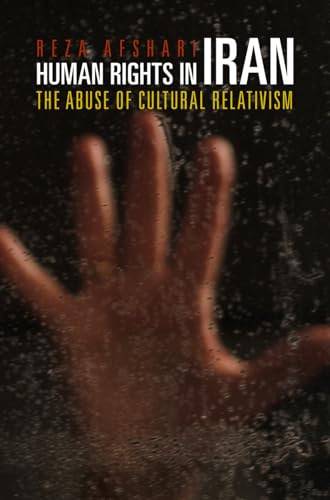
Synopsis
Selected by Choice magazine as an Outstanding Academic Title
Are the principles set forth in the Universal Declaration of Human Rights truly universal? Or, as some have argued, are they derived exclusively from Western philosophic traditions and therefore irrelevant to many non-Western cultures? Should a state's claims to indigenous traditions, and not international covenants, determine the scope of rights granted to its citizens?
In his strong defense of the Declaration, Reza Afshari contends that the moral vision embodied in this and other agreements is a proper response to the abuses of the modern state. Asserting that the most serious violations of human rights by state rulers are motivated by political and economic factors rather than the purported concern for cultural authenticity, Afshari examines one particular state that has claimed cultural exception to the universality of human rights, the Islamic Republic of Iran.
In his revealing case study, Afshari investigates how Islamic culture and Iranian politics since the fall of the Shah have affected human rights policy in that state. He exposes the human rights violations committed by ruling clerics in Iran since the Revolution, showing that Iran has behaved remarkably like other authoritarian governments in its human rights abuses. For more than two decades, Iran has systematically jailed, tortured, and executed dissidents without due process of law and assassinated political opponents outside state borders. Furthermore, like other oppressive states, Iran has regularly denied and countered the charges made by United Nations human rights monitors, defending its acts as authentic cultural practices.
Throughout his study, Afshari addresses Iran's claims of cultural relativism, a controversial thesis in the intense ongoing debate over the universality of human rights. In prison memoirs he uncovers the actual human rights abuses committed by the Islamic Republic and the sociopolitical conditions that cause or permit them. Finally, Afshari turns to little-read UN reports that reveal that the dynamics of power between UN human rights monitors and Iranian leaders have proven ineffective at enforcing human rights policy in Iran. Critically analyzing the state's responses, Afshari shows that the Islamic Republic, like other oppressive states, has regularly denied and countered the charges made by UN human rights monitors, and when denials were patently implausible, it defended its acts as authentic cultural practices. This defense is equally unconvincing, since it lacked domestic cultural consensus.
Les informations fournies dans la section « Synopsis » peuvent faire référence à une autre édition de ce titre.
À propos de l'auteur
Reza Afshari is Professor of History and Human Rights at Pace University.
Les informations fournies dans la section « A propos du livre » peuvent faire référence à une autre édition de ce titre.
Résultats de recherche pour Human Rights in Iran: The Abuse of Cultural Relativism

Image d'archives
Human Rights in Iran: The Abuse of Cultural Relativism (Pennsylvania Studies in Human Rights)
Edité par
University of Pennsylvania Press, 2011
ISBN 10 : 0812221397
ISBN 13 : 9780812221398
Ancien ou d'occasion
Paperback
Vendeur : Midtown Scholar Bookstore, Harrisburg, PA, Etats-Unis
Évaluation du vendeur 5 sur 5 étoiles

Paperback. Etat : Good. Good - Bumped and creased book with tears to the extremities, but not affecting the text block, may have remainder mark or previous owner's name - GOOD Standard-sized. N° de réf. du vendeur M0812221397Z3
Acheter D'occasion
EUR 19,03
Expédition à EUR 5,23
Expédition nationale : Etats-Unis
Expédition nationale : Etats-Unis
Quantité disponible : 1 disponible(s)
Image d'archives
Human Rights in Iran: The Abuse of Cultural Relativism (Pennsylvania Studies in Human Rights)
Edité par
University of Pennsylvania Press, 2011
ISBN 10 : 0812221397
ISBN 13 : 9780812221398
Ancien ou d'occasion
Soft cover
Vendeur : Eve's Book Garden, Albany, CA, Etats-Unis
Évaluation du vendeur 4 sur 5 étoiles

Soft cover. Etat : Fine. Clean, bright, unopened pages in glossy covers. Corner tips with mini turns. N° de réf. du vendeur 037461
Acheter D'occasion
EUR 22,43
Expédition à EUR 5,23
Expédition nationale : Etats-Unis
Expédition nationale : Etats-Unis
Quantité disponible : 1 disponible(s)
Image fournie par le vendeur
Human Rights in Iran : The Abuse of Cultural Relativism
Edité par
University of Pennsylvania Press, 2011
ISBN 10 : 0812221397
ISBN 13 : 9780812221398
Ancien ou d'occasion
Couverture souple
Vendeur : GreatBookPrices, Columbia, MD, Etats-Unis
Évaluation du vendeur 5 sur 5 étoiles
Etat : As New. Unread book in perfect condition. N° de réf. du vendeur 12359284
Acheter D'occasion
EUR 41,11
Expédition à EUR 2,30
Expédition nationale : Etats-Unis
Expédition nationale : Etats-Unis
Quantité disponible : 1 disponible(s)
Image d'archives
Human Rights in Iran
Edité par
MT - University of Pennsylvania Press, 2011
ISBN 10 : 0812221397
ISBN 13 : 9780812221398
Neuf
PAP
Vendeur : PBShop.store UK, Fairford, GLOS, Royaume-Uni
Évaluation du vendeur 5 sur 5 étoiles
PAP. Etat : New. New Book. Shipped from UK. Established seller since 2000. N° de réf. du vendeur FW-9780812221398
Acheter neuf
EUR 37,53
Expédition à EUR 6,85
Expédition depuis Royaume-Uni vers Etats-Unis
Expédition depuis Royaume-Uni vers Etats-Unis
Quantité disponible : 1 disponible(s)
Image fournie par le vendeur
Human Rights in Iran : The Abuse of Cultural Relativism
Edité par
University of Pennsylvania Press, 2011
ISBN 10 : 0812221397
ISBN 13 : 9780812221398
Neuf
Couverture souple
Vendeur : GreatBookPrices, Columbia, MD, Etats-Unis
Évaluation du vendeur 5 sur 5 étoiles
Etat : New. N° de réf. du vendeur 12359284-n
Acheter neuf
EUR 43,35
Expédition à EUR 2,30
Expédition nationale : Etats-Unis
Expédition nationale : Etats-Unis
Quantité disponible : 1 disponible(s)
Image d'archives
Human Rights in Iran: The Abuse of Cultural Relativism (Pennsylvania Studies in Human Rights)
Edité par
University of Pennsylvania Press, 2011
ISBN 10 : 0812221397
ISBN 13 : 9780812221398
Neuf
Couverture souple
Vendeur : Ria Christie Collections, Uxbridge, Royaume-Uni
Évaluation du vendeur 5 sur 5 étoiles
Etat : New. In English. N° de réf. du vendeur ria9780812221398_new
Acheter neuf
EUR 39,07
Expédition à EUR 13,17
Expédition depuis Royaume-Uni vers Etats-Unis
Expédition depuis Royaume-Uni vers Etats-Unis
Quantité disponible : 1 disponible(s)
Image d'archives
Human Rights in Iran: The Abuse of Cultural Relativism
Edité par
University of Pennsylvania Press, 2011
ISBN 10 : 0812221397
ISBN 13 : 9780812221398
Neuf
Couverture souple
Vendeur : Kennys Bookshop and Art Galleries Ltd., Galway, GY, Irlande
Évaluation du vendeur 5 sur 5 étoiles
Etat : New. Reza Afshari reveals Iran's attempt to hide human rights abuses by labeling oppression as an authentic cultural practice. Series: Pennsylvania Studies in Human Rights. Num Pages: 440 pages. BIC Classification: 1FBN; JPVH. Category: (U) Tertiary Education (US: College). Dimension: 235 x 155 x 26. Weight in Grams: 735. . 2011. Paperback. . . . . N° de réf. du vendeur V9780812221398
Acheter neuf
EUR 43,20
Expédition à EUR 9,50
Expédition depuis Irlande vers Etats-Unis
Expédition depuis Irlande vers Etats-Unis
Quantité disponible : 1 disponible(s)
Image d'archives
Human Rights in Iran The Abuse of Cultural Relativism
Vendeur : Revaluation Books, Exeter, Royaume-Uni
Évaluation du vendeur 5 sur 5 étoiles
Paperback. Etat : Brand New. reprint edition. 409 pages. 9.00x6.00x1.00 inches. In Stock. N° de réf. du vendeur __0812221397
Acheter neuf
EUR 41,01
Expédition à EUR 14,58
Expédition depuis Royaume-Uni vers Etats-Unis
Expédition depuis Royaume-Uni vers Etats-Unis
Quantité disponible : 1 disponible(s)
Image d'archives
Human Rights in Iran : The Abuse of Cultural Relativism
Edité par
University of Pennsylvania Press, 2011
ISBN 10 : 0812221397
ISBN 13 : 9780812221398
Neuf
Couverture souple
Vendeur : GreatBookPricesUK, Woodford Green, Royaume-Uni
Évaluation du vendeur 5 sur 5 étoiles
Etat : New. N° de réf. du vendeur 12359284-n
Acheter neuf
EUR 39,05
Expédition à EUR 17,50
Expédition depuis Royaume-Uni vers Etats-Unis
Expédition depuis Royaume-Uni vers Etats-Unis
Quantité disponible : 1 disponible(s)
Image fournie par le vendeur
Human Rights in Iran : The Abuse of Cultural Relativism
Edité par
University of Pennsylvania Press, 2011
ISBN 10 : 0812221397
ISBN 13 : 9780812221398
Ancien ou d'occasion
Couverture souple
Vendeur : GreatBookPricesUK, Woodford Green, Royaume-Uni
Évaluation du vendeur 5 sur 5 étoiles
Etat : As New. Unread book in perfect condition. N° de réf. du vendeur 12359284
Acheter D'occasion
EUR 42,12
Expédition à EUR 17,50
Expédition depuis Royaume-Uni vers Etats-Unis
Expédition depuis Royaume-Uni vers Etats-Unis
Quantité disponible : 1 disponible(s)