
Articles liés à The Plantation Machine: Atlantic Capitalism in French...
The Plantation Machine: Atlantic Capitalism in French Saint-Domingue and British Jamaica - Couverture souple
Livre 12 sur 24: The Early Modern Americas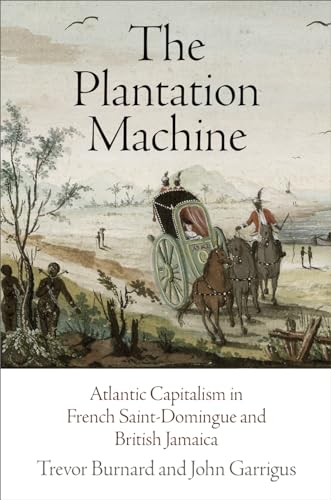
Synopsis
Jamaica and Saint-Domingue were especially brutal but conspicuously successful eighteenth-century slave societies and imperial colonies. These plantation regimes were, to adopt a metaphor of the era, complex "machines," finely tuned over time by planters, merchants, and officials to become more efficient at exploiting their enslaved workers and serving their empires. Using a wide range of archival evidence, The Plantation Machine traces a critical half-century in the development of the social, economic, and political frameworks that made these societies possible. Trevor Burnard and John Garrigus find deep and unexpected similarities in these two prize colonies of empires that fought each other throughout the period. Jamaica and Saint-Domingue experienced, at nearly the same moment, a bitter feud between planters and governors, a violent conflict between masters and enslaved workers, a fateful tightening of racial laws, a steady expansion of the slave trade, and metropolitan criticism of planters' cruelty.
The core of The Plantation Machine addresses the Seven Years' War and its aftermath. The events of that period, notably a slave poisoning scare in Saint-Domingue and a near-simultaneous slave revolt in Jamaica, cemented white dominance in both colonies. Burnard and Garrigus argue that local political concerns, not emerging racial ideologies, explain the rise of distinctive forms of racism in these two societies. The American Revolution provided another imperial crisis for the beneficiaries of the plantation machine, but by the 1780s whites in each place were prospering as never before--and blacks were suffering in new and disturbing ways. The result was that Jamaica and Saint-Domingue became vitally important parts of the late eighteenth-century American empires of Britain and France.
Les informations fournies dans la section « Synopsis » peuvent faire référence à une autre édition de ce titre.
À propos de l'auteur
Trevor Burnard is Wilberforce Professor of Slavery and Emancipation and Director of the Wilberforce Institute, University of Hull. He is author of Mastery, Tyranny, and Desire: Thomas Thistlewood and His Slaves in the Anglo-Jamaican World. John Garrigus is Professor of History at the University of Texas at Arlington and author of Before Haiti: Race and Citizenship in French Saint-Domingue.
Les informations fournies dans la section « A propos du livre » peuvent faire référence à une autre édition de ce titre.
Résultats de recherche pour The Plantation Machine: Atlantic Capitalism in French...

Image d'archives
The Plantation Machine
Edité par
University of Pennsylvania Press, 2018
ISBN 10 : 081222423X
ISBN 13 : 9780812224238
Neuf
PAP
Vendeur : PBShop.store UK, Fairford, GLOS, Royaume-Uni
Évaluation du vendeur 5 sur 5 étoiles

PAP. Etat : New. New Book. Shipped from UK. Established seller since 2000. N° de réf. du vendeur FW-9780812224238
Acheter neuf
EUR 30,57
Expédition à EUR 5,92
Expédition depuis Royaume-Uni vers Etats-Unis
Expédition depuis Royaume-Uni vers Etats-Unis
Quantité disponible : 15 disponible(s)
Image fournie par le vendeur
Plantation Machine : Atlantic Capitalism in French Saint-Domingue and British Jamaica
Edité par
University of Pennsylvania Press, 2018
ISBN 10 : 081222423X
ISBN 13 : 9780812224238
Neuf
Couverture souple
Vendeur : GreatBookPrices, Columbia, MD, Etats-Unis
Évaluation du vendeur 5 sur 5 étoiles
Etat : New. N° de réf. du vendeur 32858694-n
Acheter neuf
EUR 35,16
Expédition à EUR 2,35
Expédition nationale : Etats-Unis
Expédition nationale : Etats-Unis
Quantité disponible : Plus de 20 disponibles
Image fournie par le vendeur
Plantation Machine : Atlantic Capitalism in French Saint-Domingue and British Jamaica
Edité par
University of Pennsylvania Press, 2018
ISBN 10 : 081222423X
ISBN 13 : 9780812224238
Ancien ou d'occasion
Couverture souple
Vendeur : GreatBookPrices, Columbia, MD, Etats-Unis
Évaluation du vendeur 5 sur 5 étoiles
Etat : As New. Unread book in perfect condition. N° de réf. du vendeur 32858694
Acheter D'occasion
EUR 35,79
Expédition à EUR 2,35
Expédition nationale : Etats-Unis
Expédition nationale : Etats-Unis
Quantité disponible : Plus de 20 disponibles
Image fournie par le vendeur
The Plantation Machine: Atlantic Capitalism in French Saint-Domingue and British Jamaica (Paperback or Softback)
Edité par
University of Pennsylvania Press 8/8/2018, 2018
ISBN 10 : 081222423X
ISBN 13 : 9780812224238
Neuf
Paperback or Softback
Vendeur : BargainBookStores, Grand Rapids, MI, Etats-Unis
Évaluation du vendeur 5 sur 5 étoiles
Paperback or Softback. Etat : New. The Plantation Machine: Atlantic Capitalism in French Saint-Domingue and British Jamaica. Book. N° de réf. du vendeur BBS-9780812224238
Acheter neuf
EUR 38,25
Livraison gratuite
Expédition nationale : Etats-Unis
Expédition nationale : Etats-Unis
Quantité disponible : 5 disponible(s)
Image d'archives
The Plantation Machine: Atlantic Capitalism in French Saint-Domingue and British Jamaica (The Early Modern Americas)
Edité par
University of Pennsylvania Press, 2018
ISBN 10 : 081222423X
ISBN 13 : 9780812224238
Neuf
Couverture souple
Vendeur : California Books, Miami, FL, Etats-Unis
Évaluation du vendeur 5 sur 5 étoiles
Etat : New. N° de réf. du vendeur I-9780812224238
Acheter neuf
EUR 39,50
Livraison gratuite
Expédition nationale : Etats-Unis
Expédition nationale : Etats-Unis
Quantité disponible : Plus de 20 disponibles
Image fournie par le vendeur
The Plantation Machine
Edité par
University of Pennsylvania Press, US, 2018
ISBN 10 : 081222423X
ISBN 13 : 9780812224238
Neuf
Paperback
Vendeur : Rarewaves USA, HEBRON, KY, Etats-Unis
Évaluation du vendeur 5 sur 5 étoiles
Paperback. Etat : New. Illustrated. Jamaica and Saint-Domingue were especially brutal but conspicuously successful eighteenth-century slave societies and imperial colonies. These plantation regimes were, to adopt a metaphor of the era, complex "machines," finely tuned over time by planters, merchants, and officials to become more efficient at exploiting their enslaved workers and serving their empires. Using a wide range of archival evidence, The Plantation Machine traces a critical half-century in the development of the social, economic, and political frameworks that made these societies possible. Trevor Burnard and John Garrigus find deep and unexpected similarities in these two prize colonies of empires that fought each other throughout the period. Jamaica and Saint-Domingue experienced, at nearly the same moment, a bitter feud between planters and governors, a violent conflict between masters and enslaved workers, a fateful tightening of racial laws, a steady expansion of the slave trade, and metropolitan criticism of planters' cruelty. The core of The Plantation Machine addresses the Seven Years' War and its aftermath. The events of that period, notably a slave poisoning scare in Saint-Domingue and a near-simultaneous slave revolt in Jamaica, cemented white dominance in both colonies. Burnard and Garrigus argue that local political concerns, not emerging racial ideologies, explain the rise of distinctive forms of racism in these two societies. The American Revolution provided another imperial crisis for the beneficiaries of the plantation machine, but by the 1780s whites in each place were prospering as never before-and blacks were suffering in new and disturbing ways. The result was that Jamaica and Saint-Domingue became vitally important parts of the late eighteenth-century American empires of Britain and France. N° de réf. du vendeur LU-9780812224238
Acheter neuf
EUR 40,36
Livraison gratuite
Expédition nationale : Etats-Unis
Expédition nationale : Etats-Unis
Quantité disponible : Plus de 20 disponibles
Image d'archives
The Plantation Machine - Atlantic Capitalism in French Saint-Domingue and British Jamaica (eng)
Edité par
University of Pennsylvania Press, 2018
ISBN 10 : 081222423X
ISBN 13 : 9780812224238
Neuf
Couverture souple
Vendeur : Brook Bookstore On Demand, Napoli, NA, Italie
Évaluation du vendeur 5 sur 5 étoiles
Etat : new. N° de réf. du vendeur acfd63fc35c22f9058db12092bfd7f6f
Acheter neuf
EUR 35,56
Expédition à EUR 6,80
Expédition depuis Italie vers Etats-Unis
Expédition depuis Italie vers Etats-Unis
Quantité disponible : Plus de 20 disponibles
Image d'archives
The Plantation Machine: Atlantic Capitalism in French Saint-Domingue and British Jamaica
Edité par
University of Pennsylvania Press, 2018
ISBN 10 : 081222423X
ISBN 13 : 9780812224238
Neuf
Couverture souple
Vendeur : Kennys Bookshop and Art Galleries Ltd., Galway, GY, Irlande
Évaluation du vendeur 5 sur 5 étoiles
Etat : New. 2018. Illustrated. Paperback. . . . . . N° de réf. du vendeur V9780812224238
Acheter neuf
EUR 38,18
Expédition à EUR 9,50
Expédition depuis Irlande vers Etats-Unis
Expédition depuis Irlande vers Etats-Unis
Quantité disponible : Plus de 20 disponibles
Image d'archives
The Plantation Machine
Edité par
University of Pennsylvania Press, 2018
ISBN 10 : 081222423X
ISBN 13 : 9780812224238
Neuf
Couverture souple
Vendeur : Majestic Books, Hounslow, Royaume-Uni
Évaluation du vendeur 4 sur 5 étoiles

Etat : New. pp. 360. N° de réf. du vendeur 391886313
Acheter neuf
EUR 40,82
Expédition à EUR 7,67
Expédition depuis Royaume-Uni vers Etats-Unis
Expédition depuis Royaume-Uni vers Etats-Unis
Quantité disponible : 3 disponible(s)
Image d'archives
The Plantation Machine Atlantic Capitalism in French SaintDomingue and British Jamaica
impression à la demandeVendeur : Revaluation Books, Exeter, Royaume-Uni
Évaluation du vendeur 5 sur 5 étoiles
Paperback. Etat : Brand New. reprint edition. 360 pages. 8.75x6.00x1.00 inches. In Stock. This item is printed on demand. N° de réf. du vendeur __081222423X
Acheter neuf
EUR 36,13
Expédition à EUR 14,75
Expédition depuis Royaume-Uni vers Etats-Unis
Expédition depuis Royaume-Uni vers Etats-Unis
Quantité disponible : 2 disponible(s)