
Articles liés à The Haunting Past: History, Memory, and Justice in...
Synopsis
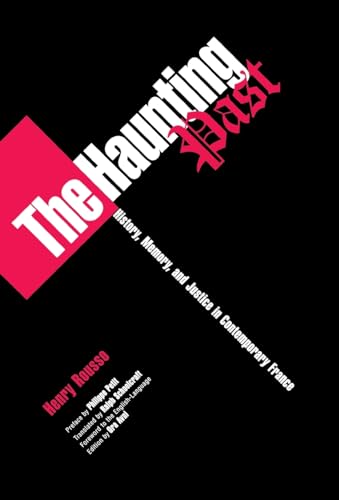
In The Haunting Past, French historian Henry Rousso discusses the varied and controversial treatments of French collaboration with the Nazis during the Vichy regime, focusing specifically on the roles played by historians, and history itself, in the postwar trials of accused collaborators.
While discussion of Nazi collaboration was mostly suppressed in the years immediately following World War II, recent changes in public sentiment paved the way for formal trials of former Vichy officials charged with collaborating with Nazi Germany. In a series of pointed interviews conducted by journalist Philippe Petit, Rousso considers events of the recent past--especially the emotionally charged Papon trial in France and the revelations that have come to light with the opening of Communist archives. While Rousso was one of the historians called to testify at a number of sensational political trials, he was also one of the few who chose not to, arguing that history is constantly changing and being rewritten and therefore should not be taken into consideration as judicial evidence. Throughout the course of these trials, the public repeatedly claimed that historians had failed to account for the crimes of Vichy and that the time had come for the truth to be known and justice delivered. Rousso, on the other hand, argued against the combination of history and justice, claiming that justice is a matter of ethics or law, while history should be free from judgment. The Haunting Past explores the methods historians employ to understand and frame varying perspectives on knowledge and truth, the ways an open society can or should manage information, and the moral and civic responsibilities of the intellectual elite in a democracy. In light of the sensational part often played by the modern media, this is a timely critique of institutions and of the relationship among politics, the courts, and the press. Rousso raises profound questions regarding the way true knowledge of the recent past is attained, untangling the roles of the historians, judges, and journalists empowered by society to bring forth historical truth and communicate it to the public.Les informations fournies dans la section « Synopsis » peuvent faire référence à une autre édition de ce titre.
À propos de l'auteur
Henry Rousso is director of the Institut d'Histoire du Temps Present. Philippe Petit is an independent journalist in Paris. Ralph Schoolcraft teaches French in the Department of Modern and Classical Languages, Texas AandM University. Ora Avni is Professor of French at Yale University.
Les informations fournies dans la section « A propos du livre » peuvent faire référence à une autre édition de ce titre.
Résultats de recherche pour The Haunting Past: History, Memory, and Justice in...

Image d'archives
The Haunting Past: History, Memory, and Justice in Contemporary France (Critical Authors and Issues)
Edité par
University of Pennsylvania Press, 2002
ISBN 10 : 0812236459
ISBN 13 : 9780812236453
Ancien ou d'occasion
Couverture rigide
Vendeur : Midtown Scholar Bookstore, Harrisburg, PA, Etats-Unis
Évaluation du vendeur 5 sur 5 étoiles

Hardcover. Etat : Good. Good - Bumped and creased book with tears to the extremities, but not affecting the text block, may have remainder mark or previous owner's name - GOOD Standard-sized. N° de réf. du vendeur M0812236459Z3
Acheter D'occasion
EUR 9,06
Expédition à EUR 5,24
Expédition nationale : Etats-Unis
Expédition nationale : Etats-Unis
Quantité disponible : 2 disponible(s)
Image d'archives
THE HAUNTING PAST: History, Memory, and Justice in Contemporary France (critical Authors and Issues)
Edité par
University of Pennsylvania Press, 2002
ISBN 10 : 0812236459
ISBN 13 : 9780812236453
Ancien ou d'occasion
Couverture rigide
Vendeur : ODYSSEY, Pointe Claire, QC, Canada
Évaluation du vendeur 5 sur 5 étoiles
Cloth. Etat : As New. Etat de la jaquette : As New. 1st English Language Ed. Type: Book xvii pp., 96 pp., black cloth bdg. with cadmium red-stamped titling on spine. Rousso was one of the few historians who argued against the combination of history and justice, claiming that justice is a matter of ethics or law, while history should be free from judgement. AS NEW Photo scan available. Shipments to USA, USPS via Canada Post Express; FREE OF CUSTOMS OR DUTY CHARGE. N° de réf. du vendeur 1635H
Acheter D'occasion
EUR 35,99
Expédition à EUR 14,85
Expédition depuis Canada vers Etats-Unis
Expédition depuis Canada vers Etats-Unis
Quantité disponible : 1 disponible(s)
Image d'archives
The Haunting Past: History, Memory, and Justice in Contemporary France (Critical Authors and Issues)
Edité par
University of Pennsylvania Press, 2002
ISBN 10 : 0812236459
ISBN 13 : 9780812236453
Neuf
Couverture rigide
Vendeur : California Books, Miami, FL, Etats-Unis
Évaluation du vendeur 4 sur 5 étoiles

Etat : New. N° de réf. du vendeur I-9780812236453
Acheter neuf
EUR 82,77
Livraison gratuite
Expédition nationale : Etats-Unis
Expédition nationale : Etats-Unis
Quantité disponible : Plus de 20 disponibles
Image d'archives
The Haunting Past
Edité par
University of Pennsylvania Press, 2002
ISBN 10 : 0812236459
ISBN 13 : 9780812236453
Neuf
Couverture rigide
Vendeur : Majestic Books, Hounslow, Royaume-Uni
Évaluation du vendeur 4 sur 5 étoiles
Etat : New. Print on Demand pp. xxii + 96. N° de réf. du vendeur 7938397
Acheter neuf
EUR 78,41
Expédition à EUR 7,58
Expédition depuis Royaume-Uni vers Etats-Unis
Expédition depuis Royaume-Uni vers Etats-Unis
Quantité disponible : Plus de 20 disponibles
Image fournie par le vendeur
The Haunting Past
Edité par
University of Pennsylvania Press, US, 2002
ISBN 10 : 0812236459
ISBN 13 : 9780812236453
Neuf
Couverture rigide
Vendeur : Rarewaves USA, HEBRON, KY, Etats-Unis
Évaluation du vendeur 5 sur 5 étoiles
Hardback. Etat : New. In The Haunting Past, French historian Henry Rousso discusses the varied and controversial treatments of French collaboration with the Nazis during the Vichy regime, focusing specifically on the roles played by historians, and history itself, in the postwar trials of accused collaborators. While discussion of Nazi collaboration was mostly suppressed in the years immediately following World War II, recent changes in public sentiment paved the way for formal trials of former Vichy officials charged with collaborating with Nazi Germany. In a series of pointed interviews conducted by journalist Philippe Petit, Rousso considers events of the recent past-especially the emotionally charged Papon trial in France and the revelations that have come to light with the opening of Communist archives. While Rousso was one of the historians called to testify at a number of sensational political trials, he was also one of the few who chose not to, arguing that history is constantly changing and being rewritten and therefore should not be taken into consideration as judicial evidence. Throughout the course of these trials, the public repeatedly claimed that historians had failed to account for the crimes of Vichy and that the time had come for the truth to be known and justice delivered. Rousso, on the other hand, argued against the combination of history and justice, claiming that justice is a matter of ethics or law, while history should be free from judgment. The Haunting Past explores the methods historians employ to understand and frame varying perspectives on knowledge and truth, the ways an open society can or should manage information, and the moral and civic responsibilities of the intellectual elite in a democracy. In light of the sensational part often played by the modern media, this is a timely critique of institutions and of the relationship among politics, the courts, and the press. Rousso raises profound questions regarding the way true knowledge of the recent past is attained, untangling the roles of the historians, judges, and journalists empowered by society to bring forth historical truth and communicate it to the public. N° de réf. du vendeur LU-9780812236453
Acheter neuf
EUR 86,53
Livraison gratuite
Expédition nationale : Etats-Unis
Expédition nationale : Etats-Unis
Quantité disponible : Plus de 20 disponibles
Image d'archives
The Haunting Past
Edité par
University of Pennsylvania Press, 2002
ISBN 10 : 0812236459
ISBN 13 : 9780812236453
Neuf
Couverture rigide
Vendeur : Books Puddle, Woodside, NY, Etats-Unis
Évaluation du vendeur 4 sur 5 étoiles
Etat : New. Print on Demand pp. xxii + 96. N° de réf. du vendeur 26958082
Acheter neuf
EUR 84,20
Expédition à EUR 3,49
Expédition nationale : Etats-Unis
Expédition nationale : Etats-Unis
Quantité disponible : Plus de 20 disponibles
Image d'archives
The Haunting Past
Edité par
University of Pennsylvania Press, 2002
ISBN 10 : 0812236459
ISBN 13 : 9780812236453
Neuf
Couverture rigide
Vendeur : Biblios, Frankfurt am main, HESSE, Allemagne
Évaluation du vendeur 4 sur 5 étoiles
Etat : New. PRINT ON DEMAND pp. xxii + 96. N° de réf. du vendeur 18958088
Acheter neuf
EUR 79,30
Expédition à EUR 9,95
Expédition depuis Allemagne vers Etats-Unis
Expédition depuis Allemagne vers Etats-Unis
Quantité disponible : Plus de 20 disponibles
Image d'archives
The Haunting Past: History, Memory, and Justice in Contemporary France
Edité par
University of Pennsylvania Press, 2002
ISBN 10 : 0812236459
ISBN 13 : 9780812236453
Neuf
Couverture rigide
Vendeur : THE SAINT BOOKSTORE, Southport, Royaume-Uni
Évaluation du vendeur 5 sur 5 étoiles
Hardback. Etat : New. This item is printed on demand. New copy - Usually dispatched within 5-9 working days. N° de réf. du vendeur C9780812236453
Acheter neuf
EUR 93,97
Expédition à EUR 16,63
Expédition depuis Royaume-Uni vers Etats-Unis
Expédition depuis Royaume-Uni vers Etats-Unis
Quantité disponible : Plus de 20 disponibles
Image d'archives
The Haunting Past History, Memory, and Justice in Contemporary France
Edité par
Univ of Pennsylvania Pr, 2002
ISBN 10 : 0812236459
ISBN 13 : 9780812236453
Neuf
Couverture rigide
Vendeur : Revaluation Books, Exeter, Royaume-Uni
Évaluation du vendeur 5 sur 5 étoiles
Hardcover. Etat : Brand New. 136 pages. 8.75x5.75x0.65 inches. In Stock. N° de réf. du vendeur x-0812236459
Acheter neuf
EUR 99,81
Expédition à EUR 11,66
Expédition depuis Royaume-Uni vers Etats-Unis
Expédition depuis Royaume-Uni vers Etats-Unis
Quantité disponible : 2 disponible(s)
Image fournie par le vendeur
The Haunting Post: History, Memory, and Justice in Contemporary France
Edité par
UNIV OF PENNSYLVANIA PR, 2002
ISBN 10 : 0812236459
ISBN 13 : 9780812236453
Neuf
Couverture rigide
Vendeur : moluna, Greven, Allemagne
Évaluation du vendeur 5 sur 5 étoiles
Gebunden. Etat : New. Über den AutorHenry Rousso. Preface by Philippe Petit. Translated by Ralph Schoolcraft. Foreword to the English-language edition by Ora AvniKlappentextrnrn The Haunting Past is a brief but richly textured t. N° de réf. du vendeur 595035936
Acheter neuf
EUR 66,10
Expédition à EUR 48,99
Expédition depuis Allemagne vers Etats-Unis
Expédition depuis Allemagne vers Etats-Unis
Quantité disponible : Plus de 20 disponibles