
Articles liés à Conversion and Narrative: Reading and Religious Authority...
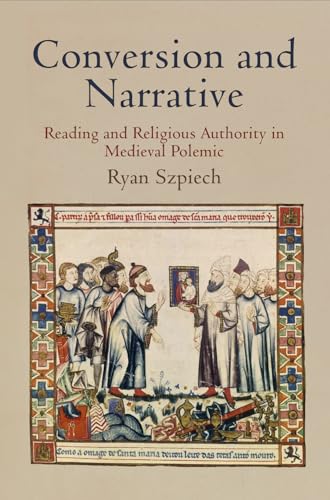
Synopsis
In 1322, a Jewish doctor named Abner entered a synagogue in the Castilian city of Burgos and began to weep in prayer. Falling asleep, he dreamed of a great man who urged him to awaken from his slumber. Shortly thereafter, he converted to Christianity and wrote a number of works attacking his old faith. Abner tells the story in fantastic detail in the opening to his Hebrew-language but anti-Jewish polemical treatise, Teacher of Righteousness.
In the religiously plural context of the medieval Western Mediterranean, religious conversion played an important role as a marker of social boundaries and individual identity. The writers of medieval religious polemics such as Teacher of Righteousness often began by giving a brief, first-person account of the rejection of their old faith and their embrace of the new. In such accounts, Ryan Szpiech argues, the narrative form plays an important role in dramatizing the transition from infidelity to faith. Szpiech draws on a wide body of sources from Christian, Jewish, and Muslim polemics to investigate the place of narrative in the representation of conversion. Making a firm distinction between stories told about conversion and the experience of religious change, his book is not a history of conversion itself but a comparative study of how and why it was presented in narrative form within the context of religious disputation. He argues that between the twelfth and fifteenth centuries, conversion narratives were needed to represent communal notions of history and authority in allegorical, dramatic terms. After considering the late antique paradigms on which medieval Christian conversion narratives were based, Szpiech juxtaposes Christian stories with contemporary accounts of conversion to Islam and Judaism. He emphasizes that polemical conflict between Abrahamic religions in the medieval Mediterranean centered on competing visions of history and salvation. By seeing conversion not as an individual experience but as a public narrative, Conversion and Narrative provides a new, interdisciplinary perspective on medieval writing about religious disputes.Les informations fournies dans la section « Synopsis » peuvent faire référence à une autre édition de ce titre.
À propos de l'auteur
Ryan Szpiech teaches Spanish literature and Jewish studies at the University of Michigan.
Les informations fournies dans la section « A propos du livre » peuvent faire référence à une autre édition de ce titre.
Résultats de recherche pour Conversion and Narrative: Reading and Religious Authority...

Image d'archives
Conversion and Narrative: Reading and Religious Authority in Medieval Polemic (The Middle Ages Series)
Edité par
University of Pennsylvania Press, 2012
ISBN 10 : 0812244710
ISBN 13 : 9780812244717
Ancien ou d'occasion
Couverture rigide
Vendeur : Midtown Scholar Bookstore, Harrisburg, PA, Etats-Unis
Évaluation du vendeur 5 sur 5 étoiles

Hardcover. Etat : Good. HARDCOVER Good - Bumped and creased book with tears to the extremities, but not affecting the text block, may have remainder mark or previous owner's name - GOOD Standard-sized. N° de réf. du vendeur M0812244710Z3
Acheter D'occasion
EUR 43,92
Expédition à EUR 5,28
Expédition nationale : Etats-Unis
Expédition nationale : Etats-Unis
Quantité disponible : 2 disponible(s)
Image d'archives
Conversion and Narrative
Edité par
University of Pennsylvania Press, 2012
ISBN 10 : 0812244710
ISBN 13 : 9780812244717
Neuf
Couverture rigide
Vendeur : PBShop.store UK, Fairford, GLOS, Royaume-Uni
Évaluation du vendeur 5 sur 5 étoiles
HRD. Etat : New. New Book. Shipped from UK. Established seller since 2000. N° de réf. du vendeur GB-9780812244717
Acheter neuf
EUR 52,01
Expédition à EUR 5,85
Expédition depuis Royaume-Uni vers Etats-Unis
Expédition depuis Royaume-Uni vers Etats-Unis
Quantité disponible : 2 disponible(s)
Image d'archives
Conversion and Narrative (Hardcover)
Edité par
University of Pennsylvania Press, Pennsylvania, 2012
ISBN 10 : 0812244710
ISBN 13 : 9780812244717
Neuf
Couverture rigide
Vendeur : Grand Eagle Retail, Bensenville, IL, Etats-Unis
Évaluation du vendeur 5 sur 5 étoiles
Hardcover. Etat : new. Hardcover. In 1322, a Jewish doctor named Abner entered a synagogue in the Castilian city of Burgos and began to weep in prayer. Falling asleep, he dreamed of a "great man" who urged him to awaken from his slumber. Shortly thereafter, he converted to Christianity and wrote a number of works attacking his old faith. Abner tells the story in fantastic detail in the opening to his Hebrew-language but anti-Jewish polemical treatise, Teacher of Righteousness.In the religiously plural context of the medieval Western Mediterranean, religious conversion played an important role as a marker of social boundaries and individual identity. The writers of medieval religious polemics such as Teacher of Righteousness often began by giving a brief, first-person account of the rejection of their old faith and their embrace of the new. In such accounts, Ryan Szpiech argues, the narrative form plays an important role in dramatizing the transition from infidelity to faith.Szpiech draws on a wide body of sources from Christian, Jewish, and Muslim polemics to investigate the place of narrative in the representation of conversion. Making a firm distinction between stories told about conversion and the experience of religious change, his book is not a history of conversion itself but a comparative study of how and why it was presented in narrative form within the context of religious disputation. He argues that between the twelfth and fifteenth centuries, conversion narratives were needed to represent communal notions of history and authority in allegorical, dramatic terms. After considering the late antique paradigms on which medieval Christian conversion narratives were based, Szpiech juxtaposes Christian stories with contemporary accounts of conversion to Islam and Judaism. He emphasizes that polemical conflict between Abrahamic religions in the medieval Mediterranean centered on competing visions of history and salvation. By seeing conversion not as an individual experience but as a public narrative, Conversion and Narrative provides a new, interdisciplinary perspective on medieval writing about religious disputes. Szpiech draws on medieval Christian, Jewish, and Muslim polemics to investigate the role of narrative in the representation of conversion. By investigating conversion not as individual experience but as expression of communal visions of history, he shows how the narratives dramatize the conflict of ideas in disputational writing. Shipping may be from multiple locations in the US or from the UK, depending on stock availability. N° de réf. du vendeur 9780812244717
Acheter neuf
EUR 59,55
Livraison gratuite
Expédition nationale : Etats-Unis
Expédition nationale : Etats-Unis
Quantité disponible : 1 disponible(s)
Image fournie par le vendeur
Conversion and Narrative
Edité par
University of Pennsylvania Press, US, 2012
ISBN 10 : 0812244710
ISBN 13 : 9780812244717
Neuf
Couverture rigide
Vendeur : Rarewaves.com USA, London, LONDO, Royaume-Uni
Évaluation du vendeur 5 sur 5 étoiles
Hardback. Etat : New. In 1322, a Jewish doctor named Abner entered a synagogue in the Castilian city of Burgos and began to weep in prayer. Falling asleep, he dreamed of a "great man" who urged him to awaken from his slumber. Shortly thereafter, he converted to Christianity and wrote a number of works attacking his old faith. Abner tells the story in fantastic detail in the opening to his Hebrew-language but anti-Jewish polemical treatise, Teacher of Righteousness. In the religiously plural context of the medieval Western Mediterranean, religious conversion played an important role as a marker of social boundaries and individual identity. The writers of medieval religious polemics such as Teacher of Righteousness often began by giving a brief, first-person account of the rejection of their old faith and their embrace of the new. In such accounts, Ryan Szpiech argues, the narrative form plays an important role in dramatizing the transition from infidelity to faith. Szpiech draws on a wide body of sources from Christian, Jewish, and Muslim polemics to investigate the place of narrative in the representation of conversion. Making a firm distinction between stories told about conversion and the experience of religious change, his book is not a history of conversion itself but a comparative study of how and why it was presented in narrative form within the context of religious disputation. He argues that between the twelfth and fifteenth centuries, conversion narratives were needed to represent communal notions of history and authority in allegorical, dramatic terms. After considering the late antique paradigms on which medieval Christian conversion narratives were based, Szpiech juxtaposes Christian stories with contemporary accounts of conversion to Islam and Judaism. He emphasizes that polemical conflict between Abrahamic religions in the medieval Mediterranean centered on competing visions of history and salvation. By seeing conversion not as an individual experience but as a public narrative, Conversion and Narrative provides a new, interdisciplinary perspective on medieval writing about religious disputes. N° de réf. du vendeur LU-9780812244717
Acheter neuf
EUR 60,73
Livraison gratuite
Expédition depuis Royaume-Uni vers Etats-Unis
Expédition depuis Royaume-Uni vers Etats-Unis
Quantité disponible : 1 disponible(s)
Image d'archives
Conversion and Narrative: Reading and Religious Authority in Medieval Polemic (The Middle Ages Series)
Edité par
University of Pennsylvania Press 2012-11-06, 2012
ISBN 10 : 0812244710
ISBN 13 : 9780812244717
Neuf
Couverture rigide
Vendeur : Chiron Media, Wallingford, Royaume-Uni
Évaluation du vendeur 5 sur 5 étoiles
Hardcover. Etat : New. N° de réf. du vendeur 6666-GRD-9780812244717
Acheter neuf
EUR 48,42
Expédition à EUR 18,06
Expédition depuis Royaume-Uni vers Etats-Unis
Expédition depuis Royaume-Uni vers Etats-Unis
Quantité disponible : 2 disponible(s)
Image d'archives
Conversion and Narrative: Reading and Religious Authority in Medieval Polemic (The Middle Ages Series)
Edité par
University of Pennsylvania Press, 2012
ISBN 10 : 0812244710
ISBN 13 : 9780812244717
Neuf
Couverture rigide
Vendeur : Ria Christie Collections, Uxbridge, Royaume-Uni
Évaluation du vendeur 5 sur 5 étoiles
Etat : New. In English. N° de réf. du vendeur ria9780812244717_new
Acheter neuf
EUR 57,28
Expédition à EUR 13,16
Expédition depuis Royaume-Uni vers Etats-Unis
Expédition depuis Royaume-Uni vers Etats-Unis
Quantité disponible : 7 disponible(s)
Image d'archives
Conversion and Narrative Reading and Religious Authority in Medieval Polemic
Edité par
Univ of Pennsylvania Pr, 2012
ISBN 10 : 0812244710
ISBN 13 : 9780812244717
Neuf
Couverture rigide
Vendeur : Revaluation Books, Exeter, Royaume-Uni
Évaluation du vendeur 5 sur 5 étoiles
Hardcover. Etat : Brand New. 311 pages. 9.00x6.25x1.00 inches. In Stock. This item is printed on demand. N° de réf. du vendeur __0812244710
Acheter neuf
EUR 57,37
Expédition à EUR 14,57
Expédition depuis Royaume-Uni vers Etats-Unis
Expédition depuis Royaume-Uni vers Etats-Unis
Quantité disponible : 2 disponible(s)
Image d'archives
Conversion and Narrative: Reading and Religious Authority in Medieval Polemic
Edité par
University of Pennsylvania Press, 2012
ISBN 10 : 0812244710
ISBN 13 : 9780812244717
Neuf
Couverture rigide
Vendeur : THE SAINT BOOKSTORE, Southport, Royaume-Uni
Évaluation du vendeur 5 sur 5 étoiles
Hardback. Etat : New. New copy - Usually dispatched within 3 working days. N° de réf. du vendeur B9780812244717
Acheter neuf
EUR 56,98
Expédition à EUR 19,38
Expédition depuis Royaume-Uni vers Etats-Unis
Expédition depuis Royaume-Uni vers Etats-Unis
Quantité disponible : 2 disponible(s)
Image fournie par le vendeur
Conversion and Narrative
Edité par
University of Pennsylvania Press, US, 2012
ISBN 10 : 0812244710
ISBN 13 : 9780812244717
Neuf
Couverture rigide
Vendeur : Rarewaves USA, HEBRON, KY, Etats-Unis
Évaluation du vendeur 5 sur 5 étoiles
Hardback. Etat : New. In 1322, a Jewish doctor named Abner entered a synagogue in the Castilian city of Burgos and began to weep in prayer. Falling asleep, he dreamed of a "great man" who urged him to awaken from his slumber. Shortly thereafter, he converted to Christianity and wrote a number of works attacking his old faith. Abner tells the story in fantastic detail in the opening to his Hebrew-language but anti-Jewish polemical treatise, Teacher of Righteousness. In the religiously plural context of the medieval Western Mediterranean, religious conversion played an important role as a marker of social boundaries and individual identity. The writers of medieval religious polemics such as Teacher of Righteousness often began by giving a brief, first-person account of the rejection of their old faith and their embrace of the new. In such accounts, Ryan Szpiech argues, the narrative form plays an important role in dramatizing the transition from infidelity to faith. Szpiech draws on a wide body of sources from Christian, Jewish, and Muslim polemics to investigate the place of narrative in the representation of conversion. Making a firm distinction between stories told about conversion and the experience of religious change, his book is not a history of conversion itself but a comparative study of how and why it was presented in narrative form within the context of religious disputation. He argues that between the twelfth and fifteenth centuries, conversion narratives were needed to represent communal notions of history and authority in allegorical, dramatic terms. After considering the late antique paradigms on which medieval Christian conversion narratives were based, Szpiech juxtaposes Christian stories with contemporary accounts of conversion to Islam and Judaism. He emphasizes that polemical conflict between Abrahamic religions in the medieval Mediterranean centered on competing visions of history and salvation. By seeing conversion not as an individual experience but as a public narrative, Conversion and Narrative provides a new, interdisciplinary perspective on medieval writing about religious disputes. N° de réf. du vendeur LU-9780812244717
Acheter neuf
EUR 82,20
Livraison gratuite
Expédition nationale : Etats-Unis
Expédition nationale : Etats-Unis
Quantité disponible : Plus de 20 disponibles
Image d'archives
Conversion and Narrative: Reading and Religious Authority in Medieval Polemic (eng)
Edité par
University of Pennsylvania Press, 2012
ISBN 10 : 0812244710
ISBN 13 : 9780812244717
Neuf
Couverture rigide
Vendeur : Brook Bookstore On Demand, Napoli, NA, Italie
Évaluation du vendeur 5 sur 5 étoiles
Etat : new. N° de réf. du vendeur 042f7405e756244d1864e50058c2db36
Acheter neuf
EUR 80,79
Expédition à EUR 6,80
Expédition depuis Italie vers Etats-Unis
Expédition depuis Italie vers Etats-Unis
Quantité disponible : 5 disponible(s)