
Articles liés à Reforming the Presidential Nomination Process
Synopsis
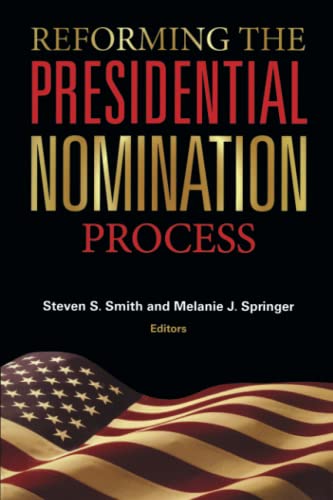
The 2008 U.S. presidential campaign has provided a lifetime's worth of surprises. Once again, however, the nomination process highlighted the importance of organization, political prowess, timing, and money. And once again, it raised many hackles. The Democratic contest in particular generated many complaints—for example, it started too early, it was too long, and Super Tuesday was overloaded. This timely book synthesizes new analysis by premier political scientists into a cohesive look at the presidential nomination process—the ways in which it is broken and how it might be fixed.
The contributors to Reforming the Presidential Nomination Process address different facets of the selection process, starting with a brief history of how we got to this point. They analyze the importance—and perceived unfairness—of the earliest primaries and discuss what led to record turnouts in 2008. What roles do media coverage and public endorsements play? William Mayer explains the superdelegate phenomenon and the controversy surrounding it; James Gibson and Melanie Springer evaluate public perceptions of the current process as well as possible reforms. Larry Sabato (A More Perfect Constitution) calls for a new nomination system, installed via constitutional amendment, while Tom Mann of Brookings opines on calls for reform that arose in 2008 and Daniel Lowenstein examines the process by which reforms may be adopted—or blocked.
Les informations fournies dans la section « Synopsis » peuvent faire référence à une autre édition de ce titre.
À propos de l'auteur
"Steven S. Smith is the Kate M. Gregg Professor of Social Sciences at Washington University in St. Louis, where he directs the Weidenbaum Center on the Economy, Government, and Public Policy. His many books include Party Influence in Congress (Cambridge, 2007). Melanie J. Springer is an assistant professor of political science at Washington University, where she is a fellow in the Center on Political Economy."
Les informations fournies dans la section « A propos du livre » peuvent faire référence à une autre édition de ce titre.
Résultats de recherche pour Reforming the Presidential Nomination Process

Image d'archives
Reforming the Presidential Nomination Process
Edité par
Brookings Institution Press, 2009
ISBN 10 : 0815702892
ISBN 13 : 9780815702894
Ancien ou d'occasion
Couverture souple
Vendeur : ZBK Books, Carlstadt, NJ, Etats-Unis
Évaluation du vendeur 5 sur 5 étoiles

Etat : very_good. Fast & Free Shipping â" Very Good condition book with a firm cover and clean pages. Shows normal use and some light wear or limited notes markings. A solid, nice copy to enjoy. N° de réf. du vendeur ZWV.0815702892.VG
Acheter D'occasion
EUR 15,55
Livraison gratuite
Expédition nationale : Etats-Unis
Expédition nationale : Etats-Unis
Quantité disponible : 1 disponible(s)
Image d'archives
Reforming the Presidential Nomination Process
Edité par
Brookings Institution Press, 2009
ISBN 10 : 0815702892
ISBN 13 : 9780815702894
Ancien ou d'occasion
Couverture souple
Edition originale
Vendeur : Better World Books, Mishawaka, IN, Etats-Unis
Évaluation du vendeur 5 sur 5 étoiles
Etat : Good. 1st. Pages intact with minimal writing/highlighting. The binding may be loose and creased. Dust jackets/supplements are not included. Stock photo provided. Product includes identifying sticker. Better World Books: Buy Books. Do Good. N° de réf. du vendeur 987325-6
Acheter D'occasion
EUR 21,59
Livraison gratuite
Expédition nationale : Etats-Unis
Expédition nationale : Etats-Unis
Quantité disponible : 1 disponible(s)
Image d'archives
Reforming the Presidential Nomination Process (Paperback)
Edité par
Bloomsbury Publishing Plc, Washington DC, 2009
ISBN 10 : 0815702892
ISBN 13 : 9780815702894
Neuf
Paperback
Vendeur : Grand Eagle Retail, Bensenville, IL, Etats-Unis
Évaluation du vendeur 5 sur 5 étoiles
Paperback. Etat : new. Paperback. The 2008 U.S. presidential campaign has provided a lifetime's worth of surprises. Once again, however, the nomination process highlighted the importance of organization, political prowess, timing, and money. And once again, it raised many hackles. The Democratic contest in particular generated many complaintsfor example, it started too early, it was too long, and Super Tuesday was overloaded. This timely book synthesizes new analysis by premier political scientists into a cohesive look at the presidential nomination processthe ways in which it is broken and how it might be fixed.The contributors to Reforming the Presidential Nomination Process address different facets of the selection process, starting with a brief history of how we got to this point. They analyze the importanceand perceived unfairnessof the earliest primaries and discuss what led to record turnouts in 2008. What roles do media coverage and public endorsements play? William Mayer explains the ""superdelegate"" phenomenon and the controversy surrounding it; James Gibson and Melanie Springer evaluate public perceptions of the current process as well as possible reforms. Larry Sabato (A More Perfect Constitution) calls for a new nomination system, installed via constitutional amendment, while Tom Mann of Brookings opines on calls for reform that arose in 2008 and Daniel Lowenstein examines the process by which reforms may be adoptedor blocked. The 2008 U.S. presidential campaign has provided a lifetime's worth of surprises. Once again, however, the nomination process highlighted the importance of organization, political prowess, timing, and money. This item is printed on demand. Shipping may be from multiple locations in the US or from the UK, depending on stock availability. N° de réf. du vendeur 9780815702894
Acheter neuf
EUR 34,01
Livraison gratuite
Expédition nationale : Etats-Unis
Expédition nationale : Etats-Unis
Quantité disponible : 1 disponible(s)
Image d'archives
Reforming the Presidential Nomination Process
Edité par
Brookings Institution Press, 2009
ISBN 10 : 0815702892
ISBN 13 : 9780815702894
Neuf
Couverture souple
Vendeur : California Books, Miami, FL, Etats-Unis
Évaluation du vendeur 5 sur 5 étoiles
Etat : New. N° de réf. du vendeur I-9780815702894
Acheter neuf
EUR 34,02
Livraison gratuite
Expédition nationale : Etats-Unis
Expédition nationale : Etats-Unis
Quantité disponible : Plus de 20 disponibles
Image d'archives
Reforming the Presidential Nomination Process
impression à la demandeVendeur : PBShop.store US, Wood Dale, IL, Etats-Unis
Évaluation du vendeur 5 sur 5 étoiles
PAP. Etat : New. New Book. Shipped from UK. THIS BOOK IS PRINTED ON DEMAND. Established seller since 2000. N° de réf. du vendeur L0-9780815702894
Acheter neuf
EUR 34,43
Livraison gratuite
Expédition nationale : Etats-Unis
Expédition nationale : Etats-Unis
Quantité disponible : Plus de 20 disponibles
Image d'archives
Reforming the Presidential Nomination Process
impression à la demandeVendeur : PBShop.store UK, Fairford, GLOS, Royaume-Uni
Évaluation du vendeur 5 sur 5 étoiles
PAP. Etat : New. New Book. Delivered from our UK warehouse in 4 to 14 business days. THIS BOOK IS PRINTED ON DEMAND. Established seller since 2000. N° de réf. du vendeur L0-9780815702894
Acheter neuf
EUR 32
Expédition à EUR 4,91
Expédition depuis Royaume-Uni vers Etats-Unis
Expédition depuis Royaume-Uni vers Etats-Unis
Quantité disponible : Plus de 20 disponibles
Image d'archives
Reforming the Presidential Nomination Process
Edité par
Brookings Institution Press, 2009
ISBN 10 : 0815702892
ISBN 13 : 9780815702894
Neuf
Couverture souple
Vendeur : Ria Christie Collections, Uxbridge, Royaume-Uni
Évaluation du vendeur 5 sur 5 étoiles
Etat : New. In English. N° de réf. du vendeur ria9780815702894_new
Acheter neuf
EUR 35,14
Expédition à EUR 11,07
Expédition depuis Royaume-Uni vers Etats-Unis
Expédition depuis Royaume-Uni vers Etats-Unis
Quantité disponible : Plus de 20 disponibles
Image d'archives
Reforming the Presidential Nomination Process
Edité par
Brookings Institution, 2009
ISBN 10 : 0815702892
ISBN 13 : 9780815702894
Neuf
Paperback / softback
Vendeur : THE SAINT BOOKSTORE, Southport, Royaume-Uni
Évaluation du vendeur 5 sur 5 étoiles
Paperback / softback. Etat : New. This item is printed on demand. New copy - Usually dispatched within 5-9 working days. N° de réf. du vendeur C9780815702894
Acheter neuf
EUR 36,03
Expédition à EUR 16,81
Expédition depuis Royaume-Uni vers Etats-Unis
Expédition depuis Royaume-Uni vers Etats-Unis
Quantité disponible : Plus de 20 disponibles
Image d'archives
Reforming the Presidential Nomination Process
Vendeur : Revaluation Books, Exeter, Royaume-Uni
Évaluation du vendeur 5 sur 5 étoiles
Paperback. Etat : Brand New. 1st edition. 205 pages. 9.00x6.00x0.75 inches. In Stock. N° de réf. du vendeur x-0815702892
Acheter neuf
EUR 42,70
Expédition à EUR 11,81
Expédition depuis Royaume-Uni vers Etats-Unis
Expédition depuis Royaume-Uni vers Etats-Unis
Quantité disponible : 2 disponible(s)
Image d'archives
Reforming the Presidential Nomination Process (Paperback)
Edité par
Bloomsbury Publishing Plc, Washington DC, 2009
ISBN 10 : 0815702892
ISBN 13 : 9780815702894
Neuf
Paperback
Vendeur : CitiRetail, Stevenage, Royaume-Uni
Évaluation du vendeur 5 sur 5 étoiles
Paperback. Etat : new. Paperback. The 2008 U.S. presidential campaign has provided a lifetime's worth of surprises. Once again, however, the nomination process highlighted the importance of organization, political prowess, timing, and money. And once again, it raised many hackles. The Democratic contest in particular generated many complaintsfor example, it started too early, it was too long, and Super Tuesday was overloaded. This timely book synthesizes new analysis by premier political scientists into a cohesive look at the presidential nomination processthe ways in which it is broken and how it might be fixed.The contributors to Reforming the Presidential Nomination Process address different facets of the selection process, starting with a brief history of how we got to this point. They analyze the importanceand perceived unfairnessof the earliest primaries and discuss what led to record turnouts in 2008. What roles do media coverage and public endorsements play? William Mayer explains the ""superdelegate"" phenomenon and the controversy surrounding it; James Gibson and Melanie Springer evaluate public perceptions of the current process as well as possible reforms. Larry Sabato (A More Perfect Constitution) calls for a new nomination system, installed via constitutional amendment, while Tom Mann of Brookings opines on calls for reform that arose in 2008 and Daniel Lowenstein examines the process by which reforms may be adoptedor blocked. The 2008 U.S. presidential campaign has provided a lifetime's worth of surprises. Once again, however, the nomination process highlighted the importance of organization, political prowess, timing, and money. This item is printed on demand. Shipping may be from our UK warehouse or from our Australian or US warehouses, depending on stock availability. N° de réf. du vendeur 9780815702894
Acheter neuf
EUR 35,88
Expédition à EUR 43,71
Expédition depuis Royaume-Uni vers Etats-Unis
Expédition depuis Royaume-Uni vers Etats-Unis
Quantité disponible : 1 disponible(s)