
Articles liés à The Subject of Documentary
Synopsis
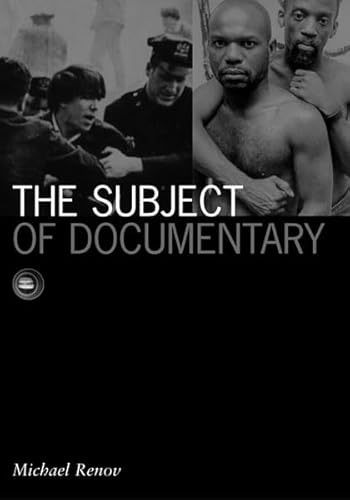
The documentary, a genre as old as cinema itself, has traditionally aspired to objectivity. Whether making ethnographic, propagandistic, or educational films, documentarians have pointed the camera outward, drawing as little attention to themselves as possible. In recent decades, however, a new kind of documentary has emerged in which the filmmaker has become the subject of the work. Whether chronicling family history, sexual identity, or a personal or social world, this new generation of nonfiction filmmakers has defiantly embraced autobiography. In The Subject of Documentary, Michael Renov focuses on how documentary filmmaking has become an important means for both examining and constructing selfhood. By looking at key figures in documentary filmmaking as well as noncanonical video art and avant-garde artists, Renov broadens the definition of what counts as documentary, and explores the intersection of the personal and political, considering how memory can create a way into asking troubling questions about identity, oppression, and resiliency. Offering historical context for the explosion of personal nonfiction filmmaking in the 1980s and 1990s, Renov analyzes films in which the subjectivity of the filmmaker is expressly defined in relation to political struggle or historical trauma, from Haskell Wexler's Medium Cool to Jonas Mekas's Lost, Lost, Lost. And, looking beyond the traditional documentary, Renov contemplates such nontraditional modes of autobiographical practice as the essay film, the video confession, and the personal Web page.Unique in its attention to diverse expressions of personal nonfiction filmmaking, The Subject of Documentary forges a new understanding of the heightened role and function of subjectivity in contemporary documentary practice.Michael Renov is professor of critical studies at the USC School of Cinema-Television. He is the editor of Theorizing Documentary and the coeditor of Resolutions: Contemporary Video Practices (Minnesota, 1996) and Collecting Visible Evidence (Minnesota, 1999).
Les informations fournies dans la section « Synopsis » peuvent faire référence à une autre édition de ce titre.
À propos de l'auteur
Michael Renov is professor of critical studies at the USC School of Cinema-Television. He is the editor of Theorizing Documentary and the coeditor of Resolutions: Contemporary Video Practices (Minnesota, 1996) and Collecting Visible Evidence (Minnesota, 1999).
Les informations fournies dans la section « A propos du livre » peuvent faire référence à une autre édition de ce titre.
Résultats de recherche pour The Subject of Documentary

Image d'archives
Subject Of Documentary (Volume 16) (Visible Evidence)
Edité par
Univ Of Minnesota Press, 2004
ISBN 10 : 0816634416
ISBN 13 : 9780816634415
Ancien ou d'occasion
Paperback
Vendeur : Midtown Scholar Bookstore, Harrisburg, PA, Etats-Unis
Évaluation du vendeur 5 sur 5 étoiles

Paperback. Etat : Good. Good - Bumped and creased book with tears to the extremities, but not affecting the text block, may have remainder mark or previous owner's name - GOOD PAPERBACK Standard-sized. N° de réf. du vendeur M0816634416Z3
Acheter D'occasion
EUR 4,83
Expédition à EUR 5,36
Expédition nationale : Etats-Unis
Expédition nationale : Etats-Unis
Quantité disponible : 1 disponible(s)
Image d'archives
Subject Of Documentary: Volume 16 (Visible Evidence)
Edité par
Univ Of Minnesota Press, 2004
ISBN 10 : 0816634416
ISBN 13 : 9780816634415
Ancien ou d'occasion
Paperback
Vendeur : WorldofBooks, Goring-By-Sea, WS, Royaume-Uni
Évaluation du vendeur 5 sur 5 étoiles
Paperback. Etat : Very Good. The book has been read, but is in excellent condition. Pages are intact and not marred by notes or highlighting. The spine remains undamaged. N° de réf. du vendeur GOR010049853
Acheter D'occasion
EUR 4,24
Expédition à EUR 6,63
Expédition depuis Royaume-Uni vers Etats-Unis
Expédition depuis Royaume-Uni vers Etats-Unis
Quantité disponible : 3 disponible(s)
Image d'archives
Subject of Documentary
Edité par
University of Minnesota Press, 2004
ISBN 10 : 0816634416
ISBN 13 : 9780816634415
Ancien ou d'occasion
Paperback
Vendeur : World of Books (was SecondSale), Montgomery, IL, Etats-Unis
Évaluation du vendeur 5 sur 5 étoiles
Paperback. Etat : Good. The documentary, a genre as old as cinema itself, has traditionally aspired to objectivity. Whether making ethnographic, propagandistic, or educational films, documentarians have pointed the camera outward, drawing as little attention to themselves as possible. In recent decades, however, a new kind of documentary has emerged in which the filmmaker has become the subject of the work. Whether chronicling family history, sexual identity, or a personal or social world, this new generation of nonfiction filmmakers has defiantly embraced autobiography. In The Subject of Documentary, Michael Renov focuses on how documentary filmmaking has become an important means for both examining and constructing selfhood. By looking at key figures in documentary filmmaking as well as noncanonical video art and avant-garde artists, Renov broadens the definition of what counts as documentary, and explores the intersection of the personal and political, considering how memory can create a way into asking troubling questions about identity, oppression, and resiliency. Offering historical context for the explosion of personal nonfiction filmmaking in the 1980s and 1990s, Renov analyzes films in which the subjectivity of the filmmaker is expressly defined in relation to political struggle or historical trauma, from Haskell Wexler's Medium Cool to Jonas Mekas's Lost, Lost, Lost. And, looking beyond the traditional documentary, Renov contemplates such nontraditional modes of autobiographical practice as the essay film, the video confession, and the personal Web page.Unique in its attention to diverse expressions of personal nonfiction filmmaking, The Subject of Documentary forges a new understanding of the heightened role and function of subjectivity in contemporary documentary practice.Michael Renov is professor of critical studies at the USC School of Cinema-Television. He is the editor of Theorizing Documentary and the coeditor of Resolutions: Contemporary Video Practices (Minnesota, 1996) and Collecting Visible Evidence (Minnesota, 1999). N° de réf. du vendeur 00110950342
Acheter D'occasion
EUR 11,02
Livraison gratuite
Expédition nationale : Etats-Unis
Expédition nationale : Etats-Unis
Quantité disponible : 1 disponible(s)
Image d'archives
Subject Of Documentary (Volume 16) (Visible Evidence)
Edité par
Univ Of Minnesota Press, 2004
ISBN 10 : 0816634416
ISBN 13 : 9780816634415
Ancien ou d'occasion
paperback
Vendeur : Bank of Books, Ventura, CA, Etats-Unis
Évaluation du vendeur 4 sur 5 étoiles

paperback. Etat : Good. Book shows common (average) signs of wear and use. Binding is still tight. Covers are intact but may be repaired. We have 75,000 books to choose from -- Ship within 24 hours -- Satisfaction Guaranteed! N° de réf. du vendeur mon0000971621
Acheter D'occasion
EUR 7,59
Expédition à EUR 3,79
Expédition nationale : Etats-Unis
Expédition nationale : Etats-Unis
Quantité disponible : 1 disponible(s)
Image d'archives
Subject of Documentary
Edité par
University of Minnesota Press, 2004
ISBN 10 : 0816634416
ISBN 13 : 9780816634415
Ancien ou d'occasion
Paperback
Vendeur : World of Books Inc, Montgomery, IL, Etats-Unis
Évaluation du vendeur 4 sur 5 étoiles
Paperback. Etat : Good. The documentary, a genre as old as cinema itself, has traditionally aspired to objectivity. Whether making ethnographic, propagandistic, or educational films, documentarians have pointed the camera outward, drawing as little attention to themselves as possible. In recent decades, however, a new kind of documentary has emerged in which the filmmaker has become the subject of the work. Whether chronicling family history, sexual identity, or a personal or social world, this new generation of nonfiction filmmakers has defiantly embraced autobiography. In The Subject of Documentary, Michael Renov focuses on how documentary filmmaking has become an important means for both examining and constructing selfhood. By looking at key figures in documentary filmmaking as well as noncanonical video art and avant-garde artists, Renov broadens the definition of what counts as documentary, and explores the intersection of the personal and political, considering how memory can create a way into asking troubling questions about identity, oppression, and resiliency. Offering historical context for the explosion of personal nonfiction filmmaking in the 1980s and 1990s, Renov analyzes films in which the subjectivity of the filmmaker is expressly defined in relation to political struggle or historical trauma, from Haskell Wexler's Medium Cool to Jonas Mekas's Lost, Lost, Lost. And, looking beyond the traditional documentary, Renov contemplates such nontraditional modes of autobiographical practice as the essay film, the video confession, and the personal Web page.Unique in its attention to diverse expressions of personal nonfiction filmmaking, The Subject of Documentary forges a new understanding of the heightened role and function of subjectivity in contemporary documentary practice.Michael Renov is professor of critical studies at the USC School of Cinema-Television. He is the editor of Theorizing Documentary and the coeditor of Resolutions: Contemporary Video Practices (Minnesota, 1996) and Collecting Visible Evidence (Minnesota, 1999). N° de réf. du vendeur CIN0816634416G
Acheter D'occasion
EUR 12,86
Livraison gratuite
Expédition nationale : Etats-Unis
Expédition nationale : Etats-Unis
Quantité disponible : 1 disponible(s)
Image d'archives
Subject of Documentary
Edité par
University of Minnesota Press, 2004
ISBN 10 : 0816634416
ISBN 13 : 9780816634415
Ancien ou d'occasion
Couverture souple
Vendeur : Better World Books Ltd, Dunfermline, Royaume-Uni
Évaluation du vendeur 5 sur 5 étoiles
Etat : Good. Former library copy. Pages intact with minimal writing/highlighting. The binding may be loose and creased. Dust jackets/supplements are not included. Includes library markings. Stock photo provided. Product includes identifying sticker. Better World Books: Buy Books. Do Good. N° de réf. du vendeur 40102646-75
Acheter D'occasion
EUR 7,64
Expédition à EUR 5,92
Expédition depuis Royaume-Uni vers Etats-Unis
Expédition depuis Royaume-Uni vers Etats-Unis
Quantité disponible : 1 disponible(s)
Image d'archives
Subject Of Documentary (Volume 16) (Visible Evidence)
Edité par
Univ Of Minnesota Press, 2004
ISBN 10 : 0816634416
ISBN 13 : 9780816634415
Ancien ou d'occasion
Soft cover
Edition originale
Vendeur : Regent College Bookstore, Vancouver, BC, Canada
Évaluation du vendeur 5 sur 5 étoiles
Soft cover. Etat : Fair. 1st Edition. Some general wear, curling of corners, some underlining in first half of book, binding good. WR. N° de réf. du vendeur ABE-1722114015349
Acheter D'occasion
EUR 7,36
Expédition à EUR 8,70
Expédition depuis Canada vers Etats-Unis
Expédition depuis Canada vers Etats-Unis
Quantité disponible : 1 disponible(s)
Image d'archives
Subject Of Documentary: 16 (Visible Evidence)
Edité par
University of Minnesota Press, 2004
ISBN 10 : 0816634416
ISBN 13 : 9780816634415
Ancien ou d'occasion
Soft cover
Vendeur : Murphy-Brookfield Books, Iowa City SE, IA, Etats-Unis
Évaluation du vendeur 4 sur 5 étoiles
Soft cover. Etat : Near Fine. clean, unmarked copy. N° de réf. du vendeur 366624
Acheter D'occasion
EUR 13,79
Expédition à EUR 4,91
Expédition nationale : Etats-Unis
Expédition nationale : Etats-Unis
Quantité disponible : 1 disponible(s)
Image d'archives
Subject Of Documentary (Volume 16) (Visible Evidence)
Edité par
Univ Of Minnesota Press, 2004
ISBN 10 : 0816634416
ISBN 13 : 9780816634415
Ancien ou d'occasion
Couverture souple
Vendeur : Kisharon Langdon New Chapters, HARROW, Royaume-Uni
Évaluation du vendeur 4 sur 5 étoiles
Etat : Very Good. Sold by the U.K Charity Kisharon Langdon. Offering Opportunities and Support for People within the Autism and Learning Disability Community. N° de réf. du vendeur historybox68/ben6/11/03/26-RL
Acheter D'occasion
EUR 8,51
Expédition à EUR 11,82
Expédition depuis Royaume-Uni vers Etats-Unis
Expédition depuis Royaume-Uni vers Etats-Unis
Quantité disponible : 1 disponible(s)
Image d'archives
Subject Of Documentary Format: Paperback
Edité par
University of Chicago press, 2004
ISBN 10 : 0816634416
ISBN 13 : 9780816634415
Neuf
Couverture souple
Vendeur : INDOO, Avenel, NJ, Etats-Unis
Évaluation du vendeur 5 sur 5 étoiles
Etat : New. Brand New. N° de réf. du vendeur 9780816634415
Acheter neuf
EUR 24,92
Livraison gratuite
Expédition nationale : Etats-Unis
Expédition nationale : Etats-Unis
Quantité disponible : Plus de 20 disponibles