
Articles liés à The Making of a Human Bomb: An Ethnography of Palestinian...
The Making of a Human Bomb: An Ethnography of Palestinian Resistance - Couverture souple
Livre 4 sur 10: The Cultures and Practice of Violence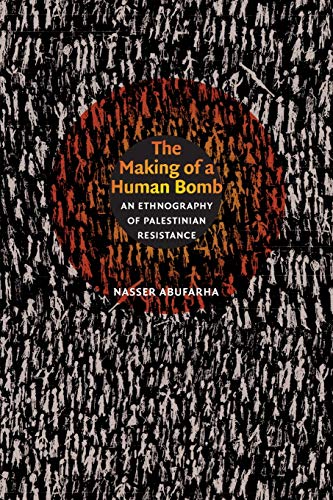
Synopsis
In The Making of a Human Bomb, Nasser Abufarha, a Palestinian anthropologist, explains the cultural logic underlying Palestinian martyrdom operations (suicide attacks) launched against Israel during the Al-Aqsa Intifada (2000-06). In so doing, he sheds much-needed light on how Palestinians have experienced and perceived the broader conflict. During the Intifada, many of the martyrdom operations against Israeli targets were initiated in the West Bank town of Jenin and surrounding villages. Abufarha was born and raised in Jenin. His personal connections to the area enabled him to conduct ethnographic research there during the Intifada, while he was a student at a U.S. university.
Abufarha draws on the life histories of martyrs, interviews he conducted with their families and members of the groups that sponsored their operations, and examinations of Palestinian literature, art, performance, news stories, and political commentaries. He also assesses data-about the bombers, targets, and fatalities caused-from more than two hundred martyrdom operations carried out by Palestinian groups between 2001 and 2004. Some involved the use of explosive belts or the detonation of cars; others entailed armed attacks against Israeli targets (military and civilian) undertaken with the intent of fighting until death. In addition, he scrutinized suicide attacks executed by Hamas and Islamic Jihad between 1994 and 2000. In his analysis of Palestinian political violence, Abufarha takes into account Palestinians' understanding of the history of the conflict with Israel, the effects of containment on Palestinians' everyday lives, the disillusionment created by the Oslo peace process, and reactions to specific forms of Israeli state violence. The Making of a Human Bomb illuminates the Palestinians' perspective on the conflict with Israel and provides a model for ethnographers seeking to make sense of political violence.
Les informations fournies dans la section « Synopsis » peuvent faire référence à une autre édition de ce titre.
À propos de l'auteur
Nasser Abufarha is the Founder and Chair of the Palestine Fair Trade Association, based in Jenin, Palestine. He has a doctorate in anthropology from the University of Wisconsin, Madison.
Les informations fournies dans la section « A propos du livre » peuvent faire référence à une autre édition de ce titre.
Résultats de recherche pour The Making of a Human Bomb: An Ethnography of Palestinian...

Image d'archives
The Making of a Human Bomb: An Ethnography of Palestinian Resistance
Edité par
Duke University Press, 2009
ISBN 10 : 0822344394
ISBN 13 : 9780822344391
Ancien ou d'occasion
Paperback
Vendeur : World of Books (was SecondSale), Montgomery, IL, Etats-Unis
Évaluation du vendeur 5 sur 5 étoiles

Paperback. Etat : Good. Claims that there is a cultural logic to Palestinian suicide bombings, and that these acts can neither be understood nor effectively countered without taking this into account. This title illuminates the Palestinians' perspective on the conflict with Israel and provides a model for ethnographers seeking to make sense of political violence. N° de réf. du vendeur 00107093515
Acheter D'occasion
EUR 5,01
Livraison gratuite
Expédition nationale : Etats-Unis
Expédition nationale : Etats-Unis
Quantité disponible : 1 disponible(s)
Image d'archives
The Making of a Human Bomb: An Ethnography of Palestinian Resistance
Edité par
Duke University Press, 2009
ISBN 10 : 0822344394
ISBN 13 : 9780822344391
Ancien ou d'occasion
Paperback
Vendeur : World of Books (was SecondSale), Montgomery, IL, Etats-Unis
Évaluation du vendeur 5 sur 5 étoiles
Paperback. Etat : Very Good. Claims that there is a cultural logic to Palestinian suicide bombings, and that these acts can neither be understood nor effectively countered without taking this into account. This title illuminates the Palestinians' perspective on the conflict with Israel and provides a model for ethnographers seeking to make sense of political violence. N° de réf. du vendeur 00109991939
Acheter D'occasion
EUR 5,51
Livraison gratuite
Expédition nationale : Etats-Unis
Expédition nationale : Etats-Unis
Quantité disponible : 1 disponible(s)
Image d'archives
The Making of a Human Bomb: An Ethnography of Palestinian Resistance
Edité par
Duke University Press, 2009
ISBN 10 : 0822344394
ISBN 13 : 9780822344391
Ancien ou d'occasion
Paperback
Vendeur : World of Books Inc, Montgomery, IL, Etats-Unis
Évaluation du vendeur 4 sur 5 étoiles

Paperback. Etat : Good. Claims that there is a cultural logic to Palestinian suicide bombings, and that these acts can neither be understood nor effectively countered without taking this into account. This title illuminates the Palestinians' perspective on the conflict with Israel and provides a model for ethnographers seeking to make sense of political violence. N° de réf. du vendeur CIN0822344394G
Acheter D'occasion
EUR 6,85
Livraison gratuite
Expédition nationale : Etats-Unis
Expédition nationale : Etats-Unis
Quantité disponible : 1 disponible(s)
Image fournie par le vendeur
The Making of a Human Bomb: An Ethnography of Palestinian Resistance (The Cultures and Practice of Violence)
Edité par
Duke University Press, 2009
ISBN 10 : 0822344394
ISBN 13 : 9780822344391
Ancien ou d'occasion
Couverture souple
Vendeur : Greenworld Books, Arlington, TX, Etats-Unis
Évaluation du vendeur 5 sur 5 étoiles
Etat : good. Fast Free Shipping â" Good condition. It may show normal signs of use, such as light writing, highlighting, or library markings, but all pages are intact and the book is fully readable. A solid, complete copy that's ready to enjoy. N° de réf. du vendeur GWV.0822344394.G
Acheter D'occasion
EUR 7,33
Livraison gratuite
Expédition nationale : Etats-Unis
Expédition nationale : Etats-Unis
Quantité disponible : 1 disponible(s)
Image d'archives
The Making of a Human Bomb: An Ethnography of Palestinian Resistance
Edité par
Duke University Press, 2009
ISBN 10 : 0822344394
ISBN 13 : 9780822344391
Ancien ou d'occasion
Paperback
Vendeur : World of Books Inc, Montgomery, IL, Etats-Unis
Évaluation du vendeur 4 sur 5 étoiles
Paperback. Etat : Very Good. Claims that there is a cultural logic to Palestinian suicide bombings, and that these acts can neither be understood nor effectively countered without taking this into account. This title illuminates the Palestinians' perspective on the conflict with Israel and provides a model for ethnographers seeking to make sense of political violence. N° de réf. du vendeur CIN0822344394VG
Acheter D'occasion
EUR 7,35
Livraison gratuite
Expédition nationale : Etats-Unis
Expédition nationale : Etats-Unis
Quantité disponible : 1 disponible(s)
Image d'archives
The Making of a Human Bomb: An Ethnography of Palestinian Resistance (The Cultures and Practice of Violence)
Edité par
Duke University Press Books, 2009
ISBN 10 : 0822344394
ISBN 13 : 9780822344391
Ancien ou d'occasion
Paperback
Vendeur : HPB-Red, Dallas, TX, Etats-Unis
Évaluation du vendeur 5 sur 5 étoiles
Paperback. Etat : Acceptable. Connecting readers with great books since 1972. Used textbooks may not include companion materials such as access codes, etc. May have condition issues including wear and notes/highlighting. We ship orders daily and Customer Service is our top priority! N° de réf. du vendeur S_461706089
Acheter D'occasion
EUR 4,60
Expédition à EUR 3,35
Expédition nationale : Etats-Unis
Expédition nationale : Etats-Unis
Quantité disponible : 1 disponible(s)
Image d'archives
The Making of a Human Bomb: An Ethnography of Palestinian Resistance
Edité par
Duke University Press, 2009
ISBN 10 : 0822344394
ISBN 13 : 9780822344391
Ancien ou d'occasion
Paperback
Vendeur : ThriftBooks-Dallas, Dallas, TX, Etats-Unis
Évaluation du vendeur 5 sur 5 étoiles
Paperback. Etat : Good. No Jacket. Pages can have notes/highlighting. Spine may show signs of wear. ~ ThriftBooks: Read More, Spend Less. N° de réf. du vendeur G0822344394I3N00
Acheter D'occasion
EUR 8,02
Livraison gratuite
Expédition nationale : Etats-Unis
Expédition nationale : Etats-Unis
Quantité disponible : 1 disponible(s)
Image d'archives
The Making of a Human Bomb: An Ethnography of Palestinian Resistance (The Cultures and Practice of Violence)
Edité par
Duke University Press, 2009
ISBN 10 : 0822344394
ISBN 13 : 9780822344391
Ancien ou d'occasion
Paperback
Vendeur : Textbook Bookie, Little Rock, AR, Etats-Unis
Évaluation du vendeur 4 sur 5 étoiles
Paperback. Etat : Good. Book in Good condition. N° de réf. du vendeur 9780822344391-good
Acheter D'occasion
EUR 9,19
Expédition à EUR 3,79
Expédition nationale : Etats-Unis
Expédition nationale : Etats-Unis
Quantité disponible : 7 disponible(s)
Image d'archives
The Making of a Human Bomb: An Ethnography of Palestinian Resistance
Edité par
Duke University Press, 2009
ISBN 10 : 0822344394
ISBN 13 : 9780822344391
Ancien ou d'occasion
Couverture souple
Vendeur : Anybook.com, Lincoln, Royaume-Uni
Évaluation du vendeur 5 sur 5 étoiles
Etat : Good. This is an ex-library book and may have the usual library/used-book markings inside.This book has soft covers. In good all round condition. Please note the Image in this listing is a stock photo and may not match the covers of the actual item,500grams, ISBN:9780822344391. N° de réf. du vendeur 5582094
Acheter D'occasion
EUR 13,82
Expédition à EUR 15,43
Expédition depuis Royaume-Uni vers Etats-Unis
Expédition depuis Royaume-Uni vers Etats-Unis
Quantité disponible : 1 disponible(s)
Image d'archives
The Making of a Human Bomb: An Ethnography of Palestinian Resistance (The Cultures and Practice of Violence)
Edité par
Duke University Press Books, 2009
ISBN 10 : 0822344394
ISBN 13 : 9780822344391
Neuf
paperback
Vendeur : Textbooks_Source, Columbia, MO, Etats-Unis
Évaluation du vendeur 5 sur 5 étoiles
paperback. Etat : New. Illustrated. Ships in a BOX from Central Missouri! UPS shipping for most packages, (Priority Mail for AK/HI/APO/PO Boxes). N° de réf. du vendeur 001002025N
Acheter neuf
EUR 29,86
Expédition à EUR 3,56
Expédition nationale : Etats-Unis
Expédition nationale : Etats-Unis
Quantité disponible : 7 disponible(s)