
Articles liés à Understanding Stone Tools and Archaeological Sites
Synopsis
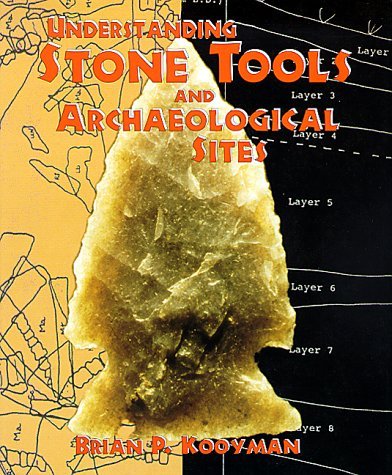
This generously illustrated instructional guide explains the examination and analysis of stone tools and stone-tool sites anywhere in the world. Lithics expert Brian P. Kooyman explores the production, function, and context of stone tools to understand how human cultures used lithic tools at particular sites and to give readers the practical skills for lithic and site analysis. The guide covers manufacturing techniques, lithic types and materials, reduction strategies and techniques, world-wide lithic technology, production variables, meaning of form, and usewear and residue analysis. The author draws on extensive field work in North America, particularly at Head-Smashed-In in Alberta, Canada. However, the theory, methodology, and analysis applies to the investigation of stone tools and lithic sites worldwide.
Les informations fournies dans la section « Synopsis » peuvent faire référence à une autre édition de ce titre.
Présentation de l'éditeur
This valuable volume of investigative archaeology focuses on stone tools, the artifacts produced by these tools, and the revealing debris left behind at sites where they were produced. The majority of study sites discussed are in western North America, including Alberta's own Head-Smashed-In Buffalo Jump, a World Heritage Site. Suitable for both the scholar and the interested layperson, Understanding Stone Tools and Archaeological Sites provides a comprehensive study in archaeological lithic analysis. This concise, hands-on guide to practical exploration at stone tool sites will become required reading for those pursuing studies of any sort in prehistoric lithic artifacts. The inclusion of maps, illustrations, and photographs broadens the reader's understanding of deriving meaning and relevance in the study of stone tool technology.
Biographie de l'auteur
Brian Kooyman, a professor of archaeology at the University of Calgary, is well used to translating his extensive knowledge into material easily accessible to students of all levels, and this makes Understanding Stone Tools and Archaeological Sites such an important educational volume.
Les informations fournies dans la section « A propos du livre » peuvent faire référence à une autre édition de ce titre.

