
Articles liés à The Golden Age of Arbitration: Dispute Resolution Under...
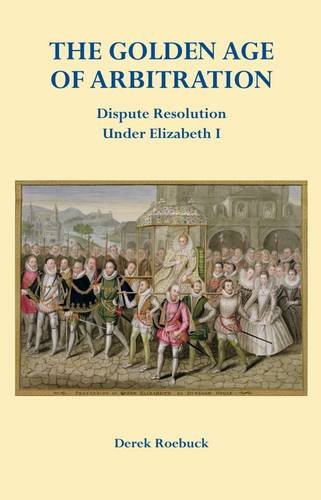
Synopsis
Elizabeth I consciously and determinedly provided a Government mediation and arbitration scheme. A wealth of primary sources show that she had a special concern for women, the poor and anyone disadvantaged by the costs and delays of the law. Her Privy Council arranged arbitrations with no fees and with free legal aid for those who needed it. The archives are voluminous, not only in the Acts of the Privy Council but in the National Archives and local collections. Her arbitration scheme dominates this book, but the background was private arbitration, arranged by the parties. In Elizabethan England arbitration was the ordinary way to settle a dispute the parties could not end themselves. Each side chose one or more arbitrators and that even number would try to mediate a settlement. If they failed, they would at least try to get the parties to agree on whom they would appoint to decide for them. The arbitrators include well-known personalities: Cecil and Walsingham, Raleigh and Hawkins, Coke and Bacon. Women are shown participating at all levels, as claimants and defendants, in matters of title to land, commerce and all kinds of family squabbles. They could even act as arbitrator or mediator. Elizabeth I herself did both. Many of the disputes were between foreign merchants and some were submitted to their arbitration. What law there was on arbitration, as the courts developed it over the 45 years of the reign, had little impact on practice. But the most important revelation is the Queen's concern for the poor: 'If the phrases "legal aid" and even "welfare state" had been coined by then, it may be unwise to assume that Elizabeth I's Government would have used them as terms of abuse.'
Les informations fournies dans la section « Synopsis » peuvent faire référence à une autre édition de ce titre.
À propos de l'auteur
Derek Roebuck is a Senior Associate Research Fellow at London University's Institute of Advanced Legal Studies. His researches into the history of arbitration, Ancient Greek Arbitration, Roman Arbitration (with Bruno de Loynes de Fumichon), Early English Arbitration and Mediation and Arbitration in the Middle Ages were published by HOLO Books in 2001, 2004, 2008 and 2013.
Les informations fournies dans la section « A propos du livre » peuvent faire référence à une autre édition de ce titre.
Résultats de recherche pour The Golden Age of Arbitration: Dispute Resolution Under...

Image d'archives
The Golden Age of Arbitration: Dispute Resolution Under Elizabeth I
Edité par
Holo Books The Arbitration Press, 2015
ISBN 10 : 0957215304
ISBN 13 : 9780957215306
Ancien ou d'occasion
Couverture rigide
Vendeur : HALCYON BOOKS, LONDON, Royaume-Uni
Évaluation du vendeur 5 sur 5 étoiles

hardcover. Etat : Very Good. NEW EU 3 EURO CHARGE FOR IMPORTS IS INCLUDED IN OUR SHIPPING PRICE. ALL ITEMS ARE DISPATCHED FROM THE UK, ALL OVERSEAS ORDERS SENT BY TRACKABLE AIR MAIL. IF YOU ARE LOCATED OUTSIDE THE UK PLEASE ASK US FOR A POSTAGE QUOTE FOR MULTI VOLUME SETS BEFORE ORDERING. N° de réf. du vendeur mon0000886623
Acheter D'occasion
EUR 7,78
Expédition à EUR 20,91
Expédition depuis Royaume-Uni vers Etats-Unis
Expédition depuis Royaume-Uni vers Etats-Unis
Quantité disponible : 1 disponible(s)
Image d'archives
The Golden Age Of Arbitration
Edité par
GARDNERS VI BOOKS AMS006, 2015
ISBN 10 : 0957215304
ISBN 13 : 9780957215306
Ancien ou d'occasion
Couverture rigide
Vendeur : GreatBookPrices, Columbia, MD, Etats-Unis
Évaluation du vendeur 5 sur 5 étoiles
Etat : As New. Unread book in perfect condition. N° de réf. du vendeur 22190979
Acheter D'occasion
EUR 41,03
Expédition à EUR 2,32
Expédition nationale : Etats-Unis
Expédition nationale : Etats-Unis
Quantité disponible : Plus de 20 disponibles
Image d'archives
The Golden Age Of Arbitration
Edité par
GARDNERS VI BOOKS AMS006, 2015
ISBN 10 : 0957215304
ISBN 13 : 9780957215306
Neuf
Couverture rigide
Vendeur : GreatBookPrices, Columbia, MD, Etats-Unis
Évaluation du vendeur 5 sur 5 étoiles
Etat : New. N° de réf. du vendeur 22190979-n
Acheter neuf
EUR 43,61
Expédition à EUR 2,32
Expédition nationale : Etats-Unis
Expédition nationale : Etats-Unis
Quantité disponible : Plus de 20 disponibles
Image fournie par le vendeur
The Golden Age of Arbitration
Edité par
Holo Books The Arbitration Press, GB, 2015
ISBN 10 : 0957215304
ISBN 13 : 9780957215306
Neuf
Couverture rigide
Vendeur : Rarewaves.com USA, London, LONDO, Royaume-Uni
Évaluation du vendeur 5 sur 5 étoiles
00. Etat : New. Elizabeth I consciously and determinedly provided a Government mediation and arbitration scheme. A wealth of primary sources show that she had a special concern for women, the poor and anyone disadvantaged by the costs and delays of the law. Her Privy Council arranged arbitrations with no fees and with free legal aid for those who needed it. The archives are voluminous, not only in the Acts of the Privy Council but in the National Archives and local collections. Her arbitration scheme dominates this book, but the background was private arbitration, arranged by the parties. In Elizabethan England arbitration was the ordinary way to settle a dispute the parties could not end themselves. Each side chose one or more arbitrators and that even number would try to mediate a settlement. If they failed, they would at least try to get the parties to agree on whom they would appoint to decide for them. The arbitrators include well-known personalities: Cecil and Walsingham, Raleigh and Hawkins, Coke and Bacon. Women are shown participating at all levels, as claimants and defendants, in matters of title to land, commerce and all kinds of family squabbles.They could even act as arbitrator or mediator. Elizabeth I herself did both. Many of the disputes were between foreign merchants and some were submitted to their arbitration. What law there was on arbitration, as the courts developed it over the 45 years of the reign, had little impact on practice. But the most important revelation is the Queen's concern for the poor: 'If the phrases "legal aid" and even "welfare state" had been coined by then, it may be unwise to assume that Elizabeth I's Government would have used them as terms of abuse.'. N° de réf. du vendeur LU-9780957215306
Acheter neuf
EUR 46,01
Livraison gratuite
Expédition depuis Royaume-Uni vers Etats-Unis
Expédition depuis Royaume-Uni vers Etats-Unis
Quantité disponible : 11 disponible(s)
Image d'archives
The Golden Age of Arbitration: Dispute Resolution Under Elizabeth I
Edité par
Holo Books The Arbitration Press 2015-01-15, 2015
ISBN 10 : 0957215304
ISBN 13 : 9780957215306
Neuf
Couverture rigide
Vendeur : Chiron Media, Wallingford, Royaume-Uni
Évaluation du vendeur 5 sur 5 étoiles
Hardcover. Etat : New. Brand new book, sourced directly from publisher. Dispatch time is 3-4 days from our warehouse. Book will be sent in robust, secure packaging to ensure it reaches you securely. N° de réf. du vendeur 6666-CBK-9780957215306
Acheter neuf
EUR 41,68
Expédition à EUR 7,54
Expédition depuis Royaume-Uni vers Etats-Unis
Expédition depuis Royaume-Uni vers Etats-Unis
Quantité disponible : Plus de 20 disponibles
Image d'archives
The Golden Age of Arbitration
Edité par
Holo Books The Arbitration Press, 2015
ISBN 10 : 0957215304
ISBN 13 : 9780957215306
Neuf
Couverture rigide
Vendeur : PBShop.store UK, Fairford, GLOS, Royaume-Uni
Évaluation du vendeur 5 sur 5 étoiles
UNK. Etat : New. New Book. Shipped from UK. Established seller since 2000. N° de réf. du vendeur C3-9780957215306
Acheter neuf
EUR 44,63
Expédition à EUR 5,83
Expédition depuis Royaume-Uni vers Etats-Unis
Expédition depuis Royaume-Uni vers Etats-Unis
Quantité disponible : 15 disponible(s)
Image d'archives
The Golden Age of Arbitration (Hardcover)
Edité par
Holo Books The Arbitration Press, Oxford, 2015
ISBN 10 : 0957215304
ISBN 13 : 9780957215306
Neuf
Couverture rigide
Vendeur : Grand Eagle Retail, Bensenville, IL, Etats-Unis
Évaluation du vendeur 5 sur 5 étoiles
Hardcover. Etat : new. Hardcover. Elizabeth I consciously and determinedly provided a Government mediation and arbitration scheme. A wealth of primary sources show that she had a special concern for women, the poor and anyone disadvantaged by the costs and delays of the law. Her Privy Council arranged arbitrations with no fees and with free legal aid for those who needed it. The archives are voluminous, not only in the Acts of the Privy Council but in the National Archives and local collections. Her arbitration scheme dominates this book, but the background was private arbitration, arranged by the parties. In Elizabethan England arbitration was the ordinary way to settle a dispute the parties could not end themselves. Each side chose one or more arbitrators and that even number would try to mediate a settlement. If they failed, they would at least try to get the parties to agree on whom they would appoint to decide for them. The arbitrators include well-known personalities: Cecil and Walsingham, Raleigh and Hawkins, Coke and Bacon. Women are shown participating at all levels, as claimants and defendants, in matters of title to land, commerce and all kinds of family squabbles.They could even act as arbitrator or mediator. Elizabeth I herself did both. Many of the disputes were between foreign merchants and some were submitted to their arbitration. What law there was on arbitration, as the courts developed it over the 45 years of the reign, had little impact on practice. But the most important revelation is the Queen's concern for the poor: 'If the phrases "legal aid" and even "welfare state" had been coined by then, it may be unwise to assume that Elizabeth I's Government would have used them as terms of abuse.' Elizabeth I consciously and determinedly provided a Government mediation and arbitration scheme. A wealth of primary sources show that she had a special concern for women, the poor and anyone disadvantaged by the costs and delays of the law. Her Privy Council arranged arbitrations with no fees and with free legal aid for those who needed it. Shipping may be from multiple locations in the US or from the UK, depending on stock availability. N° de réf. du vendeur 9780957215306
Acheter neuf
EUR 51,07
Livraison gratuite
Expédition nationale : Etats-Unis
Expédition nationale : Etats-Unis
Quantité disponible : 1 disponible(s)
Image d'archives
The Golden Age of Arbitration: Dispute Resolution Under Elizabeth I
Edité par
Holo Books The Arbitration Press, 2015
ISBN 10 : 0957215304
ISBN 13 : 9780957215306
Neuf
Couverture rigide
Vendeur : Revaluation Books, Exeter, Royaume-Uni
Évaluation du vendeur 5 sur 5 étoiles
Hardcover. Etat : Brand New. 365 pages. Portuguese language. 8.43x5.67x1.50 inches. In Stock. N° de réf. du vendeur __0957215304
Acheter neuf
EUR 37,10
Expédition à EUR 14,52
Expédition depuis Royaume-Uni vers Etats-Unis
Expédition depuis Royaume-Uni vers Etats-Unis
Quantité disponible : 2 disponible(s)
Image d'archives
The Golden Age of Arbitration: Dispute Resolution Under Elizabeth I
Edité par
GARDNERS VI BOOKS AMS006, 2015
ISBN 10 : 0957215304
ISBN 13 : 9780957215306
Neuf
Couverture rigide
Vendeur : Majestic Books, Hounslow, Royaume-Uni
Évaluation du vendeur 4 sur 5 étoiles

Etat : New. pp. 365. N° de réf. du vendeur 373360264
Acheter neuf
EUR 44,15
Expédition à EUR 7,55
Expédition depuis Royaume-Uni vers Etats-Unis
Expédition depuis Royaume-Uni vers Etats-Unis
Quantité disponible : 3 disponible(s)
Image d'archives
The Golden Age of Arbitration: Dispute Resolution Under Elizabeth I
Edité par
Holo Books The Arbitration Press, 2015
ISBN 10 : 0957215304
ISBN 13 : 9780957215306
Neuf
Couverture rigide
Vendeur : Kennys Bookshop and Art Galleries Ltd., Galway, GY, Irlande
Évaluation du vendeur 5 sur 5 étoiles
Etat : New. Elizabeth I consciously and determinedly provided a Government mediation and arbitration scheme. A wealth of primary sources show that she had a special concern for women, the poor and anyone disadvantaged by the costs and delays of the law. Her Privy Council arranged arbitrations with no fees and with free legal aid for those who needed it. Num Pages: 365 pages. BIC Classification: 1DBKE; 3JB; HBJD1; HBLH. Category: (UP) Postgraduate, Research & Scholarly. Dimension: 222 x 137 x 32. Weight in Grams: 604. . 2015. Hardcover. . . . . N° de réf. du vendeur V9780957215306
Acheter neuf
EUR 49,34
Expédition à EUR 9,50
Expédition depuis Irlande vers Etats-Unis
Expédition depuis Irlande vers Etats-Unis
Quantité disponible : Plus de 20 disponibles