
Synopsis
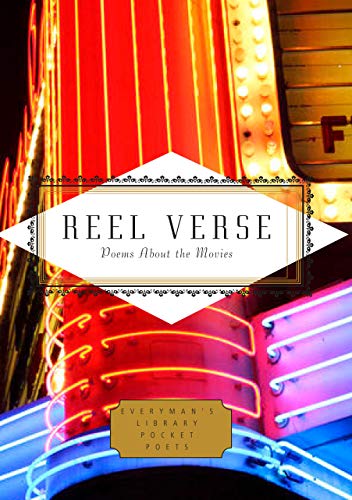
A unique Pocket Poets anthology of a hundred years of poetic tributes to the silver screen, from the silent film era to the present.
The variety of subjects is dazzling, from movie stars to bit players, from B-movies to Bollywood, from Clark Gable to Jean Cocteau. More than a hundred poets riff on their movie memories: Langston Hughes and John Updike on the theaters of their youth, Jack Kerouac and Robert Lowell on Harpo Marx, Sharon Olds on Marilyn Monroe, Louise Erdrich on John Wayne, May Swenson on the James Bond films, Terrance Hayes on early Black cinema, Maxine Kumin on Casablanca, and Richard Wilbur on The Prisoner of Zenda. Orson Welles, Leni Riefenstahl, and Ingmar Bergman share the spotlight with Shirley Temple, King Kong, and Carmen Miranda; Bonnie and Clyde and Ridley Scott with Roshomon, Hitchcock, and Bresson. In Reel Verse, one of our oldest art forms pays loving homage to one of our newest—the thrilling art of cinema.
Les informations fournies dans la section « Synopsis » peuvent faire référence à une autre édition de ce titre.
À propos de l'auteur
HAROLD SCHECHTER is a retired professor of American literature and culture at Queens College, CUNY, and the author of several mystery novels featuring Edgar Allan Poe, as well as coeditor of two previous Everyman's Library Pocket Poets. He lives in New York City.
MICHAEL WATERS is the author of numerous poetry collections, including the Los Angeles Times Book Prize finalist Darling Vulgarity (2006) and Parthenopi: New and Selected Poems (2001). His honors include fellowships from the Fulbright Foundation, the National Endowment for the Arts, and the Guggenheim Foundation, and five Pushcart Prizes. Waters teaches at Monmouth University and Drew University. He lives in Ocean, New Jersey.
Extrait. © Reproduit sur autorisation. Tous droits réservés.
Foreword
If, as Henry David Thoreau says, “our truest lives are when we are in dreams awake,” then millions of people have led, if not their truest, certainly their most vivid lives in darkened theaters, immersed in the transporting dreams unreeling before their open eyes. The narrator of Walker Percy’s classic novel, The Moviegoer, speaks for many in recalling the high points of his life: “Other people, so I have read, treasure memorable moments in their lives: the time one climbed the Pantheon at sunrise, the summer night one met a lonely girl in Central Park and achieved with her a sweet and natural relationship, as they say in books. I, too, once met a girl in Central Park, but it is not much to remember. What I remember is the time John Wayne killed three men with a carbine as he was falling to the dusty street in Stagecoach. And the time the kitten found Orson Welles in the doorway in The Third Man.”
That poets—practitioners of what is traditionally viewed as the most refined of arts—should devote their writings to a medium as demotic as the movies might seem paradoxical at a glance. But as the poet Vachel Lindsay was the first to acknowledge, the deities of the ancient pantheon have been replaced in the modern world by the gods and goddesses of the silver screen. Far from being mere entertainment, the movies constitute the myths of our time. In the century since the birth of the Hollywood studios, poets, as the works collected here attest, have been deeply engaged with the movies, exploring the countless ways those celluloid dreams have nourished, excited, and shaped the modern imagination.
—Harold Schechter and Michael Waters
Les informations fournies dans la section « A propos du livre » peuvent faire référence à une autre édition de ce titre.
Résultats de recherche pour Reel Verse: Poems About the Movies

Image d'archives
Reel Verse: Poems About the Movies (Everyman's Library Pocket Poets Series)
Edité par
Everyman's Library, 2019
ISBN 10 : 1101908033
ISBN 13 : 9781101908037
Ancien ou d'occasion
Couverture rigide
Vendeur : PlumCircle, West Mifflin, PA, Etats-Unis
Évaluation du vendeur 5 sur 5 étoiles

Hardcover. Etat : Very Good. Publisher overstock. May have remainder mark / minor shelfwear. 99% of orders arrive in 4-10 days. Discounted shipping on multiple books. N° de réf. du vendeur mon0001333336
Acheter D'occasion
EUR 0,90
Expédition à EUR 4,36
Expédition nationale : Etats-Unis
Expédition nationale : Etats-Unis
Quantité disponible : 7 disponible(s)
Image d'archives
Reel Verse: Poems About the Movies (Everyman's Library Pocket Poets Series)
Edité par
Everyman's Library, 2019
ISBN 10 : 1101908033
ISBN 13 : 9781101908037
Ancien ou d'occasion
Couverture rigide
Vendeur : Evergreen Goodwill, Seattle, WA, Etats-Unis
Évaluation du vendeur 5 sur 5 étoiles
hardcover. Etat : Good. N° de réf. du vendeur mon0000538519
Acheter D'occasion
EUR 2,50
Expédition à EUR 3,49
Expédition nationale : Etats-Unis
Expédition nationale : Etats-Unis
Quantité disponible : 1 disponible(s)
Image d'archives
Reel Verse: Poems about the Movies
Edité par
Everyman's Library, 2019
ISBN 10 : 1101908033
ISBN 13 : 9781101908037
Ancien ou d'occasion
Couverture rigide
Vendeur : ThriftBooks-Atlanta, AUSTELL, GA, Etats-Unis
Évaluation du vendeur 5 sur 5 étoiles
Hardcover. Etat : Very Good. No Jacket. May have limited writing in cover pages. Pages are unmarked. ~ ThriftBooks: Read More, Spend Less. N° de réf. du vendeur G1101908033I4N00
Acheter D'occasion
EUR 6,19
Livraison gratuite
Expédition nationale : Etats-Unis
Expédition nationale : Etats-Unis
Quantité disponible : 1 disponible(s)
Image d'archives
Reel Verse : Poems about the Movies
Edité par
Knopf Doubleday Publishing Group, 2019
ISBN 10 : 1101908033
ISBN 13 : 9781101908037
Ancien ou d'occasion
Couverture rigide
Vendeur : Better World Books, Mishawaka, IN, Etats-Unis
Évaluation du vendeur 5 sur 5 étoiles
Etat : Very Good. Pages intact with possible writing/highlighting. Binding strong with minor wear. Dust jackets/supplements may not be included. Stock photo provided. Product includes identifying sticker. Better World Books: Buy Books. Do Good. N° de réf. du vendeur 18983512-6
Acheter D'occasion
EUR 9,61
Livraison gratuite
Expédition nationale : Etats-Unis
Expédition nationale : Etats-Unis
Quantité disponible : 1 disponible(s)
Image d'archives
Reel Verse: Poems About the Movies (Everyman's Library Pocket Poets Series)
Edité par
Everyman's Library, 2019
ISBN 10 : 1101908033
ISBN 13 : 9781101908037
Ancien ou d'occasion
Couverture rigide
Vendeur : HPB Inc., Dallas, TX, Etats-Unis
Évaluation du vendeur 5 sur 5 étoiles
hardcover. Etat : Very Good. Connecting readers with great books since 1972! Used books may not include companion materials, and may have some shelf wear or limited writing. We ship orders daily and Customer Service is our top priority! N° de réf. du vendeur S_474669673
Acheter D'occasion
EUR 6,74
Expédition à EUR 3,28
Expédition nationale : Etats-Unis
Expédition nationale : Etats-Unis
Quantité disponible : 1 disponible(s)
Image fournie par le vendeur
Reel Verse: Poems About the Movies (Everyman's Library Pocket Poets Series)
Edité par
Everyman's Library, 2019
ISBN 10 : 1101908033
ISBN 13 : 9781101908037
Ancien ou d'occasion
Couverture rigide
Vendeur : EdmondDantes Bookseller, Minneapolis, MN, Etats-Unis
Évaluation du vendeur 5 sur 5 étoiles
Hardcover. Etat : Very Good. Etat de la jaquette : Very Good. Hardcover in Dust Jacket with only minor reading wear; book is clean, unmarked. In stock. Ships from MN, USA. N° de réf. du vendeur 015987
Acheter D'occasion
EUR 7,19
Expédition à EUR 3,93
Expédition nationale : Etats-Unis
Expédition nationale : Etats-Unis
Quantité disponible : 1 disponible(s)
Image fournie par le vendeur
Reel Verse : Poems About the Movies
Edité par
Everyman's Library, 2019
ISBN 10 : 1101908033
ISBN 13 : 9781101908037
Neuf
Couverture rigide
Vendeur : GreatBookPrices, Columbia, MD, Etats-Unis
Évaluation du vendeur 5 sur 5 étoiles
Etat : New. N° de réf. du vendeur 32767096-n
Acheter neuf
EUR 10,84
Expédition à EUR 2,31
Expédition nationale : Etats-Unis
Expédition nationale : Etats-Unis
Quantité disponible : Plus de 20 disponibles
Image fournie par le vendeur
Reel Verse
Edité par
Random House USA Inc, US, 2019
ISBN 10 : 1101908033
ISBN 13 : 9781101908037
Neuf
Couverture rigide
Vendeur : Rarewaves USA, OSWEGO, IL, Etats-Unis
Évaluation du vendeur 5 sur 5 étoiles
Hardback. Etat : New. N° de réf. du vendeur LU-9781101908037
Acheter neuf
EUR 13,26
Livraison gratuite
Expédition nationale : Etats-Unis
Expédition nationale : Etats-Unis
Quantité disponible : 8 disponible(s)
Image fournie par le vendeur
Reel Verse : Poems About the Movies
Edité par
Everyman's Library, 2019
ISBN 10 : 1101908033
ISBN 13 : 9781101908037
Ancien ou d'occasion
Couverture rigide
Vendeur : GreatBookPrices, Columbia, MD, Etats-Unis
Évaluation du vendeur 5 sur 5 étoiles
Etat : As New. Unread book in perfect condition. N° de réf. du vendeur 32767096
Acheter D'occasion
EUR 11,44
Expédition à EUR 2,31
Expédition nationale : Etats-Unis
Expédition nationale : Etats-Unis
Quantité disponible : Plus de 20 disponibles
Image d'archives
Reel Verse Format: Hardcover
Edité par
Penguin Random House, 2019
ISBN 10 : 1101908033
ISBN 13 : 9781101908037
Ancien ou d'occasion
Couverture rigide
Vendeur : INDOO, Avenel, NJ, Etats-Unis
Évaluation du vendeur 5 sur 5 étoiles
Etat : As New. Unread copy in mint condition. N° de réf. du vendeur RH9781101908037
Acheter D'occasion
EUR 13,83
Livraison gratuite
Expédition nationale : Etats-Unis
Expédition nationale : Etats-Unis
Quantité disponible : Plus de 20 disponibles