
Articles liés à Ecological Impacts of Non-Native Invertebrates and...
Ecological Impacts of Non-Native Invertebrates and Fungi on Terrestrial Ecosystems - Couverture rigide
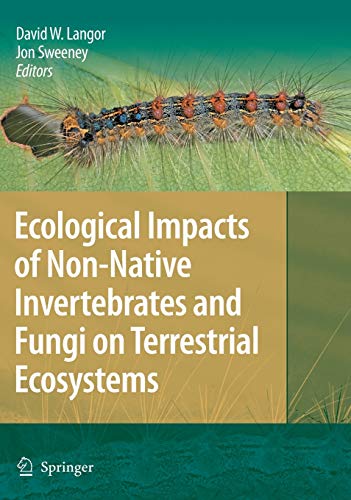
Synopsis
Since the arrival of Europeans about 500 years ago, an estimated 50,000 non-native species have been introduced to North America (including Hawaii). Non-native species figure prominently in our lives, often as ornamentals, sources of food or pests. Although many introduced species are beneficial, there is increasing awareness of the enormous economic costs associated with non-native pests. In contrast, the ecological impacts of non-native species have received much less public and scientific attention, despite the fact that invasion by exotic species ranks second to habitat destruction as a cause of species loss. In particular, there is little information about the ecological impacts of hyper-diverse groups such as terrestrial fungi and invertebrates.
A science symposium, Ecological impacts of non-native invertebrates and fungi on terrestrial ecosystems, held in 2006, brought together scientists from the USA and Canada to review the state of knowledge in this field of work. Additional reviews were solicited following the symposium. The resulting set of review/synthesis papers and case studies represents a cross-section of work on ecological impacts of non-native terrestrial invertebrates and fungi. Although there is a strong focus on Canadian work, there is also significant presentation of work in the northern USA and Europe.
Les informations fournies dans la section « Synopsis » peuvent faire référence à une autre édition de ce titre.
À propos de la quatrième de couverture
Since the arrival of Europeans about 500 years ago, an estimated 50,000 non-native species have been introduced to North America (including Hawaii). Non-native species figure prominently in our lives, often as ornamentals, sources of food or pests. Although many introduced species are beneficial, there is increasing awareness of the enormous economic costs associated with non-native pests. In contrast, the ecological impacts of non-native species have received much less public and scientific attention, despite the fact that invasion by exotic species ranks second to habitat destruction as a cause of species loss. In particular, there is little information about the ecological impacts of hyper-diverse groups such as terrestrial fungi and invertebrates. A science symposium, Ecological impacts of non-native invertebrates and fungi on terrestrial ecosystems, held in 2006, brought together scientists from the USA and Canada to review the state of knowledge in this field of work. Additional reviews were solicited following the symposium. The resulting set of review/synthesis papers and case studies represents a cross-section of work on ecological impacts of non-native terrestrial invertebrates and fungi. Although there is a strong focus on Canadian work, there is also significant presentation of work in the northern USA and Europe.
Les informations fournies dans la section « A propos du livre » peuvent faire référence à une autre édition de ce titre.
Résultats de recherche pour Ecological Impacts of Non-Native Invertebrates and...

Image fournie par le vendeur
Ecological Impacts of Non-Native Invertebrates and Fungi on Terrestrial Ecosystems
Edité par
Springer Netherlands Feb 2009, 2009
ISBN 10 : 1402096798
ISBN 13 : 9781402096792
Neuf
Couverture rigide
Vendeur : BuchWeltWeit Ludwig Meier e.K., Bergisch Gladbach, Allemagne
Évaluation du vendeur 5 sur 5 étoiles

Buch. Etat : Neu. This item is printed on demand - it takes 3-4 days longer - Neuware -Since the arrival of Europeans about 500 years ago, an estimated 50,000 non-native species have been introduced to North America (including Hawaii). Non-native species figure prominently in our lives, often as ornamentals, sources of food or pests. Although many introduced species are beneficial, there is increasing awareness of the enormous economic costs associated with non-native pests. In contrast, the ecological impacts of non-native species have received much less public and scientific attention, despite the fact that invasion by exotic species ranks second to habitat destruction as a cause of species loss. In particular, there is little information about the ecological impacts of hyper-diverse groups such as terrestrial fungi and invertebrates.A science symposium, Ecological impacts of non-native invertebrates and fungi on terrestrial ecosystems, held in 2006, brought together scientists from the USA and Canada to review the state of knowledge in this field of work. Additional reviews were solicited following the symposium. The resulting set of review/synthesis papers and case studies represents a cross-section of work on ecological impacts of non-native terrestrial invertebrates and fungi. Although there is a strong focus on Canadian work, there is also significant presentation of work in the northern USA and Europe. 164 pp. Englisch. N° de réf. du vendeur 9781402096792
Acheter neuf
EUR 106,99
Expédition à EUR 23
Expédition depuis Allemagne vers Etats-Unis
Expédition depuis Allemagne vers Etats-Unis
Quantité disponible : 2 disponible(s)
Image d'archives
Ecological Impacts of Non-Native Invertebrates and Fungi on Terrestrial Ecosystems
Edité par
Springer Netherlands, 2009
ISBN 10 : 1402096798
ISBN 13 : 9781402096792
Ancien ou d'occasion
Couverture rigide
Vendeur : Buchpark, Trebbin, Allemagne
Évaluation du vendeur 5 sur 5 étoiles
Etat : Sehr gut. Zustand: Sehr gut | Sprache: Englisch | Produktart: Bücher | Since the arrival of Europeans about 500 years ago, an estimated 50,000 non-native species have been introduced to North America (including Hawaii). Non-native species figure prominently in our lives, often as ornamentals, sources of food or pests. Although many introduced species are beneficial, there is increasing awareness of the enormous economic costs associated with non-native pests. In contrast, the ecological impacts of non-native species have received much less public and scientific attention, despite the fact that invasion by exotic species ranks second to habitat destruction as a cause of species loss. In particular, there is little information about the ecological impacts of hyper-diverse groups such as terrestrial fungi and invertebrates.A science symposium, Ecological impacts of non-native invertebrates and fungi on terrestrial ecosystems, held in 2006, brought together scientists from the USA and Canada to review the state of knowledge in this field of work. Additional reviews were solicited following the symposium. The resulting set of review/synthesis papers and case studies represents a cross-section of work on ecological impacts of non-native terrestrial invertebrates and fungi. Although there is a strong focus on Canadian work, there is also significant presentation of work in the northern USA and Europe. N° de réf. du vendeur 4947447/12
Acheter D'occasion
EUR 32,59
Expédition à EUR 105
Expédition depuis Allemagne vers Etats-Unis
Expédition depuis Allemagne vers Etats-Unis
Quantité disponible : 1 disponible(s)
Image fournie par le vendeur
Ecological Impacts of Non-Native Invertebrates and Fungi on Terrestrial Ecosystems
Edité par
Springer Netherlands, 2009
ISBN 10 : 1402096798
ISBN 13 : 9781402096792
Neuf
Couverture rigide
Vendeur : moluna, Greven, Allemagne
Évaluation du vendeur 5 sur 5 étoiles
Gebunden. Etat : New. Dieser Artikel ist ein Print on Demand Artikel und wird nach Ihrer Bestellung fuer Sie gedruckt. State-of-the art reviewsBest treatment of this topic availableAddresses impacts of a range of exotic organisms in terrestrial ecosystemsSince the arrival of Europeans about 500 years ago, an estimated 50,000 non-native species ha. N° de réf. du vendeur 4095981
Acheter neuf
EUR 92,27
Expédition à EUR 48,99
Expédition depuis Allemagne vers Etats-Unis
Expédition depuis Allemagne vers Etats-Unis
Quantité disponible : Plus de 20 disponibles
Image d'archives
Ecological Impacts of Non-Native Invertebrates and Fungi on Terrestrial Ecosystems
Vendeur : Ria Christie Collections, Uxbridge, Royaume-Uni
Évaluation du vendeur 5 sur 5 étoiles
Etat : New. In English. N° de réf. du vendeur ria9781402096792_new
Acheter neuf
EUR 131,23
Expédition à EUR 13,48
Expédition depuis Royaume-Uni vers Etats-Unis
Expédition depuis Royaume-Uni vers Etats-Unis
Quantité disponible : Plus de 20 disponibles
Image fournie par le vendeur
Ecological Impacts of Non-Native Invertebrates and Fungi on Terrestrial Ecosystems
Vendeur : AHA-BUCH GmbH, Einbeck, Allemagne
Évaluation du vendeur 5 sur 5 étoiles
Buch. Etat : Neu. Druck auf Anfrage Neuware - Printed after ordering - Since the arrival of Europeans about 500 years ago, an estimated 50,000 non-native species have been introduced to North America (including Hawaii). Non-native species figure prominently in our lives, often as ornamentals, sources of food or pests. Although many introduced species are beneficial, there is increasing awareness of the enormous economic costs associated with non-native pests. In contrast, the ecological impacts of non-native species have received much less public and scientific attention, despite the fact that invasion by exotic species ranks second to habitat destruction as a cause of species loss. In particular, there is little information about the ecological impacts of hyper-diverse groups such as terrestrial fungi and invertebrates.A science symposium, Ecological impacts of non-native invertebrates and fungi on terrestrial ecosystems, held in 2006, brought together scientists from the USA and Canada to review the state of knowledge in this field of work. Additional reviews were solicited following the symposium. The resulting set of review/synthesis papers and case studies represents a cross-section of work on ecological impacts of non-native terrestrial invertebrates and fungi. Although there is a strong focus on Canadian work, there is also significant presentation of work in the northern USA and Europe. N° de réf. du vendeur 9781402096792
Acheter neuf
EUR 124,85
Expédition à EUR 35
Expédition depuis Allemagne vers Etats-Unis
Expédition depuis Allemagne vers Etats-Unis
Quantité disponible : 1 disponible(s)
Image fournie par le vendeur
Ecological Impacts of Non-Native Invertebrates and Fungi on Terrestrial Ecosystems
Edité par
Springer, Springer Feb 2009, 2009
ISBN 10 : 1402096798
ISBN 13 : 9781402096792
Neuf
Couverture rigide
Vendeur : buchversandmimpf2000, Emtmannsberg, BAYE, Allemagne
Évaluation du vendeur 5 sur 5 étoiles
Buch. Etat : Neu. This item is printed on demand - Print on Demand Titel. Neuware -Since the arrival of Europeans about 500 years ago, an estimated 50,000 non-native species have been introduced to North America (including Hawaii). Non-native species figure prominently in our lives, often as ornamentals, sources of food or pests. Although many introduced species are beneficial, there is increasing awareness of the enormous economic costs associated with non-native pests. In contrast, the ecological impacts of non-native species have received much less public and scientific attention, despite the fact that invasion by exotic species ranks second to habitat destruction as a cause of species loss. In particular, there is little information about the ecological impacts of hyper-diverse groups such as terrestrial fungi and invertebrates.A science symposium, Ecological impacts of non-native invertebrates and fungi on terrestrial ecosystems, held in 2006, brought together scientists from the USA and Canada to review the state of knowledge in this field of work. Additional reviews were solicited following the symposium. The resulting set of review/synthesis papers and case studies represents a cross-section of work on ecological impacts of non-native terrestrial invertebrates and fungi. Although there is a strong focus on Canadian work, there is also significant presentation of work in the northern USA and Europe.Springer-Verlag KG, Sachsenplatz 4-6, 1201 Wien 164 pp. Englisch. N° de réf. du vendeur 9781402096792
Acheter neuf
EUR 106,99
Expédition à EUR 60
Expédition depuis Allemagne vers Etats-Unis
Expédition depuis Allemagne vers Etats-Unis
Quantité disponible : 1 disponible(s)
Image d'archives
Ecological Impacts of Non-native Invertebrates and Fungi on Terrestrial Ecosystems
Vendeur : Revaluation Books, Exeter, Royaume-Uni
Évaluation du vendeur 5 sur 5 étoiles
Hardcover. Etat : Brand New. 1st edition. 158 pages. 10.50x7.75x0.50 inches. In Stock. N° de réf. du vendeur x-1402096798
Acheter neuf
EUR 159,60
Expédition à EUR 14,93
Expédition depuis Royaume-Uni vers Etats-Unis
Expédition depuis Royaume-Uni vers Etats-Unis
Quantité disponible : 2 disponible(s)