
Articles liés à Beethoven - His Spiritual Development
Synopsis
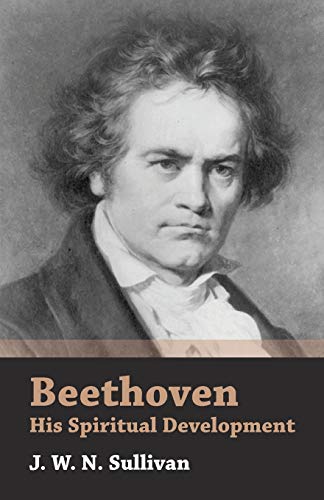
First published in 1927, J. W. N. Sullivan's “Beethoven - His Spiritual Development” explores the subject of Beethoven's spirituality, which the author believes he expressed through his greatest musical compositions. Contents include: “Art and Reality”, “Music as Isolated”, “Music as Expression”, “Beethoven’s Characteristics”, “The Morality of Power”, “The Mind of Beethoven”, “The Hero”, “The End of a Period”, “Love and Money”, “The Hammerclavier Sonata”, “God the Companion”, etc. A fascinating study of Beethoven's work not to be missed by fans of classical music. John William Navin Sullivan (1886–1937) was a popular literary journalist and science writer who wrote some of the first accounts of Albert Einstein’s General Theory of Relativity for the laymen. Sullivan was acquainted with a number of important writers in 1920s London including T. S. Eliot, Aldous Huxley, and Aleister Crowley. Read & Co. Books is republishing this classic work now in a new edition complete with a specially-commissioned new biography of the author.
Les informations fournies dans la section « Synopsis » peuvent faire référence à une autre édition de ce titre.
Présentation de l'éditeur
‘Beethoven – His Spiritual Development’ was written by J.W.N. Sullivan, first published in 1927. John William Navin Sullivan (1886-1937) was a popular writer on science and literature, but his study of Beethoven was his most celebrated work. A modern day polymath, Sullivan also wrote one of the earliest accounts of Einstein’s ‘General Theory of Relativity’ and circulated amongst the literary elite of London, including Aldous Huxley, Wyndham Lewis and T.S. Eliot. This text contains an author biography, briefly detailing Sullivan’s life, as well as thematic chapters split into two parts. Book one deals with themes such as ‘art and reality’, ‘music as isolated’ and ‘music as expression.’ Book two deals with more specific issues, such as ‘Beethoven’s characteristics’ his ‘Hammerclavier Sonata’, ‘relationship with God’ and the ‘Last Quartets.’ This book is essential reading for anyone interested in musical theory and history – an insightful and engaging read.
Revue de presse
From the Author's Preface:
"I believe that in his greatest music Beethoven was primarily concerned to express his personal vision of life. This vision was, of course, the product of his character and his experience. Beethoven the man and Beethoven the composer are not two unconnected entities, and the known history of the man may be used to throw light upon the character of his music."
Clifton Fadiman has said of this classic study:
"It is the most interesting book on music that I have ever read and it is not written for musical experts; rather for people like myself who like to listen to music but can boast no special knowledge of it. It deals not only with music, on which I do not speak with authority, but with human life in general, about which you and I speak with authority every day of our lives."
Les informations fournies dans la section « A propos du livre » peuvent faire référence à une autre édition de ce titre.
Résultats de recherche pour Beethoven - His Spiritual Development

Image d'archives
Beethoven - His Spiritual Development
Edité par
Read & Co. Books, 2007
ISBN 10 : 140675420X
ISBN 13 : 9781406754209
Ancien ou d'occasion
Paperback
Vendeur : WorldofBooks, Goring-By-Sea, WS, Royaume-Uni
Évaluation du vendeur 5 sur 5 étoiles

Paperback. Etat : Very Good. The book has been read, but is in excellent condition. Pages are intact and not marred by notes or highlighting. The spine remains undamaged. N° de réf. du vendeur GOR007874995
Acheter D'occasion
EUR 10,70
Expédition à EUR 6,52
Expédition depuis Royaume-Uni vers Etats-Unis
Expédition depuis Royaume-Uni vers Etats-Unis
Quantité disponible : 1 disponible(s)
Image fournie par le vendeur
Beethoven : His Spiritual Development
Edité par
Read & Co. Books, 2007
ISBN 10 : 140675420X
ISBN 13 : 9781406754209
Neuf
Couverture souple
Vendeur : GreatBookPrices, Columbia, MD, Etats-Unis
Évaluation du vendeur 5 sur 5 étoiles
Etat : New. N° de réf. du vendeur 5183456-n
Acheter neuf
EUR 23,65
Expédition à EUR 2,30
Expédition nationale : Etats-Unis
Expédition nationale : Etats-Unis
Quantité disponible : Plus de 20 disponibles
Image d'archives
Beethoven - His Spiritual Development
Edité par
Read & Co. Books, 2007
ISBN 10 : 140675420X
ISBN 13 : 9781406754209
Neuf
Couverture souple
Vendeur : California Books, Miami, FL, Etats-Unis
Évaluation du vendeur 4 sur 5 étoiles

Etat : New. N° de réf. du vendeur I-9781406754209
Acheter neuf
EUR 26,03
Livraison gratuite
Expédition nationale : Etats-Unis
Expédition nationale : Etats-Unis
Quantité disponible : Plus de 20 disponibles
Image fournie par le vendeur
Beethoven : His Spiritual Development
Edité par
Read & Co. Books, 2007
ISBN 10 : 140675420X
ISBN 13 : 9781406754209
Ancien ou d'occasion
Couverture souple
Vendeur : GreatBookPrices, Columbia, MD, Etats-Unis
Évaluation du vendeur 5 sur 5 étoiles
Etat : As New. Unread book in perfect condition. N° de réf. du vendeur 5183456
Acheter D'occasion
EUR 24,49
Expédition à EUR 2,30
Expédition nationale : Etats-Unis
Expédition nationale : Etats-Unis
Quantité disponible : Plus de 20 disponibles
Image fournie par le vendeur
Beethoven - His Spiritual Development
Vendeur : Rarewaves.com USA, London, LONDO, Royaume-Uni
Évaluation du vendeur 5 sur 5 étoiles
Paperback. Etat : New. N° de réf. du vendeur LU-9781406754209
Acheter neuf
EUR 27,91
Livraison gratuite
Expédition depuis Royaume-Uni vers Etats-Unis
Expédition depuis Royaume-Uni vers Etats-Unis
Quantité disponible : Plus de 20 disponibles
Image d'archives
Beethoven - His Spiritual Development
impression à la demandeVendeur : PBShop.store US, Wood Dale, IL, Etats-Unis
Évaluation du vendeur 5 sur 5 étoiles
PAP. Etat : New. New Book. Shipped from UK. THIS BOOK IS PRINTED ON DEMAND. Established seller since 2000. N° de réf. du vendeur L0-9781406754209
Acheter neuf
EUR 28,30
Livraison gratuite
Expédition nationale : Etats-Unis
Expédition nationale : Etats-Unis
Quantité disponible : Plus de 20 disponibles
Image d'archives
Beethoven - His Spiritual Development
impression à la demandeVendeur : PBShop.store UK, Fairford, GLOS, Royaume-Uni
Évaluation du vendeur 5 sur 5 étoiles
PAP. Etat : New. New Book. Delivered from our UK warehouse in 4 to 14 business days. THIS BOOK IS PRINTED ON DEMAND. Established seller since 2000. N° de réf. du vendeur L0-9781406754209
Acheter neuf
EUR 26,05
Expédition à EUR 4,84
Expédition depuis Royaume-Uni vers Etats-Unis
Expédition depuis Royaume-Uni vers Etats-Unis
Quantité disponible : Plus de 20 disponibles
Image fournie par le vendeur
Beethoven: his spiritual development
Edité par
Read & Co. Books, 2007
ISBN 10 : 140675420X
ISBN 13 : 9781406754209
Ancien ou d'occasion
Couverture souple
Vendeur : Cotswold Internet Books, Cheltenham, Royaume-Uni
Évaluation du vendeur 5 sur 5 étoiles
Etat : Used - Good. Good paperback. Reprint, 2013. Bottom corner of front cover& pages below creased, otherwise VG. N° de réf. du vendeur BOOKS271485I
Acheter D'occasion
EUR 14,99
Expédition à EUR 16,29
Expédition depuis Royaume-Uni vers Etats-Unis
Expédition depuis Royaume-Uni vers Etats-Unis
Quantité disponible : 1 disponible(s)
Image d'archives
Beethoven - His Spiritual Development
Edité par
Read and Co. Books, 2007
ISBN 10 : 140675420X
ISBN 13 : 9781406754209
Ancien ou d'occasion
Paperback
Vendeur : Brit Books, Milton Keynes, Royaume-Uni
Évaluation du vendeur 4 sur 5 étoiles
Paperback. Etat : Used; Very Good. ***Simply Brit*** Welcome to our online used book store, where affordability meets great quality. Dive into a world of captivating reads without breaking the bank. We take pride in offering a wide selection of used books, from classics to hidden gems, ensuring there is something for every literary palate. All orders are shipped within 24 hours and our lightning fast-delivery within 48 hours coupled with our prompt customer service ensures a smooth journey from ordering to delivery. Discover the joy of reading with us, your trusted source for affordable books that do not compromise on quality. N° de réf. du vendeur 3855974
Acheter D'occasion
EUR 13,62
Expédition à EUR 18,61
Expédition depuis Royaume-Uni vers Etats-Unis
Expédition depuis Royaume-Uni vers Etats-Unis
Quantité disponible : 1 disponible(s)
Image d'archives
Beethoven - His Spiritual Development
Edité par
Read & Co. Books, 2007
ISBN 10 : 140675420X
ISBN 13 : 9781406754209
Neuf
Couverture souple
Vendeur : Ria Christie Collections, Uxbridge, Royaume-Uni
Évaluation du vendeur 5 sur 5 étoiles
Etat : New. In English. N° de réf. du vendeur ria9781406754209_new
Acheter neuf
EUR 24,31
Expédition à EUR 10,91
Expédition depuis Royaume-Uni vers Etats-Unis
Expédition depuis Royaume-Uni vers Etats-Unis
Quantité disponible : Plus de 20 disponibles