
Articles liés à Field Guide to Native Oak Species of Eastern North...
Synopsis
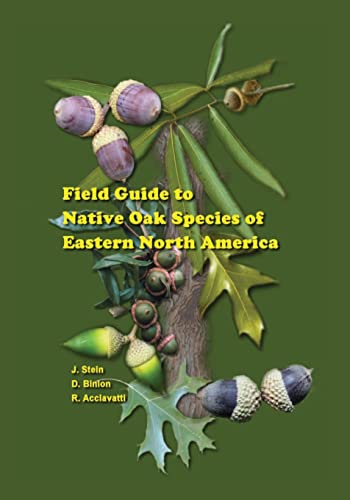
Oaks are primarily temperate region trees and shrubs numbering approximately 600 species worldwide. Oaks have occupied the nonglaciated landscape of North America since the Cretaceous Period. Fifty oak species are represented in two-thirds of the eastern North American forest cover types and dominate 68 percent of hardwood forests (191 million acres). Oaks have figured prominently in folklore, construction, food sources, medications, and dyes. Great political events have occurred under “charter oaks,” and Native Americans utilized acorns as food (particularly the sweeter white oaks) and the inner bark as medicine (Q. falcata, Q. ilicifolia, Q. imbricaria, Q. muehlenbergii, Q. rubra, and others). This genus, which includes economically important hardwoods, is also critical for meeting watershed, recreation, and wildlife management goals. This field guide provides an illustrated reference for identification of eastern oaks and can be used in several ways. Oak identification can be accomplished by utilizing the leaf keys, cross referencing scientific or local common names in the index, verifying similarities between leaf specimens and the illustrated oak leaf reference charts, and comparing descriptions provided for each species. Distribution maps may also aid in the separation of similar appearing species. The distribution of each oak species can be further defined according to ecoregion. A map of the eastern North American ecoregion provinces is provided (p. 106) and ecoregion provinces associated with each oak species are also included in the summary tables (pp. 109-119). The same common names may be used for different species or many common names may be applied to a single species in more than one location. Therefore, the preferred name is shown in bold with other names cross referenced in the index. Leaf morphology may vary considerably depending upon a combination of hybridization, tree age, position in the crown, and available sunlight. Many oaks are noted for hybridizing with other species in the same subgenus. Such progeny differ from the typical form, are usually isolated individuals or have a limited distribution, and are not included here. Characteristics used in the field identification key are limited to mature leaves with full exposure to the sun. When using the key, it is recommended that species verification be made by reference to other tree characteristics listed in the text. This field guide includes all native oak species occurring east of the 100th meridian in North America north of Mexico. The nomenclature and treatment of species follows the protocol in the Flora of North America (Jensen 1997). Individual species descriptions are based on several sources (Miller and Lamb 1985, Jensen 1997). Distribution records were obtained from USDA Forest Service data, voucher plant specimens, published state floras, and other literature. Native species in arboreta and landscape plantings outside their natural distribution are excluded from the maps (e.g. Canadian occurrence of scarlet oak (Q. coccinea)). The natural distribution of each species is presented at the county level except for Canada and Mexico. There are several species whose range overlaps the 100th meridian or the Mexican border; these are documented on the distribution maps. Seven species of white oaks (Q. fusiformis, Q. laceyi, Q. mohriana, Q. muehlenbergii, Q. pungens, Q. sinuata, and Q. vaseyana) with a Mexican distribution extending from Texas are also noted on distribution maps. The reader is referred to other publications (Muller 1942, Elias 1980, Zavala-Chavez 1989) for details on the oak flora of Mexico. U.S. Department of Agriculture, Forest Service, Forest Health Technology Enterprise Team.
Les informations fournies dans la section « Synopsis » peuvent faire référence à une autre édition de ce titre.
Présentation de l'éditeur
Oaks are primarily temperate region trees and shrubs numbering approximately 600 species worldwide. Oaks have occupied the nonglaciated landscape of North America since the Cretaceous Period. Fifty oak species are represented in two-thirds of the eastern North American forest cover types and dominate 68 percent of hardwood forests (191 million acres). Oaks have figured prominently in folklore, construction, food sources, medications, and dyes. Great political events have occurred under “charter oaks,” and Native Americans utilized acorns as food (particularly the sweeter white oaks) and the inner bark as medicine (Q. falcata, Q. ilicifolia, Q. imbricaria, Q. muehlenbergii, Q. rubra, and others). This genus, which includes economically important hardwoods, is also critical for meeting watershed, recreation, and wildlife management goals. This field guide provides an illustrated reference for identification of eastern oaks and can be used in several ways. Oak identification can be accomplished by utilizing the leaf keys, cross referencing scientific or local common names in the index, verifying similarities between leaf specimens and the illustrated oak leaf reference charts, and comparing descriptions provided for each species. Distribution maps may also aid in the separation of similar appearing species. The distribution of each oak species can be further defined according to ecoregion. A map of the eastern North American ecoregion provinces is provided (p. 106) and ecoregion provinces associated with each oak species are also included in the summary tables (pp. 109-119). The same common names may be used for different species or many common names may be applied to a single species in more than one location. Therefore, the preferred name is shown in bold with other names cross referenced in the index. Leaf morphology may vary considerably depending upon a combination of hybridization, tree age, position in the crown, and available sunlight. Many oaks are noted for hybridizing with other species in the same subgenus. Such progeny differ from the typical form, are usually isolated individuals or have a limited distribution, and are not included here. Characteristics used in the field identification key are limited to mature leaves with full exposure to the sun. When using the key, it is recommended that species verification be made by reference to other tree characteristics listed in the text. This field guide includes all native oak species occurring east of the 100th meridian in North America north of Mexico. The nomenclature and treatment of species follows the protocol in the Flora of North America (Jensen 1997). Individual species descriptions are based on several sources (Miller and Lamb 1985, Jensen 1997). Distribution records were obtained from USDA Forest Service data, voucher plant specimens, published state floras, and other literature. Native species in arboreta and landscape plantings outside their natural distribution are excluded from the maps (e.g. Canadian occurrence of scarlet oak (Q. coccinea)). The natural distribution of each species is presented at the county level except for Canada and Mexico. There are several species whose range overlaps the 100th meridian or the Mexican border; these are documented on the distribution maps. Seven species of white oaks (Q. fusiformis, Q. laceyi, Q. mohriana, Q. muehlenbergii, Q. pungens, Q. sinuata, and Q. vaseyana) with a Mexican distribution extending from Texas are also noted on distribution maps. The reader is referred to other publications (Muller 1942, Elias 1980, Zavala-Chavez 1989) for details on the oak flora of Mexico. U.S. Department of Agriculture, Forest Service, Forest Health Technology Enterprise Team.
Les informations fournies dans la section « A propos du livre » peuvent faire référence à une autre édition de ce titre.
Résultats de recherche pour Field Guide to Native Oak Species of Eastern North...

Image d'archives
Field Guide to Native Oak Species of Eastern North America
Edité par
CreateSpace Independent Publishing Platform, 2012
ISBN 10 : 1470112361
ISBN 13 : 9781470112363
Ancien ou d'occasion
Soft cover
Vendeur : This Old Book, Inc, Grayslake, IL, Etats-Unis
Évaluation du vendeur 4 sur 5 étoiles

Soft cover. Etat : Near Fine. Very light shelf wear to covers. Pages are crisp and clean. #O. N° de réf. du vendeur ABE-1784744203685
Acheter D'occasion
EUR 18,37
Expédition à EUR 5,34
Expédition nationale : Etats-Unis
Expédition nationale : Etats-Unis
Quantité disponible : 1 disponible(s)
Image fournie par le vendeur
Field Guide to Native Oak Species of Eastern North America
Edité par
CreateSpace Independent Publishing Platform, 2012
ISBN 10 : 1470112361
ISBN 13 : 9781470112363
Neuf
Couverture souple
Vendeur : GreatBookPrices, Columbia, MD, Etats-Unis
Évaluation du vendeur 5 sur 5 étoiles

Etat : New. N° de réf. du vendeur 20931132-n
Acheter neuf
EUR 24,20
Expédition à EUR 2,35
Expédition nationale : Etats-Unis
Expédition nationale : Etats-Unis
Quantité disponible : Plus de 20 disponibles
Image d'archives
Field Guide to Native Oak Species of Eastern North America
Edité par
CreateSpace Independent Publishing Platform, 2012
ISBN 10 : 1470112361
ISBN 13 : 9781470112363
Neuf
Couverture souple
Vendeur : California Books, Miami, FL, Etats-Unis
Évaluation du vendeur 5 sur 5 étoiles
Etat : New. Print on Demand. N° de réf. du vendeur I-9781470112363
Acheter neuf
EUR 26,64
Livraison gratuite
Expédition nationale : Etats-Unis
Expédition nationale : Etats-Unis
Quantité disponible : Plus de 20 disponibles
Image fournie par le vendeur
Field Guide to Native Oak Species of Eastern North America
Edité par
CreateSpace Independent Publishing Platform, 2012
ISBN 10 : 1470112361
ISBN 13 : 9781470112363
Ancien ou d'occasion
Couverture souple
Vendeur : GreatBookPrices, Columbia, MD, Etats-Unis
Évaluation du vendeur 5 sur 5 étoiles
Etat : As New. Unread book in perfect condition. N° de réf. du vendeur 20931132
Acheter D'occasion
EUR 24,54
Expédition à EUR 2,35
Expédition nationale : Etats-Unis
Expédition nationale : Etats-Unis
Quantité disponible : Plus de 20 disponibles
Image fournie par le vendeur
Field Guide to Native Oak Species of Eastern North America
Edité par
Createspace Independent Publishing Platform, 2012
ISBN 10 : 1470112361
ISBN 13 : 9781470112363
Neuf
Paperback
Vendeur : Rarewaves USA, HEBRON, KY, Etats-Unis
Évaluation du vendeur 5 sur 5 étoiles
Paperback. Etat : New. N° de réf. du vendeur LU-9781470112363
Acheter neuf
EUR 27,38
Livraison gratuite
Expédition nationale : Etats-Unis
Expédition nationale : Etats-Unis
Quantité disponible : Plus de 20 disponibles
Image fournie par le vendeur
Field Guide to Native Oak Species of Eastern North America
Edité par
Createspace Independent Publishing Platform, 2012
ISBN 10 : 1470112361
ISBN 13 : 9781470112363
Neuf
Paperback
Vendeur : Rarewaves.com USA, London, LONDO, Royaume-Uni
Évaluation du vendeur 5 sur 5 étoiles
Paperback. Etat : New. N° de réf. du vendeur LU-9781470112363
Acheter neuf
EUR 31,95
Livraison gratuite
Expédition depuis Royaume-Uni vers Etats-Unis
Expédition depuis Royaume-Uni vers Etats-Unis
Quantité disponible : Plus de 20 disponibles
Image fournie par le vendeur
Field Guide to Native Oak Species of Eastern North America
Edité par
CreateSpace Independent Publishing Platform, 2012
ISBN 10 : 1470112361
ISBN 13 : 9781470112363
Neuf
Couverture souple
Vendeur : GreatBookPricesUK, Woodford Green, Royaume-Uni
Évaluation du vendeur 5 sur 5 étoiles
Etat : New. N° de réf. du vendeur 20931132-n
Acheter neuf
EUR 28,47
Expédition à EUR 17,70
Expédition depuis Royaume-Uni vers Etats-Unis
Expédition depuis Royaume-Uni vers Etats-Unis
Quantité disponible : Plus de 20 disponibles
Image fournie par le vendeur
Field Guide to Native Oak Species of Eastern North America
Edité par
CreateSpace Independent Publishing Platform, 2012
ISBN 10 : 1470112361
ISBN 13 : 9781470112363
Ancien ou d'occasion
Couverture souple
Vendeur : GreatBookPricesUK, Woodford Green, Royaume-Uni
Évaluation du vendeur 5 sur 5 étoiles
Etat : As New. Unread book in perfect condition. N° de réf. du vendeur 20931132
Acheter D'occasion
EUR 31,06
Expédition à EUR 17,70
Expédition depuis Royaume-Uni vers Etats-Unis
Expédition depuis Royaume-Uni vers Etats-Unis
Quantité disponible : Plus de 20 disponibles
Image d'archives
Field Guide to Native Oak Species of Eastern North America
Edité par
Createspace Independent Publishing Platform, 2012
ISBN 10 : 1470112361
ISBN 13 : 9781470112363
Neuf
Paperback / softback
Vendeur : THE SAINT BOOKSTORE, Southport, Royaume-Uni
Évaluation du vendeur 5 sur 5 étoiles
Paperback / softback. Etat : New. This item is printed on demand. New copy - Usually dispatched within 5-9 working days. N° de réf. du vendeur C9781470112363
Acheter neuf
EUR 34,30
Expédition à EUR 16,93
Expédition depuis Royaume-Uni vers Etats-Unis
Expédition depuis Royaume-Uni vers Etats-Unis
Quantité disponible : Plus de 20 disponibles
Image fournie par le vendeur
Field Guide to Native Oak Species of Eastern North America
Edité par
Createspace Independent Publishing Platform, 2012
ISBN 10 : 1470112361
ISBN 13 : 9781470112363
Neuf
Paperback
Vendeur : Rarewaves USA United, HEBRON, KY, Etats-Unis
Évaluation du vendeur 5 sur 5 étoiles
Paperback. Etat : New. N° de réf. du vendeur LU-9781470112363
Acheter neuf
EUR 28,48
Expédition à EUR 44,59
Expédition nationale : Etats-Unis
Expédition nationale : Etats-Unis
Quantité disponible : Plus de 20 disponibles