
Articles liés à Herding Hemingway's Cats: Understanding how our...
Synopsis
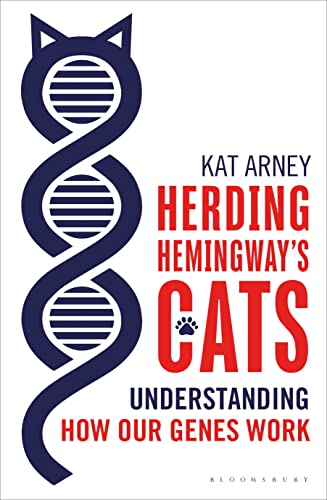
How DNA is packed, unpacked and read - a companion reader to the book of life itself.
Les informations fournies dans la section « Synopsis » peuvent faire référence à une autre édition de ce titre.
À propos de l'auteur
Following a doctorate and subsequent research career in genetics, Kat Arney went on to become Science Communications Manager for Cancer Research UK, where she translated science into plain English to help people understand more about the disease.
Now a freelance science writer and broadcaster, Kat's writing has appeared in the Guardian, Science, New Scientist, BBC Online and Al-Jazeera Online.
Kat regularly appears on national TV and radio shows, including Today, BBC Breakfast and GMTV, talking about the latest cancer research. She has presented several BBC Radio 4 science documentaries and programmes in the Costing the Earth series, is a regular presenter with the Naked Scientists, and presents and produces the Naked Genetics monthly podcast.
À propos de la quatrième de couverture
According to legend, Ernest Hemingway was once given a six-toed cat by an old sea captain, and her distinctive descendants still roam the writer's Florida estate today. Scientists now know that the fault driving this profusion of digits lies in a tiny genetic control switch, miles away (in molecular terms) from the gene that 'makes' toes. And it's the same mistake that gives rise to multi-toed humans too. There are 2.2 metres of DNA inside every one of your cells, encoding roughly 20,000 genes. These are the 'recipes' that tell our cells how to make the building blocks of life, along with myriad control switches ensuring they're turned on and off at the right time and in the right place. But rather than a static string of genetic code, this is a dynamic, writhing biological library. And figuring out how it all works - how your genes make you, you - is a major challenge for researchers around the world. Drawing on stories ranging from six-toed cats and stickleback hips to wobbly worms and zombie genes, geneticist Kat Arney explores the how our genes work, creating a companion reader to the book of life itself.
À propos de la deuxième de couverture
According to legend, Ernest Hemingway was once given a six-toed cat by an old sea captain, and her distinctive descendants still roam the writer's Florida estate today. Scientists now know that the fault driving this profusion of digits lies in a tiny genetic control switch, miles away (in molecular terms) from the gene that 'makes' toes. And it's the same mistake that gives rise to multi-toed humans too. There are 2.2 metres of DNA inside every one of your cells, encoding roughly 20,000 genes. These are the 'recipes' that tell our cells how to make the building blocks of life, along with myriad control switches ensuring they're turned on and off at the right time and in the right place. But rather than a static string of genetic code, this is a dynamic, writhing biological library. And figuring out how it all works - how your genes make you, you - is a major challenge for researchers around the world. Drawing on stories ranging from six-toed cats and stickleback hips to wobbly worms and zombie genes, geneticist Kat Arney explores the how our genes work, creating a companion reader to the book of life itself.
Les informations fournies dans la section « A propos du livre » peuvent faire référence à une autre édition de ce titre.
Résultats de recherche pour Herding Hemingway's Cats: Understanding how our...

Image d'archives
Herding Hemingway's Cats: Understanding how our genes work
Edité par
Bloomsbury Publishing PLC, 2016
ISBN 10 : 1472910052
ISBN 13 : 9781472910059
Ancien ou d'occasion
Paperback
Vendeur : ThriftBooks-Dallas, Dallas, TX, Etats-Unis
Évaluation du vendeur 5 sur 5 étoiles

Paperback. Etat : Very Good. No Jacket. May have limited writing in cover pages. Pages are unmarked. ~ ThriftBooks: Read More, Spend Less. N° de réf. du vendeur G1472910052I4N00
Acheter D'occasion
EUR 27,97
Livraison gratuite
Expédition nationale : Etats-Unis
Expédition nationale : Etats-Unis
Quantité disponible : 1 disponible(s)
Image d'archives
Herding Hemingway's Cats: Understanding how our genes work
Edité par
Bloomsbury Publishing PLC, 2016
ISBN 10 : 1472910052
ISBN 13 : 9781472910059
Ancien ou d'occasion
Paperback
Vendeur : ThriftBooks-Atlanta, AUSTELL, GA, Etats-Unis
Évaluation du vendeur 5 sur 5 étoiles
Paperback. Etat : Good. No Jacket. Former library book; Pages can have notes/highlighting. Spine may show signs of wear. ~ ThriftBooks: Read More, Spend Less. N° de réf. du vendeur G1472910052I3N10
Acheter D'occasion
EUR 27,97
Livraison gratuite
Expédition nationale : Etats-Unis
Expédition nationale : Etats-Unis
Quantité disponible : 1 disponible(s)
Image fournie par le vendeur
Herding Hemingway's Cats: Understanding how our genes work
Edité par
Bloomsbury Publishing PLC, 2016
ISBN 10 : 1472910052
ISBN 13 : 9781472910059
Ancien ou d'occasion
Secondhand, Paperback
Vendeur : Book Grocer, Tullamarine, VIC, Australie
Évaluation du vendeur 5 sur 5 étoiles
Secondhand, Paperback. [Author], [Publisher]. NB: This is a secondhand book in very good condition. See our FAQs for more information. Please note that the jacket image is indicative only. A description of our secondhand books is not always available. Please contact us if you have a question about this title. Author: Kat Arney Format: Paperback Number of Pages: 288 The language of genes has become common parlance. We know they make your eyes blue, your hair curly or your nose straight. The media tells us that our genes control the risk of cancer, heart disease, alcoholism or Alzheimer's. The cost of DNA sequencing has plummeted from billions of pounds to a few hundred, and gene-based advances in medicine hold huge promise. So we've all heard of genes, but how do they actually work? According to legend, Ernest Hemingway was once given a six-toed cat by an old sea captain, and her distinctive descendants still roam the writer's Florida estate today. Scientists now know that the fault driving this profusion of digits lies in a tiny genetic control switch, miles away (in molecular terms) from the gene that 'makes' toes. And it's the same mistake that gives rise to multi-toed humans too. There are 2.2 metres of DNA inside every one of your cells, encoding roughly 20,000 genes. These are the 'recipes' that tell our cells how to make the building blocks of life, along with myriad control switches ensuring they're turned on and off at the right time and in the right place. But rather than a static string of genetic code, this is a dynamic, writhing biological library. And figuring out how it all works - how your genes make you, you - is a major challenge for researchers around the world. Drawing on stories ranging from six-toed cats and stickleback hips to wobbly worms and zombie genes, geneticist Kat Arney explores the how our genes work, creating a companion reader to the book of life itself. Secondhand, Paperback. N° de réf. du vendeur 9781472910059-SECONDHAND
Acheter D'occasion
EUR 6,42
Expédition à EUR 26,78
Expédition depuis Australie vers Etats-Unis
Expédition depuis Australie vers Etats-Unis
Quantité disponible : 1 disponible(s)
Image fournie par le vendeur
Herding Hemingway's Cats
Edité par
Bloomsbury Sigma, 2016
ISBN 10 : 1472910052
ISBN 13 : 9781472910059
Ancien ou d'occasion
Paperback
Vendeur : Book Express (NZ), Shannon, Nouvelle-Zélande
Évaluation du vendeur 3 sur 5 étoiles

Paperback. Etat : Very Good. 288 pages. Spine fadedThe language of genes has become common parlance. We know they make your eyes blue, your hair curly or your nose straight. The media tells us that our genes control the risk of cancer, heart disease, alcoholism or Alzheimer's. The cost o f DNA sequencing has plummeted from billions of pounds to a few hundred, and gen e-based advances in medicine hold huge promise.So we've all heard of genes, but how do they actually work?According to legend, Ernest Hemingway was once given a six-toed cat by an old sea captain, and her distinctive descendants still roam the writer's Florida estate today. Scientists now know that the fault driving th is profusion of digits lies in a tiny genetic control switch, miles away (in mol ecular terms) from the gene that 'makes' toes. And it's the same mistake that gi ves rise to multi-toed humans too.There are 2.2 metres of DNA inside every one o f your cells, encoding roughly 20,000 genes. These are the 'recipes' that tell o ur cells how to make the building blocks of life, along with myriad control swit ches ensuring they're turned on and off at the right time and in the right place . But rather than a static string of genetic code, this is a dynamic, writhing b iological library. And figuring out how it all works - how your genes make you, you - is a major challenge for researchers around the world.Drawing on stories r anging from six-toed cats and stickleback hips to wobbly worms and zombie genes, geneticist Kat Arney explores the how our genes work, creating a companion read er to the book of life itself. N° de réf. du vendeur 2481af
Acheter D'occasion
EUR 5,16
Expédition à EUR 40,17
Expédition depuis Nouvelle-Zélande vers Etats-Unis
Expédition depuis Nouvelle-Zélande vers Etats-Unis
Quantité disponible : 1 disponible(s)
Image fournie par le vendeur
Herding Hemingway's Cats : Understanding How Our Genes Work
Edité par
Bloomsbury Trade, 2016
ISBN 10 : 1472910052
ISBN 13 : 9781472910059
Ancien ou d'occasion
Couverture souple
Vendeur : AHA-BUCH GmbH, Einbeck, Allemagne
Évaluation du vendeur 5 sur 5 étoiles
Etat : Sehr gut. Gebraucht - Sehr gut Sg - leichte Beschädigungen oder Verschmutzungen, ungelesenes Mängelexemplar, gestempelt - The language of genes has become common parlance. We know they make your eyes blue, your hair curly or your nose straight. The media tells us that our genes control the risk of cancer, heart disease, alcoholism or Alzheimer's. The cost of DNA sequencing has plummeted from billions of pounds to a few hundred, and gene-based advances in medicine hold huge promise. So we've all heard of genes, but how do they actually work According to legend, Ernest Hemingway was once given a six-toed cat by an old sea captain, and her distinctive descendants still roam the writer's Florida estate today. Scientists now know that the fault driving this profusion of digits lies in a tiny genetic control switch, miles away (in molecular terms) from the gene that 'makes' toes. And it's the same mistake that gives rise to multi-toed humans too.There are 2.2 metres of DNA inside every one of your cells, encoding roughly 20,000 genes. These are the 'recipes' that tell our cells how to make the building blocks of life, along with myriad control switches ensuring they're turned on and off at the right time and in the right place. But rather than a static string of genetic code, this is a dynamic, writhing biological library. And figuring out how it all works - how your genes make you, you - is a major challenge for researchers around the world.Drawing on stories ranging from six-toed cats and stickleback hips to wobbly worms and zombie genes, geneticist Kat Arney explores the how our genes work, creating a companion reader to the book of life itself. N° de réf. du vendeur INF1000788642
Acheter D'occasion
EUR 17,15
Expédition à EUR 35
Expédition depuis Allemagne vers Etats-Unis
Expédition depuis Allemagne vers Etats-Unis
Quantité disponible : 1 disponible(s)