
Articles liés à First Light: Switching on Stars at the Dawn of Time,...
Synopsis
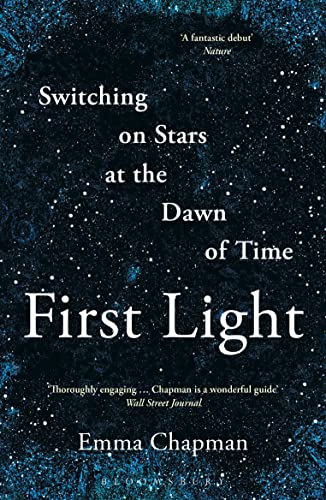
Opens a window into a previously dark and secret time in our universe's history: when the first stars were born.
Astronomers have successfully observed a great deal of the Universe's history, from recording the afterglow of the Big Bang to imaging thousands of galaxies, and even to visualising an actual black hole. There's a lot for astronomers to be smug about. But when it comes to understanding how the Universe began and grew up, we are literally in the dark ages. In effect, we are missing the first one billion years from the timeline of the Universe.
This brief but far-reaching period in the Universe's history, known to astrophysicists as the 'Epoch of Reionisation', represents the start of the cosmos as we experience it today. The time when the very first stars burst into life, when darkness gave way to light. After hundreds of millions of years of dark, uneventful expansion, one by the one these stars suddenly came into being. This was the point at which the chaos of the Big Bang first began to yield to the order of galaxies, black holes and stars, kick-starting the pathway to planets, to comets, to moons, and to life itself.
Incorporating the very latest research into this branch of astrophysics, this book sheds light on this time of darkness, telling the story of these first stars, hundreds of times the size of the Sun and a million times brighter, lonely giants that lived fast and died young in powerful explosions that seeded the Universe with the heavy elements that we are made of. Dr Emma Chapman tells us how these stars formed, why they were so unusual, and what they can teach us about the Universe today. She also offers a first-hand look at the immense telescopes about to come on line to peer into the past, searching for the echoes and footprints of these stars, to take this period in the Universe's history from the realm of theoretical physics towards the wonder of observational astronomy.
Les informations fournies dans la section « Synopsis » peuvent faire référence à une autre édition de ce titre.
À propos de l'auteur
Emma Chapman is a Royal Society research fellow based at Imperial College London, and one of the world's leading researchers in search of the first stars to exist in our Universe.
Emma is the recipient of multiple commendations and prizes, including the Royal Society Dorothy Hodgkin Research Fellowship, one of the most prestigious science fellowships in the UK. She was presented with the Royal Society Athena Medal in 2018 and highly commended in the UK L'Oréal-UNESCO Women in Science award in 2017. In 2014, she won the Institute of Physics Jocelyn Bell Burnell Prize.
Emma is a respected public commentator, contributing regularly to the BBC on screen, over the airwaves and in printed media. She has presented at Cheltenham Science Festival, the European Open Science Forum and at New Scientist Live.
@DrEOChapman
Les informations fournies dans la section « A propos du livre » peuvent faire référence à une autre édition de ce titre.
Résultats de recherche pour First Light: Switching on Stars at the Dawn of Time,...

Image d'archives
First Light: Switching on Stars at the Dawn of Time (Bloomsbury Sigma)
Edité par
Bloomsbury Sigma, 2022
ISBN 10 : 147296294X
ISBN 13 : 9781472962942
Ancien ou d'occasion
paperback
Vendeur : HPB-Red, Dallas, TX, Etats-Unis
Évaluation du vendeur 5 sur 5 étoiles

paperback. Etat : Good. Connecting readers with great books since 1972! Used textbooks may not include companion materials such as access codes, etc. May have some wear or writing/highlighting. We ship orders daily and Customer Service is our top priority! N° de réf. du vendeur S_439838805
Acheter D'occasion
EUR 4,60
Expédition à EUR 3,35
Expédition nationale : Etats-Unis
Expédition nationale : Etats-Unis
Quantité disponible : 1 disponible(s)
Image d'archives
First Light: Switching on Stars at the Dawn of Time, revised edition
Edité par
Bloomsbury Publishing PLC, 2022
ISBN 10 : 147296294X
ISBN 13 : 9781472962942
Ancien ou d'occasion
Paperback
Vendeur : World of Books (was SecondSale), Montgomery, IL, Etats-Unis
Évaluation du vendeur 5 sur 5 étoiles
Paperback. Etat : Fair. Opens a window into a previously dark and secret time in our universe's history: when the first stars were born.Astronomers have successfully observed a great deal of the Universe?s history, from recording the afterglow of the Big Bang to imaging thousands of galaxies, and even to visualising an actual black hole. There?s a lot for astronomers to be smug about. But when it comes to understanding how the Universe began and grew up, we are literally in the dark ages. In effect, we are missing the first one billion years from the timeline of the Universe.This brief but far-reaching period in the Universe?s history, known to astrophysicists as the ?Epoch of Reionisation?, represents the start of the cosmos as we experience it today. The time when the very first stars burst into life, when darkness gave way to light. After hundreds of millions of years of dark, uneventful expansion, one by the one these stars suddenly came into being. This was the point at which the chaos of the Big Bang first began to yield to the order of galaxies, black holes and stars, kick-starting the pathway to planets, to comets, to moons, and to life itself.Incorporating the very latest research into this branch of astrophysics, this book sheds light on this time of darkness, telling the story of these first stars, hundreds of times the size of the Sun and a million times brighter, lonely giants that lived fast and died young in powerful explosions that seeded the Universe with the heavy elements that we are made of. Dr Emma Chapman tells us how these stars formed, why they were so unusual, and what they can teach us about the Universe today. She also offers a first-hand look at the immense telescopes about to come on line to peer into the past, searching for the echoes and footprints of these stars, to take this period in the Universe?s history from the realm of theoretical physics towards the wonder of observational astronomy. N° de réf. du vendeur 00101281951
Acheter D'occasion
EUR 8,03
Livraison gratuite
Expédition nationale : Etats-Unis
Expédition nationale : Etats-Unis
Quantité disponible : 1 disponible(s)
Image d'archives
First Light: Switching on Stars at the Dawn of Time, revised edition
Edité par
Bloomsbury Publishing PLC, 2022
ISBN 10 : 147296294X
ISBN 13 : 9781472962942
Ancien ou d'occasion
Paperback
Vendeur : World of Books Inc, Montgomery, IL, Etats-Unis
Évaluation du vendeur 4 sur 5 étoiles

Paperback. Etat : Fair. Opens a window into a previously dark and secret time in our universe's history: when the first stars were born.Astronomers have successfully observed a great deal of the Universe?s history, from recording the afterglow of the Big Bang to imaging thousands of galaxies, and even to visualising an actual black hole. There?s a lot for astronomers to be smug about. But when it comes to understanding how the Universe began and grew up, we are literally in the dark ages. In effect, we are missing the first one billion years from the timeline of the Universe.This brief but far-reaching period in the Universe?s history, known to astrophysicists as the ?Epoch of Reionisation?, represents the start of the cosmos as we experience it today. The time when the very first stars burst into life, when darkness gave way to light. After hundreds of millions of years of dark, uneventful expansion, one by the one these stars suddenly came into being. This was the point at which the chaos of the Big Bang first began to yield to the order of galaxies, black holes and stars, kick-starting the pathway to planets, to comets, to moons, and to life itself.Incorporating the very latest research into this branch of astrophysics, this book sheds light on this time of darkness, telling the story of these first stars, hundreds of times the size of the Sun and a million times brighter, lonely giants that lived fast and died young in powerful explosions that seeded the Universe with the heavy elements that we are made of. Dr Emma Chapman tells us how these stars formed, why they were so unusual, and what they can teach us about the Universe today. She also offers a first-hand look at the immense telescopes about to come on line to peer into the past, searching for the echoes and footprints of these stars, to take this period in the Universe?s history from the realm of theoretical physics towards the wonder of observational astronomy. N° de réf. du vendeur CIN147296294XA
Acheter D'occasion
EUR 9,87
Livraison gratuite
Expédition nationale : Etats-Unis
Expédition nationale : Etats-Unis
Quantité disponible : 1 disponible(s)
Image d'archives
First Light: Switching on Stars at the Dawn of Time, revised edition (Bloomsbury Sigma)
Edité par
Bloomsbury Sigma, 2022
ISBN 10 : 147296294X
ISBN 13 : 9781472962942
Ancien ou d'occasion
Paperback
Vendeur : WorldofBooks, Goring-By-Sea, WS, Royaume-Uni
Évaluation du vendeur 5 sur 5 étoiles
Paperback. Etat : Very Good. The book has been read, but is in excellent condition. Pages are intact and not marred by notes or highlighting. The spine remains undamaged. N° de réf. du vendeur GOR012338445
Acheter D'occasion
EUR 3,36
Expédition à EUR 6,62
Expédition depuis Royaume-Uni vers Etats-Unis
Expédition depuis Royaume-Uni vers Etats-Unis
Quantité disponible : 5 disponible(s)
Image d'archives
First Light: Switching on Stars at the Dawn of Time, revised edition (Bloomsbury Sigma)
Edité par
Bloomsbury Sigma, 2022
ISBN 10 : 147296294X
ISBN 13 : 9781472962942
Ancien ou d'occasion
Couverture souple
Vendeur : MusicMagpie, Stockport, Royaume-Uni
Évaluation du vendeur 5 sur 5 étoiles
Etat : Very Good. 1786370433. 8/10/2026 2:00:33 PM. N° de réf. du vendeur U9781472962942
Acheter D'occasion
EUR 4,84
Expédition à EUR 6,49
Expédition depuis Royaume-Uni vers Etats-Unis
Expédition depuis Royaume-Uni vers Etats-Unis
Quantité disponible : 1 disponible(s)
Image fournie par le vendeur
First Light
Edité par
Bloomsbury Publishing PLC, GB, 2022
ISBN 10 : 147296294X
ISBN 13 : 9781472962942
Neuf
Paperback
Vendeur : Rarewaves USA, HEBRON, KY, Etats-Unis
Évaluation du vendeur 5 sur 5 étoiles
Paperback. Etat : New. Opens a window into a previously dark and secret time in our universe's history: when the first stars were born.Astronomers have successfully observed a great deal of the Universe's history, from recording the afterglow of the Big Bang to imaging thousands of galaxies, and even to visualising an actual black hole. There's a lot for astronomers to be smug about. But when it comes to understanding how the Universe began and grew up, we are literally in the dark ages. In effect, we are missing the first one billion years from the timeline of the Universe.This brief but far-reaching period in the Universe's history, known to astrophysicists as the 'Epoch of Reionisation', represents the start of the cosmos as we experience it today. The time when the very first stars burst into life, when darkness gave way to light. After hundreds of millions of years of dark, uneventful expansion, one by the one these stars suddenly came into being. This was the point at which the chaos of the Big Bang first began to yield to the order of galaxies, black holes and stars, kick-starting the pathway to planets, to comets, to moons, and to life itself.Incorporating the very latest research into this branch of astrophysics, this book sheds light on this time of darkness, telling the story of these first stars, hundreds of times the size of the Sun and a million times brighter, lonely giants that lived fast and died young in powerful explosions that seeded the Universe with the heavy elements that we are made of. Dr Emma Chapman tells us how these stars formed, why they were so unusual, and what they can teach us about the Universe today. She also offers a first-hand look at the immense telescopes about to come on line to peer into the past, searching for the echoes and footprints of these stars, to take this period in the Universe's history from the realm of theoretical physics towards the wonder of observational astronomy. N° de réf. du vendeur LU-9781472962942
Acheter neuf
EUR 15,49
Livraison gratuite
Expédition nationale : Etats-Unis
Expédition nationale : Etats-Unis
Quantité disponible : 20 disponible(s)
Image d'archives
First Light Format: Paperback
Edité par
MacMillan Publishers, 2022
ISBN 10 : 147296294X
ISBN 13 : 9781472962942
Neuf
Couverture souple
Vendeur : INDOO, Avenel, NJ, Etats-Unis
Évaluation du vendeur 5 sur 5 étoiles
Etat : New. N° de réf. du vendeur 9781472962942
Acheter neuf
EUR 15,50
Livraison gratuite
Expédition nationale : Etats-Unis
Expédition nationale : Etats-Unis
Quantité disponible : Plus de 20 disponibles
Image d'archives
First Light Format: Paperback
Edité par
MacMillan Publishers, 2022
ISBN 10 : 147296294X
ISBN 13 : 9781472962942
Ancien ou d'occasion
Couverture souple
Vendeur : INDOO, Avenel, NJ, Etats-Unis
Évaluation du vendeur 5 sur 5 étoiles
Etat : As New. Unread copy in mint condition. N° de réf. du vendeur VH9781472962942
Acheter D'occasion
EUR 15,77
Livraison gratuite
Expédition nationale : Etats-Unis
Expédition nationale : Etats-Unis
Quantité disponible : Plus de 20 disponibles
Image fournie par le vendeur
First Light (Paperback)
Edité par
Bloomsbury Publishing PLC, London, 2022
ISBN 10 : 147296294X
ISBN 13 : 9781472962942
Neuf
Paperback
Vendeur : Grand Eagle Retail, Bensenville, IL, Etats-Unis
Évaluation du vendeur 5 sur 5 étoiles
Paperback. Etat : new. Paperback. Opens a window into a previously dark and secret time in our universe's history: when the first stars were born.Astronomers have successfully observed a great deal of the Universes history, from recording the afterglow of the Big Bang to imaging thousands of galaxies, and even to visualising an actual black hole. Theres a lot for astronomers to be smug about. But when it comes to understanding how the Universe began and grew up, we are literally in the dark ages. In effect, we are missing the first one billion years from the timeline of the Universe.This brief but far-reaching period in the Universes history, known to astrophysicists as the Epoch of Reionisation, represents the start of the cosmos as we experience it today. The time when the very first stars burst into life, when darkness gave way to light. After hundreds of millions of years of dark, uneventful expansion, one by the one these stars suddenly came into being. This was the point at which the chaos of the Big Bang first began to yield to the order of galaxies, black holes and stars, kick-starting the pathway to planets, to comets, to moons, and to life itself.Incorporating the very latest research into this branch of astrophysics, this book sheds light on this time of darkness, telling the story of these first stars, hundreds of times the size of the Sun and a million times brighter, lonely giants that lived fast and died young in powerful explosions that seeded the Universe with the heavy elements that we are made of. Dr Emma Chapman tells us how these stars formed, why they were so unusual, and what they can teach us about the Universe today. She also offers a first-hand look at the immense telescopes about to come on line to peer into the past, searching for the echoes and footprints of these stars, to take this period in the Universes history from the realm of theoretical physics towards the wonder of observational astronomy. First Light opens a window into a previously dark and secret time in our Universe's history the time when the first stars were born. Shipping may be from multiple locations in the US or from the UK, depending on stock availability. N° de réf. du vendeur 9781472962942
Acheter neuf
EUR 18,65
Livraison gratuite
Expédition nationale : Etats-Unis
Expédition nationale : Etats-Unis
Quantité disponible : 1 disponible(s)
Image fournie par le vendeur
First Light : Switching on Stars at the Dawn of Time
Edité par
Bloomsbury Sigma, 2022
ISBN 10 : 147296294X
ISBN 13 : 9781472962942
Ancien ou d'occasion
Couverture souple
Vendeur : GreatBookPrices, Columbia, MD, Etats-Unis
Évaluation du vendeur 5 sur 5 étoiles
Etat : As New. Unread book in perfect condition. N° de réf. du vendeur 43140399
Acheter D'occasion
EUR 21,46
Expédition à EUR 2,36
Expédition nationale : Etats-Unis
Expédition nationale : Etats-Unis
Quantité disponible : 3 disponible(s)