
Articles liés à The Science of Paintings
Synopsis
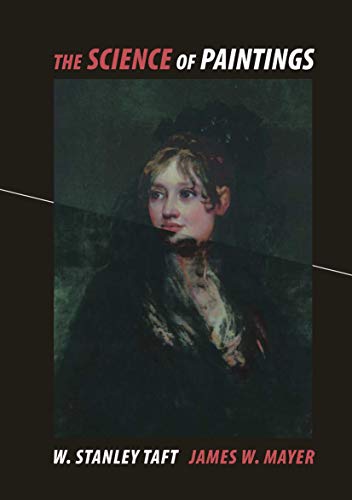
The beauty, mystery, joy, and inspired observation of the human spirit that paintings evoke result from a complex of intuitive and cognitive choices made by the artist. An understanding of the genesis of these choices can be as elusive as the resulting imagery, but great paintings seem to initiate in us a curiosity about the ideas, methods, and mate- als used by their creators. In the twentieth century connoisseurship has been enriched by the application of methods of scientific analysis. The results of these investigations into the physical properties of paintings have shed new light on their authenticity and individual histories as well as on the craft in general. Developments in the fields of physics and chemistry have allowed us to understand still more about how we p- ceive and interact with paintings. This book is intended for those both inside and outside the field of art who wish to gain insight into the making of paintings. It is directed toward students, teachers, and scientists in engineering, physics, and chemistry as well as those in art, art history, and art conservation. This book grew out of the interdisciplinary undergraduate-level course Art, Isotopes, and Ana- sis taught at Cornell University by the two authors and supported in l- tures and seminars by three of the contributing authors: Dr. Richard Newman, of the Museum of Fine Arts, Boston; Dr. Dusan Stulik, of the Getty Conservation Institute; and Prof.
Les informations fournies dans la section « Synopsis » peuvent faire référence à une autre édition de ce titre.
Résultats de recherche pour The Science of Paintings

Image d'archives
The Science of Paintings (eng)
impression à la demandeVendeur : Brook Bookstore On Demand, Napoli, NA, Italie
Évaluation du vendeur 5 sur 5 étoiles

Etat : new. Questo è un articolo print on demand. N° de réf. du vendeur ef402b0f10d563d284241417a15b9fc1
Acheter neuf
EUR 58,23
Expédition à EUR 6,80
Expédition depuis Italie vers Etats-Unis
Expédition depuis Italie vers Etats-Unis
Quantité disponible : Plus de 20 disponibles
Image fournie par le vendeur
The Science of Paintings
Edité par
Springer New York Apr 2013, 2013
ISBN 10 : 1475773889
ISBN 13 : 9781475773880
Neuf
Taschenbuch
Vendeur : BuchWeltWeit Ludwig Meier e.K., Bergisch Gladbach, Allemagne
Évaluation du vendeur 5 sur 5 étoiles
Taschenbuch. Etat : Neu. This item is printed on demand - it takes 3-4 days longer - Neuware -The beauty, mystery, joy, and inspired observation of the human spirit that paintings evoke result from a complex of intuitive and cognitive choices made by the artist. An understanding of the genesis of these choices can be as elusive as the resulting imagery, but great paintings seem to initiate in us a curiosity about the ideas, methods, and mate- als used by their creators. In the twentieth century connoisseurship has been enriched by the application of methods of scientific analysis. The results of these investigations into the physical properties of paintings have shed new light on their authenticity and individual histories as well as on the craft in general. Developments in the fields of physics and chemistry have allowed us to understand still more about how we p- ceive and interact with paintings. This book is intended for those both inside and outside the field of art who wish to gain insight into the making of paintings. It is directed toward students, teachers, and scientists in engineering, physics, and chemistry as well as those in art, art history, and art conservation. This book grew out of the interdisciplinary undergraduate-level course Art, Isotopes, and Ana- sis taught at Cornell University by the two authors and supported in l- tures and seminars by three of the contributing authors: Dr. Richard Newman, of the Museum of Fine Arts, Boston; Dr. Dusan Stulik, of the Getty Conservation Institute; and Prof. 272 pp. Englisch. N° de réf. du vendeur 9781475773880
Acheter neuf
EUR 53,49
Expédition à EUR 23
Expédition depuis Allemagne vers Etats-Unis
Expédition depuis Allemagne vers Etats-Unis
Quantité disponible : 2 disponible(s)
Image fournie par le vendeur
The Science of Paintings
Vendeur : Agapea Libros, Malaga, MA, Espagne
Évaluation du vendeur 5 sur 5 étoiles
Etat : New. Idioma/Language: Inglés. The physics and materials science behind paintings: the pigments, binders, canvas, and varnish that go into making a painting appear the way it does. The text discusses the physical principles behind the colors seen and how these change with illumination, the various types of paint and binders used in both old and modern paintings, and the optics and microscopic structure of paint films. Chapters on dating, binders, and dendochronology have been contributed by experts in the respective fields. *** Nota: Los envíos a España peninsular, Baleares y Canarias se realizan a través de mensajería urgente. No aceptamos pedidos con destino a Ceuta y Melilla. N° de réf. du vendeur 9567365
Acheter neuf
EUR 68,70
Expédition à EUR 18,52
Expédition depuis Espagne vers Etats-Unis
Expédition depuis Espagne vers Etats-Unis
Quantité disponible : 1 disponible(s)
Image fournie par le vendeur
The Science of Paintings
impression à la demandeVendeur : AHA-BUCH GmbH, Einbeck, Allemagne
Évaluation du vendeur 5 sur 5 étoiles
Taschenbuch. Etat : Neu. nach der Bestellung gedruckt Neuware - Printed after ordering - The beauty, mystery, joy, and inspired observation of the human spirit that paintings evoke result from a complex of intuitive and cognitive choices made by the artist. An understanding of the genesis of these choices can be as elusive as the resulting imagery, but great paintings seem to initiate in us a curiosity about the ideas, methods, and mate- als used by their creators. In the twentieth century connoisseurship has been enriched by the application of methods of scientific analysis. The results of these investigations into the physical properties of paintings have shed new light on their authenticity and individual histories as well as on the craft in general. Developments in the fields of physics and chemistry have allowed us to understand still more about how we p- ceive and interact with paintings. This book is intended for those both inside and outside the field of art who wish to gain insight into the making of paintings. It is directed toward students, teachers, and scientists in engineering, physics, and chemistry as well as those in art, art history, and art conservation. This book grew out of the interdisciplinary undergraduate-level course Art, Isotopes, and Ana- sis taught at Cornell University by the two authors and supported in l- tures and seminars by three of the contributing authors: Dr. Richard Newman, of the Museum of Fine Arts, Boston; Dr. Dusan Stulik, of the Getty Conservation Institute; and Prof. N° de réf. du vendeur 9781475773880
Acheter neuf
EUR 66,40
Expédition à EUR 35
Expédition depuis Allemagne vers Etats-Unis
Expédition depuis Allemagne vers Etats-Unis
Quantité disponible : 1 disponible(s)
Image fournie par le vendeur
The Science of Paintings
Edité par
Springer New York, 2013
ISBN 10 : 1475773889
ISBN 13 : 9781475773880
Neuf
Couverture souple
Vendeur : moluna, Greven, Allemagne
Évaluation du vendeur 5 sur 5 étoiles
Etat : New. Dieser Artikel ist ein Print on Demand Artikel und wird nach Ihrer Bestellung fuer Sie gedruckt. The physics and materials science behind paintings: the pigments, binders, canvas, and varnish that go into making a painting appear the way it does. The text discusses the physical principles behind the colors seen and how these change with illumination, t. N° de réf. du vendeur 4207810
Acheter neuf
EUR 60,06
Expédition à EUR 48,99
Expédition depuis Allemagne vers Etats-Unis
Expédition depuis Allemagne vers Etats-Unis
Quantité disponible : Plus de 20 disponibles
Image d'archives
The Science of Paintings
Vendeur : Books Puddle, Woodside, NY, Etats-Unis
Évaluation du vendeur 4 sur 5 étoiles

Etat : New. pp. 274. N° de réf. du vendeur 2697863301
Acheter neuf
EUR 107,81
Expédition à EUR 3,56
Expédition nationale : Etats-Unis
Expédition nationale : Etats-Unis
Quantité disponible : 4 disponible(s)
Image d'archives
The Science of Paintings
Edité par
Springer-Verlag New York Inc., 2013
ISBN 10 : 1475773889
ISBN 13 : 9781475773880
Neuf
Paperback / softback
Vendeur : THE SAINT BOOKSTORE, Southport, Royaume-Uni
Évaluation du vendeur 5 sur 5 étoiles
Paperback / softback. Etat : New. New copy - Usually dispatched within 4 working days. N° de réf. du vendeur B9781475773880
Acheter neuf
EUR 97,44
Expédition à EUR 18,77
Expédition depuis Royaume-Uni vers Etats-Unis
Expédition depuis Royaume-Uni vers Etats-Unis
Quantité disponible : 1 disponible(s)
Image d'archives
The Science of Paintings
impression à la demandeVendeur : Majestic Books, Hounslow, Royaume-Uni
Évaluation du vendeur 4 sur 5 étoiles
Etat : New. Print on Demand pp. 274. N° de réf. du vendeur 94566746
Acheter neuf
EUR 110,15
Expédition à EUR 7,69
Expédition depuis Royaume-Uni vers Etats-Unis
Expédition depuis Royaume-Uni vers Etats-Unis
Quantité disponible : 4 disponible(s)
Image d'archives
The Science of Paintings
impression à la demandeVendeur : Biblios, Frankfurt am main, HESSE, Allemagne
Évaluation du vendeur 4 sur 5 étoiles
Etat : New. PRINT ON DEMAND pp. 274. N° de réf. du vendeur 1897863311
Acheter neuf
EUR 110,23
Expédition à EUR 9,95
Expédition depuis Allemagne vers Etats-Unis
Expédition depuis Allemagne vers Etats-Unis
Quantité disponible : 4 disponible(s)
Image fournie par le vendeur
The Science of Paintings
Vendeur : preigu, Osnabrück, Allemagne
Évaluation du vendeur 5 sur 5 étoiles
Taschenbuch. Etat : Neu. The Science of Paintings | W. Stanley Jr. Taft (u. a.) | Taschenbuch | xi | Englisch | 2013 | Springer | EAN 9781475773880 | Verantwortliche Person für die EU: Springer Verlag GmbH, Tiergartenstr. 17, 69121 Heidelberg, juergen[dot]hartmann[at]springer[dot]com | Anbieter: preigu. N° de réf. du vendeur 105648748
Acheter neuf
EUR 50,45
Expédition à EUR 70
Expédition depuis Allemagne vers Etats-Unis
Expédition depuis Allemagne vers Etats-Unis
Quantité disponible : 5 disponible(s)