
Articles liés à The Development of the B-52 and Jet Propulsion: A Case...
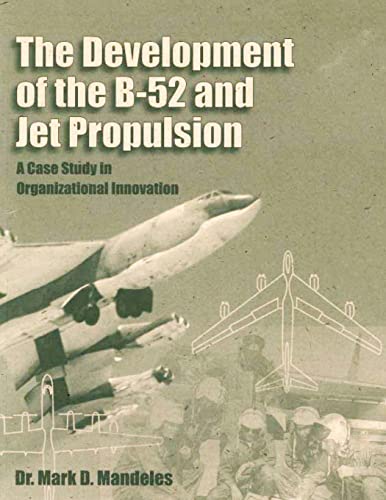
The Development of the B-52 and Jet Propulsion: A Case Study in Organizational Innovation - Couverture souple
Synopsis
The B-52 and Jet Propulsion: A Case Study in Organizational Innovation is a coherent and nonpolemical discussion of the revolution in military affairs, a hot topic in the national security arena. Mark Mandeles examines an interesting topic, how can the military better understand, manage, and evaluate technological development programs. We see Murphy’s Law (anything that can go wrong, will go wrong) in operation. No matter how carefully the military designs, plans, and programs the process of technological development, inevitably, equipment, organizations, and people will challenge the desired expectations. Mandeles argues convincingly that recognizing the inevitability of error may be the single most important factor in the design of effective organizations and procedures to foster and enhance innovative technology and concepts. The book focuses on the introduction of jet propulsion into the B-52. This case study illustrates the reality that surprises and failures are endemic to development programs where information and knowledge are indeterminate, ambiguous, and imperfect. Mandeles’ choice of the B-52 to illustrate this process is both intriguing and apt. The military had no coherent search process inevitably leading to the choice of a particular technology; nor was decision making concerning the B-52 development program coherent or orderly. Different mixtures of participants, problems, and solutions came together at various times to make decisions about funding or to review the status of performance projections and requirements. Three aspects of the B-52’s history are striking because they challenge conventional wisdom about rationally managed innovation. First, Air Force personnel working on the B-52 program did not obtain the aircraft they assumed they would get when the program began. Second, the development process did not conform to idealized features of a rational program. While a rationally organized program has clear goals, adequate information, and well-organized and attentive leadership, the B-52 development process exhibited substantial disagreement over, and revision of, requirements or goals, and ambiguous, imperfect, and changing information. Third, the “messy” development process, as described in the book, forestalled premature closure on a particular design and spurred learning and the continuous introduction of new knowledge into the design as the process went along. Military innovations involve questions about politics, cooperation and coordination, and social benefits, and like other development efforts, there appears to be no error-free method to predict at the outset the end results of any given program. This study offers a major lesson to today’s planners: improving the capacity of a number of organizations with overlapping jurisdictions to interact enhances prospects to innovate new weapons and operational concepts. We can mitigate bureaucratic pathologies by fostering interaction among government and private organizations.
Les informations fournies dans la section « Synopsis » peuvent faire référence à une autre édition de ce titre.
Présentation de l'éditeur
The B-52 and Jet Propulsion: A Case Study in Organizational Innovation is a coherent and nonpolemical discussion of the revolution in military affairs, a hot topic in the national security arena. Mark Mandeles examines an interesting topic, how can the military better understand, manage, and evaluate technological development programs. We see Murphy’s Law (anything that can go wrong, will go wrong) in operation. No matter how carefully the military designs, plans, and programs the process of technological development, inevitably, equipment, organizations, and people will challenge the desired expectations. Mandeles argues convincingly that recognizing the inevitability of error may be the single most important factor in the design of effective organizations and procedures to foster and enhance innovative technology and concepts. The book focuses on the introduction of jet propulsion into the B-52. This case study illustrates the reality that surprises and failures are endemic to development programs where information and knowledge are indeterminate, ambiguous, and imperfect. Mandeles’ choice of the B-52 to illustrate this process is both intriguing and apt. The military had no coherent search process inevitably leading to the choice of a particular technology; nor was decision making concerning the B-52 development program coherent or orderly. Different mixtures of participants, problems, and solutions came together at various times to make decisions about funding or to review the status of performance projections and requirements. Three aspects of the B-52’s history are striking because they challenge conventional wisdom about rationally managed innovation. First, Air Force personnel working on the B-52 program did not obtain the aircraft they assumed they would get when the program began. Second, the development process did not conform to idealized features of a rational program. While a rationally organized program has clear goals, adequate information, and well-organized and attentive leadership, the B-52 development process exhibited substantial disagreement over, and revision of, requirements or goals, and ambiguous, imperfect, and changing information. Third, the “messy” development process, as described in the book, forestalled premature closure on a particular design and spurred learning and the continuous introduction of new knowledge into the design as the process went along. Military innovations involve questions about politics, cooperation and coordination, and social benefits, and like other development efforts, there appears to be no error-free method to predict at the outset the end results of any given program. This study offers a major lesson to today’s planners: improving the capacity of a number of organizations with overlapping jurisdictions to interact enhances prospects to innovate new weapons and operational concepts. We can mitigate bureaucratic pathologies by fostering interaction among government and private organizations.
Les informations fournies dans la section « A propos du livre » peuvent faire référence à une autre édition de ce titre.
Résultats de recherche pour The Development of the B-52 and Jet Propulsion: A Case...

Image d'archives
The Development of the B-52 and Jet Propulsion: A Case Study in Organizational Innovation [Paperback] Mandeles, Dr. Mark D.
Edité par
CreateSpace Independent Publishing Platform, 2012
ISBN 10 : 147838039X
ISBN 13 : 9781478380399
Neuf
Paperback
Vendeur : Turtlerun Mercantile, Albuquerque, NM, Etats-Unis
Évaluation du vendeur 1 sur 5 étoiles

Paperback. Etat : New. 1998 paperback book, as shown. Mint condition book, clean, tight and unmarked with a crisp, clean cover. N° de réf. du vendeur 9WW-JYF-I81
Acheter neuf
EUR 8,38
Expédition à EUR 6,36
Expédition nationale : Etats-Unis
Expédition nationale : Etats-Unis
Quantité disponible : 1 disponible(s)
Image fournie par le vendeur
Development of the B-52 and Jet Propulsion : A Case Study in Organizational Innovation
Edité par
CreateSpace Independent Publishing Platform, 2012
ISBN 10 : 147838039X
ISBN 13 : 9781478380399
Ancien ou d'occasion
Couverture souple
Vendeur : GreatBookPrices, Columbia, MD, Etats-Unis
Évaluation du vendeur 5 sur 5 étoiles

Etat : As New. Unread book in perfect condition. N° de réf. du vendeur 20925458
Acheter D'occasion
EUR 16,18
Expédition à EUR 2,30
Expédition nationale : Etats-Unis
Expédition nationale : Etats-Unis
Quantité disponible : Plus de 20 disponibles
Image fournie par le vendeur
Development of the B-52 and Jet Propulsion : A Case Study in Organizational Innovation
Edité par
CreateSpace Independent Publishing Platform, 2012
ISBN 10 : 147838039X
ISBN 13 : 9781478380399
Neuf
Couverture souple
Vendeur : GreatBookPrices, Columbia, MD, Etats-Unis
Évaluation du vendeur 5 sur 5 étoiles
Etat : New. N° de réf. du vendeur 20925458-n
Acheter neuf
EUR 16,45
Expédition à EUR 2,30
Expédition nationale : Etats-Unis
Expédition nationale : Etats-Unis
Quantité disponible : Plus de 20 disponibles
Image d'archives
The Development of the B-52 and Jet Propulsion: A Case Study in Organizational Innovation
Edité par
CreateSpace Independent Publishing Platform, 2012
ISBN 10 : 147838039X
ISBN 13 : 9781478380399
Neuf
Couverture souple
Vendeur : California Books, Miami, FL, Etats-Unis
Évaluation du vendeur 4 sur 5 étoiles

Etat : New. Print on Demand. N° de réf. du vendeur I-9781478380399
Acheter neuf
EUR 18,83
Livraison gratuite
Expédition nationale : Etats-Unis
Expédition nationale : Etats-Unis
Quantité disponible : Plus de 20 disponibles
Image d'archives
The Development of the B-52 and Jet Propulsion (Paperback)
Edité par
Createspace Independent Publishing Platform, 2012
ISBN 10 : 147838039X
ISBN 13 : 9781478380399
Neuf
Paperback
Vendeur : Grand Eagle Retail, Bensenville, IL, Etats-Unis
Évaluation du vendeur 5 sur 5 étoiles
Paperback. Etat : new. Paperback. The B-52 and Jet Propulsion: A Case Study in Organizational Innovation is a coherent and nonpolemical discussion of the revolution in military affairs, a hot topic in the national security arena. Mark Mandeles examines an interesting topic, how can the military better understand, manage, and evaluate technological development programs. We see Murphy's Law (anything that can go wrong, will go wrong) in operation. No matter how carefully the military designs, plans, and programs the process of technological development, inevitably, equipment, organizations, and people will challenge the desired expectations. Mandeles argues convincingly that recognizing the inevitability of error may be the single most important factor in the design of effective organizations and procedures to foster and enhance innovative technology and concepts. The book focuses on the introduction of jet propulsion into the B-52. This case study illustrates the reality that surprises and failures are endemic to development programs where information and knowledge are indeterminate, ambiguous, and imperfect. Mandeles' choice of the B-52 to illustrate this process is both intriguing and apt. The military had no coherent search process inevitably leading to the choice of a particular technology; nor was decision making concerning the B-52 development program coherent or orderly. Different mixtures of participants, problems, and solutions came together at various times to make decisions about funding or to review the status of performance projections and requirements. Three aspects of the B-52's history are striking because they challenge conventional wisdom about rationally managed innovation. First, Air Force personnel working on the B-52 program did not obtain the aircraft they assumed they would get when the program began. Second, the development process did not conform to idealized features of a rational program. While a rationally organized program has clear goals, adequate information, and well-organized and attentive leadership, the B-52 development process exhibited substantial disagreement over, and revision of, requirements or goals, and ambiguous, imperfect, and changing information. Third, the "messy" development process, as described in the book, forestalled premature closure on a particular design and spurred learning and the continuous introduction of new knowledge into the design as the process went along. Military innovations involve questions about politics, cooperation and coordination, and social benefits, and like other development efforts, there appears to be no error-free method to predict at the outset the end results of any given program. This study offers a major lesson to today's planners: improving the capacity of a number of organizations with overlapping jurisdictions to interact enhances prospects to innovate new weapons and operational concepts. We can mitigate bureaucratic pathologies by fostering interaction among government and private organizations. Shipping may be from multiple locations in the US or from the UK, depending on stock availability. N° de réf. du vendeur 9781478380399
Acheter neuf
EUR 20,20
Livraison gratuite
Expédition nationale : Etats-Unis
Expédition nationale : Etats-Unis
Quantité disponible : 1 disponible(s)
Image fournie par le vendeur
Development of the B-52 and Jet Propulsion : A Case Study in Organizational Innovation
Edité par
CreateSpace Independent Publishing Platform, 2012
ISBN 10 : 147838039X
ISBN 13 : 9781478380399
Ancien ou d'occasion
Couverture souple
Vendeur : GreatBookPricesUK, Woodford Green, Royaume-Uni
Évaluation du vendeur 5 sur 5 étoiles
Etat : As New. Unread book in perfect condition. N° de réf. du vendeur 20925458
Acheter D'occasion
EUR 22,50
Expédition à EUR 17,49
Expédition depuis Royaume-Uni vers Etats-Unis
Expédition depuis Royaume-Uni vers Etats-Unis
Quantité disponible : Plus de 20 disponibles
Image fournie par le vendeur
Development of the B-52 and Jet Propulsion : A Case Study in Organizational Innovation
Edité par
CreateSpace Independent Publishing Platform, 2012
ISBN 10 : 147838039X
ISBN 13 : 9781478380399
Neuf
Couverture souple
Vendeur : GreatBookPricesUK, Woodford Green, Royaume-Uni
Évaluation du vendeur 5 sur 5 étoiles
Etat : New. N° de réf. du vendeur 20925458-n
Acheter neuf
EUR 25,80
Expédition à EUR 17,49
Expédition depuis Royaume-Uni vers Etats-Unis
Expédition depuis Royaume-Uni vers Etats-Unis
Quantité disponible : Plus de 20 disponibles
Image d'archives
The Development of the B-52 and Jet Propulsion (Paperback)
Edité par
Createspace Independent Publishing Platform, 2012
ISBN 10 : 147838039X
ISBN 13 : 9781478380399
Neuf
Paperback
Vendeur : CitiRetail, Stevenage, Royaume-Uni
Évaluation du vendeur 5 sur 5 étoiles
Paperback. Etat : new. Paperback. The B-52 and Jet Propulsion: A Case Study in Organizational Innovation is a coherent and nonpolemical discussion of the revolution in military affairs, a hot topic in the national security arena. Mark Mandeles examines an interesting topic, how can the military better understand, manage, and evaluate technological development programs. We see Murphy's Law (anything that can go wrong, will go wrong) in operation. No matter how carefully the military designs, plans, and programs the process of technological development, inevitably, equipment, organizations, and people will challenge the desired expectations. Mandeles argues convincingly that recognizing the inevitability of error may be the single most important factor in the design of effective organizations and procedures to foster and enhance innovative technology and concepts. The book focuses on the introduction of jet propulsion into the B-52. This case study illustrates the reality that surprises and failures are endemic to development programs where information and knowledge are indeterminate, ambiguous, and imperfect. Mandeles' choice of the B-52 to illustrate this process is both intriguing and apt. The military had no coherent search process inevitably leading to the choice of a particular technology; nor was decision making concerning the B-52 development program coherent or orderly. Different mixtures of participants, problems, and solutions came together at various times to make decisions about funding or to review the status of performance projections and requirements. Three aspects of the B-52's history are striking because they challenge conventional wisdom about rationally managed innovation. First, Air Force personnel working on the B-52 program did not obtain the aircraft they assumed they would get when the program began. Second, the development process did not conform to idealized features of a rational program. While a rationally organized program has clear goals, adequate information, and well-organized and attentive leadership, the B-52 development process exhibited substantial disagreement over, and revision of, requirements or goals, and ambiguous, imperfect, and changing information. Third, the "messy" development process, as described in the book, forestalled premature closure on a particular design and spurred learning and the continuous introduction of new knowledge into the design as the process went along. Military innovations involve questions about politics, cooperation and coordination, and social benefits, and like other development efforts, there appears to be no error-free method to predict at the outset the end results of any given program. This study offers a major lesson to today's planners: improving the capacity of a number of organizations with overlapping jurisdictions to interact enhances prospects to innovate new weapons and operational concepts. We can mitigate bureaucratic pathologies by fostering interaction among government and private organizations. This item is printed on demand. Shipping may be from our UK warehouse or from our Australian or US warehouses, depending on stock availability. N° de réf. du vendeur 9781478380399
Acheter neuf
EUR 25,81
Expédition à EUR 43,15
Expédition depuis Royaume-Uni vers Etats-Unis
Expédition depuis Royaume-Uni vers Etats-Unis
Quantité disponible : 1 disponible(s)
Image d'archives
The Development of the B-52 and Jet Propulsion: A Case Study in Organizational Innovation
Edité par
Createspace Independent Publishing Platform, 2012
ISBN 10 : 147838039X
ISBN 13 : 9781478380399
Neuf
Paperback / softback
Vendeur : THE SAINT BOOKSTORE, Southport, Royaume-Uni
Évaluation du vendeur 5 sur 5 étoiles
Paperback / softback. Etat : New. This item is printed on demand. New copy - Usually dispatched within 5-9 working days. N° de réf. du vendeur C9781478380399
Acheter neuf
EUR 52,23
Expédition à EUR 17,49
Expédition depuis Royaume-Uni vers Etats-Unis
Expédition depuis Royaume-Uni vers Etats-Unis
Quantité disponible : Plus de 20 disponibles