
Articles liés à Calumet 'k'
Synopsis
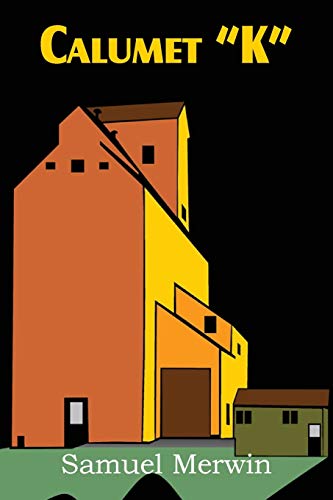
Calumet "K" is simply light fiction telling the story of how Charlie Bannon attempts to construct a Chicago grain elevator in the face of a series of hurdles that threaten to scuttle the project. Bannon is a superbly competent man and the manner in which he faces challenges during the construction is admirable. He is a man who can get things done and a man who loves his work. "A story which points every young man in business life to one of the greatest highways to success." Ayn Rand's
Les informations fournies dans la section « Synopsis » peuvent faire référence à une autre édition de ce titre.
Présentation de l'éditeur
Henry Kitchell Webster (September 7, 1875 – December 8, 1932) was an American author who lived in Evanston, Illinois. He wrote novels and short stories on themes ranging from mystery to family drama to science fiction. He first achieved moderate recognition in 1899 when he co-wrote The Short Line War with fellow Illinois author Samuel Merwin, with whom he later collaborated to write one of his more famous works, Calumet "K" (1901). Calumet "K", which The Chicago Daily Tribune called "a vivifying romance of business," has maintained a modest level of popularity due to its status as Ayn Rand's favorite novel, a source of inspiration for her Objectivist philosophy. "A novel, with several elements of rather unusual interest. As a tale, it is swift, simple, and absorbing, and one does not willingly put it down until it is finished. It has to do with grain-elevator business, with railways, strikes, and commercial and financial matters generally, woven skilfully into a human story of love." --The Commercial Advertiser" 'Calumet "K"' is a novel that is exciting and absorbing, but not the least bit sensational. It is the story of a rush.... The book is an unusually good story; one that shows the inner workings of the labor union, and portrays men who are the bone and sinew of the earth."--The Toledo Blade. "The heroine in this case is the hero's stenographer; but the action of the story grows out of the attempt of rival capitalists and grain men to balk the building of a grain elevator by a set date."
Présentation de l'éditeur
This book was originally published prior to 1923, and represents a reproduction of an important historical work, maintaining the same format as the original work. While some publishers have opted to apply OCR (optical character recognition) technology to the process, we believe this leads to sub-optimal results (frequent typographical errors, strange characters and confusing formatting) and does not adequately preserve the historical character of the original artifact. We believe this work is culturally important in its original archival form. While we strive to adequately clean and digitally enhance the original work, there are occasionally instances where imperfections such as blurred or missing pages, poor pictures or errant marks may have been introduced due to either the quality of the original work or the scanning process itself. Despite these occasional imperfections, we have brought it back into print as part of our ongoing global book preservation commitment, providing customers with access to the best possible historical reprints. We appreciate your understanding of these occasional imperfections, and sincerely hope you enjoy seeing the book in a format as close as possible to that intended by the original publisher.
Les informations fournies dans la section « A propos du livre » peuvent faire référence à une autre édition de ce titre.
Résultats de recherche pour Calumet 'k'

Image d'archives
Calumet 'k'
Edité par
Spastic Cat Press, 2013
ISBN 10 : 1483701018
ISBN 13 : 9781483701011
Ancien ou d'occasion
Soft cover
Vendeur : Hellertown Books, Hellertown, PA, Etats-Unis
Évaluation du vendeur 4 sur 5 étoiles

Soft cover. Etat : Very Good. Etat de la jaquette : No Dj. N° de réf. du vendeur 16123H0776
Acheter D'occasion
EUR 6,37
Expédition à EUR 7,13
Expédition nationale : Etats-Unis
Expédition nationale : Etats-Unis
Quantité disponible : 1 disponible(s)