
Articles liés à Occurrence and Potential Transport of Selected Pharmaceutica...
Occurrence and Potential Transport of Selected Pharmaceuticals and Other Organic Wastewater Compounds from Wastewater-Treatment Plant Influent and ... Canal Systems in Miami-Dade County, Florida - Couverture souple
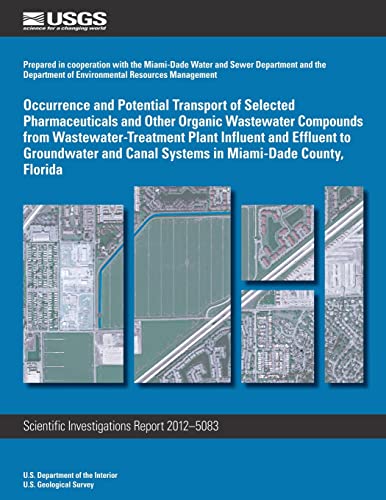
Synopsis
The purposes of this report are to 1) assess and document the occurrence and concentrations of selected pharmaceuticals and other organic wastewater compounds in WWTP influent and effluent, groundwater, canal water, and canal sediment samples at selected sites in Miami-Dade County; 2) assess the persistence of these compounds during wastewater treatment by comparing influent and effluent concentrations, loads, and seasonal variations, and by calculating percent reduction of individual compounds during treatment at each plant; and (3) assess the potential transport of these compounds from recharge areas through the groundwater system and into the canal system by comparing effluent concentrations at the HSWWTP with concentrations in nearby groundwater, nearby canal water and bed sediments, and more distant canal water and bed sediments.
Les informations fournies dans la section « Synopsis » peuvent faire référence à une autre édition de ce titre.
Présentation de l'éditeur
The purposes of this report are to 1) assess and document the occurrence and concentrations of selected pharmaceuticals and other organic wastewater compounds in WWTP influent and effluent, groundwater, canal water, and canal sediment samples at selected sites in Miami-Dade County; 2) assess the persistence of these compounds during wastewater treatment by comparing influent and effluent concentrations, loads, and seasonal variations, and by calculating percent reduction of individual compounds during treatment at each plant; and (3) assess the potential transport of these compounds from recharge areas through the groundwater system and into the canal system by comparing effluent concentrations at the HSWWTP with concentrations in nearby groundwater, nearby canal water and bed sediments, and more distant canal water and bed sediments.
Les informations fournies dans la section « A propos du livre » peuvent faire référence à une autre édition de ce titre.
Résultats de recherche pour Occurrence and Potential Transport of Selected Pharmaceutica...

Image fournie par le vendeur
Occurrence and Potential Transport of Selected Pharmaceuticals and Other Organic Wastewater Compounds from Wastewater-treatment Plant Influent and Effluent to Groundwater and Canal Systems in Miami-dade County, Florida
Edité par
CreateSpace Independent Publishing Platform, 2014
ISBN 10 : 1497525241
ISBN 13 : 9781497525245
Ancien ou d'occasion
Couverture souple
Vendeur : GreatBookPrices, Columbia, MD, Etats-Unis
Évaluation du vendeur 5 sur 5 étoiles

Etat : As New. Unread book in perfect condition. N° de réf. du vendeur 21472501
Acheter D'occasion
EUR 17,51
Expédition à EUR 2,35
Expédition nationale : Etats-Unis
Expédition nationale : Etats-Unis
Quantité disponible : Plus de 20 disponibles
Image fournie par le vendeur
Occurrence and Potential Transport of Selected Pharmaceuticals and Other Organic Wastewater Compounds from Wastewater-treatment Plant Influent and Effluent to Groundwater and Canal Systems in Miami-dade County, Florida
Edité par
CreateSpace Independent Publishing Platform, 2014
ISBN 10 : 1497525241
ISBN 13 : 9781497525245
Neuf
Couverture souple
Vendeur : GreatBookPrices, Columbia, MD, Etats-Unis
Évaluation du vendeur 5 sur 5 étoiles
Etat : New. N° de réf. du vendeur 21472501-n
Acheter neuf
EUR 18,63
Expédition à EUR 2,35
Expédition nationale : Etats-Unis
Expédition nationale : Etats-Unis
Quantité disponible : Plus de 20 disponibles
Image d'archives
Occurrence and Potential Transport of Selected Pharmaceuticals and Other Organic Wastewater Compounds from Wastewater-Treatment Plant Influent and ... Canal Systems in Miami-Dade County, Florida
Edité par
CreateSpace Independent Publishing Platform, 2014
ISBN 10 : 1497525241
ISBN 13 : 9781497525245
Neuf
Couverture souple
Vendeur : California Books, Miami, FL, Etats-Unis
Évaluation du vendeur 5 sur 5 étoiles
Etat : New. Print on Demand. N° de réf. du vendeur I-9781497525245
Acheter neuf
EUR 21,06
Livraison gratuite
Expédition nationale : Etats-Unis
Expédition nationale : Etats-Unis
Quantité disponible : Plus de 20 disponibles
Image fournie par le vendeur
Occurrence and Potential Transport of Selected Pharmaceuticals and Other Organic Wastewater Compounds from Wastewater-treatment Plant Influent and Effluent to Groundwater and Canal Systems in Miami-dade County, Florida
Edité par
CreateSpace Independent Publishing Platform, 2014
ISBN 10 : 1497525241
ISBN 13 : 9781497525245
Ancien ou d'occasion
Couverture souple
Vendeur : GreatBookPricesUK, Woodford Green, Royaume-Uni
Évaluation du vendeur 5 sur 5 étoiles
Etat : As New. Unread book in perfect condition. N° de réf. du vendeur 21472501
Acheter D'occasion
EUR 23
Expédition à EUR 17,60
Expédition depuis Royaume-Uni vers Etats-Unis
Expédition depuis Royaume-Uni vers Etats-Unis
Quantité disponible : Plus de 20 disponibles
Image fournie par le vendeur
Occurrence and Potential Transport of Selected Pharmaceuticals and Other Organic Wastewater Compounds from Wastewater-treatment Plant Influent and Effluent to Groundwater and Canal Systems in Miami-dade County, Florida
Edité par
CreateSpace Independent Publishing Platform, 2014
ISBN 10 : 1497525241
ISBN 13 : 9781497525245
Neuf
Couverture souple
Vendeur : GreatBookPricesUK, Woodford Green, Royaume-Uni
Évaluation du vendeur 5 sur 5 étoiles
Etat : New. N° de réf. du vendeur 21472501-n
Acheter neuf
EUR 23,85
Expédition à EUR 17,60
Expédition depuis Royaume-Uni vers Etats-Unis
Expédition depuis Royaume-Uni vers Etats-Unis
Quantité disponible : Plus de 20 disponibles