
Articles liés à Radical Conflict: Essays on Violence, Intractability,...
Synopsis
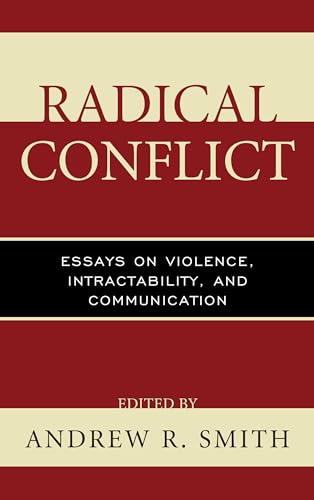
Radical Conflictaddresses conflict at interpersonal and communal, legal and rhetorical, ethnopolitical, global, and geopolitical levels. The conflicts analyzed are "radical" because in each some intense and often prolonged violence takes place. The chapters address different kinds of violence(s)-physical and gratuitous, structural and socio-economic, legal and symbolic, all with significant ill effects and injustices that spiral in all directions. All share an interest in exploring imaginatively and speculatively what can be done to attenuate such cycles of violence. The volume analyzes how recurrent narratives, mythologies, media(ted) constructions and other discourse(s) of liberal democratic and authoritarian states play a significant role in exacerbating or thwarting violence, exposing, escalating, legitimizing, rationalizing, propagating, but also possibly mitigating violence in all of its forms.
Each contributor provides a critical interpretation of the status of the conflict under inquiry, including: a teacher verbally abusing and ridiculing a student then exposing it in social media; a community torn apart by environmental disaster; the incommensurate but not incommensurable conflict between Israelis and Palestinians; the Muslim Brotherhood and the militarized state(s) of Egypt and Libya; urban discourses in cyberspace among Moroccan and Maghreb youth that have become counter-signifying publics against oppression of the state; the role of media and violence in Zimbabwe's political struggle; the impact of the Circassian diaspora in global politics especially in the United States; India's soft power approach to the Kashmir conflict as a way to capitalize on it through tourism; the agonistic discourses that pervade the conflict over the Sahara and deprive Sahrawi people of rights; and how the liberal state is implicated in the gratuitous violence of ISIL.
The volume also offers a section on the rhetoric of exclusionary laws associated with intractable conflicts of the abortion conflict, the right to die controversy, and a Burkean perspective on violence in Bangladesh. Contributors suggest what can be done conceptually and politically to mitigate and end violations of those who are most vulnerable, banished, forgotten, damaged, and often silenced.
Les informations fournies dans la section « Synopsis » peuvent faire référence à une autre édition de ce titre.
À propos des auteurs
Andrew R. Smith is professor and graduate program head in the Department of Communication Studies at Edinboro University.
Donald G. Ellis is professor of communication at the University of Hartford.
Jason Hannan is assistant professor in the Department of Rhetoric, Writing, and Communications at the University of Winnipeg.
Les informations fournies dans la section « A propos du livre » peuvent faire référence à une autre édition de ce titre.
Résultats de recherche pour Radical Conflict: Essays on Violence, Intractability,...

Image d'archives
Radical Conflict
Edité par
Bloomsbury Publishing (UK), 2016
ISBN 10 : 1498521770
ISBN 13 : 9781498521772
Neuf
Couverture rigide
Vendeur : PBShop.store UK, Fairford, GLOS, Royaume-Uni
Évaluation du vendeur 5 sur 5 étoiles

HRD. Etat : New. New Book. Delivered from our UK warehouse in 4 to 14 business days. THIS BOOK IS PRINTED ON DEMAND. Established seller since 2000. N° de réf. du vendeur L1-9781498521772
Acheter neuf
EUR 143,26
Expédition à EUR 5,85
Expédition depuis Royaume-Uni vers Etats-Unis
Expédition depuis Royaume-Uni vers Etats-Unis
Quantité disponible : Plus de 20 disponibles
Image d'archives
Radical Conflict
impression à la demandeVendeur : PBShop.store US, Wood Dale, IL, Etats-Unis
Évaluation du vendeur 5 sur 5 étoiles
HRD. Etat : New. New Book. Shipped from UK. THIS BOOK IS PRINTED ON DEMAND. Established seller since 2000. N° de réf. du vendeur L1-9781498521772
Acheter neuf
EUR 150,36
Livraison gratuite
Expédition nationale : Etats-Unis
Expédition nationale : Etats-Unis
Quantité disponible : Plus de 20 disponibles
Image d'archives
Radical Conflict: Essays on Violence, Intractability, and Communication (Peace and Conflict Studies)
Vendeur : Ria Christie Collections, Uxbridge, Royaume-Uni
Évaluation du vendeur 5 sur 5 étoiles
Etat : New. In English. N° de réf. du vendeur ria9781498521772_new
Acheter neuf
EUR 155,21
Expédition à EUR 13,16
Expédition depuis Royaume-Uni vers Etats-Unis
Expédition depuis Royaume-Uni vers Etats-Unis
Quantité disponible : Plus de 20 disponibles
Image d'archives
Radical Conflict (Hardcover)
Edité par
Bloomsbury Publishing Plc, Lanham, MD, 2016
ISBN 10 : 1498521770
ISBN 13 : 9781498521772
Neuf
Couverture rigide
Vendeur : Grand Eagle Retail, Bensenville, IL, Etats-Unis
Évaluation du vendeur 5 sur 5 étoiles
Hardcover. Etat : new. Hardcover. Radical Conflictaddresses conflict at interpersonal and communal, legal and rhetorical, ethnopolitical, global, and geopolitical levels. The conflicts analyzed are "radical" because in each some intense and often prolonged violence takes place. The chapters address different kinds of violence(s)physical and gratuitous, structural and socio-economic, legal and symbolic, all with significant ill effects and injustices that spiral in all directions. All share an interest in exploring imaginatively and speculatively what can be done to attenuate such cycles of violence. The volume analyzes how recurrent narratives, mythologies, media(ted) constructions and other discourse(s) of liberal democratic and authoritarian states play a significant role in exacerbating or thwarting violence, exposing, escalating, legitimizing, rationalizing, propagating, but also possibly mitigating violence in all of its forms. Each contributor provides a critical interpretation of the status of the conflict under inquiry, including: a teacher verbally abusing and ridiculing a student then exposing it in social media; a community torn apart by environmental disaster; the incommensurate but not incommensurable conflict between Israelis and Palestinians; the Muslim Brotherhood and the militarized state(s) of Egypt and Libya; urban discourses in cyberspace among Moroccan and Maghreb youth that have become counter-signifying publics against oppression of the state; the role of media and violence in Zimbabwe's political struggle; the impact of the Circassian diaspora in global politics especially in the United States; India's soft power approach to the Kashmir conflict as a way to capitalize on it through tourism; the agonistic discourses that pervade the conflict over the Sahara and deprive Sahrawi people of rights; and how the liberal state is implicated in the gratuitous violence of ISIL. The volume also offers a section on the rhetoric of exclusionary laws associated with intractable conflicts of the abortion conflict, the right to die controversy, and a Burkean perspective on violence in Bangladesh. Contributors suggest what can be done conceptually and politically to mitigate and end violations of those who are most vulnerable, banished, forgotten, damaged, and often silenced. This book examines instances of radical conflict in order to provide critical analyses of media and mediation implicated in such conflicts, often for ill but sometimes for good. Chapters offer ways of thinking intended to attenuate spirals of violence and move radical conflicts toward new means of discourse. This item is printed on demand. Shipping may be from multiple locations in the US or from the UK, depending on stock availability. N° de réf. du vendeur 9781498521772
Acheter neuf
EUR 171,33
Livraison gratuite
Expédition nationale : Etats-Unis
Expédition nationale : Etats-Unis
Quantité disponible : 1 disponible(s)
Image d'archives
Radical Conflict: Essays on Violence, Intractability, and Communication (Peace and Conflict Studies)
Vendeur : California Books, Miami, FL, Etats-Unis
Évaluation du vendeur 5 sur 5 étoiles
Etat : New. N° de réf. du vendeur I-9781498521772
Acheter neuf
EUR 173,01
Livraison gratuite
Expédition nationale : Etats-Unis
Expédition nationale : Etats-Unis
Quantité disponible : Plus de 20 disponibles
Image fournie par le vendeur
Radical Conflict
Edité par
Bloomsbury Publishing Plc, US, 2016
ISBN 10 : 1498521770
ISBN 13 : 9781498521772
Neuf
Couverture rigide
Vendeur : Rarewaves.com USA, London, LONDO, Royaume-Uni
Évaluation du vendeur 5 sur 5 étoiles
Hardback. Etat : New. Radical Conflictaddresses conflict at interpersonal and communal, legal and rhetorical, ethnopolitical, global, and geopolitical levels. The conflicts analyzed are "radical" because in each some intense and often prolonged violence takes place. The chapters address different kinds of violence(s)-physical and gratuitous, structural and socio-economic, legal and symbolic, all with significant ill effects and injustices that spiral in all directions. All share an interest in exploring imaginatively and speculatively what can be done to attenuate such cycles of violence. The volume analyzes how recurrent narratives, mythologies, media(ted) constructions and other discourse(s) of liberal democratic and authoritarian states play a significant role in exacerbating or thwarting violence, exposing, escalating, legitimizing, rationalizing, propagating, but also possibly mitigating violence in all of its forms. Each contributor provides a critical interpretation of the status of the conflict under inquiry, including: a teacher verbally abusing and ridiculing a student then exposing it in social media; a community torn apart by environmental disaster; the incommensurate but not incommensurable conflict between Israelis and Palestinians; the Muslim Brotherhood and the militarized state(s) of Egypt and Libya; urban discourses in cyberspace among Moroccan and Maghreb youth that have become counter-signifying publics against oppression of the state; the role of media and violence in Zimbabwe's political struggle; the impact of the Circassian diaspora in global politics especially in the United States; India's soft power approach to the Kashmir conflict as a way to capitalize on it through tourism; the agonistic discourses that pervade the conflict over the Sahara and deprive Sahrawi people of rights; and how the liberal state is implicated in the gratuitous violence of ISIL. The volume also offers a section on the rhetoric of exclusionary laws associated with intractable conflicts of the abortion conflict, the right to die controversy, and a Burkean perspective on violence in Bangladesh. Contributors suggest what can be done conceptually and politically to mitigate and end violations of those who are most vulnerable, banished, forgotten, damaged, and often silenced. N° de réf. du vendeur LU-9781498521772
Acheter neuf
EUR 179,48
Livraison gratuite
Expédition depuis Royaume-Uni vers Etats-Unis
Expédition depuis Royaume-Uni vers Etats-Unis
Quantité disponible : Plus de 20 disponibles
Image d'archives
Radical Conflict (Hardcover)
Edité par
Bloomsbury Publishing Plc, Lanham, MD, 2016
ISBN 10 : 1498521770
ISBN 13 : 9781498521772
Neuf
Couverture rigide
Vendeur : CitiRetail, Stevenage, Royaume-Uni
Évaluation du vendeur 5 sur 5 étoiles
Hardcover. Etat : new. Hardcover. Radical Conflictaddresses conflict at interpersonal and communal, legal and rhetorical, ethnopolitical, global, and geopolitical levels. The conflicts analyzed are "radical" because in each some intense and often prolonged violence takes place. The chapters address different kinds of violence(s)physical and gratuitous, structural and socio-economic, legal and symbolic, all with significant ill effects and injustices that spiral in all directions. All share an interest in exploring imaginatively and speculatively what can be done to attenuate such cycles of violence. The volume analyzes how recurrent narratives, mythologies, media(ted) constructions and other discourse(s) of liberal democratic and authoritarian states play a significant role in exacerbating or thwarting violence, exposing, escalating, legitimizing, rationalizing, propagating, but also possibly mitigating violence in all of its forms. Each contributor provides a critical interpretation of the status of the conflict under inquiry, including: a teacher verbally abusing and ridiculing a student then exposing it in social media; a community torn apart by environmental disaster; the incommensurate but not incommensurable conflict between Israelis and Palestinians; the Muslim Brotherhood and the militarized state(s) of Egypt and Libya; urban discourses in cyberspace among Moroccan and Maghreb youth that have become counter-signifying publics against oppression of the state; the role of media and violence in Zimbabwe's political struggle; the impact of the Circassian diaspora in global politics especially in the United States; India's soft power approach to the Kashmir conflict as a way to capitalize on it through tourism; the agonistic discourses that pervade the conflict over the Sahara and deprive Sahrawi people of rights; and how the liberal state is implicated in the gratuitous violence of ISIL. The volume also offers a section on the rhetoric of exclusionary laws associated with intractable conflicts of the abortion conflict, the right to die controversy, and a Burkean perspective on violence in Bangladesh. Contributors suggest what can be done conceptually and politically to mitigate and end violations of those who are most vulnerable, banished, forgotten, damaged, and often silenced. This book examines instances of radical conflict in order to provide critical analyses of media and mediation implicated in such conflicts, often for ill but sometimes for good. Chapters offer ways of thinking intended to attenuate spirals of violence and move radical conflicts toward new means of discourse. This item is printed on demand. Shipping may be from our UK warehouse or from our Australian or US warehouses, depending on stock availability. N° de réf. du vendeur 9781498521772
Acheter neuf
EUR 151,26
Expédition à EUR 43,13
Expédition depuis Royaume-Uni vers Etats-Unis
Expédition depuis Royaume-Uni vers Etats-Unis
Quantité disponible : 1 disponible(s)
Image fournie par le vendeur
Radical Conflict
impression à la demandeVendeur : moluna, Greven, Allemagne
Évaluation du vendeur 5 sur 5 étoiles
Gebunden. Etat : New. Dieser Artikel ist ein Print on Demand Artikel und wird nach Ihrer Bestellung fuer Sie gedruckt. This book examines instances of radical conflict in order to provide critical analyses of media and mediation implicated in such conflicts, often for ill but sometimes for good. Chapters offer ways of thinking intended to attenuate spirals of violence and m. N° de réf. du vendeur 447970084
Acheter neuf
EUR 148,64
Expédition à EUR 48,99
Expédition depuis Allemagne vers Etats-Unis
Expédition depuis Allemagne vers Etats-Unis
Quantité disponible : Plus de 20 disponibles
Image d'archives
Radical Conflict: Essays on Violence, Intractability, and Communication
Vendeur : Revaluation Books, Exeter, Royaume-Uni
Évaluation du vendeur 5 sur 5 étoiles
Hardcover. Etat : Brand New. 295 pages. 9.50x6.50x1.00 inches. In Stock. N° de réf. du vendeur x-1498521770
Acheter neuf
EUR 210,64
Expédition à EUR 14,57
Expédition depuis Royaume-Uni vers Etats-Unis
Expédition depuis Royaume-Uni vers Etats-Unis
Quantité disponible : 2 disponible(s)
Image fournie par le vendeur
Radical Conflict
Edité par
Bloomsbury Publishing Plc, US, 2016
ISBN 10 : 1498521770
ISBN 13 : 9781498521772
Neuf
Couverture rigide
Vendeur : Rarewaves.com UK, London, Royaume-Uni
Évaluation du vendeur 5 sur 5 étoiles
Hardback. Etat : New. Radical Conflictaddresses conflict at interpersonal and communal, legal and rhetorical, ethnopolitical, global, and geopolitical levels. The conflicts analyzed are "radical" because in each some intense and often prolonged violence takes place. The chapters address different kinds of violence(s)-physical and gratuitous, structural and socio-economic, legal and symbolic, all with significant ill effects and injustices that spiral in all directions. All share an interest in exploring imaginatively and speculatively what can be done to attenuate such cycles of violence. The volume analyzes how recurrent narratives, mythologies, media(ted) constructions and other discourse(s) of liberal democratic and authoritarian states play a significant role in exacerbating or thwarting violence, exposing, escalating, legitimizing, rationalizing, propagating, but also possibly mitigating violence in all of its forms. Each contributor provides a critical interpretation of the status of the conflict under inquiry, including: a teacher verbally abusing and ridiculing a student then exposing it in social media; a community torn apart by environmental disaster; the incommensurate but not incommensurable conflict between Israelis and Palestinians; the Muslim Brotherhood and the militarized state(s) of Egypt and Libya; urban discourses in cyberspace among Moroccan and Maghreb youth that have become counter-signifying publics against oppression of the state; the role of media and violence in Zimbabwe's political struggle; the impact of the Circassian diaspora in global politics especially in the United States; India's soft power approach to the Kashmir conflict as a way to capitalize on it through tourism; the agonistic discourses that pervade the conflict over the Sahara and deprive Sahrawi people of rights; and how the liberal state is implicated in the gratuitous violence of ISIL. The volume also offers a section on the rhetoric of exclusionary laws associated with intractable conflicts of the abortion conflict, the right to die controversy, and a Burkean perspective on violence in Bangladesh. Contributors suggest what can be done conceptually and politically to mitigate and end violations of those who are most vulnerable, banished, forgotten, damaged, and often silenced. N° de réf. du vendeur LU-9781498521772
Acheter neuf
EUR 175,64
Expédition à EUR 75,77
Expédition depuis Royaume-Uni vers Etats-Unis
Expédition depuis Royaume-Uni vers Etats-Unis
Quantité disponible : Plus de 20 disponibles