
Articles liés à Postphenomenological Methodologies: New Ways in Mediating...
Postphenomenological Methodologies: New Ways in Mediating Techno-Human Relationships - Couverture rigide
Livre 11 sur 18: Postphenomenology and the Philosophy of Technology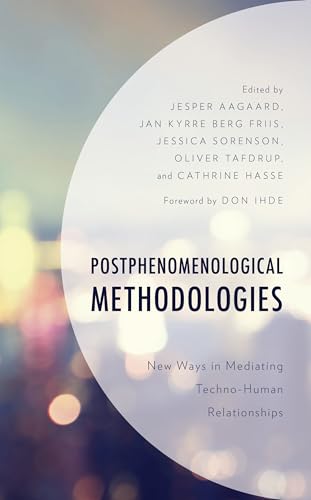
Synopsis
This edited volume is the first publication to tackle the issue of researching human-technology relations from a methodological postphenomenological perspective. While the 'traditional' phenomenology of the 20th century, with figures like Husserl, Heidegger and Merleau-Ponty, provided valuable insights into the formal structures of essence, being and embodiment, etc. their mode of philosophizing mostly involved abstract 'pure' thinking. Although rooted in this tradition, the postphenomenological approach to the study of human-technology relations emphasizes the "empirical turn" and interdisciplinary work in the field of philosophy - and reaches out to other disciplines like anthropology, education, media studies, and science and technology studies (STS).
The contributors discuss what it means for the field of postphenomenology to be empirically based and what kind of methodology is required in order for researchers to go out and study human-technology relations in this perspective. In many disciplines, methodology refers to the analytical approach taken - e.g. the analytical concepts you employ to make an analysis; in postphenomenology, these might include concepts such as multistability, variation, or mediation. In a discipline like anthropology, it also refers to reflections over the methods researchers use to approach an empirical field. Methods can include interviews of different kinds, participant observations, surveys, and auto-ethnography. Furthermore, methodology can include ethical issues tied to doing research in an empirical field. These practical aspects are not separate from, but rather connected to, theoretical approaches. This book ties together the methods, ethics, and theories of postphenomenology in a groundbreaking volume on methodology. With postphenomenological studies of education, digital media, biohacking, health, robotics, and skateboarding as points of reference, the authors of this volume, in twelve chapters, provide new perspectives on what a comprehensive postphenomenological research methodology must consist of.
Les informations fournies dans la section « Synopsis » peuvent faire référence à une autre édition de ce titre.
À propos des auteurs
Jesper Aagaard is assistant professor in the Department of Psychology and Behavioral Sciences at Aarhus University.
Jan Kyrre Berg Friis is course manager of theory of science at Copenhagen University.
Jessica Sorenson is research assistant at the Future, Technology, Culture, and Learning program at Aarhus University.
Oliver Tafdrup is doctoral fellow at the Future, Technology, Culture, and Learning program at Aarhus University.
Cathrine Hasse is professor of cultural anthropology and learning at Aarhus University.
Les informations fournies dans la section « A propos du livre » peuvent faire référence à une autre édition de ce titre.
Résultats de recherche pour Postphenomenological Methodologies: New Ways in Mediating...

Image fournie par le vendeur
Postphenomenological Methodologies : New Ways in Mediating Techno-Human Relationships
Vendeur : GreatBookPrices, Columbia, MD, Etats-Unis
Évaluation du vendeur 5 sur 5 étoiles

Etat : New. N° de réf. du vendeur 32447147-n
Acheter neuf
EUR 133,55
Expédition à EUR 2,35
Expédition nationale : Etats-Unis
Expédition nationale : Etats-Unis
Quantité disponible : Plus de 20 disponibles
Image d'archives
Postphenomenological Methodologies (Hardcover)
Edité par
Bloomsbury Publishing Plc, Lanham, MD, 2018
ISBN 10 : 1498545238
ISBN 13 : 9781498545235
Neuf
Couverture rigide
Vendeur : Grand Eagle Retail, Bensenville, IL, Etats-Unis
Évaluation du vendeur 5 sur 5 étoiles
Hardcover. Etat : new. Hardcover. This edited volume is the first publication to tackle the issue of researching human-technology relations from a methodological postphenomenological perspective. While the traditional phenomenology of the 20th century, with figures like Husserl, Heidegger and Merleau-Ponty, provided valuable insights into the formal structures of essence, being and embodiment, etc. their mode of philosophizing mostly involved abstract pure thinking. Although rooted in this tradition, the postphenomenological approach to the study of human-technology relations emphasizes the empirical turn and interdisciplinary work in the field of philosophy and reaches out to other disciplines like anthropology, education, media studies, and science and technology studies (STS).The contributors discuss what it means for the field of postphenomenology to be empirically based and what kind of methodology is required in order for researchers to go out and study human-technology relations in this perspective. In many disciplines, methodology refers to the analytical approach taken e.g. the analytical concepts you employ to make an analysis; in postphenomenology, these might include concepts such as multistability, variation, or mediation. In a discipline like anthropology, it also refers to reflections over the methods researchers use to approach an empirical field. Methods can include interviews of different kinds, participant observations, surveys, and auto-ethnography. Furthermore, methodology can include ethical issues tied to doing research in an empirical field. These practical aspects are not separate from, but rather connected to, theoretical approaches. This book ties together the methods, ethics, and theories of postphenomenology in a groundbreaking volume on methodology. With postphenomenological studies of education, digital media, biohacking, health, robotics, and skateboarding as points of reference, the authors of this volume, in twelve chapters, provide new perspectives on what a comprehensive postphenomenological research methodology must consist of. This volume contributes to postphenomenological research into human-technology relations with essays reflecting on methodological issues through empirical studies of education, digital media, biohacking, health, robotics, and skateboarding. This work provides new perspectives that call for a comprehensive postphenomenological research methodology. This item is printed on demand. Shipping may be from multiple locations in the US or from the UK, depending on stock availability. N° de réf. du vendeur 9781498545235
Acheter neuf
EUR 135,98
Livraison gratuite
Expédition nationale : Etats-Unis
Expédition nationale : Etats-Unis
Quantité disponible : 1 disponible(s)
Image d'archives
Postphenomenological Methodologies
impression à la demandeVendeur : PBShop.store US, Wood Dale, IL, Etats-Unis
Évaluation du vendeur 5 sur 5 étoiles
HRD. Etat : New. New Book. Shipped from UK. THIS BOOK IS PRINTED ON DEMAND. Established seller since 2000. N° de réf. du vendeur L1-9781498545235
Acheter neuf
EUR 138,52
Livraison gratuite
Expédition nationale : Etats-Unis
Expédition nationale : Etats-Unis
Quantité disponible : Plus de 20 disponibles
Image d'archives
Postphenomenological Methodologies
impression à la demandeVendeur : PBShop.store UK, Fairford, GLOS, Royaume-Uni
Évaluation du vendeur 5 sur 5 étoiles
HRD. Etat : New. New Book. Delivered from our UK warehouse in 4 to 14 business days. THIS BOOK IS PRINTED ON DEMAND. Established seller since 2000. N° de réf. du vendeur L1-9781498545235
Acheter neuf
EUR 133
Expédition à EUR 5,95
Expédition depuis Royaume-Uni vers Etats-Unis
Expédition depuis Royaume-Uni vers Etats-Unis
Quantité disponible : Plus de 20 disponibles
Image fournie par le vendeur
Postphenomenological Methodologies : New Ways in Mediating Techno-Human Relationships
Edité par
Lexington Books, 2018
ISBN 10 : 1498545238
ISBN 13 : 9781498545235
Ancien ou d'occasion
Couverture rigide
Vendeur : GreatBookPrices, Columbia, MD, Etats-Unis
Évaluation du vendeur 5 sur 5 étoiles
Etat : As New. Unread book in perfect condition. N° de réf. du vendeur 32447147
Acheter D'occasion
EUR 143,75
Expédition à EUR 2,35
Expédition nationale : Etats-Unis
Expédition nationale : Etats-Unis
Quantité disponible : Plus de 20 disponibles
Image d'archives
Postphenomenological Methodologies : New Ways in Mediating Techno-Human Relationships
Vendeur : GreatBookPricesUK, Woodford Green, Royaume-Uni
Évaluation du vendeur 5 sur 5 étoiles
Etat : New. N° de réf. du vendeur 32447147-n
Acheter neuf
EUR 132,98
Expédition à EUR 17,79
Expédition depuis Royaume-Uni vers Etats-Unis
Expédition depuis Royaume-Uni vers Etats-Unis
Quantité disponible : Plus de 20 disponibles
Image d'archives
Postphenomenological Methodologies: New Ways in Mediating Techno-Human Relationships (Postphenomenology and the Philosophy of Technology)
Vendeur : California Books, Miami, FL, Etats-Unis
Évaluation du vendeur 5 sur 5 étoiles
Etat : New. N° de réf. du vendeur I-9781498545235
Acheter neuf
EUR 152,14
Livraison gratuite
Expédition nationale : Etats-Unis
Expédition nationale : Etats-Unis
Quantité disponible : Plus de 20 disponibles
Image d'archives
Postphenomenological Methodologies: New Ways in Mediating Techno-Human Relationships (Postphenomenology and the Philosophy of Technology)
Vendeur : Ria Christie Collections, Uxbridge, Royaume-Uni
Évaluation du vendeur 5 sur 5 étoiles
Etat : New. In English. N° de réf. du vendeur ria9781498545235_new
Acheter neuf
EUR 144,14
Expédition à EUR 13,39
Expédition depuis Royaume-Uni vers Etats-Unis
Expédition depuis Royaume-Uni vers Etats-Unis
Quantité disponible : Plus de 20 disponibles
Image fournie par le vendeur
Postphenomenological Methodologies : New Ways in Mediating Techno-Human Relationships
Edité par
Lexington Books, 2018
ISBN 10 : 1498545238
ISBN 13 : 9781498545235
Ancien ou d'occasion
Couverture rigide
Vendeur : GreatBookPricesUK, Woodford Green, Royaume-Uni
Évaluation du vendeur 5 sur 5 étoiles
Etat : As New. Unread book in perfect condition. N° de réf. du vendeur 32447147
Acheter D'occasion
EUR 145,42
Expédition à EUR 17,79
Expédition depuis Royaume-Uni vers Etats-Unis
Expédition depuis Royaume-Uni vers Etats-Unis
Quantité disponible : Plus de 20 disponibles
Image fournie par le vendeur
Postphenomenological Methodologies
Edité par
Bloomsbury Publishing Plc, US, 2018
ISBN 10 : 1498545238
ISBN 13 : 9781498545235
Neuf
Couverture rigide
Vendeur : Rarewaves.com USA, London, LONDO, Royaume-Uni
Évaluation du vendeur 5 sur 5 étoiles
Hardback. Etat : New. This edited volume is the first publication to tackle the issue of researching human-technology relations from a methodological postphenomenological perspective. While the 'traditional' phenomenology of the 20th century, with figures like Husserl, Heidegger and Merleau-Ponty, provided valuable insights into the formal structures of essence, being and embodiment, etc. their mode of philosophizing mostly involved abstract 'pure' thinking. Although rooted in this tradition, the postphenomenological approach to the study of human-technology relations emphasizes the "empirical turn" and interdisciplinary work in the field of philosophy - and reaches out to other disciplines like anthropology, education, media studies, and science and technology studies (STS).The contributors discuss what it means for the field of postphenomenology to be empirically based and what kind of methodology is required in order for researchers to go out and study human-technology relations in this perspective. In many disciplines, methodology refers to the analytical approach taken - e.g. the analytical concepts you employ to make an analysis; in postphenomenology, these might include concepts such as multistability, variation, or mediation. In a discipline like anthropology, it also refers to reflections over the methods researchers use to approach an empirical field. Methods can include interviews of different kinds, participant observations, surveys, and auto-ethnography. Furthermore, methodology can include ethical issues tied to doing research in an empirical field. These practical aspects are not separate from, but rather connected to, theoretical approaches. This book ties together the methods, ethics, and theories of postphenomenology in a groundbreaking volume on methodology. With postphenomenological studies of education, digital media, biohacking, health, robotics, and skateboarding as points of reference, the authors of this volume, in twelve chapters, provide new perspectives on what a comprehensive postphenomenological research methodology must consist of. N° de réf. du vendeur LU-9781498545235
Acheter neuf
EUR 164,69
Livraison gratuite
Expédition depuis Royaume-Uni vers Etats-Unis
Expédition depuis Royaume-Uni vers Etats-Unis
Quantité disponible : Plus de 20 disponibles