
Articles liés à The Trans-Pacific Partnership (TPP) Negotiations and...
Synopsis
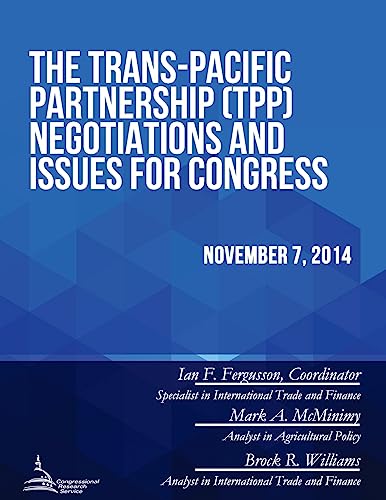
The Trans-Pacific Partnership (TPP) is a proposed regional free trade agreement (FTA) being negotiated among the United States, Australia, Brunei, Canada, Chile, Japan, Malaysia, Mexico, New Zealand, Peru, Singapore, and Vietnam. U.S. negotiators and others describe and envision the TPP as a “comprehensive and high-standard” FTA that aims to liberalize trade in nearly all goods and services and include rules-based commitments beyond those currently established in the World Trade Organization (WTO). The broad outline of an agreement was announced on the sidelines of the Asia-Pacific Economic Cooperation (APEC) ministerial in November 2011, in Honolulu, HI. If concluded as envisioned, the TPP potentially could eliminate tariff and nontariff barriers to trade and investment among the parties and could serve as a template for a future trade pact among APEC members and potentially other countries. Congress has a direct interest in the negotiations, both through influencing U.S. negotiating positions with the executive branch, and by considering legislation to implement any resulting agreement.
Les informations fournies dans la section « Synopsis » peuvent faire référence à une autre édition de ce titre.
Présentation de l'éditeur
The Trans-Pacific Partnership (TPP) is a proposed regional free trade agreement (FTA) being negotiated among the United States, Australia, Brunei, Canada, Chile, Japan, Malaysia, Mexico, New Zealand, Peru, Singapore, and Vietnam. U.S. negotiators and others describe and envision the TPP as a “comprehensive and high-standard” FTA that aims to liberalize trade in nearly all goods and services and include rules-based commitments beyond those currently established in the World Trade Organization (WTO). The broad outline of an agreement was announced on the sidelines of the Asia-Pacific Economic Cooperation (APEC) ministerial in November 2011, in Honolulu, HI. If concluded as envisioned, the TPP potentially could eliminate tariff and nontariff barriers to trade and investment among the parties and could serve as a template for a future trade pact among APEC members and potentially other countries. Congress has a direct interest in the negotiations, both through influencing U.S. negotiating positions with the executive branch, and by considering legislation to implement any resulting agreement.
Les informations fournies dans la section « A propos du livre » peuvent faire référence à une autre édition de ce titre.
Résultats de recherche pour The Trans-Pacific Partnership (TPP) Negotiations and...

Image fournie par le vendeur
Trans-pacific Partnership Tpp Negotiations and Issues for Congress
Edité par
CreateSpace Independent Publishing Platform, 2015
ISBN 10 : 1512309826
ISBN 13 : 9781512309829
Neuf
Couverture souple
Vendeur : GreatBookPrices, Columbia, MD, Etats-Unis
Évaluation du vendeur 5 sur 5 étoiles

Etat : New. N° de réf. du vendeur 24123627-n
Acheter neuf
EUR 17,80
Expédition à EUR 2,36
Expédition nationale : Etats-Unis
Expédition nationale : Etats-Unis
Quantité disponible : Plus de 20 disponibles
Image d'archives
The Trans-Pacific Partnership (TPP) Negotiations and Issues for Congress
Edité par
CreateSpace Independent Publishing Platform, 2015
ISBN 10 : 1512309826
ISBN 13 : 9781512309829
Neuf
Couverture souple
Vendeur : California Books, Miami, FL, Etats-Unis
Évaluation du vendeur 5 sur 5 étoiles
Etat : New. Print on Demand. N° de réf. du vendeur I-9781512309829
Acheter neuf
EUR 20,24
Livraison gratuite
Expédition nationale : Etats-Unis
Expédition nationale : Etats-Unis
Quantité disponible : Plus de 20 disponibles
Image fournie par le vendeur
Trans-pacific Partnership Tpp Negotiations and Issues for Congress
Edité par
CreateSpace Independent Publishing Platform, 2015
ISBN 10 : 1512309826
ISBN 13 : 9781512309829
Ancien ou d'occasion
Couverture souple
Vendeur : GreatBookPrices, Columbia, MD, Etats-Unis
Évaluation du vendeur 5 sur 5 étoiles
Etat : As New. Unread book in perfect condition. N° de réf. du vendeur 24123627
Acheter D'occasion
EUR 18,06
Expédition à EUR 2,36
Expédition nationale : Etats-Unis
Expédition nationale : Etats-Unis
Quantité disponible : Plus de 20 disponibles
Image d'archives
The Trans-Pacific Partnership (TPP) Negotiations and Issues for Congress
Edité par
Createspace Independent Publishing Platform, 2015
ISBN 10 : 1512309826
ISBN 13 : 9781512309829
Neuf
Paperback / softback
Vendeur : THE SAINT BOOKSTORE, Southport, Royaume-Uni
Évaluation du vendeur 5 sur 5 étoiles
Paperback / softback. Etat : New. This item is printed on demand. New copy - Usually dispatched within 5-9 working days. N° de réf. du vendeur C9781512309829
Acheter neuf
EUR 24,47
Expédition à EUR 15,20
Expédition depuis Royaume-Uni vers Etats-Unis
Expédition depuis Royaume-Uni vers Etats-Unis
Quantité disponible : Plus de 20 disponibles
Image fournie par le vendeur
Trans-pacific Partnership Tpp Negotiations and Issues for Congress
Edité par
CreateSpace Independent Publishing Platform, 2015
ISBN 10 : 1512309826
ISBN 13 : 9781512309829
Ancien ou d'occasion
Couverture souple
Vendeur : GreatBookPricesUK, Woodford Green, Royaume-Uni
Évaluation du vendeur 5 sur 5 étoiles
Etat : As New. Unread book in perfect condition. N° de réf. du vendeur 24123627
Acheter D'occasion
EUR 23,71
Expédition à EUR 17,73
Expédition depuis Royaume-Uni vers Etats-Unis
Expédition depuis Royaume-Uni vers Etats-Unis
Quantité disponible : Plus de 20 disponibles
Image fournie par le vendeur
Trans-pacific Partnership Tpp Negotiations and Issues for Congress
Edité par
CreateSpace Independent Publishing Platform, 2015
ISBN 10 : 1512309826
ISBN 13 : 9781512309829
Neuf
Couverture souple
Vendeur : GreatBookPricesUK, Woodford Green, Royaume-Uni
Évaluation du vendeur 5 sur 5 étoiles
Etat : New. N° de réf. du vendeur 24123627-n
Acheter neuf
EUR 24,45
Expédition à EUR 17,73
Expédition depuis Royaume-Uni vers Etats-Unis
Expédition depuis Royaume-Uni vers Etats-Unis
Quantité disponible : Plus de 20 disponibles