
Articles liés à Lysis (annotated)
Synopsis
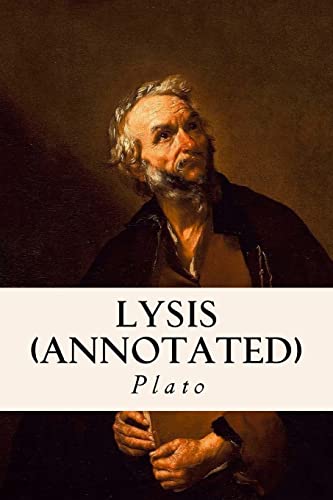
Lysis is a philosophy classic and a dialogue by Plato. The dialogue consists of two scenes or conversations which seem to have no relation to each other: What is Love? and What is Friendship? he main characters are Socrates, the boys Lysis and Menexenus who are friends, as well as Hippothales, who is in unrequited love with Lysis and therefore, after the initial conversation, hides himself behind the surrounding listeners. Socrates proposes four possible notions regarding the true nature of friendship: Friendship between people who are similar, interpreted by Socrates as friendship between good men. Friendship between men who are dissimilar. Friendship between men who are neither good nor bad and good men. Gradually emerging: friendship between those who are relatives "not kindred" by the nature of their souls. Of all those options, Socrates thinks that the only logical possibility is the friendship between men who are good and men who are neither good nor bad. In the end, Socrates seems to discard all these ideas as wrong, although his para-logical refutations have strong hints of irony about them. Hippothales is accused by Ctesippus, that he still presents annoying praises of his beloved person before the others. He is then asked by Socrates to show his usual behavior in this situation. He admits his love for Lysis, but refuses, that he behaves by the manner depicted by the others. According to Ctesippus it is possible only by his absolute madness, because how would the others know about the love otherwise?
Les informations fournies dans la section « Synopsis » peuvent faire référence à une autre édition de ce titre.
Présentation de l'éditeur
Lysis is a philosophy classic and a dialogue by Plato. The dialogue consists of two scenes or conversations which seem to have no relation to each other: What is Love? and What is Friendship? he main characters are Socrates, the boys Lysis and Menexenus who are friends, as well as Hippothales, who is in unrequited love with Lysis and therefore, after the initial conversation, hides himself behind the surrounding listeners. Socrates proposes four possible notions regarding the true nature of friendship: Friendship between people who are similar, interpreted by Socrates as friendship between good men. Friendship between men who are dissimilar. Friendship between men who are neither good nor bad and good men. Gradually emerging: friendship between those who are relatives "not kindred" by the nature of their souls. Of all those options, Socrates thinks that the only logical possibility is the friendship between men who are good and men who are neither good nor bad. In the end, Socrates seems to discard all these ideas as wrong, although his para-logical refutations have strong hints of irony about them. Hippothales is accused by Ctesippus, that he still presents annoying praises of his beloved person before the others. He is then asked by Socrates to show his usual behavior in this situation. He admits his love for Lysis, but refuses, that he behaves by the manner depicted by the others. According to Ctesippus it is possible only by his absolute madness, because how would the others know about the love otherwise?
Biographie de l'auteur
Aeterna Press: Low-cost, high quality Christian Paperbacks and E-Books. Spanning the genres of Christian Bibles, Commentaries, Theology, Mariology, History, Devotionals, Meditations, Prayers, Monasticism, Sermons, Biographies, The Catholic Church, Church Fathers to Collections, Fiction, Philosophy, History, Literary Collections, References, Critiques and Poetry.
Les informations fournies dans la section « A propos du livre » peuvent faire référence à une autre édition de ce titre.
Résultats de recherche pour Lysis (annotated)

Image fournie par le vendeur
Lysis
Edité par
CreateSpace Independent Publishing Platform, 2015
ISBN 10 : 1518703062
ISBN 13 : 9781518703065
Ancien ou d'occasion
Couverture souple
Vendeur : GreatBookPrices, Columbia, MD, Etats-Unis
Évaluation du vendeur 5 sur 5 étoiles

Etat : As New. Unread book in perfect condition. N° de réf. du vendeur 24923502
Acheter D'occasion
EUR 7,16
Expédition à EUR 2,35
Expédition nationale : Etats-Unis
Expédition nationale : Etats-Unis
Quantité disponible : Plus de 20 disponibles
Image d'archives
Lysis (annotated)
Edité par
Createspace Independent Publishing Platform, 2015
ISBN 10 : 1518703062
ISBN 13 : 9781518703065
Neuf
Paperback / softback
Vendeur : THE SAINT BOOKSTORE, Southport, Royaume-Uni
Évaluation du vendeur 5 sur 5 étoiles
Paperback / softback. Etat : New. This item is printed on demand. New copy - Usually dispatched within 5-9 working days. N° de réf. du vendeur C9781518703065
Acheter neuf
EUR 10,90
Expédition à EUR 14,25
Expédition depuis Royaume-Uni vers Etats-Unis
Expédition depuis Royaume-Uni vers Etats-Unis
Quantité disponible : Plus de 20 disponibles
Image fournie par le vendeur
Lysis
Edité par
CreateSpace Independent Publishing Platform, 2015
ISBN 10 : 1518703062
ISBN 13 : 9781518703065
Neuf
Couverture souple
Vendeur : GreatBookPrices, Columbia, MD, Etats-Unis
Évaluation du vendeur 5 sur 5 étoiles
Etat : New. N° de réf. du vendeur 24923502-n
Acheter neuf
EUR 23,40
Expédition à EUR 2,35
Expédition nationale : Etats-Unis
Expédition nationale : Etats-Unis
Quantité disponible : Plus de 20 disponibles
Image fournie par le vendeur
Lysis
Edité par
CreateSpace Independent Publishing Platform, 2015
ISBN 10 : 1518703062
ISBN 13 : 9781518703065
Neuf
Couverture souple
Vendeur : GreatBookPricesUK, Woodford Green, Royaume-Uni
Évaluation du vendeur 5 sur 5 étoiles
Etat : New. N° de réf. du vendeur 24923502-n
Acheter neuf
EUR 10,89
Expédition à EUR 17,99
Expédition depuis Royaume-Uni vers Etats-Unis
Expédition depuis Royaume-Uni vers Etats-Unis
Quantité disponible : Plus de 20 disponibles
Image fournie par le vendeur
Lysis
Edité par
CreateSpace Independent Publishing Platform, 2015
ISBN 10 : 1518703062
ISBN 13 : 9781518703065
Ancien ou d'occasion
Couverture souple
Vendeur : GreatBookPricesUK, Woodford Green, Royaume-Uni
Évaluation du vendeur 5 sur 5 étoiles
Etat : As New. Unread book in perfect condition. N° de réf. du vendeur 24923502
Acheter D'occasion
EUR 12,18
Expédition à EUR 17,99
Expédition depuis Royaume-Uni vers Etats-Unis
Expédition depuis Royaume-Uni vers Etats-Unis
Quantité disponible : Plus de 20 disponibles
Image d'archives
Lysis (annotated) (Paperback)
Edité par
Createspace Independent Publishing Platform, 2015
ISBN 10 : 1518703062
ISBN 13 : 9781518703065
Neuf
Paperback
Vendeur : CitiRetail, Stevenage, Royaume-Uni
Évaluation du vendeur 5 sur 5 étoiles
Paperback. Etat : new. Paperback. Lysis is a philosophy classic and a dialogue by Plato. The dialogue consists of two scenes or conversations which seem to have no relation to each other: What is Love? and What is Friendship? he main characters are Socrates, the boys Lysis and Menexenus who are friends, as well as Hippothales, who is in unrequited love with Lysis and therefore, after the initial conversation, hides himself behind the surrounding listeners. Socrates proposes four possible notions regarding the true nature of friendship: Friendship between people who are similar, interpreted by Socrates as friendship between good men. Friendship between men who are dissimilar. Friendship between men who are neither good nor bad and good men. Gradually emerging: friendship between those who are relatives "not kindred" by the nature of their souls. Of all those options, Socrates thinks that the only logical possibility is the friendship between men who are good and men who are neither good nor bad. In the end, Socrates seems to discard all these ideas as wrong, although his para-logical refutations have strong hints of irony about them. Hippothales is accused by Ctesippus, that he still presents annoying praises of his beloved person before the others. He is then asked by Socrates to show his usual behavior in this situation. He admits his love for Lysis, but refuses, that he behaves by the manner depicted by the others. According to Ctesippus it is possible only by his absolute madness, because how would the others know about the love otherwise? This item is printed on demand. Shipping may be from our UK warehouse or from our Australian or US warehouses, depending on stock availability. N° de réf. du vendeur 9781518703065
Acheter neuf
EUR 14,81
Expédition à EUR 44,38
Expédition depuis Royaume-Uni vers Etats-Unis
Expédition depuis Royaume-Uni vers Etats-Unis
Quantité disponible : 1 disponible(s)