
Articles liés à Wingate's Men: The Chindit Operations; Special...
Wingate's Men: The Chindit Operations; Special Forces in Burma - Couverture souple
Livre 245 sur 314: Images of War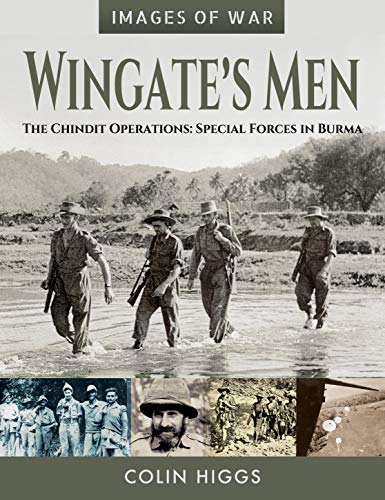
Synopsis
Possibly the most famous fighting formations of the Burma campaign during the Second World War were the Long Range Penetration Groups, more commonly known as the Chindits. Colonel Orde Wingate was given permission to attempt long-range operations deep within Japanese-held territory with the aim of sowing alarm and confusion amongst the enemy and disrupting Japanese plans for the invasion of India. For this, Wingate was given the Indian 77th Infantry Brigade. In February 1943 this force crossed into Burma on its first Chindit operation, codenamed Loincloth. The Chindits took the Japanese by surprise, putting one of the main railway lines out of order, but the Japanese responded quickly, interdicting supply drops to the Chindits who soon began to suffer severely from exhaustion and shortages of water and food. With three brigades chasing them, the Chindits headed back to India, being forced to break up into small groups to avoid capture. By the time the 77th Brigade crossed the border, it had lost a third of its strength. Despite the heavy losses, Wingate had shown that British troops could operate successfully against the Japanese in inhospitable terrain. Promoted to acting major general Wingate was granted permission to undertake another Chindit operation, but this time on a far greater scale. In Operation Thursday Wingate aimed to fly a force of 10,000 men, 1,000 mules, equipment and supplies into clearings in the heart of Burma behind enemy lines. The operation proved a considerable success, the Chindits causing mayhem amongst the Japanese forces. Wingate, though, did not live to see the end of Operation Thursday, as he was killed when the aircraft in which he was being transported to one of the Chindit bases crashed into the jungle. In this wonderful collection of photographs, drawn in large part from one man s photograph albums, we see the harsh conditions in which the Chindits had to operate, and the terrible physical state of many of the men who survived the jungles, the dry plains, and the ferocious Japanese enemy.
Les informations fournies dans la section « Synopsis » peuvent faire référence à une autre édition de ce titre.
À propos de l'auteur
COLIN HIGGS has more than twenty-five years experience in the broadcast and home entertainment industries and for much of that time has co-produced, written and researched aviation documentaries together with Bruce Vigar of Leading Edge TV. Colin s business, A Flying History, was created to make accessible the unique Peter Keating and John Stroud aviation photograph collections and Colin and Bruce's extensive archive of first-hand interviews with RAF veterans.
Les informations fournies dans la section « A propos du livre » peuvent faire référence à une autre édition de ce titre.
Résultats de recherche pour Wingate's Men: The Chindit Operations; Special...

Image d'archives
Wingate's Men: The Chindit Operations: Special Forces in Burma (Images of War)
Edité par
Frontline Books (edition ), 2019
ISBN 10 : 1526746670
ISBN 13 : 9781526746672
Ancien ou d'occasion
Paperback
Vendeur : BooksRun, Philadelphia, PA, Etats-Unis
Évaluation du vendeur 5 sur 5 étoiles

Paperback. Etat : Very Good. It's a well-cared-for item that has seen limited use. The item may show minor signs of wear. All the text is legible, with all pages included. It may have slight markings and/or highlighting. N° de réf. du vendeur 1526746670-11-1
Acheter D'occasion
EUR 11,52
Livraison gratuite
Expédition nationale : Etats-Unis
Expédition nationale : Etats-Unis
Quantité disponible : 1 disponible(s)
Image d'archives
Wingate's Men: The Chindit Operations: Special Forces in Burma (Images of War)
Edité par
Frontline Books, 2019
ISBN 10 : 1526746670
ISBN 13 : 9781526746672
Ancien ou d'occasion
Paperback
Vendeur : WorldofBooks, Goring-By-Sea, WS, Royaume-Uni
Évaluation du vendeur 5 sur 5 étoiles
Paperback. Etat : Very Good. The book has been read, but is in excellent condition. Pages are intact and not marred by notes or highlighting. The spine remains undamaged. N° de réf. du vendeur GOR010942434
Acheter D'occasion
EUR 11,35
Expédition à EUR 6,69
Expédition depuis Royaume-Uni vers Etats-Unis
Expédition depuis Royaume-Uni vers Etats-Unis
Quantité disponible : 3 disponible(s)
Image fournie par le vendeur
Wingate's Men (Paperback)
Edité par
Pen & Sword Books Ltd, Barnsley, 2019
ISBN 10 : 1526746670
ISBN 13 : 9781526746672
Neuf
Paperback
Vendeur : Grand Eagle Retail, Bensenville, IL, Etats-Unis
Évaluation du vendeur 5 sur 5 étoiles
Paperback. Etat : new. Paperback. Possibly the most famous fighting formations of the Burma campaign during the Second World War were the Long Range Penetration Groups, more commonly known as the Chindits. Colonel Orde Wingate was given permission to attempt long-range operations deep within Japanese-held territory with the aim of sowing alarm and confusion amongst the enemy and disrupting Japanese plans for the invasion of India. For this, Wingate was given the Indian 77th Infantry Brigade. In February 1943 this force crossed into Burma on its first Chindit operation, codenamed Loincloth. The Chindits took the Japanese by surprise, putting one of the main railway lines out of order, but the Japanese responded quickly, interdicting supply drops to the Chindits who soon began to suffer severely from exhaustion and shortages of water and food. With three brigades chasing them, the Chindits headed back to India, being forced to break up into small groups to avoid capture. By the time the 77th Brigade crossed the border, it had lost a third of its strength. Despite the heavy losses, Wingate had shown that British troops could operate successfully against the Japanese in inhospitable terrain. Promoted to acting major general Wingate was granted permission to undertake another Chindit operation, but this time on a far greater scale. In Operation Thursday Wingate aimed to fly a force of 10,000 men, 1,000 mules, equipment and supplies into clearings in the heart of Burma behind enemy lines. The operation proved a considerable success, the Chindits causing mayhem amongst the Japanese forces. Wingate, though, did not live to see the end of Operation Thursday, as he was killed when the aircraft in which he was being transported to one of the Chindit bases crashed into the jungle. In this wonderful collection of photographs, drawn in large part from one man s photograph albums, we see the harsh conditions in which the Chindits had to operate, and the terrible physical state of many of the men who survived the jungles, the dry plains, and the ferocious Japanese enemy. AUTHOR: Colin Higgs has more than twenty-five years experience in the broadcast and home entertainment industries and for much of that time has co-produced, written and researched aviation documentaries together with Bruce Vigar of Leading Edge TV. Colin s business, A Flying History, was created to make accessible the unique Peter Keating and John Stroud aviation photograph collections and Colin and Bruce's extensive archive of first-hand interviews with RAF veterans. 150 b/w images Explores the events of the two main Chindit missions - Operation Longcloth and Operation Thursday. Shipping may be from multiple locations in the US or from the UK, depending on stock availability. N° de réf. du vendeur 9781526746672
Acheter neuf
EUR 19,45
Livraison gratuite
Expédition nationale : Etats-Unis
Expédition nationale : Etats-Unis
Quantité disponible : 1 disponible(s)
Image d'archives
Wingate's Men
Vendeur : PBShop.store US, Wood Dale, IL, Etats-Unis
Évaluation du vendeur 5 sur 5 étoiles
PAP. Etat : New. New Book. Shipped from UK. Established seller since 2000. N° de réf. du vendeur GB-9781526746672
Acheter neuf
EUR 19,45
Livraison gratuite
Expédition nationale : Etats-Unis
Expédition nationale : Etats-Unis
Quantité disponible : 2 disponible(s)
Image fournie par le vendeur
Wingate's Men
Edité par
Pen and Sword Books Ltd, GB, 2019
ISBN 10 : 1526746670
ISBN 13 : 9781526746672
Neuf
Paperback
Vendeur : Rarewaves.com USA, London, LONDO, Royaume-Uni
Évaluation du vendeur 5 sur 5 étoiles
Paperback. Etat : New. Possibly the most famous fighting formations of the Burma campaign during the Second World War were the Long Range Penetration Groups, more commonly known as the Chindits. Colonel Orde Wingate was given permission to attempt long-range operations deep within Japanese-held territory with the aim of sowing alarm and confusion amongst the enemy and disrupting Japanese plans for the invasion of India. For this, Wingate was given the Indian 77th Infantry Brigade. In February 1943 this force crossed into Burma on its first Chindit operation, codenamed Loincloth.The Chindits took the Japanese by surprise, putting one of the main railway lines out of order, but the Japanese responded quickly, interdicting supply drops to the Chindits who soon began to suffer severely from exhaustion and shortages of water and food. With three brigades chasing them, the Chindits headed back to India, being forced to break up into small groups to avoid capture. By the time the 77th Brigade crossed the border, it had lost a third of its strength.Despite the heavy losses, Wingate had shown that British troops could operate successfully against the Japanese in inhospitable terrain. Promoted to acting major general Wingate was granted permission to undertake another Chindit operation, but this time on a far greater scale. In Operation Thursday Wingate aimed to fly a force of 10,000 men, 1,000 mules, equipment and supplies into clearings in the heart of Burma behind enemy lines. The operation proved a considerable success, the Chindits causing mayhem amongst the Japanese forces. Wingate, though, did not live to see the end of Operation Thursday, as he was killed when the aircraft in which he was being transported to one of the Chindit bases crashed into the jungle.In this wonderful collection of photographs, drawn in large part from one man's photograph albums, we see the harsh conditions in which the Chindits had to operate, and the terrible physical state of many of the men who survived the jungles, the dry plains, and the ferocious Japanese enemy. N° de réf. du vendeur LU-9781526746672
Acheter neuf
EUR 19,49
Livraison gratuite
Expédition depuis Royaume-Uni vers Etats-Unis
Expédition depuis Royaume-Uni vers Etats-Unis
Quantité disponible : 1 disponible(s)
Image d'archives
Wingate's Men: The Chindit Operations: Special Forces in Burma (Images of War)
Edité par
Frontline Books 2019-09-30, 2019
ISBN 10 : 1526746670
ISBN 13 : 9781526746672
Neuf
Paperback
Vendeur : Chiron Media, Wallingford, Royaume-Uni
Évaluation du vendeur 5 sur 5 étoiles
Paperback. Etat : New. Brand new book, sourced directly from publisher. Dispatch time is 24-48 hours from our warehouse. Book will be sent in robust, secure packaging to ensure it reaches you securely. N° de réf. du vendeur 6666-GRD-9781526746672
Acheter neuf
EUR 14,20
Expédition à EUR 5,96
Expédition depuis Royaume-Uni vers Etats-Unis
Expédition depuis Royaume-Uni vers Etats-Unis
Quantité disponible : 1 disponible(s)
Image fournie par le vendeur
Wingate's Men
Edité par
Pen and Sword Books Ltd, GB, 2019
ISBN 10 : 1526746670
ISBN 13 : 9781526746672
Neuf
Paperback
Vendeur : Rarewaves USA, HEBRON, KY, Etats-Unis
Évaluation du vendeur 5 sur 5 étoiles
Paperback. Etat : New. Possibly the most famous fighting formations of the Burma campaign during the Second World War were the Long Range Penetration Groups, more commonly known as the Chindits. Colonel Orde Wingate was given permission to attempt long-range operations deep within Japanese-held territory with the aim of sowing alarm and confusion amongst the enemy and disrupting Japanese plans for the invasion of India. For this, Wingate was given the Indian 77th Infantry Brigade. In February 1943 this force crossed into Burma on its first Chindit operation, codenamed Loincloth.The Chindits took the Japanese by surprise, putting one of the main railway lines out of order, but the Japanese responded quickly, interdicting supply drops to the Chindits who soon began to suffer severely from exhaustion and shortages of water and food. With three brigades chasing them, the Chindits headed back to India, being forced to break up into small groups to avoid capture. By the time the 77th Brigade crossed the border, it had lost a third of its strength.Despite the heavy losses, Wingate had shown that British troops could operate successfully against the Japanese in inhospitable terrain. Promoted to acting major general Wingate was granted permission to undertake another Chindit operation, but this time on a far greater scale. In Operation Thursday Wingate aimed to fly a force of 10,000 men, 1,000 mules, equipment and supplies into clearings in the heart of Burma behind enemy lines. The operation proved a considerable success, the Chindits causing mayhem amongst the Japanese forces. Wingate, though, did not live to see the end of Operation Thursday, as he was killed when the aircraft in which he was being transported to one of the Chindit bases crashed into the jungle.In this wonderful collection of photographs, drawn in large part from one man's photograph albums, we see the harsh conditions in which the Chindits had to operate, and the terrible physical state of many of the men who survived the jungles, the dry plains, and the ferocious Japanese enemy. N° de réf. du vendeur LU-9781526746672
Acheter neuf
EUR 22,47
Livraison gratuite
Expédition nationale : Etats-Unis
Expédition nationale : Etats-Unis
Quantité disponible : 8 disponible(s)
Image d'archives
Wingate's Men
Vendeur : PBShop.store UK, Fairford, GLOS, Royaume-Uni
Évaluation du vendeur 5 sur 5 étoiles
PAP. Etat : New. New Book. Shipped from UK. Established seller since 2000. N° de réf. du vendeur GB-9781526746672
Acheter neuf
EUR 17,89
Expédition à EUR 4,97
Expédition depuis Royaume-Uni vers Etats-Unis
Expédition depuis Royaume-Uni vers Etats-Unis
Quantité disponible : 1 disponible(s)
Image d'archives
Wingate?s Men: The Chindit Operations: Special Forces in Burma
Edité par
Pen & Sword Books Ltd, 2019
ISBN 10 : 1526746670
ISBN 13 : 9781526746672
Neuf
Couverture souple
Vendeur : Kennys Bookshop and Art Galleries Ltd., Galway, GY, Irlande
Évaluation du vendeur 5 sur 5 étoiles
Etat : New. 2019. Paperback. . . . . . N° de réf. du vendeur V9781526746672
Acheter neuf
EUR 18,80
Expédition à EUR 9,50
Expédition depuis Irlande vers Etats-Unis
Expédition depuis Irlande vers Etats-Unis
Quantité disponible : 1 disponible(s)
Image d'archives
Wingate's Men: The Chindit Operations; Special Forces in Burma
Vendeur : Revaluation Books, Exeter, Royaume-Uni
Évaluation du vendeur 5 sur 5 étoiles
Paperback. Etat : Brand New. 117 pages. 9.50x7.50x0.50 inches. In Stock. N° de réf. du vendeur __1526746670
Acheter neuf
EUR 17,59
Expédition à EUR 11,94
Expédition depuis Royaume-Uni vers Etats-Unis
Expédition depuis Royaume-Uni vers Etats-Unis
Quantité disponible : 1 disponible(s)