Synopsis
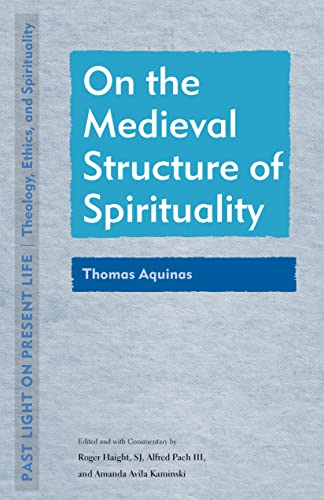
If Thomas Aquinas was born in 1225, as is commonly thought, then he died before reaching the age of fifty after producing the single most influential systematic theology of the Western Christian tradition. He did this with a formula: He internalized the thought of Aristotle as it was being introduced into western Europe and translated into Latin, and he in turn "translated" Christianity into this Aristotelian language. One can use the principles of hermeneutics outlined in Retrieving the Spiritual Teaching of Jesus of this series to analyze what was going on as Aquinas went through some of the basic doctrines of the Church in his Summa Theologiae. He laid out their contents by answering an exhaustive series of questions and responding to each of them in intricate detail. The model for each question and answer was drawn directly from the pattern of learning at the University of Paris. Although systematic and abstract, it also enabled an extensive conversation with the tradition of classical theologians and his own contemporaries. This may seem quite distant from spiritual life on the ground, but the method produced a clear understanding of the structure of spiritual life in terms of its goal and the means of attaining it. Aquinas's analysis of grace--how it enabled genuine Christian spirituality, empowered the virtues, and led to eternal life--constitutes a classic substructure of Western Christian spirituality that became all the more distinctive when Reformation spiritualities offered alternatives to it.
Les informations fournies dans la section « Synopsis » peuvent faire référence à une autre édition de ce titre.
À propos des auteurs
Roger Haight is emeritus Visiting Professor at Union Theological Seminary. The recipient of the Alumnus of the Year award from the Divinity School of the University of Chicago in 2006, he is a Past President of the Catholic Theological Society of America and a recipient of the John Courtney Murray award for achievement in theology.
Alfred Pach III is an Associate Professor of Medical Sciences and Global Health at the Hackensack Meridian School of Medicine. He has a Ph.D. from the University of Wisconsin in Madison and an MDiv in Psychology and Religion from Union Theological Seminary.
Amanda Avila Kaminski is an Assistant Professor of Theology at Texas Lutheran University, where she also serves as Director of the program in Social Innovation and Social Entrepreneurship. She has written extensively in the area of Christian spirituality.
Les informations fournies dans la section « A propos du livre » peuvent faire référence à une autre édition de ce titre.
Résultats de recherche pour On the Medieval Structure of Spirituality: Thomas Aquinas

Image d'archives
On the Medieval Structure of Spirituality: Thomas Aquinas (Past Light on Present Life: Theology, Ethics, and Spirituality)
Edité par
Fordham University Press, 2022
ISBN 10 : 1531502199
ISBN 13 : 9781531502195
Ancien ou d'occasion
paperback
Vendeur : Midtown Scholar Bookstore, Harrisburg, PA, Etats-Unis
Évaluation du vendeur 5 sur 5 étoiles

paperback. Etat : Very Good. Very Good paperback with light shelfwear - NICE! Standard-sized. N° de réf. du vendeur mon0000262196
Acheter D'occasion
EUR 3,37
Frais de port :
EUR 5,15
Vers Etats-Unis
Quantité disponible : 5 disponible(s)
Image fournie par le vendeur
On the Medieval Structure of Spirituality: Thomas Aquinas
Edité par
Fordham University Press, 2022
ISBN 10 : 1531502199
ISBN 13 : 9781531502195
Neuf
Couverture souple
Vendeur : GreatBookPrices, Columbia, MD, Etats-Unis
Évaluation du vendeur 5 sur 5 étoiles
Etat : New. N° de réf. du vendeur 44442222-n
Acheter neuf
EUR 11,26
Frais de port :
EUR 2,27
Vers Etats-Unis
Quantité disponible : Plus de 20 disponibles
Image fournie par le vendeur
On the Medieval Structure of Spirituality: Thomas Aquinas (Paperback or Softback)
Edité par
Fordham University Press 6/7/2022, 2022
ISBN 10 : 1531502199
ISBN 13 : 9781531502195
Neuf
Paperback or Softback
Vendeur : BargainBookStores, Grand Rapids, MI, Etats-Unis
Évaluation du vendeur 5 sur 5 étoiles
Paperback or Softback. Etat : New. On the Medieval Structure of Spirituality: Thomas Aquinas. Book. N° de réf. du vendeur BBS-9781531502195
Acheter neuf
EUR 13,61
Frais de port :
Gratuit
Vers Etats-Unis
Quantité disponible : 5 disponible(s)
Image d'archives
On the Medieval Structure of Spirituality Thomas Aquinas
Edité par
Fordham University Press, 2022
ISBN 10 : 1531502199
ISBN 13 : 9781531502195
Ancien ou d'occasion
Paperback
Vendeur : Michener & Rutledge Booksellers, Inc., Baldwin City, KS, Etats-Unis
Évaluation du vendeur 5 sur 5 étoiles
Paperback. Etat : As New. Text clean and tight; Past Light On Present Life: Theology, Ethics, And Spirituality; 8vo 8" - 9" tall; 120 pages. N° de réf. du vendeur 247523
Acheter D'occasion
EUR 8,85
Frais de port :
EUR 5,15
Vers Etats-Unis
Quantité disponible : 1 disponible(s)
Image fournie par le vendeur
On the Medieval Structure of Spirituality: Thomas Aquinas
Edité par
Fordham University Press, 2022
ISBN 10 : 1531502199
ISBN 13 : 9781531502195
Ancien ou d'occasion
Couverture souple
Vendeur : GreatBookPrices, Columbia, MD, Etats-Unis
Évaluation du vendeur 5 sur 5 étoiles
Etat : As New. Unread book in perfect condition. N° de réf. du vendeur 44442222
Acheter D'occasion
EUR 11,81
Frais de port :
EUR 2,27
Vers Etats-Unis
Quantité disponible : Plus de 20 disponibles
Image d'archives
On the Medieval Structure of Spirituality: Thomas Aquinas (Past Light on Present Life: Theology, Ethics, and Spirituality)
Edité par
Fordham University Press, 2022
ISBN 10 : 1531502199
ISBN 13 : 9781531502195
Neuf
Couverture souple
Vendeur : Lucky's Textbooks, Dallas, TX, Etats-Unis
Évaluation du vendeur 5 sur 5 étoiles
Etat : New. N° de réf. du vendeur ABLIING23Mar2716030341282
Acheter neuf
EUR 11,62
Frais de port :
EUR 3,43
Vers Etats-Unis
Quantité disponible : Plus de 20 disponibles
Image fournie par le vendeur
On the Medieval Structure of Spirituality
Edité par
Fordham University Press, US, 2022
ISBN 10 : 1531502199
ISBN 13 : 9781531502195
Neuf
Paperback
Vendeur : Rarewaves USA, OSWEGO, IL, Etats-Unis
Évaluation du vendeur 5 sur 5 étoiles
Paperback. Etat : New. If Thomas Aquinas was born in 1225, as is commonly thought, then he died before reaching the age of fifty after producing the single most influential systematic theology of the Western Christian tradition. He did this with a formula: He internalized the thought of Aristotle as it was being introduced into western Europe and translated into Latin, and he in turn "translated" Christianity into this Aristotelian language. One can use the principles of hermeneutics outlined in Retrieving the Spiritual Teaching of Jesus of this series to analyze what was going on as Aquinas went through some of the basic doctrines of the Church in his Summa Theologiae. He laid out their contents by answering an exhaustive series of questions and responding to each of them in intricate detail. The model for each question and answer was drawn directly from the pattern of learning at the University of Paris. Although systematic and abstract, it also enabled an extensive conversation with the tradition of classical theologians and his own contemporaries. This may seem quite distant from spiritual life on the ground, but the method produced a clear understanding of the structure of spiritual life in terms of its goal and the means of attaining it. Aquinas's analysis of grace-how it enabled genuine Christian spirituality, empowered the virtues, and led to eternal life-constitutes a classic substructure of Western Christian spirituality that became all the more distinctive when Reformation spiritualities offered alternatives to it. N° de réf. du vendeur LU-9781531502195
Acheter neuf
EUR 15,28
Frais de port :
Gratuit
Vers Etats-Unis
Quantité disponible : Plus de 20 disponibles
Image d'archives
On the Medieval Structure of Spirituality
Vendeur : PBShop.store UK, Fairford, GLOS, Royaume-Uni
Évaluation du vendeur 5 sur 5 étoiles
PAP. Etat : New. New Book. Shipped from UK. Established seller since 2000. N° de réf. du vendeur FW-9781531502195
Acheter neuf
EUR 11,59
Frais de port :
EUR 3,77
De Royaume-Uni vers Etats-Unis
Quantité disponible : 15 disponible(s)
Image d'archives
On the Medieval Structure of Spirituality: Thomas Aquinas (eng)
Edité par
Fordham University Press, 2022
ISBN 10 : 1531502199
ISBN 13 : 9781531502195
Neuf
Couverture souple
Vendeur : Brook Bookstore On Demand, Napoli, NA, Italie
Évaluation du vendeur 4 sur 5 étoiles

Etat : new. N° de réf. du vendeur LP0E2YS0C7
Acheter neuf
EUR 14,70
Frais de port :
EUR 4
De Italie vers Etats-Unis
Quantité disponible : Plus de 20 disponibles
Image fournie par le vendeur
On the Medieval Structure of Spirituality
Edité par
Fordham University Press, US, 2022
ISBN 10 : 1531502199
ISBN 13 : 9781531502195
Neuf
Paperback
Vendeur : Rarewaves.com USA, London, LONDO, Royaume-Uni
Évaluation du vendeur 5 sur 5 étoiles
Paperback. Etat : New. If Thomas Aquinas was born in 1225, as is commonly thought, then he died before reaching the age of fifty after producing the single most influential systematic theology of the Western Christian tradition. He did this with a formula: He internalized the thought of Aristotle as it was being introduced into western Europe and translated into Latin, and he in turn "translated" Christianity into this Aristotelian language. One can use the principles of hermeneutics outlined in Retrieving the Spiritual Teaching of Jesus of this series to analyze what was going on as Aquinas went through some of the basic doctrines of the Church in his Summa Theologiae. He laid out their contents by answering an exhaustive series of questions and responding to each of them in intricate detail. The model for each question and answer was drawn directly from the pattern of learning at the University of Paris. Although systematic and abstract, it also enabled an extensive conversation with the tradition of classical theologians and his own contemporaries. This may seem quite distant from spiritual life on the ground, but the method produced a clear understanding of the structure of spiritual life in terms of its goal and the means of attaining it. Aquinas's analysis of grace-how it enabled genuine Christian spirituality, empowered the virtues, and led to eternal life-constitutes a classic substructure of Western Christian spirituality that became all the more distinctive when Reformation spiritualities offered alternatives to it. N° de réf. du vendeur LU-9781531502195
Acheter neuf
EUR 19,10
Frais de port :
Gratuit
De Royaume-Uni vers Etats-Unis
Quantité disponible : 2 disponible(s)