
Articles liés à Primitive Man as Philosopher
Synopsis
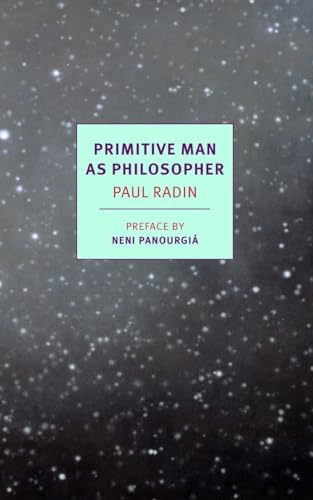
Anthropology is a science whose most significant discoveries have come when it has taken its bearings from literature, and what makes Paul Radin’s Primitive Man as Philosopher a seminal piece of anthropological inquiry is that it is also a book of enduring wonder. Writing in the 1920s, when anthropology was still young, Radin set out to show that “primitive” cultures are as intellectually sophisticated and venturesome as any of their “civilized” counterparts. The basic questions about the structure of the natural world, the nature of right and wrong, and the meaning of life and death, as well as basic methods of considering the truth or falsehood of the answers those questions give rise to, are, Radin argues, recognizably consistent across the whole range of human societies. He rejects both the romantic myth of the noble savage and the rationalist dismissal of the primitive mind as essentially undeveloped, averring that the anthropologist and the anthropologist’s subject meet on the same philosophical ground, and only when that is acknowledged can anthropology begin in earnest. The argument is clearly and forcibly made in pages that also contain an extraordinary collection of poems, proverbs, myths, and tales from a host of different cultures, making Primitive Man as Philosopher not only a lasting contribution to the discipline of anthropology but a unique, rich, and fascinating anthology, one that both illuminates and enlarges our imagination of the human.
Les informations fournies dans la section « Synopsis » peuvent faire référence à une autre édition de ce titre.
À propos de l'auteur
Paul Radin (1883–1959) was born in Łódź in what is now Poland but immigrated with his family to Elmira, New York, in 1884. As a doctoral student in anthropology at Columbia University, he studied under Franz Boas, who had developed many of the modern methods of the discipline. While at Columbia, Radin began doing fieldwork with the Ojibwa and, in particular, the Winnebago Indians of Wisconsin, an ethnographic study that would continue for the rest of his life. He produced a series of landmark books and monographs documenting the tribe’s culture and customs, including The Winnebago Tribe (1923), Crashing Thunder: The Autobiography of an American Indian (1926), The Road of Life and Death: A Ritual Drama of the American Indians (1945), and The Trickster: A Study in American Indian Mythology (1956). Dedicated to studying and preserving the oral traditions and philosophies of both primitive and modern societies across the United States and the world, Radin pursued his research at more than a dozen universities and institutions, including the University of California at Berkeley, Black Mountain College, the C.G. Jung Institute in Switzerland, and Brandeis University, his final appointment. In the 1930s, he organized an ambitious ethnographic project with the Works Progress Administration to document the folk narratives from dozens of minority communities in the California Bay Area, while his later work focused on the languages of various Mexican-Indian communities. His books Primitive Religion: Its Nature and Origin (1937), The World of Primitive Man (1953), and Primitive Man as Philosopher (1927), collections of interviews that he conducted with members of dozens of “primitive” cultures, are classics in the field of anthropology.
John Dewey (1859–1952) was one of the leading American thinkers of the twentieth century. A psychologist and educational philosopher, he was one of the founders of the New School for Social Research. He is the author of more than two dozen books, including Democracy and Education (1916), Art as Experience (1934), and Freedom and Culture (1939).
Neni Panourgiá is a writer, translator, and professor of anthropology at the New School for Social Research. She is the author, most recently, of Dangerous Citizens: The Greek Left and the Terror of the State. She lives in New York City.
Les informations fournies dans la section « A propos du livre » peuvent faire référence à une autre édition de ce titre.
Résultats de recherche pour Primitive Man as Philosopher

Image d'archives
Primitive Man as Philosopher (NYRB Classics)
Edité par
NYRB Classics, 2017
ISBN 10 : 1590177681
ISBN 13 : 9781590177686
Ancien ou d'occasion
Paperback
Vendeur : Half Price Books Inc., Dallas, TX, Etats-Unis
Évaluation du vendeur 5 sur 5 étoiles

Paperback. Etat : Very Good. Connecting readers with great books since 1972! Used books may not include companion materials, and may have some shelf wear or limited writing. We ship orders daily and Customer Service is our top priority! N° de réf. du vendeur S_483208600
Acheter D'occasion
EUR 7,72
Expédition à EUR 3,35
Expédition nationale : Etats-Unis
Expédition nationale : Etats-Unis
Quantité disponible : 1 disponible(s)
Image d'archives
Primitive Man as Philosopher
Edité par
NYRB Classics, 2017
ISBN 10 : 1590177681
ISBN 13 : 9781590177686
Ancien ou d'occasion
paperback
Vendeur : Magers and Quinn Booksellers, Minneapolis, MN, Etats-Unis
Évaluation du vendeur 5 sur 5 étoiles
paperback. Etat : Very Good. May have light to moderate shelf wear and/or a remainder mark. Complete. Clean pages. N° de réf. du vendeur 1047791
Acheter D'occasion
EUR 8,19
Expédition à EUR 3,56
Expédition nationale : Etats-Unis
Expédition nationale : Etats-Unis
Quantité disponible : 1 disponible(s)
Image fournie par le vendeur
Primitive Man as Philosopher (NYRB Classics)
Edité par
NYRB Classics, 2017
ISBN 10 : 1590177681
ISBN 13 : 9781590177686
Ancien ou d'occasion
Couverture souple
Vendeur : Big River Books, Powder Springs, GA, Etats-Unis
Évaluation du vendeur 5 sur 5 étoiles
Etat : good. This book is in good condition. The cover has minor creases or bends. The binding is tight and pages are intact. Some pages may have writing or highlighting. N° de réf. du vendeur BRV.1590177681.G
Acheter D'occasion
EUR 11,39
Expédition à EUR 3,56
Expédition nationale : Etats-Unis
Expédition nationale : Etats-Unis
Quantité disponible : 1 disponible(s)
Image fournie par le vendeur
Primitive Man as Philosopher (NYRB Classics)
Edité par
NYRB Classics, 2017
ISBN 10 : 1590177681
ISBN 13 : 9781590177686
Ancien ou d'occasion
Soft cover
Vendeur : EdmondDantes Bookseller, Minneapolis, MN, Etats-Unis
Évaluation du vendeur 5 sur 5 étoiles
Soft cover. Etat : Very Good. Trade PB with only minor reading wear; book is clean, unmarked. In stock. Ships from MN, USA. N° de réf. du vendeur 008268
Acheter D'occasion
EUR 11,47
Expédition à EUR 4,01
Expédition nationale : Etats-Unis
Expédition nationale : Etats-Unis
Quantité disponible : 1 disponible(s)
Image d'archives
Primitive Man as Philosopher
Vendeur : Powell's Bookstores Chicago, ABAA, Chicago, IL, Etats-Unis
Évaluation du vendeur 5 sur 5 étoiles
Paperback. Etat : Very Good. Minimal shelf wear, clean internals. May have remainder mark. N° de réf. du vendeur 2047454
Acheter D'occasion
EUR 11,95
Expédition à EUR 4,46
Expédition nationale : Etats-Unis
Expédition nationale : Etats-Unis
Quantité disponible : 15 disponible(s)
Image d'archives
Primitive Man as Philosopher (NYRB Classics)
Edité par
NYRB Classics, 2017
ISBN 10 : 1590177681
ISBN 13 : 9781590177686
Ancien ou d'occasion
paperback
Vendeur : suffolkbooks, Center moriches, NY, Etats-Unis
Évaluation du vendeur 5 sur 5 étoiles
paperback. Etat : Very Good. Fast Shipping - Safe and Secure 7 days a week! N° de réf. du vendeur 3TWOWA002RXL
Acheter D'occasion
EUR 16,55
Expédition à EUR 3,56
Expédition nationale : Etats-Unis
Expédition nationale : Etats-Unis
Quantité disponible : 1 disponible(s)
Image d'archives
Primitive Man as Philosopher (NYRB Classics)
Edité par
NYRB Classics February 2017, 2017
ISBN 10 : 1590177681
ISBN 13 : 9781590177686
Neuf
Paper Back
Vendeur : Eighth Day Books, LLC, Wichita, KS, Etats-Unis
Évaluation du vendeur 4 sur 5 étoiles

Paper Back. Etat : New. N° de réf. du vendeur 164416
Acheter neuf
EUR 18,34
Expédition à EUR 5,31
Expédition nationale : Etats-Unis
Expédition nationale : Etats-Unis
Quantité disponible : 1 disponible(s)
Image d'archives
Primitive Man As Philosopher (Nyrb Classics)
Edité par
New York Review Books, United States, New York, 2017
ISBN 10 : 1590177681
ISBN 13 : 9781590177686
Ancien ou d'occasion
Paperback
Vendeur : WorldofBooks, Goring-By-Sea, WS, Royaume-Uni
Évaluation du vendeur 5 sur 5 étoiles
Paperback. Etat : Very Good. The book has been read, but is in excellent condition. Pages are intact and not marred by notes or highlighting. The spine remains undamaged. N° de réf. du vendeur GOR008775495
Acheter D'occasion
EUR 18,62
Expédition à EUR 6,62
Expédition depuis Royaume-Uni vers Etats-Unis
Expédition depuis Royaume-Uni vers Etats-Unis
Quantité disponible : 1 disponible(s)
Image d'archives
Primitive Man As Philosopher
Edité par
New York Review of Books, 2017
ISBN 10 : 1590177681
ISBN 13 : 9781590177686
Neuf
Paperback
Vendeur : Revaluation Books, Exeter, Royaume-Uni
Évaluation du vendeur 5 sur 5 étoiles
Paperback. Etat : Brand New. main edition. 496 pages. 8.00x5.00x1.00 inches. In Stock. N° de réf. du vendeur zk1590177681
Acheter neuf
EUR 33,27
Expédition à EUR 14,77
Expédition depuis Royaume-Uni vers Etats-Unis
Expédition depuis Royaume-Uni vers Etats-Unis
Quantité disponible : 1 disponible(s)