
Articles liés à The Shipwrecked Mind: On Political Reaction
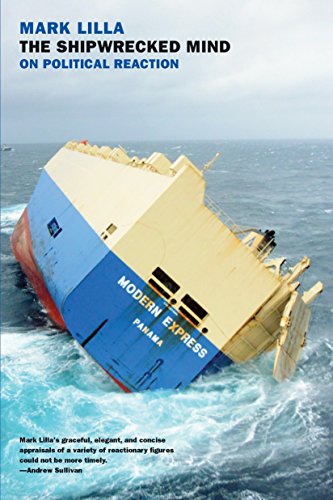
Synopsis
We don’t understand the reactionary mind. As a result, argues Mark Lilla in this timely book, the ideas and passions that shape today’s political dramas are unintelligible to us.
The reactionary is anything but a conservative. He is as radical and modern a figure as the revolutionary, someone shipwrecked in the rapidly changing present, and suffering from nostalgia for an idealized past and an apocalyptic fear that history is rushing toward catastrophe. And like the revolutionary his political engagements are motivated by highly developed ideas.
Lilla begins with three twentieth-century philosophers—Franz Rosenzweig, Eric Voegelin, and Leo Strauss—who attributed the problems of modern society to a break in the history of ideas and promoted a return to earlier modes of thought. He then examines the enduring power of grand historical narratives of betrayal to shape political outlooks since the French Revolution, and shows how these narratives are employed in the writings of Europe’s right-wing cultural pessimists and Maoist neocommunists, American theoconservatives fantasizing about the harmony of medieval Catholic society and radical Islamists seeking to restore a vanished Muslim caliphate.
The revolutionary spirit that inspired political movements across the world for two centuries may have died out. But the spirit of reaction that rose to meet it has survived and is proving just as formidable a historical force. We live in an age when the tragicomic nostalgia of Don Quixote for a lost golden age has been transformed into a potent and sometimes deadly weapon. Mark Lilla helps us to understand why.
Les informations fournies dans la section « Synopsis » peuvent faire référence à une autre édition de ce titre.
À propos de l'auteur
Mark Lilla is Professor of Humanities at Columbia. With New York Review Books he has published The Shipwrecked Mind: On Political Reaction (2016), The Reckless Mind: Intellectuals in Politics (2nd. ed., 2016), and, with Robert Silvers and Ronald Dworkin, The Legacy of Isaiah Berlin (2001). His other books include G.B. Vico: The Making of an Anti-Modern (1994), The Stillborn God: Religion, Politics, and the Modern West (2007), and, most recently, The Once and Future Liberal: On Political Reaction (2017). He was the 2015 Overseas Press Club of America winner of the Best Commentary on international News in Any Medium for his New York Review series “On France.” Visit marklilla.com.
Les informations fournies dans la section « A propos du livre » peuvent faire référence à une autre édition de ce titre.
Résultats de recherche pour The Shipwrecked Mind: On Political Reaction

Image d'archives
The Shipwrecked Mind: On Polit
Edité par
New York Review Books, 2016
ISBN 10 : 1590179021
ISBN 13 : 9781590179024
Ancien ou d'occasion
Couverture souple
Vendeur : World of Books (was SecondSale), Montgomery, IL, Etats-Unis
Évaluation du vendeur 5 sur 5 étoiles

Etat : Acceptable. Item in acceptable condition! Textbooks may not include supplemental items i.e. CDs, access codes etc. N° de réf. du vendeur 00102383205
Acheter D'occasion
EUR 3,68
Livraison gratuite
Expédition nationale : Etats-Unis
Expédition nationale : Etats-Unis
Quantité disponible : 1 disponible(s)
Image d'archives
The Shipwrecked Mind: On Political Reaction
Edité par
New York Review Books, 2016
ISBN 10 : 1590179021
ISBN 13 : 9781590179024
Ancien ou d'occasion
Paperback
Vendeur : World of Books (was SecondSale), Montgomery, IL, Etats-Unis
Évaluation du vendeur 5 sur 5 étoiles
Paperback. Etat : Very Good. We don't understand the reactionary mind. As a result, argues Mark Lilla in this timely book, the ideas and passions that shape today's political dramas are unintelligible to us. The reactionary is anything but a conservative. He is as radical and modern a figure as the revolutionary, someone shipwrecked in the rapidly changing present, and suffering from nostalgia for an idealized past and an apocalyptic fear that history is rushing toward catastrophe. And like the revolutionary his political engagements are motivated by highly developed ideas. Lilla begins with three twentieth-century philosophers-Franz Rosenzweig, Eric Voegelin, and Leo Strauss-who attributed the problems of modern society to a break in the history of ideas and promoted a return to earlier modes of thought. He then examines the enduring power of grand historical narratives of betrayal to shape political outlooks since the French Revolution, and shows how these narratives are employed in the writings of Europe's right-wing cultural pessimists and Maoist neocommunists, American theoconservatives fantasizing about the harmony of medieval Catholic society and radical Islamists seeking to restore a vanished Muslim caliphate. The revolutionary spirit that inspired political movements across the world for two centuries may have died out. But the spirit of reaction that rose to meet it has survived and is proving just as formidable a historical force. We live in an age when the tragicomic nostalgia of Don Quixote for a lost golden age has been transformed into a potent and sometimes deadly weapon. Mark Lilla helps us to understand why. N° de réf. du vendeur 00109051685
Acheter D'occasion
EUR 3,68
Livraison gratuite
Expédition nationale : Etats-Unis
Expédition nationale : Etats-Unis
Quantité disponible : 2 disponible(s)
Image d'archives
The Shipwrecked Mind: On Political Reaction
Edité par
New York Review Books, 2016
ISBN 10 : 1590179021
ISBN 13 : 9781590179024
Ancien ou d'occasion
Paperback
Vendeur : World of Books (was SecondSale), Montgomery, IL, Etats-Unis
Évaluation du vendeur 5 sur 5 étoiles
Paperback. Etat : Good. We don't understand the reactionary mind. As a result, argues Mark Lilla in this timely book, the ideas and passions that shape today's political dramas are unintelligible to us. The reactionary is anything but a conservative. He is as radical and modern a figure as the revolutionary, someone shipwrecked in the rapidly changing present, and suffering from nostalgia for an idealized past and an apocalyptic fear that history is rushing toward catastrophe. And like the revolutionary his political engagements are motivated by highly developed ideas. Lilla begins with three twentieth-century philosophers-Franz Rosenzweig, Eric Voegelin, and Leo Strauss-who attributed the problems of modern society to a break in the history of ideas and promoted a return to earlier modes of thought. He then examines the enduring power of grand historical narratives of betrayal to shape political outlooks since the French Revolution, and shows how these narratives are employed in the writings of Europe's right-wing cultural pessimists and Maoist neocommunists, American theoconservatives fantasizing about the harmony of medieval Catholic society and radical Islamists seeking to restore a vanished Muslim caliphate. The revolutionary spirit that inspired political movements across the world for two centuries may have died out. But the spirit of reaction that rose to meet it has survived and is proving just as formidable a historical force. We live in an age when the tragicomic nostalgia of Don Quixote for a lost golden age has been transformed into a potent and sometimes deadly weapon. Mark Lilla helps us to understand why. N° de réf. du vendeur 00108470053
Acheter D'occasion
EUR 3,68
Livraison gratuite
Expédition nationale : Etats-Unis
Expédition nationale : Etats-Unis
Quantité disponible : 4 disponible(s)
Image d'archives
The Shipwrecked Mind: On Political Reaction
Edité par
New York Review Books, 2016
ISBN 10 : 1590179021
ISBN 13 : 9781590179024
Ancien ou d'occasion
paperback
Vendeur : Your Online Bookstore, Houston, TX, Etats-Unis
Évaluation du vendeur 5 sur 5 étoiles
paperback. Etat : Fair. N° de réf. du vendeur 1590179021-4-37297124
Acheter D'occasion
EUR 3,69
Livraison gratuite
Expédition nationale : Etats-Unis
Expédition nationale : Etats-Unis
Quantité disponible : 1 disponible(s)
Image fournie par le vendeur
The Shipwrecked Mind: On Political Reaction
Edité par
New York Review Books, 2016
ISBN 10 : 1590179021
ISBN 13 : 9781590179024
Ancien ou d'occasion
Couverture souple
Vendeur : Greenworld Books, Arlington, TX, Etats-Unis
Évaluation du vendeur 5 sur 5 étoiles
Etat : good. Fast Free Shipping â" Good condition. It may show normal signs of use, such as light writing, highlighting, or library markings, but all pages are intact and the book is fully readable. A solid, complete copy that's ready to enjoy. N° de réf. du vendeur GWV.1590179021.G
Acheter D'occasion
EUR 4,62
Livraison gratuite
Expédition nationale : Etats-Unis
Expédition nationale : Etats-Unis
Quantité disponible : 1 disponible(s)
Image d'archives
The Shipwrecked Mind: On Political Reaction
Edité par
New York Review Books, 2016
ISBN 10 : 1590179021
ISBN 13 : 9781590179024
Ancien ou d'occasion
Paperback
Vendeur : World of Books Inc, Montgomery, IL, Etats-Unis
Évaluation du vendeur 4 sur 5 étoiles

Paperback. Etat : Very Good. We don't understand the reactionary mind. As a result, argues Mark Lilla in this timely book, the ideas and passions that shape today's political dramas are unintelligible to us. The reactionary is anything but a conservative. He is as radical and modern a figure as the revolutionary, someone shipwrecked in the rapidly changing present, and suffering from nostalgia for an idealized past and an apocalyptic fear that history is rushing toward catastrophe. And like the revolutionary his political engagements are motivated by highly developed ideas. Lilla begins with three twentieth-century philosophers-Franz Rosenzweig, Eric Voegelin, and Leo Strauss-who attributed the problems of modern society to a break in the history of ideas and promoted a return to earlier modes of thought. He then examines the enduring power of grand historical narratives of betrayal to shape political outlooks since the French Revolution, and shows how these narratives are employed in the writings of Europe's right-wing cultural pessimists and Maoist neocommunists, American theoconservatives fantasizing about the harmony of medieval Catholic society and radical Islamists seeking to restore a vanished Muslim caliphate. The revolutionary spirit that inspired political movements across the world for two centuries may have died out. But the spirit of reaction that rose to meet it has survived and is proving just as formidable a historical force. We live in an age when the tragicomic nostalgia of Don Quixote for a lost golden age has been transformed into a potent and sometimes deadly weapon. Mark Lilla helps us to understand why. N° de réf. du vendeur CIN1590179021VG
Acheter D'occasion
EUR 5,50
Livraison gratuite
Expédition nationale : Etats-Unis
Expédition nationale : Etats-Unis
Quantité disponible : 2 disponible(s)
Image d'archives
The Shipwrecked Mind: On Political Reaction
Edité par
New York Review Books, 2016
ISBN 10 : 1590179021
ISBN 13 : 9781590179024
Ancien ou d'occasion
Paperback
Vendeur : World of Books Inc, Montgomery, IL, Etats-Unis
Évaluation du vendeur 4 sur 5 étoiles
Paperback. Etat : Fair. We don't understand the reactionary mind. As a result, argues Mark Lilla in this timely book, the ideas and passions that shape today's political dramas are unintelligible to us. The reactionary is anything but a conservative. He is as radical and modern a figure as the revolutionary, someone shipwrecked in the rapidly changing present, and suffering from nostalgia for an idealized past and an apocalyptic fear that history is rushing toward catastrophe. And like the revolutionary his political engagements are motivated by highly developed ideas. Lilla begins with three twentieth-century philosophers-Franz Rosenzweig, Eric Voegelin, and Leo Strauss-who attributed the problems of modern society to a break in the history of ideas and promoted a return to earlier modes of thought. He then examines the enduring power of grand historical narratives of betrayal to shape political outlooks since the French Revolution, and shows how these narratives are employed in the writings of Europe's right-wing cultural pessimists and Maoist neocommunists, American theoconservatives fantasizing about the harmony of medieval Catholic society and radical Islamists seeking to restore a vanished Muslim caliphate. The revolutionary spirit that inspired political movements across the world for two centuries may have died out. But the spirit of reaction that rose to meet it has survived and is proving just as formidable a historical force. We live in an age when the tragicomic nostalgia of Don Quixote for a lost golden age has been transformed into a potent and sometimes deadly weapon. Mark Lilla helps us to understand why. N° de réf. du vendeur CIN1590179021A
Acheter D'occasion
EUR 5,50
Livraison gratuite
Expédition nationale : Etats-Unis
Expédition nationale : Etats-Unis
Quantité disponible : 1 disponible(s)
Image d'archives
The Shipwrecked Mind : On Political Reaction
Edité par
New York Review of Books, Incorporated, The, 2016
ISBN 10 : 1590179021
ISBN 13 : 9781590179024
Ancien ou d'occasion
Couverture souple
Vendeur : Better World Books, Mishawaka, IN, Etats-Unis
Évaluation du vendeur 5 sur 5 étoiles
Etat : Good. Former library copy. Pages intact with minimal writing/highlighting. The binding may be loose and creased. Dust jackets/supplements are not included. Includes library markings. Stock photo provided. Product includes identifying sticker. Better World Books: Buy Books. Do Good. N° de réf. du vendeur 17292425-6
Acheter D'occasion
EUR 6,12
Livraison gratuite
Expédition nationale : Etats-Unis
Expédition nationale : Etats-Unis
Quantité disponible : 1 disponible(s)
Image d'archives
The Shipwrecked Mind: On Political Reaction
Edité par
New York Review Books, 2016
ISBN 10 : 1590179021
ISBN 13 : 9781590179024
Ancien ou d'occasion
Paperback
Vendeur : HPB-Emerald, Dallas, TX, Etats-Unis
Évaluation du vendeur 5 sur 5 étoiles
Paperback. Etat : Very Good. Connecting readers with great books since 1972! Used books may not include companion materials, and may have some shelf wear or limited writing. We ship orders daily and Customer Service is our top priority! N° de réf. du vendeur S_461946282
Acheter D'occasion
EUR 3,64
Expédition à EUR 3,31
Expédition nationale : Etats-Unis
Expédition nationale : Etats-Unis
Quantité disponible : 1 disponible(s)
Image d'archives
The Shipwrecked Mind: On Political Reaction
Edité par
New York Review Books, 2016
ISBN 10 : 1590179021
ISBN 13 : 9781590179024
Ancien ou d'occasion
Paperback
Vendeur : HPB-Diamond, Dallas, TX, Etats-Unis
Évaluation du vendeur 5 sur 5 étoiles
Paperback. Etat : Very Good. Connecting readers with great books since 1972! Used books may not include companion materials, and may have some shelf wear or limited writing. We ship orders daily and Customer Service is our top priority! N° de réf. du vendeur S_397760697
Acheter D'occasion
EUR 3,64
Expédition à EUR 3,31
Expédition nationale : Etats-Unis
Expédition nationale : Etats-Unis
Quantité disponible : 1 disponible(s)