
Articles liés à Poetics
Synopsis
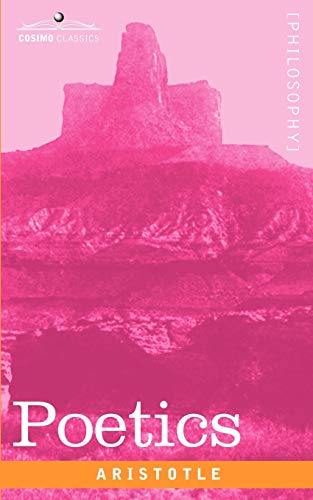
The writings of Greek philosopher ARISTOTLE (384BC-322BC)--student of Plato, teacher of Alexander the Great--are among the most influential on Western thought, and indeed upon Western civilization itself. From theology and logic to politics and even biology, there is no area of human knowledge that has not been touched by his thinking. Poetics--one of Aristotle's greatest works--is the philosopher's grand and insightful essay on art and its purposes. Why must a story have a beginning, a middle, and an end? How can we define tragedy, and what is the artistic purpose of it? Is there one "ideal" kind of drama? What is the nature of poetry? How consciously should poets and playwrights construct their work? All these questions, and others, are discussed and debated in this, perhaps the single most significant text in Western critical tradition. Writers, actors, students of literature, and armchair philosophers will find it a challenging--and rewarding--read.
Les informations fournies dans la section « Synopsis » peuvent faire référence à une autre édition de ce titre.
Biographie de l'auteur
Aristotle (384 BC – 322 BC) was a Greek philosopher and polymath, a student of Plato and teacher of Alexander the Great. His writings cover many subjects, including physics, metaphysics, poetry, theater, music, logic, rhetoric, linguistics, politics, government, ethics, biology, and zoology. Together with Plato and Socrates (Plato's teacher), Aristotle is one of the most important founding figures in Western philosophy. Aristotle's writings were the first to create a comprehensive system of Western philosophy, encompassing morality, aesthetics, logic, science, politics, and metaphysics.
Présentation de l'éditeur
Poetics
ARISTOTLE (384 BC - 322 BC)
Aristotle’s Poetics from the 4th century B.C. aims to give a short study of storytelling. It discusses things like unity of plot, reversal of situation, and character in the context of Greek tragedy, comedy and epic poetry. But it still applies today. It is especially popular with screenwriters as seen in many script gurus’ how-to books.
Les informations fournies dans la section « A propos du livre » peuvent faire référence à une autre édition de ce titre.
Résultats de recherche pour Poetics

Image d'archives
Poetics
Edité par
Cosimo Classics, 2008
ISBN 10 : 1605203556
ISBN 13 : 9781605203553
Ancien ou d'occasion
paperback
Vendeur : HPB-Movies, Dallas, TX, Etats-Unis
Évaluation du vendeur 4 sur 5 étoiles

paperback. Etat : Very Good. Connecting readers with great books since 1972! Used books may not include companion materials, and may have some shelf wear or limited writing. We ship orders daily and Customer Service is our top priority! N° de réf. du vendeur S_451355971
Acheter D'occasion
EUR 4,57
Expédition à EUR 3,35
Expédition nationale : Etats-Unis
Expédition nationale : Etats-Unis
Quantité disponible : 1 disponible(s)
Image d'archives
Poetics
Edité par
Cosimo Classics, 2008
ISBN 10 : 1605203556
ISBN 13 : 9781605203553
Ancien ou d'occasion
Paperback
Vendeur : Half Price Books Inc., Dallas, TX, Etats-Unis
Évaluation du vendeur 5 sur 5 étoiles

Paperback. Etat : Very Good. Connecting readers with great books since 1972! Used books may not include companion materials, and may have some shelf wear or limited writing. We ship orders daily and Customer Service is our top priority! N° de réf. du vendeur S_472039387
Acheter D'occasion
EUR 4,57
Expédition à EUR 3,35
Expédition nationale : Etats-Unis
Expédition nationale : Etats-Unis
Quantité disponible : 1 disponible(s)
Image d'archives
Poetics
Edité par
Cosimo Classics, 2008
ISBN 10 : 1605203556
ISBN 13 : 9781605203553
Ancien ou d'occasion
Paperback
Vendeur : ThriftBooks-Atlanta, AUSTELL, GA, Etats-Unis
Évaluation du vendeur 5 sur 5 étoiles
Paperback. Etat : Very Good. No Jacket. May have limited writing in cover pages. Pages are unmarked. ~ ThriftBooks: Read More, Spend Less. N° de réf. du vendeur G1605203556I4N00
Acheter D'occasion
EUR 8,25
Livraison gratuite
Expédition nationale : Etats-Unis
Expédition nationale : Etats-Unis
Quantité disponible : 1 disponible(s)
Image d'archives
Poetics
Edité par
Cosimo Classics, 2008
ISBN 10 : 1605203556
ISBN 13 : 9781605203553
Ancien ou d'occasion
Paperback
Vendeur : ThriftBooks-Dallas, Dallas, TX, Etats-Unis
Évaluation du vendeur 5 sur 5 étoiles
Paperback. Etat : Fair. No Jacket. Readable copy. Pages may have considerable notes/highlighting. ~ ThriftBooks: Read More, Spend Less. N° de réf. du vendeur G1605203556I5N00
Acheter D'occasion
EUR 8,25
Livraison gratuite
Expédition nationale : Etats-Unis
Expédition nationale : Etats-Unis
Quantité disponible : 1 disponible(s)
Image d'archives
Poetics
Edité par
Cosimo Classics, 2008
ISBN 10 : 1605203556
ISBN 13 : 9781605203553
Ancien ou d'occasion
paperback
Vendeur : Textbooks_Source, Columbia, MO, Etats-Unis
Évaluation du vendeur 5 sur 5 étoiles
paperback. Etat : Good. Ships in a BOX from Central Missouri! May not include working access code. Will not include dust jacket. Has used sticker(s) and some writing or highlighting. UPS shipping for most packages, (Priority Mail for AK/HI/APO/PO Boxes). N° de réf. du vendeur 001046699U
Acheter D'occasion
EUR 10,19
Expédition à EUR 3,56
Expédition nationale : Etats-Unis
Expédition nationale : Etats-Unis
Quantité disponible : 14 disponible(s)
Image fournie par le vendeur
Poetics
Edité par
Cosimo Classics, 2008
ISBN 10 : 1605203556
ISBN 13 : 9781605203553
Ancien ou d'occasion
Couverture souple
Vendeur : GreatBookPrices, Columbia, MD, Etats-Unis
Évaluation du vendeur 5 sur 5 étoiles
Etat : good. May show signs of wear, highlighting, writing, and previous use. This item may be a former library book with typical markings. No guarantee on products that contain supplements Your satisfaction is 100% guaranteed. Twenty-five year bookseller with shipments to over fifty million happy customers. N° de réf. du vendeur 5867840-5
Acheter D'occasion
EUR 11,42
Expédition à EUR 2,36
Expédition nationale : Etats-Unis
Expédition nationale : Etats-Unis
Quantité disponible : 6 disponible(s)
Image d'archives
Poetics
Edité par
Cosimo Classics, 2008
ISBN 10 : 1605203556
ISBN 13 : 9781605203553
Ancien ou d'occasion
Couverture souple
Vendeur : Better World Books Ltd, Dunfermline, Royaume-Uni
Évaluation du vendeur 5 sur 5 étoiles
Etat : Very Good. Former library copy. Pages intact with possible writing/highlighting. Binding strong with minor wear. Dust jackets/supplements may not be included. Includes library markings. Stock photo provided. Product includes identifying sticker. Better World Books: Buy Books. Do Good. N° de réf. du vendeur 14564615-6
Acheter D'occasion
EUR 7,91
Expédition à EUR 5,91
Expédition depuis Royaume-Uni vers Etats-Unis
Expédition depuis Royaume-Uni vers Etats-Unis
Quantité disponible : 1 disponible(s)
Image fournie par le vendeur
Poetics
Vendeur : GreatBookPrices, Columbia, MD, Etats-Unis
Évaluation du vendeur 5 sur 5 étoiles
Etat : New. N° de réf. du vendeur 5867840-n
Acheter neuf
EUR 12,57
Expédition à EUR 2,36
Expédition nationale : Etats-Unis
Expédition nationale : Etats-Unis
Quantité disponible : Plus de 20 disponibles
Image fournie par le vendeur
Poetics (Paperback or Softback)
Edité par
Cosimo Classics 10/31/2008, 2008
ISBN 10 : 1605203556
ISBN 13 : 9781605203553
Neuf
Paperback or Softback
Vendeur : BargainBookStores, Grand Rapids, MI, Etats-Unis
Évaluation du vendeur 5 sur 5 étoiles
Paperback or Softback. Etat : New. Poetics. Book. N° de réf. du vendeur BBS-9781605203553
Acheter neuf
EUR 15,01
Livraison gratuite
Expédition nationale : Etats-Unis
Expédition nationale : Etats-Unis
Quantité disponible : 5 disponible(s)
Image fournie par le vendeur
Poetics
Vendeur : Rarewaves USA, HEBRON, KY, Etats-Unis
Évaluation du vendeur 5 sur 5 étoiles
Paperback. Etat : New. N° de réf. du vendeur LU-9781605203553
Acheter neuf
EUR 15,11
Livraison gratuite
Expédition nationale : Etats-Unis
Expédition nationale : Etats-Unis
Quantité disponible : Plus de 20 disponibles