
Articles liés à How to Build Max-Performance Mopar Big-Blocks
Synopsis
The photos in this edition are black and white.
Starting in the early 1960s, Mopar Wedge engines powered a wide range of Chrysler muscle cars, such as the Dodge Charger, Daytona Charger, Super Bee, Challenger, as well as Plymouth Barracuda, Superbird, Road Runner, GTX, and others. Many times these high-powered muscle cars were pursued by equally high-powered Dodge and Plymouth police cars that were also packing Mopar big-block power under the hood. In 1978, the last of the Mopar big-blocks rolled down the production line, but in an odd twist of fate, the popularity of the Mopar surged again in street and strip cars during the 1980s. By the 1990s, the big Mopar engine was more popular than ever.
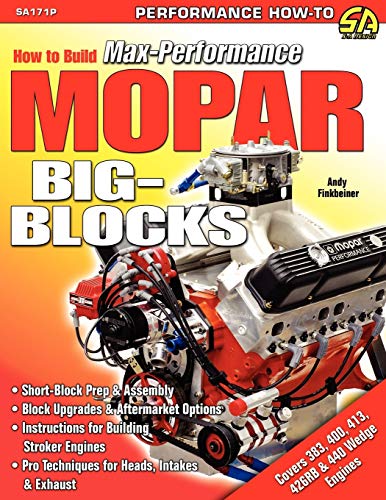
This book covers how to build Mopar's 383-, 400-, 413-, 426-, and 440-ci engines to power levels of 600 to 900 hp. How to Build Max-Performance Mopar Big Blocks discusses how to properly budget your engine build for a specific performance target and how to select a stock or aftermarket block for the desired performance level. The reciprocating assembly (crankshaft, connecting rods, and pistons) is examined in detail, to help you select the right design and material for durability and performance requirements. Cylinder heads and valvetrain configurations are crucial for generating maximum horsepower and torque. This volume discusses all the stock modification options, the best setups, selecting the right machine work, the latest aftermarket head options for producing huge horsepower, and building stroker engines. The camshafts and lifters chapter compares and contrasts use of hydraulic flat tappet, hydraulic roller, and solid flat tappet cams. In addition, the book explains how to optimize fresh and spent fuel, discussing single- and dual-plane intake manifolds, as well as the exhaust-system design to optimize scavenging. Also details engine builds at 600, 700, 800, and 900 horsepower levels to provide insight and reveal what can be done with real-world component packages.
Les informations fournies dans la section « Synopsis » peuvent faire référence à une autre édition de ce titre.
À propos de l'auteur
A veteran magazine writer/photographer, Andy Finkbeiner has created scores of articles for Popular Hot Rodding, Mopar Action, and Mopar Muscle. Finkbeiner bought his first Mopar, a 1965 Dodge Coronet, while in college. That Coronet came with a 426W engine that started the author on the path of many big-block projects. Finkbeiner lives with his wife and two kids in Wilsonville, Oregon. He owns AR Engineering, which is a company devoted to the design and manufacturing of parts for muscle car era Mopars.
Les informations fournies dans la section « A propos du livre » peuvent faire référence à une autre édition de ce titre.
Résultats de recherche pour How to Build Max-Performance Mopar Big-Blocks

Image d'archives
How to Build Max-Performance Mopar Big-Blocks
Vendeur : HPB Inc., Dallas, TX, Etats-Unis
Évaluation du vendeur 5 sur 5 étoiles

paperback. Etat : Very Good. Connecting readers with great books since 1972! Used books may not include companion materials, and may have some shelf wear or limited writing. We ship orders daily and Customer Service is our top priority! N° de réf. du vendeur S_488663498
Acheter D'occasion
EUR 23,26
Expédition à EUR 3,34
Expédition nationale : Etats-Unis
Expédition nationale : Etats-Unis
Quantité disponible : 1 disponible(s)
Image d'archives
How to Build Max-Performance Mopar Big-Blocks
Vendeur : HPB-Red, Dallas, TX, Etats-Unis
Évaluation du vendeur 5 sur 5 étoiles
paperback. Etat : Good. Connecting readers with great books since 1972! Used textbooks may not include companion materials such as access codes, etc. May have some wear or writing/highlighting. We ship orders daily and Customer Service is our top priority! N° de réf. du vendeur S_486335682
Acheter D'occasion
EUR 23,96
Expédition à EUR 3,34
Expédition nationale : Etats-Unis
Expédition nationale : Etats-Unis
Quantité disponible : 1 disponible(s)
Image d'archives
How to Build Max-Performance Mopar Big-Blocks
Edité par
CarTech, Inc., 2009
ISBN 10 : 1613250924
ISBN 13 : 9781613250921
Ancien ou d'occasion
Paperback
Vendeur : Books From California, Simi Valley, CA, Etats-Unis
Évaluation du vendeur 4 sur 5 étoiles

Paperback. Etat : Very Good. N° de réf. du vendeur mon0004263864
Acheter D'occasion
EUR 23,24
Expédition à EUR 4,44
Expédition nationale : Etats-Unis
Expédition nationale : Etats-Unis
Quantité disponible : 1 disponible(s)
Image d'archives
How to Build Max-Performance Mopar Big-Blocks
Vendeur : Lakeside Books, Benton Harbor, MI, Etats-Unis
Évaluation du vendeur 5 sur 5 étoiles
Etat : New. Brand New! Not Overstocks or Low Quality Book Club Editions! Direct From the Publisher! We're not a giant, faceless warehouse organization! We're a small town bookstore that loves books and loves it's customers! Buy from Lakeside Books! N° de réf. du vendeur OTF-S-9781613250921
Acheter neuf
EUR 25,24
Expédition à EUR 3,55
Expédition nationale : Etats-Unis
Expédition nationale : Etats-Unis
Quantité disponible : Plus de 20 disponibles
Image fournie par le vendeur
How to Build Max-performance Mopar Big-blocks
Vendeur : GreatBookPrices, Columbia, MD, Etats-Unis
Évaluation du vendeur 5 sur 5 étoiles
Etat : New. N° de réf. du vendeur 19087910-n
Acheter neuf
EUR 26,47
Expédition à EUR 2,35
Expédition nationale : Etats-Unis
Expédition nationale : Etats-Unis
Quantité disponible : Plus de 20 disponibles
Image fournie par le vendeur
How to Build Max-Performance Mopar Big-Blocks
Vendeur : Rarewaves USA, HEBRON, KY, Etats-Unis
Évaluation du vendeur 5 sur 5 étoiles
Paperback. Etat : New. N° de réf. du vendeur LU-9781613250921
Acheter neuf
EUR 29,98
Livraison gratuite
Expédition nationale : Etats-Unis
Expédition nationale : Etats-Unis
Quantité disponible : Plus de 20 disponibles
Image fournie par le vendeur
How to Build Max-Performance Mopar Big-Blocks (Paperback or Softback)
Edité par
Cartech 7/22/2009, 2009
ISBN 10 : 1613250924
ISBN 13 : 9781613250921
Neuf
Paperback or Softback
Vendeur : BargainBookStores, Grand Rapids, MI, Etats-Unis
Évaluation du vendeur 5 sur 5 étoiles
Paperback or Softback. Etat : New. How to Build Max-Performance Mopar Big-Blocks. Book. N° de réf. du vendeur BBS-9781613250921
Acheter neuf
EUR 30,05
Livraison gratuite
Expédition nationale : Etats-Unis
Expédition nationale : Etats-Unis
Quantité disponible : 5 disponible(s)
Image d'archives
How to Build Max-Performance Mopar Big-Blocks
Vendeur : California Books, Miami, FL, Etats-Unis
Évaluation du vendeur 5 sur 5 étoiles
Etat : New. N° de réf. du vendeur I-9781613250921
Acheter neuf
EUR 31,19
Livraison gratuite
Expédition nationale : Etats-Unis
Expédition nationale : Etats-Unis
Quantité disponible : Plus de 20 disponibles
Image fournie par le vendeur
How to Build Max-performance Mopar Big-blocks
Edité par
Cartech, 2009
ISBN 10 : 1613250924
ISBN 13 : 9781613250921
Ancien ou d'occasion
Couverture souple
Vendeur : GreatBookPrices, Columbia, MD, Etats-Unis
Évaluation du vendeur 5 sur 5 étoiles
Etat : As New. Unread book in perfect condition. N° de réf. du vendeur 19087910
Acheter D'occasion
EUR 30,02
Expédition à EUR 2,35
Expédition nationale : Etats-Unis
Expédition nationale : Etats-Unis
Quantité disponible : Plus de 20 disponibles
Image fournie par le vendeur
How to Build Max-Performance Mopar Big-Blocks (Paperback)
Vendeur : Grand Eagle Retail, Bensenville, IL, Etats-Unis
Évaluation du vendeur 5 sur 5 étoiles
Paperback. Etat : new. Paperback. The photos in this edition are black and white.Starting in the early 1960s, Mopar Wedge engines powered a wide range of Chrysler muscle cars, such as the Dodge Charger, Daytona Charger, Super Bee, Challenger, as well as Plymouth Barracuda, Superbird, Road Runner, GTX, and others. Many times these high-powered muscle cars were pursued by equally high-powered Dodge and Plymouth police cars that were also packing Mopar big-block power under the hood. In 1978, the last of the Mopar big-blocks rolled down the production line, but in an odd twist of fate, the popularity of the Mopar surged again in street and strip cars during the 1980s. By the 1990s, the big Mopar engine was more popular than ever. This book covers how to build Mopar's 383-, 400-, 413-, 426-, and 440-ci engines to power levels of 600 to 900 hp. How to Build Max-Performance Mopar Big Blocks discusses how to properly budget your engine build for a specific performance target and how to select a stock or aftermarket block for the desired performance level. The reciprocating assembly (crankshaft, connecting rods, and pistons) is examined in detail, to help you select the right design and material for durability and performance requirements. Cylinder heads and valvetrain configurations are crucial for generating maximum horsepower and torque. This volume discusses all the stock modification options, the best setups, selecting the right machine work, the latest aftermarket head options for producing huge horsepower, and building stroker engines. The camshafts and lifters chapter compares and contrasts use of hydraulic flat tappet, hydraulic roller, and solid flat tappet cams. In addition, the book explains how to optimize fresh and spent fuel, discussing single- and dual-plane intake manifolds, as well as the exhaust-system design to optimize scavenging. Also details engine builds at 600, 700, 800, and 900 horsepower levels to provide insight and reveal what can be done with real-world component packages. The photos in this edition are black and white.Starting in the early 1960s, Mopar Wedge engines powered a wide range of Chrysler muscle cars, such as the Dodge Charger, Daytona Charger, Super Bee, Challenger, as well as Plymouth Barracuda, Superbird, Road Runner, GTX, and others. Many times these high-powered muscle cars were pursued by equally high-powered Dodge and Plymouth police cars that were also packing Mopar big-block power under the hood. In 1978, the last of the Mopar big-blocks rolled down the production line, but in an odd twist of fate, the popularity of the Mopar surged again in street and strip cars during the 1980s. By the 1990s, the big Mopar engine was more popular than ever. This book covers how to build Mopar's 383-, 400-, 413-, 426-, and 440-ci engines to power levels of 600 to 900 hp. How to Build Max-Performance Mopar Big Blocks discusses how to properly budget your engine build for a specific performance target and how to select a stock or aftermarket block for the desired performance level. The reciprocating assembly (crankshaft, connecting rods, and pistons) is examined in detail, to help you select the right design and material for durability and performance requirements. Cylinder heads and valvetrain configurations are crucial for generating maximum horsepower and torque. This volume discusses all the stock modification options, the best setups, selecting the right machine work, the latest aftermarket head options for producing huge horsepower, and building stroker engines. The camshafts and lifters chapter compares and contrasts use of hydraulic flat tappet, hydraulic roller, and solid flat tappet cams. In addition, the book explains how to optimize fresh and spent fuel, discussing single- and dual-plane intake manifolds, as well as the exhaust-system design to optimize scavenging. Also details engine builds at 6 Shipping may be from multiple locations in the US or from the UK, depending on stock availability. N° de réf. du vendeur 9781613250921
Acheter neuf
EUR 34,31
Livraison gratuite
Expédition nationale : Etats-Unis
Expédition nationale : Etats-Unis
Quantité disponible : 1 disponible(s)