
Articles liés à Permanent Change: Plastics in Architecture and Engineering
Synopsis
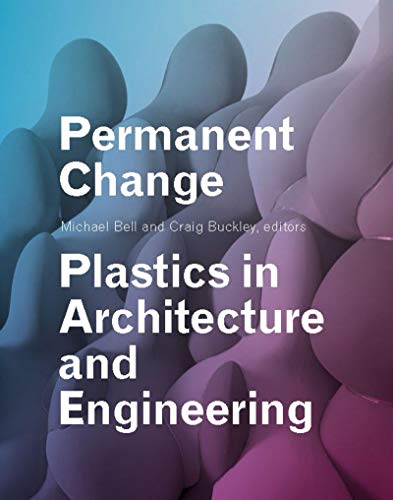
Almost every industry in the world has benefited from the invention of plastics, but it is only in the recent past that they have begun to be appreciated as architectural materials in their own right. Plastics are quickly becoming one of the most ubiquitous materials in construction and have the potential to reshape the roles of architects and engineers, as well as the construction industry at large. As a building material, plastic allows for easily molded and formed shapes, leading to increasingly malleable design processes. Despite being the most deeply engineered building materials today, plastics are still in the nascent stages of understanding in terms of their potential applications and uses. In Permanent Change an interdisciplinary group of architects, historians, theorists, and engineers collectively explore the past, present, and future possibilities of this innovative building material.
Les informations fournies dans la section « Synopsis » peuvent faire référence à une autre édition de ce titre.
À propos de l'auteur
Michael Bell is an Associate Professor at Columbia University. Bell chairs the Columbia Conference on Architecture, Engineering and Materials and is also Director of the Master of Architecture Core Studios. Craig Buckley teaches at the Graduate School of Architecture, Planning and Preservation, where he is also Director of Print Publications.
À propos de la quatrième de couverture
Almost every industry in the world has benefited from the invention of plastics, but it is only in the recent past that they have begun to be appreciated as architectural materials in their own right. Plastics are quickly becoming one of the most ubiquitous materials in construction and have the potential to reshape the roles of architects and engineers, as well as the construction industry at large. As a building material, plastic allows for easily molded and formed shapes, leading to increasingly malleable design processes. Despite being the most deeply engineered building materials today, plastics are still in the nascent stages of understanding in terms of their potential applications and uses. In Permanent Change an interdisciplinary group of architects, historians, theorists, and engineers collectively explore the past, present, and future possibilities of this innovative building material.
Les informations fournies dans la section « A propos du livre » peuvent faire référence à une autre édition de ce titre.
Résultats de recherche pour Permanent Change: Plastics in Architecture and Engineering

Image d'archives
Permanent Change: Plastics in Architecture and Engineering
Edité par
Princeton Architectural Press, 2014
ISBN 10 : 1616891661
ISBN 13 : 9781616891664
Ancien ou d'occasion
Couverture rigide
Vendeur : HPB-Red, Dallas, TX, Etats-Unis
Évaluation du vendeur 5 sur 5 étoiles

hardcover. Etat : Good. Connecting readers with great books since 1972! Used textbooks may not include companion materials such as access codes, etc. May have some wear or writing/highlighting. We ship orders daily and Customer Service is our top priority! N° de réf. du vendeur S_434549880
Acheter D'occasion
EUR 12,42
Expédition à EUR 3,35
Expédition nationale : Etats-Unis
Expédition nationale : Etats-Unis
Quantité disponible : 1 disponible(s)
Image d'archives
Permanent Change : Plastics in Architecture and Engineering
Edité par
Princeton Architectural Press, 2014
ISBN 10 : 1616891661
ISBN 13 : 9781616891664
Ancien ou d'occasion
Couverture rigide
Vendeur : Better World Books, Mishawaka, IN, Etats-Unis
Évaluation du vendeur 5 sur 5 étoiles
Etat : Very Good. Former library copy. Pages intact with possible writing/highlighting. Binding strong with minor wear. Dust jackets/supplements may not be included. Includes library markings. Stock photo provided. Product includes identifying sticker. Better World Books: Buy Books. Do Good. N° de réf. du vendeur 40031897-6
Acheter D'occasion
EUR 16,88
Livraison gratuite
Expédition nationale : Etats-Unis
Expédition nationale : Etats-Unis
Quantité disponible : 1 disponible(s)
Image d'archives
Permanent Change: Plastics in Architecture and Engineering
Edité par
Princeton Architectural Press, 2014
ISBN 10 : 1616891661
ISBN 13 : 9781616891664
Ancien ou d'occasion
Couverture rigide
Edition originale
Vendeur : FITZ BOOKS AND WAFFLES, Buffalo, NY, Etats-Unis
Évaluation du vendeur 5 sur 5 étoiles
Hardcover. Etat : Fine. Etat de la jaquette : Fine. 1st Edition. Architecture. First Printing. This is a clean, unmarked, undamaged copy. N° de réf. du vendeur ABE-1754852138721
Acheter D'occasion
EUR 18,39
Expédition à EUR 3,57
Expédition nationale : Etats-Unis
Expédition nationale : Etats-Unis
Quantité disponible : 1 disponible(s)
Image d'archives
Permanent Change: Plastics in Architecture and Engineering
Edité par
Princeton Architectural Press, 2014
ISBN 10 : 1616891661
ISBN 13 : 9781616891664
Neuf
Couverture rigide
Vendeur : GoldBooks, Denver, CO, Etats-Unis
Évaluation du vendeur 5 sur 5 étoiles
Hardcover. Etat : new. New Copy. Customer Service Guaranteed. N° de réf. du vendeur 42Q25_27_1616891661
Acheter neuf
EUR 48,40
Expédition à EUR 4,91
Expédition nationale : Etats-Unis
Expédition nationale : Etats-Unis
Quantité disponible : 1 disponible(s)
Image d'archives
Permanent Change: Plastics in Architecture and Engineering
Edité par
Princeton Architectural Press, 2014
ISBN 10 : 1616891661
ISBN 13 : 9781616891664
Ancien ou d'occasion
Couverture rigide
Vendeur : The Maryland Book Bank, Baltimore, MD, Etats-Unis
Évaluation du vendeur 5 sur 5 étoiles
hardcover. Etat : Very Good. Illustrated. Used - Very Good. N° de réf. du vendeur 19-C-7-0005
Acheter D'occasion
EUR 51,18
Expédition à EUR 4,19
Expédition nationale : Etats-Unis
Expédition nationale : Etats-Unis
Quantité disponible : 1 disponible(s)
Image d'archives
Permanent Change. Plastics in Architecture and Engineering.
Edité par
MIT Press,, 2014
ISBN 10 : 1616891661
ISBN 13 : 9781616891664
Ancien ou d'occasion
Couverture rigide
Vendeur : Antiquariat Willi Braunert, München, Allemagne
Évaluation du vendeur 4 sur 5 étoiles

4°, hardcover, plastic cover. 271 pp Very fine copy. Sprache: Englisch Gewicht in Gramm: 0. N° de réf. du vendeur 28067
Acheter D'occasion
EUR 32
Expédition à EUR 27
Expédition depuis Allemagne vers Etats-Unis
Expédition depuis Allemagne vers Etats-Unis
Quantité disponible : 1 disponible(s)
Image d'archives
Permanent Change: Plastics in Architecture and Engineering
Edité par
Princeton Architectural Pr, 2014
ISBN 10 : 1616891661
ISBN 13 : 9781616891664
Neuf
Couverture rigide
Vendeur : Revaluation Books, Exeter, Royaume-Uni
Évaluation du vendeur 5 sur 5 étoiles
Hardcover. Etat : Brand New. 271 pages. 11.50x9.00x1.00 inches. In Stock. N° de réf. du vendeur zk1616891661
Acheter neuf
EUR 41,29
Expédition à EUR 17,91
Expédition depuis Royaume-Uni vers Etats-Unis
Expédition depuis Royaume-Uni vers Etats-Unis
Quantité disponible : 1 disponible(s)
Image d'archives
Permanent Change
Edité par
Princeton Architectural Press, 2014
ISBN 10 : 1616891661
ISBN 13 : 9781616891664
Neuf
Couverture rigide
Vendeur : Basi6 International, Irving, TX, Etats-Unis
Évaluation du vendeur 5 sur 5 étoiles
Etat : Brand New. New. US edition. Expediting shipping for all USA and Europe orders excluding PO Box. Excellent Customer Service. N° de réf. du vendeur ABEOCT25-183720
Acheter neuf
EUR 59,92
Livraison gratuite
Expédition nationale : Etats-Unis
Expédition nationale : Etats-Unis
Quantité disponible : 1 disponible(s)
Image d'archives
Permanent Change: Plastics in Architecture and Engineering
Edité par
Princeton Architectural Press, 2014
ISBN 10 : 1616891661
ISBN 13 : 9781616891664
Neuf
Couverture rigide
Vendeur : Parrot Books, Hemel Hempstead, HERT, Royaume-Uni
Évaluation du vendeur 5 sur 5 étoiles
Hardcover. Etat : New. N° de réf. du vendeur mon0000021041
Acheter neuf
EUR 27,06
Expédition à EUR 34,57
Expédition depuis Royaume-Uni vers Etats-Unis
Expédition depuis Royaume-Uni vers Etats-Unis
Quantité disponible : 1 disponible(s)
Image d'archives
Permanent Change; Plastics in Architecture and Engineering
Edité par
Princeton Architectural Press, 2014
ISBN 10 : 1616891661
ISBN 13 : 9781616891664
Neuf
Couverture rigide
Vendeur : BWS BKS, Ferndale, NY, Etats-Unis
Évaluation du vendeur 2 sur 5 étoiles

Hardcover. Etat : New. N° de réf. du vendeur 107442
Acheter neuf
EUR 1 816,69
Expédition à EUR 2,68
Expédition nationale : Etats-Unis
Expédition nationale : Etats-Unis
Quantité disponible : 1 disponible(s)