
Articles liés à To Retain Command of the Mississippi: The Civil War...
Synopsis
The Mississippi River was a strategic priority for the Union army from the outset of the American Civil War. By controlling the Mississippi, the North's military forces could effectively split the Confederacy in two and create economic and logistical havoc for Confederate supply lines that relied on river transportation. A number of battles were fought for control of the Mississippi, and ultimately the combination of Union troops supported by Federal gunboats and armored paddle steamers culminated in the surrender of Port Hudson in July 1863 and Union dominance over the Mississippi waterways.
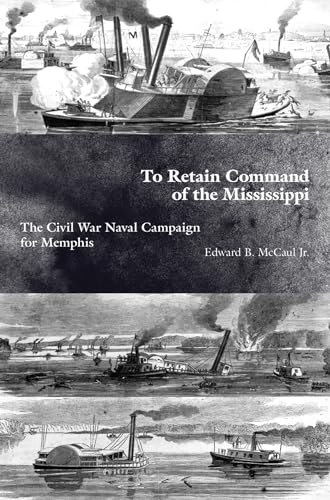
The Battle of Memphis was one such fray waged for control of the Mississippi. It was a major victory for the Union, one that was over almost before it began because of luck and lessons the Union fleet learned at a hard-fought battle with the Confederate River Defense Fleet at Plum Point. Perhaps owing to its swift conclusion, the Battle of Memphis has not received the scholarly attention of other battles, such as Vicksburg and Forts Henry and Donelson. In To Retain Command of the Mississippi, Edward B. McCaul Jr. argues that the Battle of Memphis was pivotal in the Union's efforts to control the Mississippi River. The Union command, by narrowly escaping defeat at Plum Point, learned invaluable lessons about the Confederate River Defense Fleet and masterfully enacted those lessons in decisively defeating the Confederate fleet at Memphis. With the Confederacy's river forces severely crippled after the Battle of Memphis, the Union fleets pushed onward to eventual victory at Vicksburg.
McCaul brings this pivotal river battle back into the American Civil War discussion by highlighting the Union gains and Confederate losses that led up to the Battle of Memphis and maintaining that had the battle gone differently, Grant's plans for taking Vicksburg would have been drastically altered
Les informations fournies dans la section « Synopsis » peuvent faire référence à une autre édition de ce titre.
À propos de l'auteur
Edward B. McCaul Jr. is Assistant Dean for Curriculum and Assessment in the College of Engineering at The Ohio State University. He is the author of The Mechanical Fuze and the Advance of Artillery in the Civil War, and his articles have appeared in Military History, Vietnam, and Aviation History.
Les informations fournies dans la section « A propos du livre » peuvent faire référence à une autre édition de ce titre.
Résultats de recherche pour To Retain Command of the Mississippi: The Civil War...

Image d'archives
To Retain Command of the Mississippi: The Civil War Naval Campaign for Memphis
Edité par
University of Tennessee Press, 2014
ISBN 10 : 1621900886
ISBN 13 : 9781621900887
Neuf
Couverture rigide
Vendeur : Benjamin Books, Ottawa, ON, Canada
Évaluation du vendeur 5 sur 5 étoiles

Hardcover. Etat : New. Etat de la jaquette : New. Still in publisher's shrink wrap. N° de réf. du vendeur 030666
Acheter neuf
EUR 14,23
Expédition à EUR 10,36
Expédition depuis Canada vers Etats-Unis
Expédition depuis Canada vers Etats-Unis
Quantité disponible : 1 disponible(s)
Image fournie par le vendeur
To Retain Command of the Mississippi : The Civil War Naval Campaign for Memphis
Edité par
University of Tennessee Press, 2014
ISBN 10 : 1621900886
ISBN 13 : 9781621900887
Neuf
Couverture rigide
Vendeur : GreatBookPrices, Columbia, MD, Etats-Unis
Évaluation du vendeur 5 sur 5 étoiles
Etat : New. N° de réf. du vendeur 21760375-n
Acheter neuf
EUR 22,54
Expédition à EUR 2,28
Expédition nationale : Etats-Unis
Expédition nationale : Etats-Unis
Quantité disponible : 12 disponible(s)
Image fournie par le vendeur
To Retain Command of the Mississippi : The Civil War Naval Campaign for Memphis
Edité par
University of Tennessee Press, 2014
ISBN 10 : 1621900886
ISBN 13 : 9781621900887
Ancien ou d'occasion
Couverture rigide
Vendeur : GreatBookPrices, Columbia, MD, Etats-Unis
Évaluation du vendeur 5 sur 5 étoiles
Etat : As New. Unread book in perfect condition. N° de réf. du vendeur 21760375
Acheter D'occasion
EUR 24,85
Expédition à EUR 2,28
Expédition nationale : Etats-Unis
Expédition nationale : Etats-Unis
Quantité disponible : 12 disponible(s)
Image d'archives
To Retain Command of the Mississippi: The Civil War Naval Campaign for Memphis
Edité par
University of Tennessee Press, 2014
ISBN 10 : 1621900886
ISBN 13 : 9781621900887
Neuf
Couverture rigide
Vendeur : California Books, Miami, FL, Etats-Unis
Évaluation du vendeur 4 sur 5 étoiles

Etat : New. N° de réf. du vendeur I-9781621900887
Acheter neuf
EUR 28,46
Livraison gratuite
Expédition nationale : Etats-Unis
Expédition nationale : Etats-Unis
Quantité disponible : 6 disponible(s)
Image fournie par le vendeur
To Retain Command of the Mississippi (Hardcover)
Edité par
University of Tennessee Press, Chicago, 2014
ISBN 10 : 1621900886
ISBN 13 : 9781621900887
Neuf
Couverture rigide
Vendeur : Grand Eagle Retail, Bensenville, IL, Etats-Unis
Évaluation du vendeur 5 sur 5 étoiles
Hardcover. Etat : new. Hardcover. The Mississippi River was a strategic priority for the Union army from the outset of the American Civil War. By controlling the Mississippi, the Norths military forces could effectively split the Confederacy in two and create economic and logistical havoc for Confederate supply lines that relied on river transportation. A number of battles were fought for control of the Mississippi, and ultimately the combination of Union troops supported by Federal gunboats and armored paddle steamers culminated in the surrender of Port Hudson in July 1863 and Union dominance over the Mississippi waterways.The Battle of Memphis was one such fray waged for control of the Mississippi. It was a major victory for the Union, one that was over almost before it began because of luck and lessons the Union fleet learned at a hard-fought battle with the Confederate River Defense Fleet at Plum Point. Perhaps owing to its swift conclusion, the Battle of Memphis has not received the scholarly attention of other battles, such as Vicksburg and Forts Henry and Donelson. In To Retain Command of the Mississippi, Edward B. McCaul Jr. argues that the Battle of Memphis was pivotal in the Unions efforts to control the Mississippi River. The Union command, by narrowly escaping defeat at Plum Point, learned invaluable lessons about the Confederate River Defense Fleet and masterfully enacted those lessons in decisively defeating the Confederate fleet at Memphis. With the Confederacys river forces severely crippled after the Battle of Memphis, the Union fleets pushed onward to eventual victory at Vicksburg.McCaul brings this pivotal river battle back into the American Civil War discussion by highlighting the Union gains and Confederate losses that led up to the Battle of Memphis and maintaining that had the battle gone differently, Grants plans for taking Vicksburg would have been drastically altered. Shipping may be from multiple locations in the US or from the UK, depending on stock availability. N° de réf. du vendeur 9781621900887
Acheter neuf
EUR 30,50
Livraison gratuite
Expédition nationale : Etats-Unis
Expédition nationale : Etats-Unis
Quantité disponible : 1 disponible(s)
Image d'archives
To Retain Command of the Mississippi: The Civil War Naval Campaign for Memphis
Edité par
Univ Tennessee Press, 2014
ISBN 10 : 1621900886
ISBN 13 : 9781621900887
Ancien ou d'occasion
Couverture rigide
Vendeur : Midtown Scholar Bookstore, Harrisburg, PA, Etats-Unis
Évaluation du vendeur 5 sur 5 étoiles
hardcover. Etat : Good. HARDCOVER Good - Bumped and creased book with tears to the extremities, but not affecting the text block, may have remainder mark or previous owner's name - GOOD Standard-sized. N° de réf. du vendeur M1621900886Z3
Acheter D'occasion
EUR 34,03
Expédition à EUR 5,18
Expédition nationale : Etats-Unis
Expédition nationale : Etats-Unis
Quantité disponible : 1 disponible(s)
Image d'archives
To Retain Command of the Mississippi The Civil War Naval Campaign for Memphis
Edité par
Univ of Tennessee Pr, 2014
ISBN 10 : 1621900886
ISBN 13 : 9781621900887
Neuf
Couverture rigide
Vendeur : Revaluation Books, Exeter, Royaume-Uni
Évaluation du vendeur 5 sur 5 étoiles
Hardcover. Etat : Brand New. 249 pages. 9.25x6.50x1.00 inches. In Stock. N° de réf. du vendeur x-1621900886
Acheter neuf
EUR 36,23
Expédition à EUR 14,61
Expédition depuis Royaume-Uni vers Etats-Unis
Expédition depuis Royaume-Uni vers Etats-Unis
Quantité disponible : 2 disponible(s)
Image d'archives
To Retain Command of the Mississippi
Edité par
University of Tennessee Press, 2014
ISBN 10 : 1621900886
ISBN 13 : 9781621900887
Neuf
Couverture rigide
Vendeur : Books Puddle, New York, NY, Etats-Unis
Évaluation du vendeur 4 sur 5 étoiles
Etat : New. N° de réf. du vendeur 26357611469
Acheter neuf
EUR 52,88
Expédition à EUR 3,45
Expédition nationale : Etats-Unis
Expédition nationale : Etats-Unis
Quantité disponible : 1 disponible(s)
Image d'archives
To Retain Command of the Mississippi
Edité par
University of Tennessee Press, 2014
ISBN 10 : 1621900886
ISBN 13 : 9781621900887
Neuf
Couverture rigide
Vendeur : Majestic Books, Hounslow, Royaume-Uni
Évaluation du vendeur 4 sur 5 étoiles
Etat : New. N° de réf. du vendeur 354879506
Acheter neuf
EUR 50,11
Expédition à EUR 7,60
Expédition depuis Royaume-Uni vers Etats-Unis
Expédition depuis Royaume-Uni vers Etats-Unis
Quantité disponible : 1 disponible(s)
Image fournie par le vendeur
To Retain Command of the Mississippi : The Civil War Naval Campaign for Memphis
Edité par
University Of Tennessee Press Nov 2014, 2014
ISBN 10 : 1621900886
ISBN 13 : 9781621900887
Neuf
Couverture rigide
Vendeur : AHA-BUCH GmbH, Einbeck, Allemagne
Évaluation du vendeur 5 sur 5 étoiles
Buch. Etat : Neu. Neuware - The Mississippi River was a strategic priority for the Union army from the outset of the American Civil War. By controlling the Mississippi, the North's military forces could effectively split the Confederacy in two and create economic and logistical havoc for Confederate supply lines that relied on river transportation. A number of battles were fought for control of the Mississippi, and ultimately the combination of Union troops supported by Federal gunboats and armored paddle steamers culminated in the surrender of Port Hudson in July 1863 and Union dominance over the Mississippi waterways.The Battle of Memphis was one such fray waged for control of the Mississippi. It was a major victory for the Union, one that was over almost before it began because of luck and lessons the Union fleet learned at a hard-fought battle with the Confederate River Defense Fleet at Plum Point. Perhaps owing to its swift conclusion, the Battle of Memphis has not received the scholarly attention of other battles, such as Vicksburg and Forts Henry and Donelson. In To Retain Command of the Mississippi, Edward B. McCaul Jr. argues that the Battle of Memphis was pivotal in the Union's efforts to control the Mississippi River. The Union command, by narrowly escaping defeat at Plum Point, learned invaluable lessons about the Confederate River Defense Fleet and masterfully enacted those lessons in decisively defeating the Confederate fleet at Memphis. With the Confederacy's river forces severely crippled after the Battle of Memphis, the Union fleets pushed onward to eventual victory at Vicksburg.McCaul brings this pivotal river battle back into the American Civil War discussion by highlighting the Union gains and Confederate losses that led up to the Battle of Memphis and maintaining that had the battle gone differently, Grant's plans for taking Vicksburg would have been drastically altered. N° de réf. du vendeur 9781621900887
Acheter neuf
EUR 38
Expédition à EUR 30,50
Expédition depuis Allemagne vers Etats-Unis
Expédition depuis Allemagne vers Etats-Unis
Quantité disponible : 2 disponible(s)