
Articles liés à The Next Great Migration: The Beauty and Terror of...
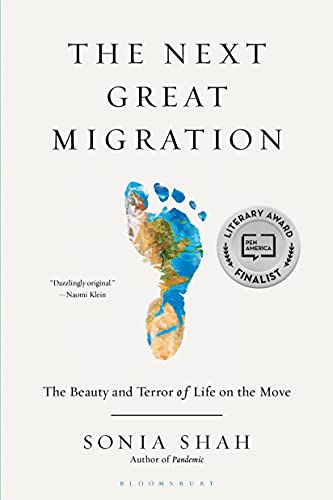
Synopsis
Finalist for the 2021 PEN/E.O. Wilson Literary Science Writing Award
A Library Journal Best Science & Technology Book of 2020
A Publishers Weekly Best Nonfiction Book of 2020
2020 Goodreads Choice Award Semifinalist in Science & Technology
Les informations fournies dans la section « Synopsis » peuvent faire référence à une autre édition de ce titre.
À propos de l'auteur
Sonia Shah is a science journalist and the prize-winning author of Pandemic: Tracking Contagions from Cholera to Ebola and Beyond, a finalist for the Los Angeles Times Book Prize and the New York Public Library Award for Excellence in Journalism. She has written for the New York Times, the Wall Street Journal, and many others. Her TED talk, "Three Reasons We Still Haven't Gotten Rid of Malaria," has been viewed by more than one million people around the world. She lives in Baltimore, Maryland.
Les informations fournies dans la section « A propos du livre » peuvent faire référence à une autre édition de ce titre.
Résultats de recherche pour The Next Great Migration: The Beauty and Terror of...

Image d'archives
The Next Great Migration: The Beauty and Terror of Life on the Move
Edité par
Bloomsbury Publishing, 2021
ISBN 10 : 1635577861
ISBN 13 : 9781635577860
Ancien ou d'occasion
Paperback
Vendeur : World of Books (was SecondSale), Montgomery, IL, Etats-Unis
Évaluation du vendeur 5 sur 5 étoiles

Paperback. Etat : Very Good. Finalist for the 2021 PEN/E.O. Wilson Literary Science Writing Award A Library Journal Best Science & Technology Book of 2020 A Publishers Weekly Best Nonfiction Book of 2020 2020 Goodreads Choice Award Semifinalist in Science & Technology A prize-winning journalist upends our centuries-long assumptions about migration through science, history, and reporting--predicting its lifesaving power in the face of climate change. The news today is full of stories of dislocated people on the move. Wild species, too, are escaping warming seas and desiccated lands, creeping, swimming, and flying in a mass exodus from their past habitats. News media presents this scrambling of the planet's migration patterns as unprecedented, provoking fears of the spread of disease and conflict and waves of anxiety across the Western world. On both sides of the Atlantic, experts issue alarmed predictions of millions of invading aliens, unstoppable as an advancing tsunami, and countries respond by electing anti-immigration leaders who slam closed borders that were historically porous. But the science and history of migration in animals, plants, and humans tell a different story. Far from being a disruptive behavior to be quelled at any cost, migration is an ancient and lifesaving response to environmental change, a biological imperative as necessary as breathing. Climate changes triggered the first human migrations out of Africa. Falling sea levels allowed our passage across the Bering Sea. Unhampered by barbed wire, migration allowed our ancestors to people the planet, catapulting us into the highest reaches of the Himalayan mountains and the most remote islands of the Pacific, creating and disseminating the biological, cultural, and social diversity that ecosystems and societies depend upon. In other words, migration is not the crisis--it is the solution. Conclusively tracking the history of misinformation from the 18th century through today's anti-immigration policies, The Next Great Migration makes the case for a future in which migration is not a source of fear, but of hope. N° de réf. du vendeur 00102364657
Acheter D'occasion
EUR 5,90
Livraison gratuite
Expédition nationale : Etats-Unis
Expédition nationale : Etats-Unis
Quantité disponible : 1 disponible(s)
Image d'archives
The Next Great Migration: The Beauty and Terror of Life on the Move
Edité par
Bloomsbury Publishing, 2021
ISBN 10 : 1635577861
ISBN 13 : 9781635577860
Ancien ou d'occasion
Paperback
Vendeur : World of Books (was SecondSale), Montgomery, IL, Etats-Unis
Évaluation du vendeur 5 sur 5 étoiles
Paperback. Etat : Good. Finalist for the 2021 PEN/E.O. Wilson Literary Science Writing Award A Library Journal Best Science & Technology Book of 2020 A Publishers Weekly Best Nonfiction Book of 2020 2020 Goodreads Choice Award Semifinalist in Science & Technology A prize-winning journalist upends our centuries-long assumptions about migration through science, history, and reporting--predicting its lifesaving power in the face of climate change. The news today is full of stories of dislocated people on the move. Wild species, too, are escaping warming seas and desiccated lands, creeping, swimming, and flying in a mass exodus from their past habitats. News media presents this scrambling of the planet's migration patterns as unprecedented, provoking fears of the spread of disease and conflict and waves of anxiety across the Western world. On both sides of the Atlantic, experts issue alarmed predictions of millions of invading aliens, unstoppable as an advancing tsunami, and countries respond by electing anti-immigration leaders who slam closed borders that were historically porous. But the science and history of migration in animals, plants, and humans tell a different story. Far from being a disruptive behavior to be quelled at any cost, migration is an ancient and lifesaving response to environmental change, a biological imperative as necessary as breathing. Climate changes triggered the first human migrations out of Africa. Falling sea levels allowed our passage across the Bering Sea. Unhampered by barbed wire, migration allowed our ancestors to people the planet, catapulting us into the highest reaches of the Himalayan mountains and the most remote islands of the Pacific, creating and disseminating the biological, cultural, and social diversity that ecosystems and societies depend upon. In other words, migration is not the crisis--it is the solution. Conclusively tracking the history of misinformation from the 18th century through today's anti-immigration policies, The Next Great Migration makes the case for a future in which migration is not a source of fear, but of hope. N° de réf. du vendeur 00100952689
Acheter D'occasion
EUR 5,90
Livraison gratuite
Expédition nationale : Etats-Unis
Expédition nationale : Etats-Unis
Quantité disponible : 5 disponible(s)
Image d'archives
The Next Great Migration: The Beauty and Terror of Life on the Move
Edité par
Bloomsbury Publishing (edition ), 2021
ISBN 10 : 1635577861
ISBN 13 : 9781635577860
Ancien ou d'occasion
Paperback
Vendeur : BooksRun, Philadelphia, PA, Etats-Unis
Évaluation du vendeur 5 sur 5 étoiles
Paperback. Etat : Very Good. It's a well-cared-for item that has seen limited use. The item may show minor signs of wear. All the text is legible, with all pages included. It may have slight markings and/or highlighting. N° de réf. du vendeur 1635577861-8-1
Acheter D'occasion
EUR 5,91
Livraison gratuite
Expédition nationale : Etats-Unis
Expédition nationale : Etats-Unis
Quantité disponible : 1 disponible(s)
Image d'archives
The Next Great Migration : The Beauty and Terror of Life on the Move
Edité par
Bloomsbury Publishing USA, 2021
ISBN 10 : 1635577861
ISBN 13 : 9781635577860
Ancien ou d'occasion
Couverture souple
Vendeur : Better World Books, Mishawaka, IN, Etats-Unis
Évaluation du vendeur 5 sur 5 étoiles
Etat : Very Good. Pages intact with possible writing/highlighting. Binding strong with minor wear. Dust jackets/supplements may not be included. Stock photo provided. Product includes identifying sticker. Better World Books: Buy Books. Do Good. N° de réf. du vendeur 39795207-6
Acheter D'occasion
EUR 7,19
Livraison gratuite
Expédition nationale : Etats-Unis
Expédition nationale : Etats-Unis
Quantité disponible : 1 disponible(s)
Image d'archives
The Next Great Migration : The Beauty and Terror of Life on the Move
Edité par
Bloomsbury Publishing USA, 2021
ISBN 10 : 1635577861
ISBN 13 : 9781635577860
Ancien ou d'occasion
Couverture souple
Vendeur : Better World Books: West, Reno, NV, Etats-Unis
Évaluation du vendeur 5 sur 5 étoiles
Etat : Very Good. Pages intact with possible writing/highlighting. Binding strong with minor wear. Dust jackets/supplements may not be included. Stock photo provided. Product includes identifying sticker. Better World Books: Buy Books. Do Good. N° de réf. du vendeur 39795207-6
Acheter D'occasion
EUR 7,19
Livraison gratuite
Expédition nationale : Etats-Unis
Expédition nationale : Etats-Unis
Quantité disponible : 1 disponible(s)
Image d'archives
The Next Great Migration : The Beauty and Terror of Life on the Move
Edité par
Bloomsbury Publishing USA, 2021
ISBN 10 : 1635577861
ISBN 13 : 9781635577860
Ancien ou d'occasion
Couverture souple
Vendeur : Better World Books, Mishawaka, IN, Etats-Unis
Évaluation du vendeur 5 sur 5 étoiles
Etat : Very Good. Former library copy. Pages intact with possible writing/highlighting. Binding strong with minor wear. Dust jackets/supplements may not be included. Includes library markings. Stock photo provided. Product includes identifying sticker. Better World Books: Buy Books. Do Good. N° de réf. du vendeur 46456381-6
Acheter D'occasion
EUR 7,19
Livraison gratuite
Expédition nationale : Etats-Unis
Expédition nationale : Etats-Unis
Quantité disponible : 1 disponible(s)
Image d'archives
The Next Great Migration: The Beauty and Terror of Life on the Move
Edité par
Bloomsbury Publishing, 2021
ISBN 10 : 1635577861
ISBN 13 : 9781635577860
Ancien ou d'occasion
paperback
Vendeur : HPB-Movies, Dallas, TX, Etats-Unis
Évaluation du vendeur 4 sur 5 étoiles

paperback. Etat : Very Good. Connecting readers with great books since 1972! Used books may not include companion materials, and may have some shelf wear or limited writing. We ship orders daily and Customer Service is our top priority! N° de réf. du vendeur S_466781230
Acheter D'occasion
EUR 4,13
Expédition à EUR 3,34
Expédition nationale : Etats-Unis
Expédition nationale : Etats-Unis
Quantité disponible : 1 disponible(s)
Image d'archives
The Next Great Migration: The Beauty and Terror of Life on the Move
Edité par
Bloomsbury Publishing, 2021
ISBN 10 : 1635577861
ISBN 13 : 9781635577860
Ancien ou d'occasion
Paperback
Vendeur : World of Books Inc, Montgomery, IL, Etats-Unis
Évaluation du vendeur 4 sur 5 étoiles
Paperback. Etat : Very Good. Finalist for the 2021 PEN/E.O. Wilson Literary Science Writing Award A Library Journal Best Science & Technology Book of 2020 A Publishers Weekly Best Nonfiction Book of 2020 2020 Goodreads Choice Award Semifinalist in Science & Technology A prize-winning journalist upends our centuries-long assumptions about migration through science, history, and reporting--predicting its lifesaving power in the face of climate change. The news today is full of stories of dislocated people on the move. Wild species, too, are escaping warming seas and desiccated lands, creeping, swimming, and flying in a mass exodus from their past habitats. News media presents this scrambling of the planet's migration patterns as unprecedented, provoking fears of the spread of disease and conflict and waves of anxiety across the Western world. On both sides of the Atlantic, experts issue alarmed predictions of millions of invading aliens, unstoppable as an advancing tsunami, and countries respond by electing anti-immigration leaders who slam closed borders that were historically porous. But the science and history of migration in animals, plants, and humans tell a different story. Far from being a disruptive behavior to be quelled at any cost, migration is an ancient and lifesaving response to environmental change, a biological imperative as necessary as breathing. Climate changes triggered the first human migrations out of Africa. Falling sea levels allowed our passage across the Bering Sea. Unhampered by barbed wire, migration allowed our ancestors to people the planet, catapulting us into the highest reaches of the Himalayan mountains and the most remote islands of the Pacific, creating and disseminating the biological, cultural, and social diversity that ecosystems and societies depend upon. In other words, migration is not the crisis--it is the solution. Conclusively tracking the history of misinformation from the 18th century through today's anti-immigration policies, The Next Great Migration makes the case for a future in which migration is not a source of fear, but of hope. N° de réf. du vendeur CIN1635577861VG
Acheter D'occasion
EUR 7,73
Livraison gratuite
Expédition nationale : Etats-Unis
Expédition nationale : Etats-Unis
Quantité disponible : 1 disponible(s)
Image d'archives
The Next Great Migration: The Beauty and Terror of Life on the Move
Edité par
Bloomsbury Publishing, 2021
ISBN 10 : 1635577861
ISBN 13 : 9781635577860
Ancien ou d'occasion
Paperback
Vendeur : World of Books Inc, Montgomery, IL, Etats-Unis
Évaluation du vendeur 4 sur 5 étoiles
Paperback. Etat : Good. Finalist for the 2021 PEN/E.O. Wilson Literary Science Writing Award A Library Journal Best Science & Technology Book of 2020 A Publishers Weekly Best Nonfiction Book of 2020 2020 Goodreads Choice Award Semifinalist in Science & Technology A prize-winning journalist upends our centuries-long assumptions about migration through science, history, and reporting--predicting its lifesaving power in the face of climate change. The news today is full of stories of dislocated people on the move. Wild species, too, are escaping warming seas and desiccated lands, creeping, swimming, and flying in a mass exodus from their past habitats. News media presents this scrambling of the planet's migration patterns as unprecedented, provoking fears of the spread of disease and conflict and waves of anxiety across the Western world. On both sides of the Atlantic, experts issue alarmed predictions of millions of invading aliens, unstoppable as an advancing tsunami, and countries respond by electing anti-immigration leaders who slam closed borders that were historically porous. But the science and history of migration in animals, plants, and humans tell a different story. Far from being a disruptive behavior to be quelled at any cost, migration is an ancient and lifesaving response to environmental change, a biological imperative as necessary as breathing. Climate changes triggered the first human migrations out of Africa. Falling sea levels allowed our passage across the Bering Sea. Unhampered by barbed wire, migration allowed our ancestors to people the planet, catapulting us into the highest reaches of the Himalayan mountains and the most remote islands of the Pacific, creating and disseminating the biological, cultural, and social diversity that ecosystems and societies depend upon. In other words, migration is not the crisis--it is the solution. Conclusively tracking the history of misinformation from the 18th century through today's anti-immigration policies, The Next Great Migration makes the case for a future in which migration is not a source of fear, but of hope. N° de réf. du vendeur CIN1635577861G
Acheter D'occasion
EUR 7,73
Livraison gratuite
Expédition nationale : Etats-Unis
Expédition nationale : Etats-Unis
Quantité disponible : 5 disponible(s)
Image d'archives
The Next Great Migration: The Beauty and Terror of Life on the Move
Edité par
Bloomsbury Publishing, 2021
ISBN 10 : 1635577861
ISBN 13 : 9781635577860
Ancien ou d'occasion
Paperback
Vendeur : ThriftBooks-Reno, Reno, NV, Etats-Unis
Évaluation du vendeur 5 sur 5 étoiles
Paperback. Etat : Very Good. No Jacket. May have limited writing in cover pages. Pages are unmarked. ~ ThriftBooks: Read More, Spend Less. N° de réf. du vendeur G1635577861I4N00
Acheter D'occasion
EUR 7,92
Livraison gratuite
Expédition nationale : Etats-Unis
Expédition nationale : Etats-Unis
Quantité disponible : 1 disponible(s)