
Articles liés à The Simple Past
Synopsis
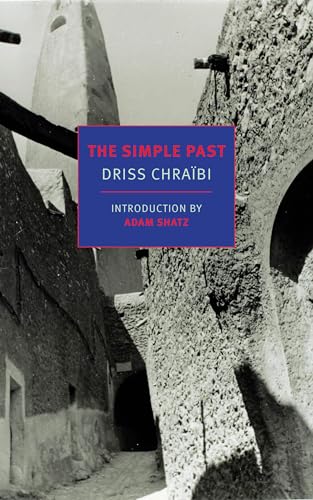
The Simple Past came out in 1954, and both in France and its author’s native Morocco the book caused an explosion of fury. The protagonist, who shares the author’s name, Driss, comes from a Moroccan family of means, his father a self-made tea merchant, the most devout of Muslims, quick to be provoked and ready to lash out verbally or physically, continually bent on subduing his timid wife and many children to his iron and ever-righteous will. He is known, simply, as the Lord, and Driss, who is in high school, is in full revolt against both him and the French colonial authorities, for whom, as much as for his father, he is no one. Driss Chraïbi’s classic coming-of-age story is about colonialism, Islam, the subjection of women, and finding, as his novel does, a voice that is as cutting and coruscating as it is original and free.
Les informations fournies dans la section « Synopsis » peuvent faire référence à une autre édition de ce titre.
À propos de l'auteur
Driss Chraïbi (1926–2007) was born to a merchant family in French Morocco. He attended a French high school in Casablanca, followed by university in Paris, where he earned a degree in chemical engineering. Deciding to become a writer, he worked as a night watchman and laborer until the publication of his first novel, Le Passé simple (1954), which was a success in France and caused a scandal in Morocco, where it was banned until 1977. He published his next novel, Les Boucs (The Butts), in 1955—the year he married Catherine Birckel, with whom he would have five children before they divorced. In 1959, Chraïbi joined Radio France as a journalist, and in the 1970s he taught Maghrebi literature in Quebec. In 1978, he remarried, to Sheena McCallion, with whom he also had five children. Chraïbi wrote some twenty novels and collections of short fiction, including six mysteries featuring the Moroccan Inspector Ali, as well as two volumes of autobiography. He was awarded the Prixde l’Afrique Méditerranéenne in 1973 and the Franco-Arab Friendship Award in 1981. He died in southeastern France and was buried in Casablanca.
Hugh A. Harter (1922–2011) received a BA in French and a PhD in Spanish at Ohio State University, and an MA, also in Spanish, at Mexico City College, the University of the Americas. He has translated from both the French and Spanish, including two other books by Driss Chraïbi, The Butts and Mother Comes of Age. Harter was the director of the International Institute in Madrid from 1984 through 1987.
Adam Shatz is a contributing editor at the London Review of Books and a contributing writer to The New York Times Magazine, The New York Review of Books, and The New Yorker, among other publications. He has been a visiting professor at Bard College and New York University and a fellow at the Dorothy and Lewis B. Cullman Center for Writers and Scholars.
À propos de la quatrième de couverture
The Simple Past came out in 1954, and both in France and its author's native Morocco the book caused an explosion of fury. The protagonist, also known as Driss, comes from a Moroccan family of means, his father a self-made tea merchant, the most devout of Muslims, quick to be provoked and ready to lash out verbally or physically, continually bent on subduing his timid wife and many children to his iron and ever-righteous will. He is known, simply, as the Lord, and Driss, who is in high school, is in full revolt against both him and the French colonial authorities, for whom, as much as for his father, he is no one. Driss Chraïbi's classic coming-of-age story is about colonialism, Islam, the subjection of women, and trying against the odds to find a voice of your own, to fight free.
Les informations fournies dans la section « A propos du livre » peuvent faire référence à une autre édition de ce titre.
Résultats de recherche pour The Simple Past

Image d'archives
The Simple Past (New York Review Books Classics)
Edité par
NYRB Classics, 2020
ISBN 10 : 1681373602
ISBN 13 : 9781681373607
Ancien ou d'occasion
Paperback
Vendeur : HPB Inc., Dallas, TX, Etats-Unis
Évaluation du vendeur 5 sur 5 étoiles

Paperback. Etat : Very Good. Connecting readers with great books since 1972! Used books may not include companion materials, and may have some shelf wear or limited writing. We ship orders daily and Customer Service is our top priority! N° de réf. du vendeur S_482666236
Acheter D'occasion
EUR 5,87
Expédition à EUR 3,34
Expédition nationale : Etats-Unis
Expédition nationale : Etats-Unis
Quantité disponible : 1 disponible(s)
Image d'archives
The Simple Past
Edité par
New York Review Books, 2020
ISBN 10 : 1681373602
ISBN 13 : 9781681373607
Ancien ou d'occasion
Paperback
Vendeur : World of Books (was SecondSale), Montgomery, IL, Etats-Unis
Évaluation du vendeur 5 sur 5 étoiles
Paperback. Etat : Good. The Simple Past came out in 1954, and both in France and its author's native Morocco the book caused an explosion of fury. The protagonist, who shares the author's name, Driss, comes from a Moroccan family of means, his father a self-made tea merchant, the most devout of Muslims, quick to be provoked and ready to lash out verbally or physically, continually bent on subduing his timid wife and many children to his iron and ever-righteous will. He is known, simply, as the Lord, and Driss, who is in high school, is in full revolt against both him and the French colonial authorities, for whom, as much as for his father, he is no one. Driss Chraibi's classic coming-of-age story is about colonialism, Islam, the subjection of women, and finding, as his novel does, a voice that is as cutting and coruscating as it is original and free. N° de réf. du vendeur 00106949076
Acheter D'occasion
EUR 9,30
Livraison gratuite
Expédition nationale : Etats-Unis
Expédition nationale : Etats-Unis
Quantité disponible : 1 disponible(s)
Image d'archives
The Simple Past
Edité par
New York Review of Books, 2020
ISBN 10 : 1681373602
ISBN 13 : 9781681373607
Ancien ou d'occasion
Paperback
Vendeur : ThriftBooks-Dallas, Dallas, TX, Etats-Unis
Évaluation du vendeur 5 sur 5 étoiles
Paperback. Etat : Very Good. No Jacket. Former library book; May have limited writing in cover pages. Pages are unmarked. ~ ThriftBooks: Read More, Spend Less. N° de réf. du vendeur G1681373602I4N10
Acheter D'occasion
EUR 9,32
Livraison gratuite
Expédition nationale : Etats-Unis
Expédition nationale : Etats-Unis
Quantité disponible : 1 disponible(s)
Image d'archives
The Simple Past
Edité par
New York Review of Books, 2020
ISBN 10 : 1681373602
ISBN 13 : 9781681373607
Ancien ou d'occasion
Paperback
Vendeur : ThriftBooks-Dallas, Dallas, TX, Etats-Unis
Évaluation du vendeur 5 sur 5 étoiles
Paperback. Etat : Very Good. No Jacket. May have limited writing in cover pages. Pages are unmarked. ~ ThriftBooks: Read More, Spend Less. N° de réf. du vendeur G1681373602I4N00
Acheter D'occasion
EUR 9,32
Livraison gratuite
Expédition nationale : Etats-Unis
Expédition nationale : Etats-Unis
Quantité disponible : 1 disponible(s)
Image d'archives
The Simple Past
Edité par
New York Review Books, 2020
ISBN 10 : 1681373602
ISBN 13 : 9781681373607
Ancien ou d'occasion
Paperback
Vendeur : World of Books Inc, Montgomery, IL, Etats-Unis
Évaluation du vendeur 4 sur 5 étoiles

Paperback. Etat : Good. The Simple Past came out in 1954, and both in France and its author's native Morocco the book caused an explosion of fury. The protagonist, who shares the author's name, Driss, comes from a Moroccan family of means, his father a self-made tea merchant, the most devout of Muslims, quick to be provoked and ready to lash out verbally or physically, continually bent on subduing his timid wife and many children to his iron and ever-righteous will. He is known, simply, as the Lord, and Driss, who is in high school, is in full revolt against both him and the French colonial authorities, for whom, as much as for his father, he is no one. Driss Chraibi's classic coming-of-age story is about colonialism, Islam, the subjection of women, and finding, as his novel does, a voice that is as cutting and coruscating as it is original and free. N° de réf. du vendeur CIN1681373602G
Acheter D'occasion
EUR 11,13
Livraison gratuite
Expédition nationale : Etats-Unis
Expédition nationale : Etats-Unis
Quantité disponible : 1 disponible(s)
Image fournie par le vendeur
Simple Past
Edité par
NYRB Classics, 2020
ISBN 10 : 1681373602
ISBN 13 : 9781681373607
Ancien ou d'occasion
Couverture souple
Vendeur : GreatBookPrices, Columbia, MD, Etats-Unis
Évaluation du vendeur 5 sur 5 étoiles
Etat : As New. Unread book in perfect condition. N° de réf. du vendeur 35507132
Acheter D'occasion
EUR 10,27
Expédition à EUR 2,35
Expédition nationale : Etats-Unis
Expédition nationale : Etats-Unis
Quantité disponible : Plus de 20 disponibles
Image fournie par le vendeur
The Simple Past (New York Review Books Classics)
Edité par
NYRB Classics, 2020
ISBN 10 : 1681373602
ISBN 13 : 9781681373607
Ancien ou d'occasion
Couverture souple
Vendeur : MERS Goodwill, Saint Louis, MO, Etats-Unis
Évaluation du vendeur 5 sur 5 étoiles
Etat : good. Used - Good: All pages and cover are intact including the dust cover, if applicable . Spine may show signs of wear. Pages may include limited notes and highlighting. May include From the library of labels. Shrink wrap, dust covers, or boxed set case may be missing. Item may be missing bundled media. Any access codes or passwords originally included with the book may be expired, used or no longer valid. Image is stock photo and cover art edition may be different than pictured. N° de réf. du vendeur MERV.1681373602.G
Acheter D'occasion
EUR 9,51
Expédition à EUR 3,57
Expédition nationale : Etats-Unis
Expédition nationale : Etats-Unis
Quantité disponible : 1 disponible(s)
Image fournie par le vendeur
Simple Past
Vendeur : GreatBookPrices, Columbia, MD, Etats-Unis
Évaluation du vendeur 5 sur 5 étoiles
Etat : New. N° de réf. du vendeur 35507132-n
Acheter neuf
EUR 11,62
Expédition à EUR 2,35
Expédition nationale : Etats-Unis
Expédition nationale : Etats-Unis
Quantité disponible : Plus de 20 disponibles
Image d'archives
TheSimplePast Format: Paperback
Vendeur : INDOO, Avenel, NJ, Etats-Unis
Évaluation du vendeur 5 sur 5 étoiles
Etat : As New. Unread copy in mint condition. N° de réf. du vendeur RH9781681373607
Acheter D'occasion
EUR 14,65
Livraison gratuite
Expédition nationale : Etats-Unis
Expédition nationale : Etats-Unis
Quantité disponible : Plus de 20 disponibles
Image d'archives
TheSimplePast Format: Paperback
Vendeur : INDOO, Avenel, NJ, Etats-Unis
Évaluation du vendeur 5 sur 5 étoiles
Etat : New. Brand New. N° de réf. du vendeur 9781681373607
Acheter neuf
EUR 14,74
Livraison gratuite
Expédition nationale : Etats-Unis
Expédition nationale : Etats-Unis
Quantité disponible : Plus de 20 disponibles