
Articles liés à Natural Gas as an Instrument of Russian State Power...
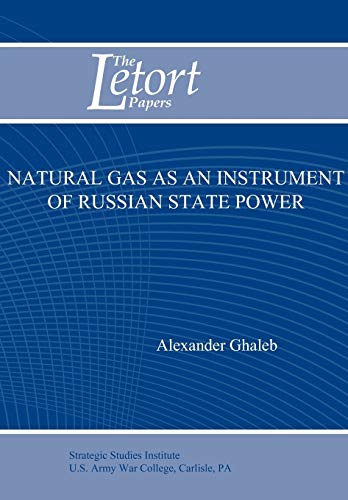
Synopsis
This monograph is meant to provide an unbiased examination of: the scarcity of natural gas in the contemporary security environment; the salience of natural gas in Russia's national security strategies; and, the natural gas pipeline politics in Eastern and Central Europe. While the tendency of most energy security scholars has been to collectively analyze Europe's dependency on oil and gas, this author analyzes the two energy markets separately, and demonstrates that natural gas is a more potent instrument of coercion in the contemporary security environment than oil was in the traditional security environment. Sufficient evidence is also provided that Russia continues to perceive NATO as a hostile alliance, and that future natural gas disruption by Russia-who holds a monopoly on the supply of natural gas via pipeline to Eastern and Central Europe-will prove deadly to the economies of many NATO member states. The salience of natural gas as an instrument of state power is emphasized in Russia's negotiations with Ukraine; this monograph credits the 2006 and 2009 gas wars between the two nations as the main causes for the failure of the Orange Revolution in Ukraine. Ultimately, today, Russia uses the same tools it used in Ukraine-in the context of natural gas negotiations-to bribe Western European nations; to divide the NATO Alliance; and to rule over its traditional sphere of influence in Eastern and Central Europe. Finally, the author emphasizes that with the Russian construction of Nord Stream and South Stream natural gas pipelines, and unless alternatives to Russian natural gas are found, it is only a matter of time until Russia will use natural gas as an instrument of coercion against NATO member states.
Les informations fournies dans la section « Synopsis » peuvent faire référence à une autre édition de ce titre.
Présentation de l'éditeur
The slow re-emergence of Russia as a world power despite its weak military force is of critical significance for the strategic interests of the United States in Europe. Since the Cold War, Russia has been perceived as a broken nation that no longer represents a threat to the North Atlantic Alliance. This monograph emphasizes that Russia overcame this major vulnerability by developing the capacity to use unilateral economic sanctions in the form of gas pricing and gas disruptions against many European North Atlantic Treaty Organization (NATO) member states. It agrees with many scholars and politicians alike who fear that Russia will leverage its monopoly of natural gas to gain political concessions. The author suggests it is only a matter of time until Russia will use natural gas as an instrument of coercion to disrupt NATO’s decisionmaking process. A key aim of this monograph is to explain why the rapid global transition from oil to natural gas will redefine the way policymakers and strategic security scholars look at the scarcity of natural gas in Europe. What is unique about this monograph is that it analyzes the oil and gas markets separately and illustrates, with examples, why in Europe natural gas is a more potent instrument of coercion than oil. Despite these revelations, only 1 month after the German Government announced its plans to abandon nuclear power by 2022, in July 2011 German Chancellor Angela Merkel disclosed that Germany will need to import more Russian natural gas to make up for the loss of over 10 gigawatts of generation capacity. Almost simultaneously, Germany’s largest energy utilities group, RWE, and the Russian state-controlled gas giv vi ant, Gazprom, have agreed to form a strategic partnership. The author argues that situations like these create a delicate state of affairs that will ultimately undermine the de facto power of NATO in the contemporary security environment, particularly vis-àvis Russia, unless the dependency on Russian natural gas is promptly addressed.
Les informations fournies dans la section « A propos du livre » peuvent faire référence à une autre édition de ce titre.
Résultats de recherche pour Natural Gas as an Instrument of Russian State Power...

Image fournie par le vendeur
Natural Gas as an Instrument of Russian State Power
Edité par
Strategic Studes Institute, Carlisle, PA, 2011
ISBN 10 : 1780399855
ISBN 13 : 9781780399850
Ancien ou d'occasion
Trade Paperback
Vendeur : Stephen Peterson, Bookseller, Eden Prairie, MN, Etats-Unis
Évaluation du vendeur 5 sur 5 étoiles

Trade Paperback. Etat : As New. New paperback, still in original, shipping materials. N° de réf. du vendeur 017246
Acheter D'occasion
EUR 10,70
Expédition à EUR 6,06
Expédition nationale : Etats-Unis
Expédition nationale : Etats-Unis
Quantité disponible : 1 disponible(s)
Image fournie par le vendeur
Natural Gas as an Instrument of Russian State Power (Letort Paper)
Edité par
Military Bookshop, 2011
ISBN 10 : 1780399855
ISBN 13 : 9781780399850
Ancien ou d'occasion
Couverture souple
Vendeur : GreatBookPrices, Columbia, MD, Etats-Unis
Évaluation du vendeur 5 sur 5 étoiles
Etat : As New. Unread book in perfect condition. N° de réf. du vendeur 14748541
Acheter D'occasion
EUR 14,58
Expédition à EUR 2,29
Expédition nationale : Etats-Unis
Expédition nationale : Etats-Unis
Quantité disponible : Plus de 20 disponibles
Image fournie par le vendeur
Natural Gas as an Instrument of Russian State Power (Letort Paper)
Edité par
Military Bookshop, 2011
ISBN 10 : 1780399855
ISBN 13 : 9781780399850
Neuf
Couverture souple
Vendeur : GreatBookPrices, Columbia, MD, Etats-Unis
Évaluation du vendeur 5 sur 5 étoiles
Etat : New. N° de réf. du vendeur 14748541-n
Acheter neuf
EUR 15,35
Expédition à EUR 2,29
Expédition nationale : Etats-Unis
Expédition nationale : Etats-Unis
Quantité disponible : Plus de 20 disponibles
Image fournie par le vendeur
Natural Gas as an Instrument of Russian State Power (Letort Paper)
Edité par
Books Express Publishing, GB, 2011
ISBN 10 : 1780399855
ISBN 13 : 9781780399850
Neuf
Paperback
Vendeur : Rarewaves.com USA, London, LONDO, Royaume-Uni
Évaluation du vendeur 5 sur 5 étoiles
Paperback. Etat : New. N° de réf. du vendeur LU-9781780399850
Acheter neuf
EUR 17,72
Livraison gratuite
Expédition depuis Royaume-Uni vers Etats-Unis
Expédition depuis Royaume-Uni vers Etats-Unis
Quantité disponible : Plus de 20 disponibles
Image d'archives
Natural Gas as an Instrument of Russian State Power (Letort Paper)
impression à la demandeVendeur : PBShop.store US, Wood Dale, IL, Etats-Unis
Évaluation du vendeur 5 sur 5 étoiles
PAP. Etat : New. New Book. Shipped from UK. THIS BOOK IS PRINTED ON DEMAND. Established seller since 2000. N° de réf. du vendeur L0-9781780399850
Acheter neuf
EUR 19,15
Livraison gratuite
Expédition nationale : Etats-Unis
Expédition nationale : Etats-Unis
Quantité disponible : Plus de 20 disponibles
Image fournie par le vendeur
Natural Gas as an Instrument of Russian State Power (Letort Paper) (Paperback or Softback)
Edité par
Military Bookshop 11/25/2011, 2011
ISBN 10 : 1780399855
ISBN 13 : 9781780399850
Neuf
Paperback or Softback
Vendeur : BargainBookStores, Grand Rapids, MI, Etats-Unis
Évaluation du vendeur 5 sur 5 étoiles
Paperback or Softback. Etat : New. Natural Gas as an Instrument of Russian State Power (Letort Paper). Book. N° de réf. du vendeur BBS-9781780399850
Acheter neuf
EUR 19,55
Livraison gratuite
Expédition nationale : Etats-Unis
Expédition nationale : Etats-Unis
Quantité disponible : 5 disponible(s)
Image d'archives
Natural Gas as an Instrument of Russian State Power (Letort Paper)
impression à la demandeVendeur : PBShop.store UK, Fairford, GLOS, Royaume-Uni
Évaluation du vendeur 5 sur 5 étoiles
PAP. Etat : New. New Book. Delivered from our UK warehouse in 4 to 14 business days. THIS BOOK IS PRINTED ON DEMAND. Established seller since 2000. N° de réf. du vendeur L0-9781780399850
Acheter neuf
EUR 17,78
Expédition à EUR 4,86
Expédition depuis Royaume-Uni vers Etats-Unis
Expédition depuis Royaume-Uni vers Etats-Unis
Quantité disponible : Plus de 20 disponibles
Image d'archives
Natural Gas as an Instrument of Russian State Power (Letort Paper)
Edité par
Military Bookshop, 2011
ISBN 10 : 1780399855
ISBN 13 : 9781780399850
Neuf
Couverture souple
Vendeur : Ria Christie Collections, Uxbridge, Royaume-Uni
Évaluation du vendeur 5 sur 5 étoiles
Etat : New. In English. N° de réf. du vendeur ria9781780399850_new
Acheter neuf
EUR 17,97
Expédition à EUR 10,95
Expédition depuis Royaume-Uni vers Etats-Unis
Expédition depuis Royaume-Uni vers Etats-Unis
Quantité disponible : Plus de 20 disponibles
Image d'archives
Natural Gas as an Instrument of Russian State Power (Letort Paper)
Edité par
Military Bookshop, 2011
ISBN 10 : 1780399855
ISBN 13 : 9781780399850
Neuf
Couverture souple
Vendeur : Majestic Books, Hounslow, Royaume-Uni
Évaluation du vendeur 4 sur 5 étoiles

Etat : New. Print on Demand pp. 164 467:B&W 6.69 x 9.61 in or 244 x 170 mm (Pinched Crown) Perfect Bound on White w/Matte Lam. N° de réf. du vendeur 130523184
Acheter neuf
EUR 24,80
Expédition à EUR 7,60
Expédition depuis Royaume-Uni vers Etats-Unis
Expédition depuis Royaume-Uni vers Etats-Unis
Quantité disponible : 4 disponible(s)
Image fournie par le vendeur
Natural Gas as an Instrument of Russian State Power (Letort Paper)
Edité par
Military Bookshop, 2011
ISBN 10 : 1780399855
ISBN 13 : 9781780399850
Neuf
Couverture souple
Vendeur : GreatBookPricesUK, Woodford Green, Royaume-Uni
Évaluation du vendeur 5 sur 5 étoiles
Etat : New. N° de réf. du vendeur 14748541-n
Acheter neuf
EUR 15,86
Expédition à EUR 17,54
Expédition depuis Royaume-Uni vers Etats-Unis
Expédition depuis Royaume-Uni vers Etats-Unis
Quantité disponible : Plus de 20 disponibles