
Articles liés à Media And Nation Building: How the Iban Became Malaysian
Synopsis
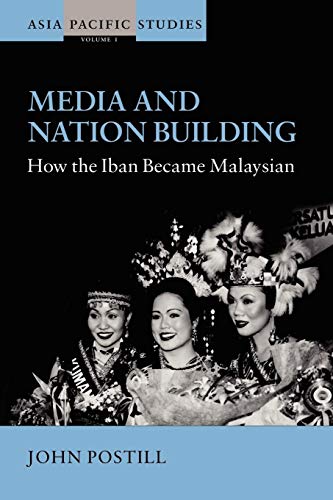
With the end of the Cold War and the proliferation of civil wars and "regime changes," the question of nation building has acquired great practical and theoretical urgency. From Eastern Europe to East Timor, Afghanistan and recently Iraq, the United States and its allies have often been accused of shirking their nation-building responsibilities as their attention -- and that of the media -- turned to yet another regional crisis. While much has been written about the growing influence of television and the Internet on modern warfare, little is known about the relationship between media and nation building. This book explores, for the first time, this relationship by means of a paradigmatic case of successful nation building: Malaysia. Based on extended fieldwork and historical research, the author follows the diffusion, adoption, and social uses of media among the Iban of Sarawak, in Malaysian Borneo and demonstrates the wide-ranging process of nation building that has accompanied the Iban adoption of radio, clocks, print media, and television. In less than four decades, Iban longhouses ('villages under one roof') have become media organizations shaped by the official ideology of Malaysia, a country hastily formed in 1963 by conjoining four disparate territories.
Les informations fournies dans la section « Synopsis » peuvent faire référence à une autre édition de ce titre.
À propos de l'auteur
John Postill is a Research Fellow at the University of Bremen. He is currently studying e-government and ethnicity in Malaysia. Trained as an anthropologist at University College London, he has published a range of articles on the anthropology of media, with special reference to Malaysian Borneo.
Les informations fournies dans la section « A propos du livre » peuvent faire référence à une autre édition de ce titre.
Résultats de recherche pour Media And Nation Building: How the Iban Became Malaysian

Image d'archives
Media and Nation Building
Vendeur : PBShop.store UK, Fairford, GLOS, Royaume-Uni
Évaluation du vendeur 5 sur 5 étoiles

PAP. Etat : New. New Book. Shipped from UK. Established seller since 2000. N° de réf. du vendeur CX-9781845451356
Acheter neuf
EUR 33,76
Expédition à EUR 4,85
Expédition depuis Royaume-Uni vers Etats-Unis
Expédition depuis Royaume-Uni vers Etats-Unis
Quantité disponible : 15 disponible(s)
Image d'archives
Media and Nation Building: How the Iban Became Malaysian (Asia Pacific Studies)
Edité par
Berghahn Books, 2008
ISBN 10 : 184545135X
ISBN 13 : 9781845451356
Ancien ou d'occasion
Couverture souple
Vendeur : Phatpocket Limited, Waltham Abbey, HERTS, Royaume-Uni
Évaluation du vendeur 5 sur 5 étoiles
Etat : Good. Your purchase helps support Sri Lankan Children's Charity 'The Rainbow Centre'. Ex-library, so some stamps and wear, but in good overall condition. Our donations to The Rainbow Centre have helped provide an education and a safe haven to hundreds of children who live in appalling conditions. N° de réf. du vendeur Z1-EE-029-00323
Acheter D'occasion
EUR 26,49
Expédition à EUR 12,41
Expédition depuis Royaume-Uni vers Etats-Unis
Expédition depuis Royaume-Uni vers Etats-Unis
Quantité disponible : 1 disponible(s)
Image d'archives
Media and Nation Building
Vendeur : PBShop.store US, Wood Dale, IL, Etats-Unis
Évaluation du vendeur 5 sur 5 étoiles
PAP. Etat : New. New Book. Shipped from UK. Established seller since 2000. N° de réf. du vendeur CX-9781845451356
Acheter neuf
EUR 39,85
Livraison gratuite
Expédition nationale : Etats-Unis
Expédition nationale : Etats-Unis
Quantité disponible : 15 disponible(s)
Image fournie par le vendeur
Media and Nation Building
Vendeur : Rarewaves USA, HEBRON, KY, Etats-Unis
Évaluation du vendeur 5 sur 5 étoiles
Paperback. Etat : New. "Postill's book will provide a stimulating read to anyone interested in the broad field of nationalism studies.a breakthrough attempt to bring nation building back on the agenda of media and communication research, and a valuable contribution to the field of media anthropology. Further comparative work in this area will hopefully give rise to a revised theory of nation building, one that acknowledges and theorizes the diversity of nation building processes, and the associated diversity of modernization projects, around the world." * H-Nation ".very well written, lively, incisive and clear. Students will learn a lot about anthropology and media from this book.it should be recommended or essential reading for students." * Andrew Beatty, Brunel University "The book excellently traces the development of both print and electronic media, which are central in making the Iban Malaysian.[It] contributes much to our understanding of the complex process of change that has occurred among the Ibans."* Asian Anthropology With the end of the Cold War and the proliferation of civil wars and "regime changes," the question of nation building has acquired great practical and theoretical urgency. From Eastern Europe to East Timor, Afghanistan and recently Iraq, the United States and its allies have often been accused of shirking their nation-building responsibilities as their attention - and that of the media -- turned to yet another regional crisis. While much has been written about the growing influence of television and the Internet on modern warfare, little is known about the relationship between media and nation building. This book explores, for the first time, this relationship by means of a paradigmatic case of successful nation building: Malaysia. Based on extended fieldwork and historical research, the author follows the diffusion, adoption, and social uses of media among the Iban of Sarawak, in Malaysian Borneo and demonstrates the wide-ranging process of nation building that has accompanied the Iban adoption of radio, clocks, print media, and television.In less than four decades, Iban longhouses ('villages under one roof') have become media organizations shaped by the official ideology of Malaysia, a country hastily formed in 1963 by conjoining four disparate territories. John Postill is a Research Fellow at the University of Bremen. He is currently studying e-government and ethnicity in Malaysia. Trained as an anthropologist at University College London, he has published a range of articles on the anthropology of media, with special reference to Malaysian Borneo. N° de réf. du vendeur LU-9781845451356
Acheter neuf
EUR 40,34
Livraison gratuite
Expédition nationale : Etats-Unis
Expédition nationale : Etats-Unis
Quantité disponible : Plus de 20 disponibles
Image fournie par le vendeur
Media and Nation Building
Vendeur : Rarewaves.com USA, London, LONDO, Royaume-Uni
Évaluation du vendeur 5 sur 5 étoiles
Paperback. Etat : New. "Postill's book will provide a stimulating read to anyone interested in the broad field of nationalism studies.a breakthrough attempt to bring nation building back on the agenda of media and communication research, and a valuable contribution to the field of media anthropology. Further comparative work in this area will hopefully give rise to a revised theory of nation building, one that acknowledges and theorizes the diversity of nation building processes, and the associated diversity of modernization projects, around the world." * H-Nation ".very well written, lively, incisive and clear. Students will learn a lot about anthropology and media from this book.it should be recommended or essential reading for students." * Andrew Beatty, Brunel University "The book excellently traces the development of both print and electronic media, which are central in making the Iban Malaysian.[It] contributes much to our understanding of the complex process of change that has occurred among the Ibans."* Asian Anthropology With the end of the Cold War and the proliferation of civil wars and "regime changes," the question of nation building has acquired great practical and theoretical urgency. From Eastern Europe to East Timor, Afghanistan and recently Iraq, the United States and its allies have often been accused of shirking their nation-building responsibilities as their attention - and that of the media -- turned to yet another regional crisis. While much has been written about the growing influence of television and the Internet on modern warfare, little is known about the relationship between media and nation building. This book explores, for the first time, this relationship by means of a paradigmatic case of successful nation building: Malaysia. Based on extended fieldwork and historical research, the author follows the diffusion, adoption, and social uses of media among the Iban of Sarawak, in Malaysian Borneo and demonstrates the wide-ranging process of nation building that has accompanied the Iban adoption of radio, clocks, print media, and television.In less than four decades, Iban longhouses ('villages under one roof') have become media organizations shaped by the official ideology of Malaysia, a country hastily formed in 1963 by conjoining four disparate territories. John Postill is a Research Fellow at the University of Bremen. He is currently studying e-government and ethnicity in Malaysia. Trained as an anthropologist at University College London, he has published a range of articles on the anthropology of media, with special reference to Malaysian Borneo. N° de réf. du vendeur LU-9781845451356
Acheter neuf
EUR 42,81
Livraison gratuite
Expédition depuis Royaume-Uni vers Etats-Unis
Expédition depuis Royaume-Uni vers Etats-Unis
Quantité disponible : 14 disponible(s)
Image d'archives
Media and Nation Building: How the Iban Became Malaysian: v. 1
Edité par
Berghahn Books, 2008
ISBN 10 : 184545135X
ISBN 13 : 9781845451356
Neuf
Paperback / softback
Vendeur : THE SAINT BOOKSTORE, Southport, Royaume-Uni
Évaluation du vendeur 5 sur 5 étoiles
Paperback / softback. Etat : New. New copy - Usually dispatched within 4 working days. N° de réf. du vendeur B9781845451356
Acheter neuf
EUR 33,76
Expédition à EUR 16,97
Expédition depuis Royaume-Uni vers Etats-Unis
Expédition depuis Royaume-Uni vers Etats-Unis
Quantité disponible : 17 disponible(s)
Image d'archives
Media and Nation Building (Paperback)
Vendeur : Grand Eagle Retail, Bensenville, IL, Etats-Unis
Évaluation du vendeur 5 sur 5 étoiles
Paperback. Etat : new. Paperback. "Postill's book will provide a stimulating read to anyone interested in the broad field of nationalism studies.a breakthrough attempt to bring nation building back on the agenda of media and communication research, and a valuable contribution to the field of media anthropology. Further comparative work in this area will hopefully give rise to a revised theory of nation building, one that acknowledges and theorizes the diversity of nation building processes, and the associated diversity of modernization projects, around the world." * H-Nation ".very well written, lively, incisive and clear. Students will learn a lot about anthropology and media from this book.it should be recommended or essential reading for students." * Andrew Beatty, Brunel University "The book excellently traces the development of both print and electronic media, which are central in making the Iban Malaysian.[It] contributes much to our understanding of the complex process of change that has occurred among the Ibans."* Asian Anthropology With the end of the Cold War and the proliferation of civil wars and "regime changes," the question of nation building has acquired great practical and theoretical urgency. From Eastern Europe to East Timor, Afghanistan and recently Iraq, the United States and its allies have often been accused of shirking their nation-building responsibilities as their attention - and that of the media -- turned to yet another regional crisis. While much has been written about the growing influence of television and the Internet on modern warfare, little is known about the relationship between media and nation building. This book explores, for the first time, this relationship by means of a paradigmatic case of successful nation building: Malaysia. Based on extended fieldwork and historical research, the author follows the diffusion, adoption, and social uses of media among the Iban of Sarawak, in Malaysian Borneo and demonstrates the wide-ranging process of nation building that has accompanied the Iban adoption of radio, clocks, print media, and television.In less than four decades, Iban longhouses ('villages under one roof') have become media organizations shaped by the official ideology of Malaysia, a country hastily formed in 1963 by conjoining four disparate territories. John Postill is a Research Fellow at the University of Bremen. He is currently studying e-government and ethnicity in Malaysia. Trained as an anthropologist at University College London, he has published a range of articles on the anthropology of media, with special reference to Malaysian Borneo. With the end of the Cold War and the proliferation of civil wars and "regime changes," the question of nation building has acquired great practical and theoretical urgency. This book demonstrates the process of nation building that has accompanied the Iban adoption of radio, clocks, print media, and television. Shipping may be from multiple locations in the US or from the UK, depending on stock availability. N° de réf. du vendeur 9781845451356
Acheter neuf
EUR 52,45
Livraison gratuite
Expédition nationale : Etats-Unis
Expédition nationale : Etats-Unis
Quantité disponible : 1 disponible(s)
Image d'archives
Media and Nation Building
Vendeur : Books Puddle, Woodside, NY, Etats-Unis
Évaluation du vendeur 4 sur 5 étoiles

Etat : New. pp. 248. N° de réf. du vendeur 261312470
Acheter neuf
EUR 54,57
Expédition à EUR 3,48
Expédition nationale : Etats-Unis
Expédition nationale : Etats-Unis
Quantité disponible : 1 disponible(s)
Image d'archives
Media and Nation Building
Vendeur : Majestic Books, Hounslow, Royaume-Uni
Évaluation du vendeur 4 sur 5 étoiles
Etat : New. pp. 248 23:B&W 6 x 9 in or 229 x 152 mm Perfect Bound on White w/Gloss Lam. N° de réf. du vendeur 6535433
Acheter neuf
EUR 51,82
Expédition à EUR 7,58
Expédition depuis Royaume-Uni vers Etats-Unis
Expédition depuis Royaume-Uni vers Etats-Unis
Quantité disponible : 1 disponible(s)
Image d'archives
Media and Nation Building: How the Iban Became Malaysian: v. 1
Edité par
Berghahn Books, 2008
ISBN 10 : 184545135X
ISBN 13 : 9781845451356
Neuf
Paperback / softback
Vendeur : THE SAINT BOOKSTORE, Southport, Royaume-Uni
Évaluation du vendeur 5 sur 5 étoiles
Paperback / softback. Etat : New. This item is printed on demand. New copy - Usually dispatched within 5-9 working days. N° de réf. du vendeur C9781845451356
Acheter neuf
EUR 47,25
Expédition à EUR 18,37
Expédition depuis Royaume-Uni vers Etats-Unis
Expédition depuis Royaume-Uni vers Etats-Unis
Quantité disponible : Plus de 20 disponibles