
Articles liés à The Long Way Home: The Meaning and Values of Repatriation
The Long Way Home: The Meaning and Values of Repatriation - Couverture souple
Livre 2 sur 12: Museums and Collections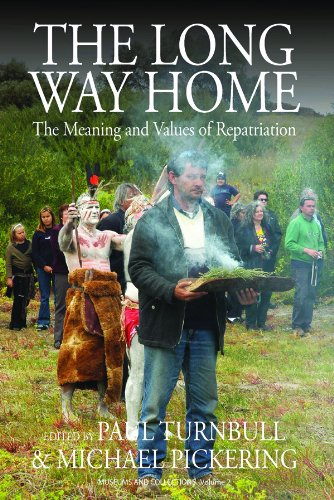
Synopsis
Indigenous peoples have long sought the return of ancestral human remains and associated artifacts from western museums and scientific institutions. Since the late 1970s their efforts have led museum curators and researchers to re-evaluate their practices and policies in respect to the scientific uses of human remains. New partnerships have been established between cultural and scientific institutions and indigenous communities. Human remains and culturally significant objects have been returned to the care of indigenous communities, although the fate of bones and burial artifacts in numerous collections remains unresolved and, in some instances, the subject of controversy. In this book, leading researchers from a wide range of disciplines in the humanities and social sciences reflect critically on the historical, cultural, ethical and scientific dimensions of repatriation. Through various case studies they consider the impact of repatriation: what have been the benefits, and in what ways has repatriation given rise to new problems for indigenous people, scientists and museum personnel. It features chapters by indigenous knowledge custodians, who reflect upon recent debates and interaction between indigenous people and researchers in disciplines with direct interests in the continued scientific preservation of human remains.
In this book, leading researchers from a wide range of disciplines in the humanities and social sciences reflect critically on the historical, cultural, ethical and scientific dimensions of repatriation. Through various case studies they consider the impact of repatriation: what have been the benefits, and in what ways has repatriation given rise to new problems for indigenous people, scientists and museum personnel. It features chapters by indigenous knowledge custodians, who reflect upon recent debates and interaction between indigenous people and researchers in disciplines with direct interests in the continued scientific preservation of human remains.
Les informations fournies dans la section « Synopsis » peuvent faire référence à une autre édition de ce titre.
À propos des auteurs
Paul Turnbull is a Professor of history in the School of History, Philosophy, Religion and Classics at the University of Queensland. He has written extensively on nineteenth-century racial thought, and the theft and repatriation of Indigenous bodily remains. His recent publications include (with Cressida Fforde and Jane Hubert) the co-edited volume The Dead and their Possessions (Routledge).
Michael Pickering is the Head of the Aboriginal and Torres Strait Islander Program at the National Museum of Australia and has directed the Museum's repatriation program for the past nine years. His research interests and publications include studies on material culture, cannibalism, hunter-gatherer archaeology and anthropology, heritage management, and repatriation.
Les informations fournies dans la section « A propos du livre » peuvent faire référence à une autre édition de ce titre.
Résultats de recherche pour The Long Way Home: The Meaning and Values of Repatriation

Image d'archives
The Long Way Home: The Meaning and Values of Repatriation (Museums and Collections)
Edité par
Berghahn Books November 2010, 2010
ISBN 10 : 184545958X
ISBN 13 : 9781845459581
Ancien ou d'occasion
Trade Paperback
Vendeur : Magus Books Seattle, Seattle, WA, Etats-Unis
Évaluation du vendeur 5 sur 5 étoiles

Trade Paperback. Etat : VG. used trade paperback edition. lightly shelfworn, corners perhaps slightly bumped. pages and binding are clean, straight and tight. there are no marks to the text or other serious flaws. N° de réf. du vendeur 1416000
Acheter D'occasion
EUR 12,52
Expédition à EUR 4,36
Expédition nationale : Etats-Unis
Expédition nationale : Etats-Unis
Quantité disponible : 1 disponible(s)
Image d'archives
The Long Way Home : The Meaning and Values of Repatriation
Edité par
Berghahn Books, Incorporated, 2010
ISBN 10 : 184545958X
ISBN 13 : 9781845459581
Ancien ou d'occasion
Couverture souple
Vendeur : Better World Books, Mishawaka, IN, Etats-Unis
Évaluation du vendeur 5 sur 5 étoiles
Etat : Good. Former library copy. Pages intact with minimal writing/highlighting. The binding may be loose and creased. Dust jackets/supplements are not included. Includes library markings. Stock photo provided. Product includes identifying sticker. Better World Books: Buy Books. Do Good. N° de réf. du vendeur 41200062-6
Acheter D'occasion
EUR 28,16
Livraison gratuite
Expédition nationale : Etats-Unis
Expédition nationale : Etats-Unis
Quantité disponible : 1 disponible(s)
Image fournie par le vendeur
The Long Way Home: The Meaning and Values of Repatriation
Edité par
Berghahn Books, USA & England, 2010
ISBN 10 : 184545958X
ISBN 13 : 9781845459581
Ancien ou d'occasion
Paper Back
Vendeur : Goulds Book Arcade, Sydney, Newtown, Sydney, NSW, Australie
Évaluation du vendeur 5 sur 5 étoiles
Paper Back. Etat : Very Good. 207 pages. Books listed here are not stored at the shop. Please contact us if you want to pick up a book from Newtown. Size: Size E: 8"-9" Tall (203-228mm). N° de réf. du vendeur 150696
Acheter D'occasion
EUR 15,97
Expédition à EUR 21,79
Expédition depuis Australie vers Etats-Unis
Expédition depuis Australie vers Etats-Unis
Quantité disponible : 1 disponible(s)
Image d'archives
The Long Way Home
Vendeur : PBShop.store UK, Fairford, GLOS, Royaume-Uni
Évaluation du vendeur 5 sur 5 étoiles
PAP. Etat : New. New Book. Shipped from UK. Established seller since 2000. N° de réf. du vendeur CX-9781845459581
Acheter neuf
EUR 33,68
Expédition à EUR 4,84
Expédition depuis Royaume-Uni vers Etats-Unis
Expédition depuis Royaume-Uni vers Etats-Unis
Quantité disponible : 15 disponible(s)
Image d'archives
The Long Way Home: The Meaning and Values of Repatriation (Museums and Collections)
Edité par
Berghahn Books, 2010
ISBN 10 : 184545958X
ISBN 13 : 9781845459581
Ancien ou d'occasion
Couverture souple
Vendeur : Phatpocket Limited, Waltham Abbey, HERTS, Royaume-Uni
Évaluation du vendeur 5 sur 5 étoiles
Etat : Good. Your purchase helps support Sri Lankan Children's Charity 'The Rainbow Centre'. Ex-library, so some stamps and wear, but in good overall condition. Our donations to The Rainbow Centre have helped provide an education and a safe haven to hundreds of children who live in appalling conditions. N° de réf. du vendeur Z1-I-022-02147
Acheter D'occasion
EUR 26,47
Expédition à EUR 12,38
Expédition depuis Royaume-Uni vers Etats-Unis
Expédition depuis Royaume-Uni vers Etats-Unis
Quantité disponible : 1 disponible(s)
Image fournie par le vendeur
Long Way Home : The Meaning and Values of Repatriation
Vendeur : GreatBookPrices, Columbia, MD, Etats-Unis
Évaluation du vendeur 5 sur 5 étoiles
Etat : New. N° de réf. du vendeur 9843612-n
Acheter neuf
EUR 36,96
Expédition à EUR 2,30
Expédition nationale : Etats-Unis
Expédition nationale : Etats-Unis
Quantité disponible : Plus de 20 disponibles
Image d'archives
The Long Way Home
Vendeur : PBShop.store US, Wood Dale, IL, Etats-Unis
Évaluation du vendeur 5 sur 5 étoiles
PAP. Etat : New. New Book. Shipped from UK. Established seller since 2000. N° de réf. du vendeur CX-9781845459581
Acheter neuf
EUR 39,33
Livraison gratuite
Expédition nationale : Etats-Unis
Expédition nationale : Etats-Unis
Quantité disponible : 15 disponible(s)
Image fournie par le vendeur
The Long Way Home
Vendeur : Rarewaves.com USA, London, LONDO, Royaume-Uni
Évaluation du vendeur 5 sur 5 étoiles
Paperback. Etat : New. Indigenous peoples have long sought the return of ancestral human remains and associated artefacts from western museums and scientific institutions. Since the late 1970s their efforts have led museum curators and researchers to re-evaluate their practices and policies in respect to the scientific uses of human remains. New partnerships have been established between cultural and scientific institutions and indigenous communities. Human remains and culturally significant objects have been returned to the care of indigenous communities, although the fate of bones and burial artefacts in numerous collections remains unresolved and, in some instances, the subject of controversy. In this book, leading researchers from a wide range of disciplines in the humanities and social sciences reflect critically on the historical, cultural, ethical and scientific dimensions of repatriation. Through various case studies they consider the impact of repatriation: what have been the benefits, and in what ways has repatriation given rise to new problems for indigenous people, scientists and museum personnel.It features chapters by indigenous knowledge custodians, who reflect upon recent debates and interaction between indigenous people and researchers in disciplines with direct interests in the continued scientific preservation of human remains. In this book, leading researchers from a wide range of disciplines in the humanities and social sciences reflect critically on the historical, cultural, ethical and scientific dimensions of repatriation. Through various case studies they consider the impact of repatriation: what have been the benefits, and in what ways has repatriation given rise to new problems for indigenous people, scientists and museum personnel. It features chapters by indigenous knowledge custodians, who reflect upon recent debates and interaction between indigenous people and researchers in disciplines with direct interests in the continued scientific preservation of human remains. Paul Turnbul lis a Professor of history in the School of History, Philosophy, Religion and Classics at the University of Queensland. He has written extensively on nineteenth-century racial thought, and the theft and repatriation of Indigenous bodily remains.His recent publications include (with Cressida Fforde and Jane Hubert) the co-edited volume The Dead and their Possessions (Routledge). Michael Pickering is the Head of the Aboriginal and Torres Strait Islander Program at the National Museum of Australia and has directed the Museum's repatriation program for the past nine years. His research interests and publications include studies on material culture, cannibalism, hunter-gatherer archaeology and anthropology, heritage management, and repatriation. N° de réf. du vendeur LU-9781845459581
Acheter neuf
EUR 42,27
Livraison gratuite
Expédition depuis Royaume-Uni vers Etats-Unis
Expédition depuis Royaume-Uni vers Etats-Unis
Quantité disponible : 11 disponible(s)
Image fournie par le vendeur
Long Way Home : The Meaning and Values of Repatriation
Edité par
Berghahn Books, 2010
ISBN 10 : 184545958X
ISBN 13 : 9781845459581
Ancien ou d'occasion
Couverture souple
Vendeur : GreatBookPrices, Columbia, MD, Etats-Unis
Évaluation du vendeur 5 sur 5 étoiles
Etat : As New. Unread book in perfect condition. N° de réf. du vendeur 9843612
Acheter D'occasion
EUR 40,86
Expédition à EUR 2,30
Expédition nationale : Etats-Unis
Expédition nationale : Etats-Unis
Quantité disponible : Plus de 20 disponibles
Image d'archives
The Long Way Home: The Meaning and Values of Repatriation
Edité par
Berghahn Books, 2010
ISBN 10 : 184545958X
ISBN 13 : 9781845459581
Neuf
Paperback / softback
Vendeur : THE SAINT BOOKSTORE, Southport, Royaume-Uni
Évaluation du vendeur 5 sur 5 étoiles
Paperback / softback. Etat : New. New copy - Usually dispatched within 4 working days. N° de réf. du vendeur B9781845459581
Acheter neuf
EUR 33,68
Expédition à EUR 16,60
Expédition depuis Royaume-Uni vers Etats-Unis
Expédition depuis Royaume-Uni vers Etats-Unis
Quantité disponible : 9 disponible(s)