
Articles liés à US Destroyers 1934-45: Pre-war Classes
Synopsis
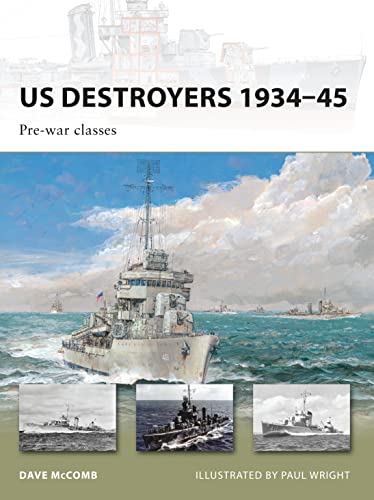
Since the beginning of the 20th century, destroyers have been all-purpose ships, indispensable from delivering the mail at sea to screening other vessels and, where larger ships were not present, forming the front line in battle.
This illustrated guide details the 169 ships of ten classes introduced in the 1930s: early 1,500-tonners and 1,850-ton destroyer leaders designed to conform to the 1930 London Naval Treaty, plus the successor 1,570-ton Sims class and 1,620and 1,630-ton Benson and Gleaves classes.
In wartime, most 1,500-tonners and leaders initially saw front line duty in the Pacific but were relegated to secondary assignments as newer vessels arrived; while the later 1,620 and 1,630-tonners became the standard destroyers of the Atlantic War. This volume reveals the fascinating design story behind these pioneering classes – from the constraints of peacetime treaties to advances in propulsion engineering, and wartime modifications.
With an operational overview of their service and tables listing all ships by class, builder, and initial squadron, this is the definitive guide to the pre-war US destroyer classes.
Les informations fournies dans la section « Synopsis » peuvent faire référence à une autre édition de ce titre.
À propos des auteurs
Dave McComb is a management consultant specializing in business process development. A lifelong student of World War II destroyer history, he has in recent years promoted the subject extensively via the web and numerous articles. He is president of the Destroyer History Foundation, which he organized in collaboration with World War II shipmates for the purpose of making original source documents accessible and preserving their perspectives and collections.
Paul Wright has painted ships of all kinds for most of his career, specializing in steel and steam warships from the late 19th century to the present day. Paul's art has illustrated the works of Patrick O'Brian, Dudley Pope and C.S. Forester amongst others, and hangs in many corporate and private collections all over the world. A Member of the Royal Society of Marine Artists, Paul lives and works in Surrey.
Les informations fournies dans la section « A propos du livre » peuvent faire référence à une autre édition de ce titre.
Résultats de recherche pour US Destroyers 1934-45: Pre-war Classes

Image d'archives
US Destroyers 1934â"45: Pre-war classes (New Vanguard, 162)
Edité par
Osprey Publishing, 2010
ISBN 10 : 1846034434
ISBN 13 : 9781846034435
Ancien ou d'occasion
paperback
Vendeur : HPB-Ruby, Dallas, TX, Etats-Unis
Évaluation du vendeur 5 sur 5 étoiles

paperback. Etat : Very Good. Wright, Paul (illustrateur). Connecting readers with great books since 1972! Used books may not include companion materials, and may have some shelf wear or limited writing. We ship orders daily and Customer Service is our top priority! N° de réf. du vendeur S_486586652
Acheter D'occasion
EUR 8,80
Expédition à EUR 3,34
Expédition nationale : Etats-Unis
Expédition nationale : Etats-Unis
Quantité disponible : 1 disponible(s)
Image d'archives
US Destroyers 1934â"45: Pre-war classes (New Vanguard, 162)
Edité par
Osprey Publishing, 2010
ISBN 10 : 1846034434
ISBN 13 : 9781846034435
Ancien ou d'occasion
paperback
Vendeur : HPB-Diamond, Dallas, TX, Etats-Unis
Évaluation du vendeur 5 sur 5 étoiles
paperback. Etat : Very Good. Wright, Paul (illustrateur). Connecting readers with great books since 1972! Used books may not include companion materials, and may have some shelf wear or limited writing. We ship orders daily and Customer Service is our top priority! N° de réf. du vendeur S_473115674
Acheter D'occasion
EUR 8,87
Expédition à EUR 3,34
Expédition nationale : Etats-Unis
Expédition nationale : Etats-Unis
Quantité disponible : 1 disponible(s)
Image d'archives
US Destroyers 1934?45: Pre-war classes
Edité par
Bloomsbury Publishing PLC, 2010
ISBN 10 : 1846034434
ISBN 13 : 9781846034435
Ancien ou d'occasion
Paperback
Vendeur : World of Books (was SecondSale), Montgomery, IL, Etats-Unis
Évaluation du vendeur 5 sur 5 étoiles
Paperback. Etat : Very Good. Wright, Paul (illustrateur). The US Navy's most modern destroyers as it entered World War II were 100 ships from eleven classes introduced in the 1930s: 1,500-tonners and 1,850-ton destroyer leaders designed to conform to the 1930 London Naval Treaty, plus the successor 1,570-ton Sims class and the first-commissioned 1,620- and 1,630-tonners of the Benson and Gleaves classes. Collectively, these destroyers carried the Navy through the war's first year when the outcome was in doubt: while most 1,500-tonners and leaders were assigned to front line duty in the Pacific before being relegated to secondary assignments, the later Bensons and Gleaves became the standard destroyers for Atlantic and Mediterranean operations and remained prominent in the Pacific throughout the war. This volume describes the fascinating design story behind these developmental classes - from the constraints of peacetime treaties to advances in propulsion engineering and wartime modifications. With an operational overview of their service and tables listing all 169 ships by class, builder, and initial squadron, this is a definitive guide to the pre-war US destroyer classes. N° de réf. du vendeur 00107898136
Acheter D'occasion
EUR 12,23
Livraison gratuite
Expédition nationale : Etats-Unis
Expédition nationale : Etats-Unis
Quantité disponible : 1 disponible(s)
Image d'archives
US Destroyers 1934?45: Pre-war classes
Edité par
Bloomsbury Publishing PLC, 2010
ISBN 10 : 1846034434
ISBN 13 : 9781846034435
Ancien ou d'occasion
Paperback
Vendeur : World of Books (was SecondSale), Montgomery, IL, Etats-Unis
Évaluation du vendeur 5 sur 5 étoiles
Paperback. Etat : Fair. Wright, Paul (illustrateur). The US Navy's most modern destroyers as it entered World War II were 100 ships from eleven classes introduced in the 1930s: 1,500-tonners and 1,850-ton destroyer leaders designed to conform to the 1930 London Naval Treaty, plus the successor 1,570-ton Sims class and the first-commissioned 1,620- and 1,630-tonners of the Benson and Gleaves classes. Collectively, these destroyers carried the Navy through the war's first year when the outcome was in doubt: while most 1,500-tonners and leaders were assigned to front line duty in the Pacific before being relegated to secondary assignments, the later Bensons and Gleaves became the standard destroyers for Atlantic and Mediterranean operations and remained prominent in the Pacific throughout the war. This volume describes the fascinating design story behind these developmental classes - from the constraints of peacetime treaties to advances in propulsion engineering and wartime modifications. With an operational overview of their service and tables listing all 169 ships by class, builder, and initial squadron, this is a definitive guide to the pre-war US destroyer classes. N° de réf. du vendeur 00110202312
Acheter D'occasion
EUR 12,23
Livraison gratuite
Expédition nationale : Etats-Unis
Expédition nationale : Etats-Unis
Quantité disponible : 2 disponible(s)
Image fournie par le vendeur
US Destroyers 1934-45
Edité par
Osprey Publishing, 2010
ISBN 10 : 1846034434
ISBN 13 : 9781846034435
Ancien ou d'occasion
Couverture souple
Edition originale
Vendeur : Liberty Book Store ABAA FABA IOBA, Jupiter, FL, Etats-Unis
Évaluation du vendeur 5 sur 5 étoiles
Paul Wright (illustrateur). First Edition. 8vo (24 x 18 cm). 48 pp. Glossy pictorial covers with black titles to upper and spine. Text block tight and unmarked. N° de réf. du vendeur 5741
Acheter D'occasion
EUR 9,17
Expédition à EUR 4,44
Expédition nationale : Etats-Unis
Expédition nationale : Etats-Unis
Quantité disponible : 2 disponible(s)
Image d'archives
US Destroyers 1934?45: Pre-war classes
Edité par
Bloomsbury Publishing PLC, 2010
ISBN 10 : 1846034434
ISBN 13 : 9781846034435
Ancien ou d'occasion
Paperback
Vendeur : World of Books Inc, Montgomery, IL, Etats-Unis
Évaluation du vendeur 4 sur 5 étoiles

Paperback. Etat : Very Good. Wright, Paul (illustrateur). The US Navy's most modern destroyers as it entered World War II were 100 ships from eleven classes introduced in the 1930s: 1,500-tonners and 1,850-ton destroyer leaders designed to conform to the 1930 London Naval Treaty, plus the successor 1,570-ton Sims class and the first-commissioned 1,620- and 1,630-tonners of the Benson and Gleaves classes. Collectively, these destroyers carried the Navy through the war's first year when the outcome was in doubt: while most 1,500-tonners and leaders were assigned to front line duty in the Pacific before being relegated to secondary assignments, the later Bensons and Gleaves became the standard destroyers for Atlantic and Mediterranean operations and remained prominent in the Pacific throughout the war. This volume describes the fascinating design story behind these developmental classes - from the constraints of peacetime treaties to advances in propulsion engineering and wartime modifications. With an operational overview of their service and tables listing all 169 ships by class, builder, and initial squadron, this is a definitive guide to the pre-war US destroyer classes. N° de réf. du vendeur CIN1846034434VG
Acheter D'occasion
EUR 14,06
Livraison gratuite
Expédition nationale : Etats-Unis
Expédition nationale : Etats-Unis
Quantité disponible : 1 disponible(s)
Image d'archives
US Destroyers 1934?45: Pre-war classes
Edité par
Bloomsbury Publishing PLC, 2010
ISBN 10 : 1846034434
ISBN 13 : 9781846034435
Ancien ou d'occasion
Paperback
Vendeur : World of Books Inc, Montgomery, IL, Etats-Unis
Évaluation du vendeur 4 sur 5 étoiles
Paperback. Etat : Fair. Wright, Paul (illustrateur). The US Navy's most modern destroyers as it entered World War II were 100 ships from eleven classes introduced in the 1930s: 1,500-tonners and 1,850-ton destroyer leaders designed to conform to the 1930 London Naval Treaty, plus the successor 1,570-ton Sims class and the first-commissioned 1,620- and 1,630-tonners of the Benson and Gleaves classes. Collectively, these destroyers carried the Navy through the war's first year when the outcome was in doubt: while most 1,500-tonners and leaders were assigned to front line duty in the Pacific before being relegated to secondary assignments, the later Bensons and Gleaves became the standard destroyers for Atlantic and Mediterranean operations and remained prominent in the Pacific throughout the war. This volume describes the fascinating design story behind these developmental classes - from the constraints of peacetime treaties to advances in propulsion engineering and wartime modifications. With an operational overview of their service and tables listing all 169 ships by class, builder, and initial squadron, this is a definitive guide to the pre-war US destroyer classes. N° de réf. du vendeur CIN1846034434A
Acheter D'occasion
EUR 14,06
Livraison gratuite
Expédition nationale : Etats-Unis
Expédition nationale : Etats-Unis
Quantité disponible : 2 disponible(s)
Image d'archives
US Destroyers 1934-45 Pre-War Classes
Edité par
Osprey Publishing, 2010
ISBN 10 : 1846034434
ISBN 13 : 9781846034435
Ancien ou d'occasion
Card Covers
Edition originale
Vendeur : Lion Books PBFA, Kidderminster, WORCS, Royaume-Uni
Évaluation du vendeur 5 sur 5 étoiles
Card Covers. Etat : Very Good. Illustrated by Paul Wright (illustrateur). First Edition. New Vanguard ~ 162; 250x180mm; 48 pages. N° de réf. du vendeur 86858
Acheter D'occasion
EUR 6,14
Expédition à EUR 9,54
Expédition depuis Royaume-Uni vers Etats-Unis
Expédition depuis Royaume-Uni vers Etats-Unis
Quantité disponible : 1 disponible(s)
Image d'archives
US Destroyers 1934-45: Pre-war classes Format: Paperback
Edité par
MacMillan Publishers, 2010
ISBN 10 : 1846034434
ISBN 13 : 9781846034435
Neuf
Couverture souple
Vendeur : INDOO, Avenel, NJ, Etats-Unis
Évaluation du vendeur 5 sur 5 étoiles
Etat : New. Wright, Paul (illustrateur). N° de réf. du vendeur 9781846034435
Acheter neuf
EUR 16,75
Livraison gratuite
Expédition nationale : Etats-Unis
Expédition nationale : Etats-Unis
Quantité disponible : Plus de 20 disponibles
Image fournie par le vendeur
US Destroyers 1934-45
Edité par
Bloomsbury Publishing PLC, GB, 2010
ISBN 10 : 1846034434
ISBN 13 : 9781846034435
Neuf
Paperback
Vendeur : Rarewaves USA, HEBRON, KY, Etats-Unis
Évaluation du vendeur 5 sur 5 étoiles
Paperback. Etat : New. Wright, Paul (illustrateur). Since the beginning of the 20th century, destroyers have been all-purpose ships, indispensable from delivering the mail at sea to screening other vessels and, where larger ships were not present, forming the front line in battle.This illustrated guide details the 169 ships of ten classes introduced in the 1930s: early 1,500-tonners and 1,850-ton destroyer leaders designed to conform to the 1930 London Naval Treaty, plus the successor 1,570-ton Sims class and 1,620and 1,630-ton Benson and Gleaves classes.In wartime, most 1,500-tonners and leaders initially saw front line duty in the Pacific but were relegated to secondary assignments as newer vessels arrived; while the later 1,620 and 1,630-tonners became the standard destroyers of the Atlantic War. This volume reveals the fascinating design story behind these pioneering classes - from the constraints of peacetime treaties to advances in propulsion engineering, and wartime modifications.With an operational overview of their service and tables listing all ships by class, builder, and initial squadron, this is the definitive guide to the pre-war US destroyer classes. N° de réf. du vendeur LU-9781846034435
Acheter neuf
EUR 16,78
Livraison gratuite
Expédition nationale : Etats-Unis
Expédition nationale : Etats-Unis
Quantité disponible : 20 disponible(s)